How it started
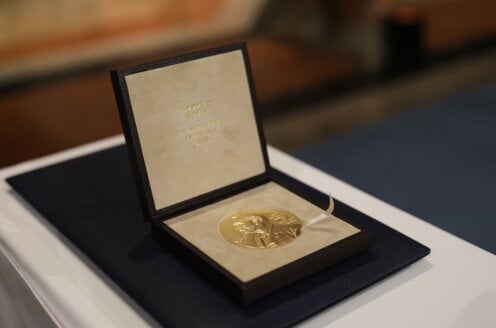
When the inventor, entrepreneur and businessman Alfred Nobel died, his will stated that his fortune was to be used to reward “those who, during the preceding year, shall have conferred the greatest benefit to humankind.” Nobel’s prize would reward outstanding efforts in the fields that he was most involved in during his lifetime: physics, chemistry, physiology or medicine, literature and peace.
After his death, a long process began to realise his vision and the first Nobel Prizes were awarded in 1901. In 1969, a new prize was established – the Sveriges Riksbank Prize in Economic Sciences in Memory of Alfred Nobel. Its addition was an exception, to celebrate the tercentenary of Sweden’s central bank.
In October every year the new Nobel Prizes and laureates are announced.