Nobel Prize in Chemistry 2020
Feeling like an outsider drove Jennifer Doudna to find her place and prove doubters wrong. She turned to books to learn more about the world and how to fit into it. Today, her Nobel Prize-awarded method for genome editing has transformed the field of molecular biology and genetics.
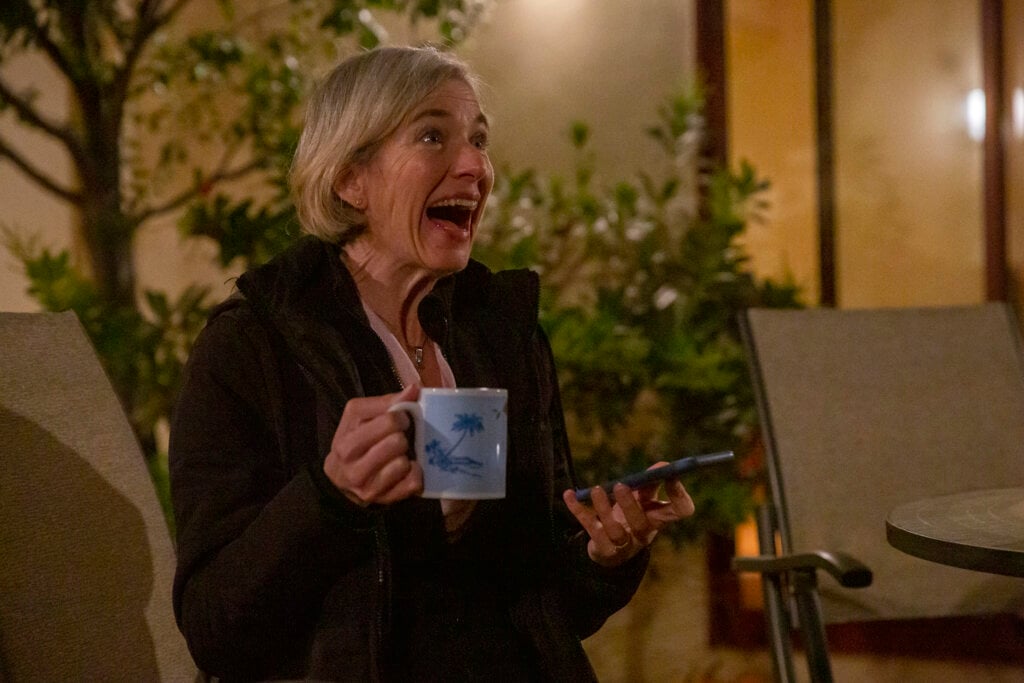

Born in 1964 in Washington, D.C., Jennifer Doudna moved to the far less populated town of Hilo, Hawaii when she was seven. Doudna spent her childhood hiking and exploring lava-flow caves. However, despite its beautiful surroundings, Hilo was not an idyllic place for haole (Hawaiian slang for a non-native people), and at school Doudna often felt like an outsider.
She sought solace in books that spurred her to learn more about the world around her and how to fit in. In sixth grade, her father gave her a copy of The Double Helix by James Watson. The scientific detective story explaining how DNA was discovered was like nothing she had read in her school textbooks. “I was captivated by how scientists, working collaboratively, were able to meticulously piece together and solve what had been one of biology’s most elusive puzzles,” she said. In time, she made friends and developed a love of maths and the process of discovery in chemistry lessons.
“Learning about the role played by Rosalind Franklin, the so-called “Dark Lady of DNA,” whose X-ray crystallography images exposed DNA’s helical shape, it struck me then for the first time that a woman could be a great scientist.”
Jennifer Doudna
Doudna enrolled at Pomona College near Los Angeles, California, to study chemistry. She initially struggled to settle in and questioned whether she was suited to science, but was won over when she discovered organic chemistry.
Her joy for discovery continued at Harvard Medical School. She was often the first to arrive in the lab of her graduate adviser, Jack W. Szostak, who would later be awarded the Nobel Prize in Physiology or Medicine. Encouraged by Szostak, Doudna decided to focus on the role RNA (ribonucleic acid) played in the origin of life on Earth and began to explore whether molecules of DNA’s less well-known cousin are able to replicate themselves.
At the time, turning away from DNA was a bold and risky move. Her first paper was rejected for publication, leaving her crushed, but the results of a study demonstrating the ability of an RNA molecule to splice together a copy of itself were published in 1989.
Doudna moved to the lab of another Nobel Prize laureate, Thomas Cech, at the University of Colorado Boulder, where she set out to solve one of biology’s toughest challenges: determining the 3D atomic structure of RNA molecules. They continued their work at Yale University, publishing a paper that described a large-structured ‘ribozyme’ – a self-replicating RNA enzyme – for the first time. “Seeing that structure was an exciting moment. I had chills down my spine,” she said.
She continued studying the structures and functions of RNA molecules at the University of California, Berkeley in a bid to understand the defence mechanisms of microbes. There Doudna learned about a type of bacteria with a repeating sequence called “clustered regularly interspaced short palindromic repeats,” or CRISPR in its genome. It enabled the bacteria to remember the identity of a previous viral attack and defend itself against it. Intrigued by the mechanism, she investigated how the process occurs and discovered proteins that act like chemical cleavers to cut out unwanted DNA.
In 2011, at a conference in Puerto Rico, Doudna met French microbiologist Emmanuelle Charpentier, who was also working with CRISPR sequences. Just one year later, the two of them together developed a method for high-precision genome editing.
“We had a sense in those very early days, in my work with Emmanuelle, that … we were onto something big, but I think we had no idea how big.”
Jennifer Doudna


They used the immune system of the Streptococcus pyogenes bacterium, which infects millions of people every year. The collaboration first revealed a simple and efficient weapon that streptococci developed as a protection from viruses – cutting their DNA up with a type of genetic scissors.
In a series of crucial experiments, the two scientists set out to simplify and reprogram the genetic scissors. In their natural form, the scissors recognise DNA from viruses, but Charpentier and Doudna proved that they could be controlled so that they can cut any DNA molecule at a predetermined site. Where the DNA is cut it is then easy to introduce new genetic information and thereby rewrite the code of life. This was the birth of the discovery known as CRISPR/Cas9 genetic scissors.

“It was an incredible, precious time of pure joy to discover that bacteria had found a way to program a warrior protein to seek and destroy viral DNA, and fortunate, even miraculous, that we could repurpose this fundamental property for an entirely different use.”
Jennifer Doudna
In 2019, Victoria Gray became the first person to be have her genome edited with CRISPR, which successfully cured her of the sickle-cell genetic disease. The following year, in 2020, Doudna was awarded the Nobel Prize in Chemistry together with Charpentier for their work on genome editing. The CRISPR/Cas9 genetic scissors have proved to be one of gene technology’s sharpest tools, bringing new opportunities for plant breeding and pioneering cancer therapies.
“It … amazes me every day to see the extraordinary work that’s going on now globally with this technology,” Doudna said.
She founded the Innovative Genomics Institute (IGI), whose researchers collaborate with doctors to create custom life-saving medicines using CRISPR-based gene editing, which Doudna hopes will one day be a mainstream approach to treatment.
Doudna is also a central leader in public discussion of the ethical implications of genome editing for human biology and societies to ensure the powerful technology is not misused.
“I never imagined, at the beginning of my career, how my scientific pursuits would lead me to friendships and collaborations with people around the world,” Doudna said.

