George Porter
Biographical
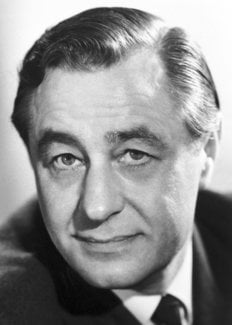
George Porter was born in the West Riding of Yorkshire on the 6th December 1920. He married Stella Jean Brooke on the 25th August 1949 and they have two sons, John and Andrew.
His first education was at local primary and grammar schools and in 1938 he went, as Ackroyd Scholar, to Leeds University. His interest in physical chemistry and chemical kinetics grew during his final year there and was inspired to a large extent by the teaching of M.G. Evans. During his final honours year he took a special course in radio physics and became, later in the year, an Officer in the Royal Naval Volunteer Reserve Special Branch, concerned with radar. The training which he received in electronics and pulse techniques was to prove useful later in suggesting new approaches to chemical problems.
Early in 1945, he went to Cambridge to work as a postgraduate research student with Professor R.G.W. Norrish. His first problem involved the study, by flow techniques, of free radicals produced in gaseous photochemical reactions. The idea of using short pulses of light, of shorter duration than the lifetime of the free radicals, occurred to him about a year later. He began the construction of an apparatus for this purpose in the early summer of 1947 and, together with Norrish, applied this to the study of gaseous free radicals and to combustion. Their collaboration continued until 1954 when Porter left Cambridge.
During 1949 there was an exciting period when the method was applied to a wide variety of gaseous substances. Porter still remembers the first appearance of the absorption spectra of new, transient substances in time resolved sequence, as they gradually appeared under the safelight of a dark room, as one of the most rewarding experiences of his life.
His subsequent work has been mainly concerned with showing how the flash-photolysis method can be extended and applied to many diverse problems of physics, chemistry and biology. He has made contributions to other techniques, particularly that of radical trapping and matrix stabilisation.
After a short period at the British Rayon Research Association, where he applied the new methods to practical problems of dye fading and the phototendering of fabrics, he went, in 1955, to the University of Sheffield, as Professor of Physical Chemistry, and later as Head of Department and Firth Professor. In 1966 he became Director and Fullerian Professor of Chemistry at the Royal Institution in succession to Sir Lawrence Bragg. He is Director of the Davy Faraday Research Laboratory of the Royal Institution. Here his research group is applying flash photolysis to the problem of photosynthesis and is extending these techniques into the nanosecond region and beyond.
Porter became a fellow of Emmanuel College, Cambridge, in 1952, and an honorary fellow in 1967. He was elected a Fellow of the Royal Society in 1960 and awarded the Davy Medal in 1971. He received the Corday-Morgan Medal of the Chemical Society in 1955, and was Tilden Lecturer of the Chemical Society in 1958 and Liversidge Lecturer in 1969. He has been President of the Chemical Society since 1970. He is Visiting Professor of University College London since 1967, and Honorary Professor of the University of Kent at Canterbury since 1966.
Porter holds Honorary D.Sc.’s from the following Universities: 1968, Utah, Salt Lake City (U.S.A.), Sheffield; 1970, East Anglia, Surrey and Durham; 1971, Leeds, Leicester, Heriot-Watt and City University. He is an honorary member of the New York Academy of Sciences (1968) and of the Academy “Leopoldina”. He is President of the Comité International de Photobiologie since 1968. He was Knighted in January 1972.
He is interested in communication between scientists of different disciplines and between the scientist and the non-scientist, and has contributed to many films and television programmes. His main recreation is sailing.
This autobiography/biography was written at the time of the award and first published in the book series Les Prix Nobel. It was later edited and republished in Nobel Lectures. To cite this document, always state the source as shown above.
Lord Porter died on August 31, 2002.
Nobel Prizes and laureates
Six prizes were awarded for achievements that have conferred the greatest benefit to humankind. The 14 laureates' work and discoveries range from quantum tunnelling to promoting democratic rights.
See them all presented here.