Yuan T. Lee
Biographical
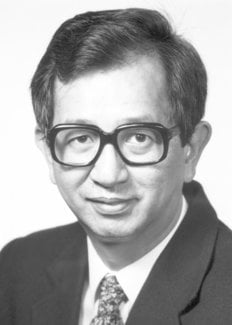
Yuan Tseh Lee was born on November 19, 1936 in Hsinchu, Taiwan. His father is an accomplished artist and his mother a school teacher.
He started his early education while Taiwan was under Japanese occupation – a result of a war between China and Japan in 1894. His elementary education was disrupted soon after it started during World War II while the city populace was relocated to the mountains to avoid the daily bombing by the Allies. It was not until after the war when Taiwan was returned to China that he was able to attend school normally as a third year student in grade school.
His elementary and secondary education in Hsinchu was rather colorful and full of fun. In elementary school, he was the second baseman on the school’s baseball team as well as a member of the ping-pong team which won the little league championship in Taiwan. In high school he played on the tennis team besides playing trombone in the marching band.
Besides his interest in sports during this time, he was also an avid and serious reader of a wide variety of books covering science, literature, and social science. The biography of Madame Curie made a strong impact on him at a young age. It was Madame Curie’s beautiful life as a wonderful human being, her dedication toward science, her selflessness, idealism that made him decide to be a scientist.
In 1955, with his excellent academic performance in high school, Lee was admitted to the National Taiwan University without having to take the entrance examination, a practice the Universities took to admit the best students. By the end of his freshman year he had decided chemistry was to be his chosen field. Although the facilities in the Taiwan University were less than ideal, the free and exciting atmosphere, the dedication of some professors, and the camaraderie among fellow students in a way made up for it. He worked under Professor Hua-sheng Cheng on his B.S. thesis which was on the separation of Sr and Ba using the paper electrophoresis method.
After graduation in 1959, he went on to the National Tsinghua University to do his graduate work. He received his Master’s degree on the studies of the natural radioisotopes contained in Hukutolite, a mineral of hot spring sediment under Professor H. Hamaguchi’s guidance. After receiving his M.S. he stayed on at Tsinghua University as a research assistant of Professor C.H. Wong and carried out the x-ray structure determination of tricyclopentadienyl samarium.
He entered the University of California at Berkeley as a graduate student in 1962. He worked under the late Professor Bruce Mahan for his thesis research on chemi-ionization processes of electronically excited alkali atoms. During his graduate student years, he developed an interest in ion-molecule reactions and the dynamics of molecular scattering, especially the crossed molecular beam studies of reaction dynamics.
Upon receiving his Ph.D. degree in 1965, he stayed on in Mahan’s group and started to work on ion molecule reactive scattering experiments with Ron Gentry using ion beam techniques measuring energy and angular distributions. In a period of about a year he learned the art of designing and constructing a very powerful scattering apparatus and carried out successful experiments on N2+ + H2 –> N2H+ + H and obtained a complete product distribution contour map, a remarkable accomplishment at that time.
In February 1967, he joined Professor Dudley Herschbach at Harvard University as a post-doctoral fellow. He spent half his time working with Robert Gordon on the reactions of hydrogen atoms and diatomic alkali molecules and the other half of his time on the construction of a universal crossed molecular beams apparatus with Doug McDonald and Pierre LeBreton. Time was certainly ripe to move the crossed molecular beams method beyond the alkali age. With tremendous effort and valuable assistance from the machine shop foreman, George Pisiello, the machine was completed in ten months and the first successful non alkali neutral beam experiment on Cl + Br2 –> BrCl + Br was carried out in late 1967.
He accepted the position as an assistant professor in the Department of Chemistry and the James Franck Institute of the University of Chicago in October 1968. There he started an illustrious academic career. His further development as a creative scientist and his construction of a new generation state-of-the-art crossed molecular beams apparatus enabled him to carry out numerous exciting and pioneering experiments with his students. He was promoted to associate professor in October 1971 and professor in January 1973.
In 1974, he returned to Berkeley as professor of chemistry and principal investigator at the Lawrence Berkeley Laboratory of the University of California. He became an American citizen the same year.
In the ensuing years, his scientific efforts blossomed and the scope expanded. His world leading laboratory now contains seven very sophisticated molecular beams apparati which were specially designed to pursue problems associated with reaction dynamics, photochemical processes, and molecular spectroscopy. His laboratory has always attracted bright scientists from all over the world and they always seem to enjoy working together. He takes great pride in the fact that more than fifteen of his former associates are serving as professors in major universities, and many others are making great contributions at the national laboratories and in the private sector.
Lee and his wife, Bernice Wu, whom he first met in elementary school have two sons, Ted (born in 1963), Sidney (born in 1966) and a daughter, Charlotte (born in 1969).
| Among some of the awards and recognitions he has received over the years include: |
| Alfred P. Sloan Fellow, 1969-1971 |
| Camille and Henry Dreyfus Foundation Teacher Scholar Grant, Recipient 1971-1974. |
| Fellow, American Academy of Arts and Science, 1975. |
| Fellow, American Physical Society, 1976. |
| John Simon Guggenheim Fellow, 1976-1977. |
| Member, National Academy of Sciences, 1979. |
| Member, Academia Sinica, Taiwan, China, 1980. |
| Honorary Professor, Institute of Chemistry, Chinese Academy of Science, Beijing, China, 1980. |
| Honorary Professor, Fudan University, Shanghai, China, 1980. |
| Miller Professorship, University of California, Berkeley, California, 1981-1982. |
| Ernest O. Lawrence Award, U.S. Department of Energy, 1981. |
| Sherman Fairchild Distinguished Scholar, California Institute of Technology, 1983. |
| Harrison Howe Award, Rochester Section, American Chemical Society, 1983. |
| Peter Debye Award of Physical Chemistry, American Chemical Society, 1986. |
| National Medal of Science, 1986. |
| Honorary Professor, Chinese University of Science and Technology, Hofei, Anhuei, China, 1986. |
| Honorary Doctor of Science Degree, University of Waterloo, 1986. |
This autobiography/biography was written at the time of the award and later published in the book series Les Prix Nobel/ Nobel Lectures/The Nobel Prizes. The information is sometimes updated with an addendum submitted by the Laureate.
Addendum, March 2006
After receiving the Nobel Prize in 1986, Yuan Tseh Lee continued his research in chemical dynamics. Aside from research on reactive scatterings, his research group has made major contributions in the elucidation of various photochemical processes as well as in the determination of the structure of various protonated molecular clusters by obtaining infrared spectra. Many new instruments were developed for these purposes. He also directed much of his attention to the advancement of international scientific developments and to the promotion of general public affairs. As a professor of chemistry at the University of California at Berkeley from 1986 to 1993, Lee on different occasions served as Co-Chair of the Chancellor’s Asian-American Affairs Committee at UC Berkeley, Member of the California Council on Science and Technology, and Member of the California Institute of Technology Board of Trustees. At the national level, he served on the Secretary of Energy Advisory Board and the Welch Foundation Science Advisory Board.
In January 1994, after 32 years of research and teaching in the U.S., he took the important step of returning to his home country, Taiwan, to serve as President of Academia Sinica. Originally founded on the Chinese mainland in 1928, Academia Sinica has long been the most prominent research institution in Taiwan; at present, it has over 30 research institutes, covering the humanities, social sciences as well as the physical and biological sciences. During his tenure as President of Academia Sinica, Lee has worked hard to improve the quality of research in that institution. He believes the research conducted at Academia Sinica in several fields, including his own, now rivals the best works done in other parts of the world.
Lee has also taken an active role in promoting scientific and cultural developments in Taiwan. From 1994 to 1996, he was the chair of the national committee for educational reform. From 1996 to 2000, he led a national organization for community empowerment in Taiwan. From 2000 to 2002, he chaired a nonpartisan group that gave advice on matters concerning cross-strait relations (i.e. relations between Taiwan and China) to President Chen Shui-bian, whose electoral victory in 2000 marked the first change in the ruling party since World War II. Since his return to Taiwan, Lee has established several new foundations and aided existing organizations that support educational and research activities. He has also traveled extensively around the world to attend scientific conferences and hold lectures.
Lee is scheduled to retire from his position as President of Academia Sinica in October 2006. Thereafter, he plans to work at the Institute of Atomic and Molecular Sciences and the Genomics Research Center, both at Academia Sinica. So far he has received 32 honorary doctoral degrees from universities around the world.
Addendum, January 2018
Yuan Tseh Lee is President Emeritus at the Institute of Atomic and Molecular Sciences Academia Sinica, Taiwan.
Born in Taiwan in 1936, he received his B.S. degree from Taiwan University in 1959 and Doctorate from University of California, Berkeley in 1965. He joined Dudley Herschbach at Harvard University as a postdoctoral fellow in 1967 and has had faculty appointments at University of Chicago and University of California, Berkeley. He was University Professor and Principal Investigator at University of California, Berkeley and the Lawrence Berkeley Laboratory before he became President of Academia Sinica (1994-2006). From 2011 to 2014 he served as President of the International Council for Science (ICSU).
He has received numerous awards and honours, including the 1986 Nobel Prize in Chemistry for his contributions concerning the dynamics of chemical elementary processes.
Copyright © The Nobel Foundation 2006Nobel Prizes and laureates
Six prizes were awarded for achievements that have conferred the greatest benefit to humankind. The 14 laureates' work and discoveries range from quantum tunnelling to promoting democratic rights.
See them all presented here.

