Luigi Pirandello
Biographical
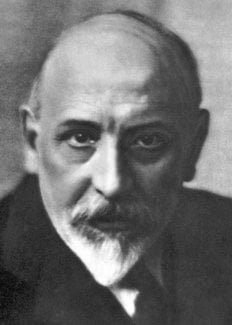
Luigi Pirandello(1867-1936) was born in Girgenti, Sicily. He studied philology at Rome and at Bonn and wrote a dissertation on the dialect of his native town (1891). From 1897 to 1922 he was professor of aesthetics and stylistics at the Real Istituto di Magistere Femminile at Rome. Pirandello’s work is impressive by its sheer volume. He wrote a great number of novellas which were collected under the title Novelle per un anno (15 vols., 1922-37). Of his six novels the best known are Il fu Mattia Pascal (1904) [The Late Mattia Pascal], I vecchi e i giovani (1913) [The Old and the Young], Si gira (1916) | [Shoot!], and Uno, nessuno e centomila (1926) [One, None, and a Hundred thousand].
But Pirandello’s greatest achievement is in his plays. He wrote a large number of dramas which were published, between 1918 and 1935, under the collective title of Maschere nude [Naked Masks]. The title is programmatic. Pirandello is always preoccupied with the problem of identity. The self exists to him only in relation to others; it consists of changing facets that hide an inscrutable abyss. In a play like Cosí é (se vi pare) (1918) [Right You Are (If You Think You Are)], two people hold contradictory notions about the identity of a third person. The protagonist in Vestire gli ignudi (1923) [To Clothe the Naked] tries to establish her individuality by assuming various identities, which are successively stripped from her; she gradually realizes her true position in the social order and in the end dies «naked», without a social mask, in both her own and her friends’ eyes. Similarly in Enrico IV (1922) [Henry IV] a man supposedly mad imagines that he is a medieval emperor, and his imagination and reality are strangely confused. The conflict between illusion and reality is central in La vita che ti diedi (1924) [The Life I Gave You] in which Anna’s long-lost son returns home and contradicts her mental conception of him. However, his death resolves Anna’s conflict; she clings to illusion rather than to reality. The analysis and dissolution of a unified self are carried to an extreme in Sei personaggi in cerca d’autore (1921) [Six Characters in Search of An Author] where the stage itself, the symbol of appearance versus reality, becomes the setting of the play.
The attitudes expressed in L’Umorismo [Humour], an early essay (1908), are fundamental to all of Pirandello’s plays. His characters attempt to fulfil their self-seeking roles and are defeated by life itself which, always changing, enables them to see their perversity. This is Pirandello’s humour, an irony which arises from the contradictions inherent in life.
This autobiography/biography was written at the time of the award and first published in the book series Les Prix Nobel. It was later edited and republished in Nobel Lectures. To cite this document, always state the source as shown above.
Luigi Pirandello died on December 10, 1936.
The Nobel Foundation's copyright has expired.Nobel Prizes and laureates
Six prizes were awarded for achievements that have conferred the greatest benefit to humankind. The 14 laureates' work and discoveries range from quantum tunnelling to promoting democratic rights.
See them all presented here.

