August Krogh
Biographical
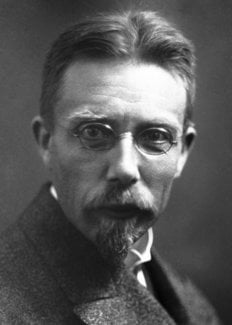
Schack August Steenberg Krogh was born at Grenaa, Jutland, Denmark, on November 15, 1874. He was the son of Viggo Krogh, shipbuilder, and Marie, née Drechmann. Even as a schoolboy August was much interested in the natural sciences and spent a great deal of his time in experimentation. He was greatly stimulated by his teacher and friend William Sörensen, D. Sc., who especially advised him to take interest in physiology. After having entered the University of Copenhagen in 1893 he started to study medicine but soon devoted himself to zoology. In 1897 he began to work in the Laboratory of Medical Physiology under the famous Professor Christian Bohr. When he had passed his examination in zoology, he became Bohr’s assistant. In 1908 an Associate Professorship in Zoophysiology was created for Krogh at the University of Copenhagen, and eight years later this was changed to an ordinary chair, which Krogh held till 1945, when he retired. His work went on, however, in the private laboratory at Gjentofte, erected for him with the aid of the Carlsberg and the Scandinavian Insulin Foundations.
Krogh’s scientific work embraces a number of different fields. As a young student he started (1896) in his private room some experiments on the hydrostatic mechanism of the Corethra larva, the results of which were not published, however, until 1911. In this connection he worked out methods for microscopical analyses of the gas contained in the air bladders of the larvae and was able to prove that these organs functioned like the diving tanks of a submarine, their content being regulated until equilibrium with the surrounding water was restored. In 1902 Krogh took part in an expedition to Disko, North Greenland, where he studied the CO2 tension and the oxygen content in the water of springs, streams and the sea. This led to important results about the role of the oceans in the regulation of the CO2 of the atmosphere and also set out the principles of tonometric measurement of dissolved gases which he later applied to physiological problems (1904).
As Bohr’s assistant Krogh became interested in problems connected with the gas exchange of the living organism. At the age of 32 years (1906) he won the Seegen prize of the Austrian Academy of Sciences for a paper on the expiration of free nitrogen from the body. Very careful experiments with chrysalides, eggs and mice showed an extremely slight production of gaseous nitrogen which might be accounted for as being due to excretion of ammonia or, in the case of eggs, as the setting free of physically dissolved nitrogen from the body.
Krogh’s dissertation (1903) contained a study of the gas exchange in the frog. He found that, whereas the skin respiration was relatively constant, great variations occurred with regard to lung respiration. This part of the gas exchange was influenced from the vagi. Krogh interpreted this result as another example of the oxygen secretion that had been assumed by Bohr to take place in the lungs. However, he soon began to doubt the correctness of this conclusion – the observations might be explained by a vasomotor action of the vagi – as well as the whole doctrine of gas secretion in the lungs. Partly in collaboration with his wife, Dr. Marie Krogh, he subjected the whole question of the nature of the gas exchange in the lungs to a new examination. For this purpose he constructed his well-known microtonometer, where the tension equalization with blood takes place against an air bubble of about 0.01 ml. The relative surface therefore being very great, equilibrium is quickly obtained, and, by the micromethods for gas analysis developed by Krogh, the final composition of the air bubble could easily be ascertained. The gas tension of the circulating arterial blood was thus determined and compared to that in the lung alveoli as obtained at the end of expiration. It turned out that the oxygen tension was always higher in the alveolar air than in the arterial blood, so that diffusion alone was sufficient to explain the gas exchange (1910). These fundamental experiments were thus opposed to the views of Bohr and of J. S. Haldane, but they were later confirmed and extended by J. Barcroft in Cambridge and others and are now generally accepted.
The results obtained shed new light on the whole complex of mechanisms that enable the organism to answer the varying «call for oxygen». A number of classical problems such as the binding of gases in the blood, their transport by the blood flow and the exchange of oxygen and CO2 in the tissues attracted Krogh’s attention, and to all of these he has made important contributions.
In collaboration with Bohr and K. A. Hasselbalch the influence of the CO2 tension on the oxyhemoglobin dissociation curve of the blood was demonstrated. This investigation, which is of fundamental importance for the modern conception of the chemical combinations of the respiratory gases in the blood, was made possible by the technique developed by Krogh. It became extended by J. Christiansen, C. G. Douglas and J. S. Haldane’s finding that the oxygen tension also influences the CO2 curve of the blood (1914).
Together with J. Lindhard, Krogh, adopted an idea that had been introduced by A. Bornstein and developed their nitrous oxide method for the determination of the general blood flow, which has been of great importance for the further development in this field. A considerable increase occurred during muscular work. This was attributed to variations in the filling of the heart during diastole. The supply of venous blood must therefore be variable within wide limits and must during rest almost always be inadequate to fill the ventricles. This conclusion was strengthened by Krogh in an analysis of the underlying mechanism 1912), which also led to the conclusion that the portal system acts as a general regulator of the pressure in the central veins and thereby on the output of the heart. Another important result of the determinations of the blood flow was the demonstration of an increased utilization of the oxygen of the blood during muscular work. Since the oxygen pressure of the resting muscles was, as found by several authors, rather low, the higher utilization must be explained by an increase in the diffusion surface. Krogh came to this conclusion after he had made experiments on the diffusion capacity of animal tissues, and these considerations were the reason for his famous studies of the capillaries during rest and work. As is well known, he thus arrived at the conclusion that during muscular work new capillaries which have been closed, are opened, thus enlarging the surface from which the oxygen can diffuse. These investigations resulted in the Nobel Prize in 1920. They were greatly extended by Krogh in the following years, as shown in his book The Anatomy and Physiology of the Capillaries (1922) and several further publications. Other comprehensive investigations on heavy muscular work were performed under the auspices of the League of Nations by Krogh and his school (1934), when a number of important problems were dealt with, such as heat regulation, respiratory metabolism, influence of diet on the capacity for work, blood sugar, lactic acid, training and fatigue, kidney function.
In insects, as well as in vertebrates under standard conditions, Krogh demonstrated a regular and constant influence on metabolism of the surrounding temperature which could be expressed by Arrhenius’ formula. He also investigated the effect of certain factors on the development in different animals. His rich experience with regard to metabolism Krogh summarized in the valuable monograph The Respiratory Exchange in Animals and Man (1916). Later on (1920) with several collaborators he made another important contribution to this series of problems by establishing the fact that when fat is catabolized for muscular work a loss of 11 % of the heat of combustion takes place, owing to the waste when fats are converted to carbohydrates.
The work on the gas exchange during respiration was not confined to vertebrates; Krogh also took up the analogous question of the mode of function of the tracheal system of insects. Analyses of the air from the tracheal tubes of the common grasshopper showed comparatively low oxygen values while the CO2 output was relatively small – probably it is given out directly through the body surface to a great extent, whereas oxygen is taken up only through the walls of the tracheae. A mechanical ventilation of the tracheae is made difficult by their structure – in many cases no respiratory movements occur – but experiments by Krogh (1920) showed that gas diffusion alone is sufficient to explain the oxygen uptake. In the course of his last unpublished studies on locusts Krogh found that during flight, when there is an enormously increased oxygen uptake in the wing muscles, a special arrangement enables a mechanical ventilation of their tracheae to occur. In his book The Comparative Physiology of Respiratory Mechanisms (1940) Krogh has given a fascinating and lucid description of many different ways in which the demand for oxygen is met in the animal kingdom.
For several years Krogh and his school have been studying the exchange of water and inorganic ions through the surface of living cells and membranes, partly with the aid of isotopes as indicators. The many facts observed in this work have been reviewed by Krogh in his monograph Osmotic Regulations in Aquatic Animals (1937) and in a Croonian lecture (1946).
Mention should also be made of his numerous additions to physiological techniques. His recording spirometer is used in many hospitals, his bicycle ergometer is an appreciated working machine, his precision pipettes, respiration apparatus, improved methods for gas analysis and many other inventions bear witness to his constructive skill.
This brief survey is far from complete and is only intended to cover the main lines of Krogh’s scientific activity. It illustrates not only his broad interests and unusual ability to take up fundamental problems and derive essential results everywhere. By his own work he has emphasized the quantitative aspect in physiological research, through his numerous pupils he has promoted such ideas into different fields of medicine.
Krogh was given Honorary Doctorates by the Universities of Edinburgh, Budapest, Lund, Harvard, Göttingen, Oslo, and Oxford. He was made a member of the Academy of Sciences, Denmark (1916) and became foreign member of many other academies and learned societies, among them The Royal Society, London (1937). The same year, he was awarded the Baly medal of the Royal College of Physicians, London.
In 1905, Krogh married Birte Marie Jörgensen, a medical student, who obtained her M. D. degree on an important paper, entitled Luftdiffusionen gennem Menneskets Lunger, 1914 (The Diffusion of Gases through the Lungs of Man, J. Physiol., 1915) in a field where she had been engaged with her husband. She died in 1943. There were four children, one son who became Prosector of Anatomy at the University of Aarhus – a post he held until his untimely death – and three daughters. The youngest of them is a well-known physiologist in U.S.A., having above all performed important researches in zoophysiology, mainly in collaboration with her former husband, K. Schmidt-Nielsen.
Dr Krogh died in Copenhagen on September 13, 1949.
This autobiography/biography was written at the time of the award and first published in the book series Les Prix Nobel. It was later edited and republished in Nobel Lectures. To cite this document, always state the source as shown above.
The Nobel Foundation's copyright has expired.Nobel Prizes and laureates
Six prizes were awarded for achievements that have conferred the greatest benefit to humankind. The 14 laureates' work and discoveries range from quantum tunnelling to promoting democratic rights.
See them all presented here.