Otto Loewi
Biographical
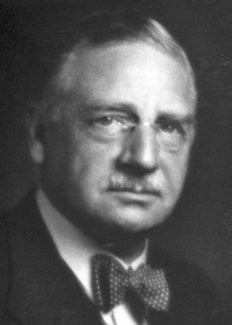
Otto Loewi was born on June 3, 1873, in Frankfurt-am-Main, Germany, the son of Jacob Loewi, a merchant, and Anna Willstätter.
After having attended the humanistic Gymnasium (grammar school) in his native town, he entered in 1891 the Universities of Munich and Strassburg (at that time part of Germany) as a medical student. Apart from his attendance at the inspiring anatomy courses of Gustav Schwalbe, however, he seldom went to the medical lectures, being more inclined towards those held at the philosophical faculty. Only in the summer of 1893 did he seriously prepare for his «Physicum», the first medical examination, which he just managed to pass. It was not until the autumn of 1894 that his indifference to medicine suddenly gave way to almost enthusiastic interest. In 1896 he took his doctor’s degree at Strassburg University, his thesis dealing with a subject suggested by Professor Oswald Schmiedeberg, the famous «Father of Pharmacology». Also responsible for his medical education were: Bernhard Naunyn, distinguished clinician and experimental pathologist, Oscar Minkowski, and Adolph Magnus-Levy.
After his graduation he followed a course in inorganic analytical chemistry with Martin Freund, in Frankfurt, and afterwards spent a few months working in the biochemical institute of Franz Hofmeister in Strassburg. During 1897-1898 he was assistant to Carl von Noorden, clinician at the City Hospital in Frankfurt. Soon, however, after seeing the high mortality in countless cases of far-advanced tuberculosis and pneumonia, left without any treatment because of lack of therapy, he decided to drop his intention to become a clinician and instead to carry out research in basic medical science, in particular pharmacology. In 1898 he succeeded in becoming an assistant of Professor Hans Horst Meyer, the renowned pharmacologist at the University of Marburg-an-der-Lahn, from 1904 Professor of Pharmacology in Vienna. In 1905 Loewi became Associate Professor at Meyer’s laboratory, and in 1909 he was appointed to the Chair of Pharmacology in Graz.
During his first years in Marburg, Loewi’s studies were in the field of metabolism. As a result of his work on the action of phlorhizin, a glucoside provoking glycosuria, and another one on nuclein metabolism in man, he was appointed «Privatdozent» (Lecturer) in 1900. Two years later he published his paper «Über Eiweiss-synthese im Tierkörper» (On protein synthesis in the animal body), proving that animals are able to rebuild their proteins from their degradation products, the amino acids – an essential discovery with regard to nutrition.
That same year he also published the first part of a series of papers about experimental contributions to the physiology and pharmacology of kidney function.
In 1902 Loewi also spent some months in Starling’s laboratory, in London, where he also worked with W. M. Bayliss, Starling’s brother-in-law. And it was in this laboratory that he first met his lifelong friend Henry Dale, who was later to share the Nobel Prize with him.
After his return to Marburg in 1902 Loewi continued to study the function of the kidney and the mechanism of the action of diuretics. On his arrival in Vienna in 1905 he again took up the problems connected with carbohydrate metabolism. He proved thereby that preference for fructose rather than glucose is not only characteristic of pancreatectomized dogs, as earlier demonstrated by Minkowski, but also of dogs deprived of their glycogen by other means, e.g. by phosphorus poisoning. He also proved that the heart in contrast to the liver, cannot utilize fructose. And finally that epinephrine injections into rabbits completely depleted of their liver glycogen by starvation brought the glycogen back to almost normal values in spite of continued starvation. His other investigations in Vienna, done jointly with Alfred Fröhlich, dealt with the vegetative nervous system (stimulated by the discovery made by Gaskell and Langley of the existence of two divisions of this nervous system, and also as a result of his coming into contact with T.R. Elliott in Cambridge, where the latter was conducting his final experiments on the action of epinephrine). His classic paper in this field was published in 1905, the best-known result of these studies being the observation that small doses of cocaine potentiate the responses of sympathetically innervated organs to epinephrine and sympathetic nerve stimulation.
It was as Professor in Graz that Loewi cultivated his gifts as a lecturer. A number of his associates during this period came from the U.S.A. Loewi continued his studies of carbohydrate metabolism, investigating among other things the conditions responsible for epinephrine hyperglycaemia.
In 1921 Loewi discovered the chemical transmission of nerve impulses the research of which was greatly developed by him and his co-workers in the years following, culminating ultimately in his demonstration that the parasympathetic substance («Vagusstoff») is acetylcholine and that a substance closely related to adrenaline played a corresponding role at the sympathetic nerve endings. It was for these researches that he received the Nobel Prize in 1936, jointly with Sir Henry Dale. This and other discoveries in the fields of chemistry, physics, and pharmacology have since then led to a complete renewal of the concepts of the sympathetic nervous system.
When the Germans invaded Austria in 1938, Loewi was forced to leave his homeland. (But only after he had been compelled to instruct the Swedish bank in Stockholm to transfer the Nobel Prize money to a prescribed Nazi-controlled bank.)
After spending some time as Visiting Professor at the Université Libre in Brussels, and at the Nuffield Institute, Oxford, Loewi accepted an invitation to join the College of Medicine, New York University, as Research Professor of Pharmacology, and to work in George Wallace’s Laboratory. He arrived in the United States in 1940. In America Loewi came into close contact with many outstanding biologists from all over the world and here he found much inspiration for his work.
Loewi held honorary degrees from New York University, Yale University, and from the Universities of Graz and Frankfurt. He was recipient of the Physiology Prize of the Royal Academy of Sciences of Bologna, of the Lieben Prize of the Academy of Vienna, and of the Cameron Prize of the University of Edinburgh (1944). He was an Honorary Member of the Physiological Society (London), of the Harvey Society (New York), and of the Società Italiana di Biologia Sperimentale; he was also Corresponding Member of the Society of Physicians in Vienna, of the Viennese Biological Society, and of the Society for the Advancement of Natural Sciences in Marburg-an-der-Lahn; and was Member of the Deutsche Akademie der Naturforscher Leopoldina, in Halle. In 1954 he was appointed Foreign Member of the Royal Society.
Since his schooldays, Loewi showed keen interest in the humanities. He always enjoyed music, architecture, and painting, and in his younger years seldom missed an opportunity to visit museums and exhibitions.
In 1908 he married Guida Goldschmiedt, daughter of Dr. Guido Goldschmiedt, then Professor of Chemistry in Prague, and later in Vienna. They had three sons, Hans, Victor, Guido; and one daughter, Anna. Professor Loewi became an American citizen in 1946. He died December 25, 1961.
This autobiography/biography was written at the time of the award and first published in the book series Les Prix Nobel. It was later edited and republished in Nobel Lectures. To cite this document, always state the source as shown above.
Nobel Prizes and laureates
Six prizes were awarded for achievements that have conferred the greatest benefit to humankind. The 14 laureates' work and discoveries range from quantum tunnelling to promoting democratic rights.
See them all presented here.