Michael S. Brown
Biographical
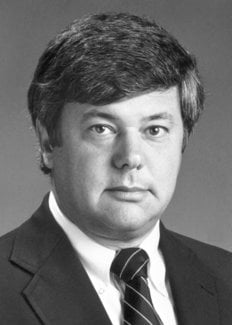
Michael S. Brown was born on April 13, 1941, in Brooklyn, New York, the eldest child of Harvey Brown, a textile salesman, and Evelyn Brown, a housewife. His sister Susan was born three years later. When Brown was 11 years old the family moved to Elkins Park, Pennsylvania, a suburb of Philadelphia, where Brown attended Cheltenham High School. An amateur radio operating license obtained at age 13 led to a life-long fascination with science. A serious interest in journalism also developed early. These two passions, science and writing, have remained paramount ever since.
Brown graduated in 1962 from the College of Arts and Sciences of the University of Pennsylvania, with chemistry as his major subject. He spent most of his time at the headquarters of the student newspaper, the Daily Pennsylvanian, where he served as features editor and briefly as editor-in-chief. In 1966 Brown received his M.D. degree from the University of Pennsylvania School of Medicine. In 1964 he married Alice Lapin, a companion from childhood. The next two years were spent as intern and resident in Internal Medicine at the Massachusetts General Hospital in Boston. Here Brown met Joseph L. Goldstein, a fellow intern, and the two established the friendship and mutual respect that led to their long-term scientific collaboration.
The years 1968-1971 were spent at the National Institutes of Health where Brown served initially as Clinical Associate in gastroenterology and hereditary disease. He then joined the Laboratory of Biochemistry, headed by Earl R. Stadtman, a pioneer in the disclosure of the mechanisms by which enzymes are regulated. Here Brown learned the techniques of enzymology and the fundamental principles of metabolic regulation. Brown made an important contribution to the Stadtman effort when he and a colleague discovered that a regulatory enzyme in the glutamine synthetic pathway was controlled by covalent attachment of a nucleotide, uridine.
In 1971 Brown joined the division of Gastroenterology in the Department of Internal Medicine at the University of Texas Southwestern Medical School in Dallas. His selection of Dallas was strongly motivated by his friendship with Goldstein, who had graduated from the Southwestern Medical School. In Dallas, Brown came under the influence of Donald W. Seldin, Chairman of the Department of Internal Medicine, an inspirational figure whose passion for medical science shaped the lives of a generation of Texas students.
Soon after his arrival in Dallas, Brown succeeded in solubilizing and partially purifying 3-hydroxy-3-methylglutaryl coenzyme A reductase, a previously enigmatic enzyme that catalyzes the rate-controlling enzyme in cholesterol biosynthesis. He and Goldstein had developed the hypothesis that abnormalities in the regulation of this enzyme were the cause of familial hypercholesterolemia, a genetic disease in which excess cholesterol accumulates in blood and tissues. The formal scientific collaboration with Goldstein began one year later, in 1972, just after Goldstein returned to Dallas from a postdoctoral fellowship in Seattle. The two young physicians initially maintained separate laboratories, but by 1974 the laboratories had been formally joined.
Throughout the decade of the 1970’s, when their scientific work was most intensive, Brown and Goldstein continued to function as academic physicians, each performing clinical attending rounds on the general medicine wards of Parkland Memorial Hospital for six to twelve weeks per year. They also conducted frequent teaching rounds in medical genetics. Their research efforts were aided by a number of talented senior collaborators and junior associates, as well as by frequent interchange with interested members of the Department of Internal Medicine.
In 1974, Brown was promoted to the rank of Associate Professor of Internal Medicine at the University of Texas Southwestern Medical School. He became a Professor in 1976. In 1977 he was appointed Paul J. Thomas Professor of Medicine and Genetics, and Director of the Center for Genetic Disease at the same institution. In 1985, Brown was appointed Regental Professor of the University of Texas.
Brown was elected to membership in the National Academy of Sciences of the United States in 1980. He is a member of the American Academy of Arts and Sciences, the American Society for Clinical Investigation, the Association of American Physicians, the American Society of Biological Chemists, and the American Society for Cell Biology. He is a Diplomate of the American Board of Internal Medicine and a Fellow of the American College of Physicians.
Brown received several student awards at the University of Pennsylvania, including a Proctor and Gamble Scholarship (1958-1962), the David L. Drabkin Prize in Biochemistry (1962), and the Frederick L. Packard Prize in Internal Medicine (1966). He was elected to Phi Beta Kappa and Alpha Omega Alpha. From 1974 to 1977 he was an Established Investigator of the American Heart Association. He has served on several review boards including the Molecular Cytology Study Section of the National Institutes of Health (1974-77) and the editorial boards of the Journal of Lipid Research, the Journal of Cell Biology, Arteriosclerosis and Science. He has been a member of the Board of Scientific Advisors of the Jane Coffin Childs Fund since 1980.
Brown received the honorary degree of Doctor of Science from the University of Chicago (1982) and Rensselaer Polytechnic Institute (1982). With his colleague, Goldstein, Brown has shared the following awards: Heinrich Wieland Prize for Research in Lipid Metabolism (1974); Pfizer Award for Enzyme Chemistry of the American Chemical Society (1976); Albion O. Bernstein Award of the New York State Medical Society (1977); Passano Award (1978); Lounsbery Award of the U.S. National Academy of Sciences (1979); Gairdner Foundation International Award (1981); New York Academy of Sciences Award in Biological and Medical Sciences (1981); Lita Annenberg Hazen Award (1982); V.D. Mattia Award of the Roche Institute of Molecular Biology (1984); Distinguished Research Award of the Association of American Medical Colleges (1984); Research Achievement Award of the American Heart Association (1984); Louisa Gross Horwitz Award (1984); 3M Life Sciences Award of the Federation of American Societies for Experimental Biology (1985); William Allan Award of the American Society of Human Genetics (1985); and the Albert D. Lasker Award in Basic Medical Research (1985).
Brown and Goldstein jointly delivered the following lectures: Harvey Lecture (1977); Christian A. Herter Lectures at Johns Hopkins University (1979); Harry Steenboch Lectures at the University of Wisconsin at Madison (1980); Smith, Kline, and French Lectures at the University of California, Berkeley (1981); Duff Memorial Lecture of the American Heart Association (1981); Doisy Lectures at the University of Illinois at Urbana-Champaign (1983); the first Pfizer Lecture in Honor of Konrad Bloch at Harvard University (1985); and the Berzelius Lecture at the Karolinska Institutet, Stockholm (1985).
Brown and his wife, Alice, have two daughters: Elizabeth (born in 1973) and Sara (born in 1977).
This autobiography/biography was written at the time of the award and later published in the book series Les Prix Nobel/ Nobel Lectures/The Nobel Prizes. The information is sometimes updated with an addendum submitted by the Laureate.
Nobel Prizes and laureates
Six prizes were awarded for achievements that have conferred the greatest benefit to humankind. The 14 laureates' work and discoveries range from quantum tunnelling to promoting democratic rights.
See them all presented here.