Max Born
Biographical
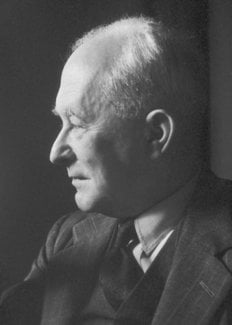
Max Born was born in Breslau on the 11th December, 1882, to Professor Gustav Born, anatomist and embryologist, and his wife Margarete, née Kauffmann, who was a member of a Silesian family of industrialists.
Max attended the König Wilhelm’s Gymnasium in Breslau and continued his studies at the Universities of Breslau (where the well-known mathematician Rosanes introduced him to matrix calculus), Heidelberg, Zurich (here he was deeply impressed by Hurwitz’s lectures on higher analysis), and Göttingen. In the latter seat of learning he read mathematics chiefly, sitting under Klein, Hilbert, Minkowski, and Runge, but also studied astronomy under Schwarzschild, and physics under Voigt. He was awarded the Prize of the Philosophical Faculty of the University of Göttingen for his work on the stability of elastic wires and tapes in 1906, and graduated at this university a year later on the basis of this work.
Born next went to Cambridge for a short time, to study under Larmor and J.J. Thomson. Back in Breslau during the years 1908-1909, he worked with the physicists Lummer and Pringsheim, and also studied the theory of relativity. On the strength of one of his papers, Minkowski invited his collaboration at Göttingen but soon after his return there, in the winter of 1909, Minkowski died. He had then the task of sifting Minkowski’s literary works in the field of physics and of publishing some uncompleted papers. Soon he became an academic lecturer at Göttingen in recognition of his work on the relativistic electron. He accepted Michelson’s invitation to lecture on relativity in Chicago (1912) and while there he did some experiments with the Michelson grating spectrograph.
An appointment as professor (extraordinarius) to assist Max Planck at Berlin University came to Born in 1915 but he had to join the German Armed Forces. In a scientific office of the army he worked on the theory of sound ranging. He found time also to study the theory of crystals, and published his first book, Dynamik der Kristallgitter (Dynamics of Crystal Lattices), which summarized a series of investigations he had started at Göttingen.
At the conclusion of the First World War, in 1919, Born was appointed Professor at the University of Frankfurt-on-Main, where a laboratory was put at his disposal. His assistant was Otto Stern, and the first of the latter’s well-known experiments, which later were rewarded with a Nobel Prize, originated there.
Max Born went to Göttingen as Professor in 1921, at the same time as James Franck, and he remained there for twelve years, interrupted only by a trip to America in 1925. During these years the Professor’s most important works were created; first a modernized version of his book on crystals, and numerous investigations by him and his pupils on crystal lattices, followed by a series of studies on the quantum theory. Among his collaborators at this time were many physicists, later to become well-known, such as Pauli, Heisenberg, Jordan, Fermi, Dirac, Hund, Hylleraas, Weisskopf, Oppenheimer, Joseph Mayer and Maria Goeppert-Mayer. During the years 1925 and 1926 he published, with Heisenberg and Jordan, investigations on the principles of quantum mechanics (matrix mechanics) and soon after this, his own studies on the statistical interpretation of quantum mechanics.
As were so many other German scientists, he was forced to emigrate in 1933 and was invited to Cambridge, where he taught for three years as Stokes Lecturer. His main sphere of work during this period was in the field of nonlinear electrodynamics, which he developed in collaboration with Infeld.
During the winter of 1935-1936 Born spent six months in Bangalore at the Indian Institute of Science, where he worked with Sir C.V. Raman and his pupils. In 1936 he was appointed Tait Professor of Natural Philosophy in Edinburgh, where he worked until his retirement in 1953. He is now living at the small spa town, Bad Pyrmont.
Max Born has been awarded fellowships of many academies – Göttingen, Moscow, Berlin, Bangalore, Bucharest, Edinburgh, London, Lima, Dublin, Copenhagen, Stockholm, Washington, and Boston, and he has received honorary doctorates from Bristol, Bordeaux, Oxford, Freiburg/Breisgau, Edinburgh, Oslo, Brussels Universities, Humboldt University Berlin, and Technical University Stuttgart. He holds the Stokes Medal of Cambridge, the Max Planck Medaille der Deutschen Physikalischen Gesellschaft (i.e. of the German Physical Society); the Hughes Medal of the Royal Society, London, the Hugo Grotius Medal for International Law, and was also awarded the MacDougall-Brisbane Prize and the Gunning-Victoria Jubilee Prize of the Royal Society, Edinburgh. In 1953 he was made honorary citizen of the town of Göttingen and a year later was granted the Nobel Prize for Physics. He was awarded the Grand Cross of Merit with Star of the Order of Merit of the German Federal Republic in 1959.
The year 1913 saw his marriage to Hedwig, née Ehrenberg, and there are three children of the marriage.
This autobiography/biography was written at the time of the award and first published in the book series Les Prix Nobel. It was later edited and republished in Nobel Lectures. To cite this document, always state the source as shown above.
For more updated biographical information, see: Born, Max, My Life: Recollections of a Nobel Laureate. Taylor & Francis, London, 1978.
Max Born died on January 5, 1970.
Nobel Prizes and laureates
Six prizes were awarded for achievements that have conferred the greatest benefit to humankind. The 14 laureates' work and discoveries range from quantum tunnelling to promoting democratic rights.
See them all presented here.