Pyotr Kapitsa
Biographical
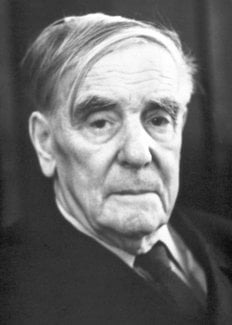
Pjotr Leonidovich Kapitsa was born in Kronstadt, near Leningrad, on the 9th July 1894, son of Leonid Petrovich Kapitsa, military engineer, and Olga Ieronimovna née Stebnitskaia, working in high education and folklore research.
Kapitsa began his scientific career in A.F. Ioffe’s section of the Electromechanics Department of the Petrograd Polytechnical Institute, completing his studies in 1918. Here, jointly with N.N. Semenov, he proposed a method for determining the magnetic moment of an atom interacting with an inhomogeneous magnetic field. This method was later used in the celebrated Stern-Gerlach experiments.
At the suggestion of A.F. Ioffe in 1921 Kapitsa came to the Cavendish Laboratory to work with Rutherford. In 1923 he made the first experiment in which a cloud chamber was placed in a strong magnetic field, and observed the bending of alfa-particle paths. In 1924 he developed methods for obtaining very strong magnetic fields and produced fields up to 320 kilogauss in a volume of 2 cm3. In 1928 he discovered the linear dependence of resistivity on magnetic field for various metals placed in very strong magnetic fields. In his last years in Cambridge Kapitsa turned to low temperature research. He began with a critical analysis of the methods that existed at the time for obtaining low temperatures and developed a new and original apparatus for the liquefaction of helium based on the adiabatic principle (1934).
Kapitsa was a Clerk Maxwell Student of Cambridge University (1923-1926), Assistant Director of Magnetic Research at Cavendish Laboratory (1924-1932), Messel Research Professor of the Royal Society (1930-1934), Director of the Royal Society Mond Laboratory (1930-1934). With R.H. Fowler he was the founder editor of the International Series of Monographs on Physics (Oxford, Clarendon Press).
In 1934 he returned to Moscow where he organized the Institute for Physical Problems at which he continued his research on strong magnetic fields, low temperature physics and cryogenics.
In 1939 he developed a new method for liquefaction of air with a lowpressure cycle using a special high-efficiency expansion turbine. In low temperature physics, Kapitsa began a series of experiments to study the properties of liquid helium that led to discovery of the superfluidity of helium in 1937 and in a series of papers investigated this new state of matter.
During the World War II Kapitsa was engaged in applied research on the production and use of oxygen that was produced using his low pressure expansion turbines, and organized and headed the Department of Oxygen Industry attached to the USSR Council of Ministers.
Late in the 1940’s Kapitsa turned his attention to a totally new range of physical problems. He invented high power microwave generators – planotron and nigotron (1950- 1955) and discovered a new kind of continuous high pressure plasma discharge with electron temperatures over a million K.
Kapitsa is director of the Institute for Physical Problems. Since 1957 he is a member of the Presidium of the USSR Academy of Sciences. He was one of the founders of the Moscow Physico-Technical Institute (MFTI), and is now head of the department of low temperature physics and cryogenics of MFTI and chairman of the Coordination Council of this teaching Institute. He is the editor-in-chief of the Journal of Experimental and Theoretical Physics and member of the Soviet National Committee of the Pugwash movement of scientists for peace and disarmament.
He was married in 1927 to Anna Alekseevna Krylova, daughter of Academician A.N. Krylov. They have two sons, Sergei and Andrei.
| Honorary degrees |
| D.Phys.-Math.Sc., USSR Academy of Sciences, 1928 |
| D.Sc., Algiers University, 1944, Sorbonne, 1945 |
| D.Ph., Oslo University, 1946 |
| D.Sc., Jagellonian University, 1964; Technische Universität Dresden, 1964; Charles University, 1965; Columbia University, 1969; Wroclaw Technical University, 1972; Delhi University, 1972; Université de Lausanne, 1973 |
| D.Ph., Turku University, 1977 |
| Honorary memberships |
| Member of the USSR Academy of Sciences, 1939 (corresponding member – 1929) |
| Fellow of the Royal Society, London, 1929; French Physical Society, 1931 |
| Institute of Physics, England, 1934; International Academy of Astronautics, 1964 |
| Honorary Member of the Moscow Society of Naturalists, 1935 |
| the Institute of Metals, England, 1943 |
| the Franklin Institute, 1944 |
| Trinity College Cambridge, 1925 |
| New York Academy of Sciences, 1946 |
| Indian Academy of Sciences, 1947 |
| the Royal Irish Academy, 1948 |
| National Institute of Sciences of India, 1957 |
| German Academy of Naturalists “Leopoldina”, 1958 |
| International Academy of the History of Science, 1971 |
| Tata Institute of Fundamental Research, Bombay, India, 1977 |
| Foreign Member of Royal Danish Academy of Sciences and Letters, 1946 |
| National Academy of Sciences, USA, 1946 |
| Indian National Sciences Academy, 1956 |
| Polish Academy of Sciences, 1962 |
| Royal Swedish Academy of Sciences, 1966 |
| American Academy of Arts and Sciences, 1968 |
| Royal Netherlands Academy of Sciences, 1969 |
| Serbian Academy of Sciences and Arts, 1971 |
| Finnish Academy of Arts and Sciences, 1974 |
| Honorary Fellow of Churchill College Cambridge, 1974 |
| Awards |
| Medal of the Liége University, 1934 |
| Faraday Medal of the Institute of Electrical Engineers, 1942 |
| Franklin Medal of the Franklin Institute, 1944 |
| Sir Devaprasad Sarbadhikary Gold Medal of the Calcutta University, 1955 |
| Kothenius Gold Medal of the German Academy of Naturalists “Leopoldina”, 1959 |
| Frédéric Joliot-Curie Silver Medal of the World Peace Committee, 1959 |
| Lomonosov Gold Medal of the USSR Academy of Sciences, 1959 |
| Great Gold Medal of the USSR Exhibition of Economic Achievements, 1962 |
| Medal for Merits in Science and to Mankind of the Czechoslovak Academy of Sciences, 1964 |
| International Niels Bohr Medal of Dansk Ingeniørvorening, 1964 |
| Rutherford Medal of the Institute of Physics and Physical Society, England, 1966 |
| Golden Kamerlingh Onnes Medal of the Netherlands Society of Refrigeration, 1968 |
| Copernic Memorial Medal of the Polish Academy of Sciences, 1974 |
| USSR State Prize – 1941, 1943 |
| Simon Memorial Award of the Institute of Physics and Physical Society, England, 1973 |
| Rutherford Memorial Lecture, Royal Society of London; Bernal Memorial Lecture, Royal Society of London, 1976 |
| Order of Lenin- 1943, 1944, 1945, 1964, 1971, 1974 |
| Hero of Socialist Labour, 1945, 1974 |
| Order of the Red Banner of Labour, 1954 |
| Order of the Jugoslav Banner with Ribbon, 1967 |
| Publications |
| Collected Papers of P.L. Kapitsa, 3 vol., Pergamon Press, Oxford, 1964 – 1967 |
| High Power Microwave Electronics, Pergamon Press, 1964 |
| Experiment. Theory. Practice. “Nauka”, Moscow, 1977 |
| Le livre du problème de physique, CEDIC, Paris, 1977 |
This autobiography/biography was written at the time of the award and later published in the book series Les Prix Nobel/ Nobel Lectures/The Nobel Prizes. The information is sometimes updated with an addendum submitted by the Laureate.
Pyotr Kapitsa died on April 8, 1984.
Nobel Prizes and laureates
Six prizes were awarded for achievements that have conferred the greatest benefit to humankind. The 14 laureates' work and discoveries range from quantum tunnelling to promoting democratic rights.
See them all presented here.

