Archibald V. Hill
Biographical
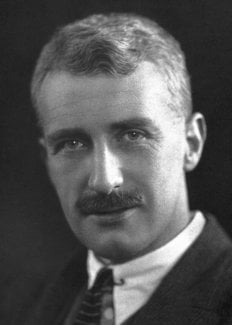 Archibald Vivian Hill was born in Bristol on September 26,1886. His early education was at Blundell’s School, Tiverton, whence he obtained scholarships to Trinity College, Cambridge. Here he studied mathematics and took the Mathematical Tripos, being Third Wrangler (1907). After graduating, he was urged to take up physiology by his teacher, Dr. (later Sir) Walter Morley Fletcher.
Hill started his research work in 1909. It was due to J.N. Langley, Head of the Department of Physiology at that time that Hill took up the study on the nature of muscular contraction. Langley drew his attention to the important (later to become classic) work carried out by Fletcher and Hopkins on the problem of lactic acid in muscle, particularly in relation to the effect of oxygen upon its removal in recovery. During his initial studies Hill made use of the Blix’ apparatus, obtaining his first knowledge of the subject from papers of this Swedish physiologist. This led him to study the dependence of heat production on the length of muscle fibre (a relation later developed by Starling in his investigation of the mechanism of the heart beat).
After having obtained a Fellowship at Trinity in 1910, Hill spent the winter of 1910-1911 in Germany, working among others with Bürker (who taught him much about the technique of myothermic observations) and Paschen (who introduced the galvanometer to him, which he since used for his investigations). From 1911-1914, until the outbreak of World War I, he continued his work on the physiology of muscular contraction at Cambridge. During this for him important period, however, he also took up other studies: on the nervous impulse (with Keith Lucas), on haemoglobin (with Barcroft), and on calorimetry of animals (partly with T. B. Wood), having also as colleagues Gaskell, Anderson, W. B. Hardy, Mines, Adrian, Hartridge, and others.
In 1914 he tended to drift away from physiology and was actually appointed University Lecturer in Physical Chemistry at Cambridge. During the war he served for the entire period as captain and brevet-major, and as Director of the Anti-Aircraft Experimental Section, Munitions Inventions Department.
In 1919 he took up again his study of the physiology of muscle, and came into close contact with Meyerhof of Kiel who, approaching the problem from a different angle, has arrived at results closely analogous to his study. They have cooperated continuously ever since, by personal contact and through correspondence. In 1919 Hill’s friend W. Hartree, mathematician and engineer, joined in the myothermic investigations – a cooperation which had rewarding results.
In 1920 Hill was appointed Brackenburg Professor of Physiology at Manchester University; there he continued the work on muscular activity and began to apply the results obtained on isolated muscles to the case of muscular exercise in man. From 1923 to 1925 he became Jodrell Professor of Physiology at University College, London, succeeding E.H. Starling. In 1926 he was appointed the Royal Society’s Foulerton Research Professor and was in charge of the Biophysics Laboratory at University College until 1952. After retiring he returned to the Physiology Department, where he continues with his experiments to the present.
His work on muscle function, especially the observation and measurement of thermal changes associated with muscle function, was later extended to similar studies on the mechanism of the passage of nerve impulses. Very sensitive techniques had to be developed and he was eventually able to measure temperature changes of the order of 0.003°C over periods of only hundredths of a second. He was the discoverer of the phenomenon that heat was produced as a result of the passage of nerve impulses. His researches gave rise to an enthusiastic following in the field of biophysics, a subject whose growth owes much to him.
Dr. Hill is the author of many scientific papers, lectures, and books. Perhaps his best-known books are Muscular Activity (1926), Muscular Movement in Man (1927); also Living Machinery (1927), The Ethical Dilemma of Science and Other Writings (1960), and Traits and Trials in Physiotogy (1965).
He was elected a Fellow of the Royal Society in 1918, serving as Secretary for the period 1935-1945, and Foreign Secretary in 1946. He was awarded the Society’s Copley Medal in 1948. He holds honorary degrees of many universities, British and foreign. He was decorated with the Order of the British Empire in 1918 and became a Companion of Honour in 1948. He also holds the Medal of Freedom with Silver Palm (U.S.A., 1947) and is a Chevalier of the Legion of Honour (1950). He has also been prominent in public life, being a Member of Parliament during the period 1940-1945, when he represented Cambridge University in the House of Commons as an Independent Conservative. He was a member of the University Grants Committee for 1937-1944 and served on the Science Committee of the British Council, 1946-1956. He was appointed a Trustee of the British Museum in 1947.
During World War II, he served on many commissions concerned with defence and scientific policy. He was a member of the War Cabinet Scientific Advisory Committee (1940-1946). He was Chairman of the Research Defence Society (1940-1951) and Chairman of the Executive Committee of the National Physical Laboratory (1940-1945).
He is also a member of the Society for the Protection of Science and Learning, and was President in 1952 of the British Society for the Advancement of Science.
Dr. Hill married Margaret Neville Keynes in 1913. They have two sons and two daughters.
This autobiography/biography was written at the time of the award and first published in the book series Les Prix Nobel. It was later edited and republished in Nobel Lectures. To cite this document, always state the source as shown above.
Archibald V. Hill died on June 3, 1977.
Nobel Prizes and laureates
Six prizes were awarded for achievements that have conferred the greatest benefit to humankind. The 14 laureates' work and discoveries range from quantum tunnelling to promoting democratic rights.
See them all presented here.