Sir Alexander Fleming
Biographical
Questions and answers on Sir Alexander Fleming
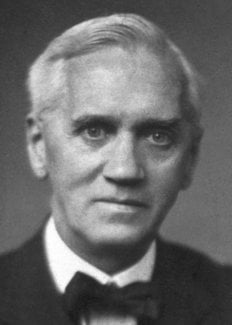
Sir Alexander Fleming was born at Lochfield near Darvel in Ayrshire, Scotland on August 6th, 1881. He attended Loudoun Moor School, Darvel School, and Kilmarnock Academy before moving to London where he attended the Polytechnic. He spent four years in a shipping office before entering St. Mary’s Medical School, London University. He qualified with distinction in 1906 and began research at St. Mary’s under Sir Almroth Wright, a pioneer in vaccine therapy. He gained M.B., B.S., (London), with Gold Medal in 1908, and became a lecturer at St. Mary’s until 1914. He served throughout World War I as a captain in the Army Medical Corps, being mentioned in dispatches, and in 1918 he returned to St.Mary’s. He was elected Professor of the School in 1928 and Emeritus Professor of Bacteriology, University of London in 1948. He was elected Fellow of the Royal Society in 1943 and knighted in 1944.
Early in his medical life, Fleming became interested in the natural bacterial action of the blood and in antiseptics. He was able to continue his studies throughout his military career and on demobilization he settled to work on antibacterial substances which would not be toxic to animal tissues. In 1921, he discovered in «tissues and secretions» an important bacteriolytic substance which he named Lysozyme. About this time, he devised sensitivity titration methods and assays in human blood and other body fluids, which he subsequently used for the titration of penicillin. In 1928, while working on influenza virus, he observed that mould had developed accidently on a staphylococcus culture plate and that the mould had created a bacteria-free circle around itself. He was inspired to further experiment and he found that a mould culture prevented growth of staphylococci, even when diluted 800 times. He named the active substance penicillin.
Sir Alexander wrote numerous papers on bacteriology, immunology and chemotherapy, including original descriptions of lysozyme and penicillin. They have been published in medical and scientific journals.
Fleming, a Fellow of the Royal College of Surgeons (England), 1909, and a Fellow of the Royal College of Physicians (London), 1944, has gained many awards. They include Hunterian Professor (1919), Arris and Gale Lecturer (1929) and Honorary Gold Medal (1946) of the Royal College of Surgeons; Williams Julius Mickle Fellowship, University of London (1942); Charles Mickle Fellowship, University of Toronto (1944); John Scott Medal, City Guild of Philadelphia (1944); Cameron Prize, University of Edinburgh (1945); Moxon Medal, Royal College of Physicians (1945); Cutter Lecturer, Harvard University (1945); Albert Gold Medal, Royal Society of Arts (1946); Gold Medal, Royal Society of Medicine (1947); Medal for Merit, U.S.A. (1947); and the Grand Cross of Alphonse X the Wise, Spain (1948).
He served as President of the Society for General Microbiology, he was a Member of the Pontifical Academy of Science and Honorary Member of almost all the medical and scientific societies of the world. He was Rector of Edinburgh University during 1951-1954, Freeman of many boroughs and cities and Honorary Chief Doy-gei-tau of the Kiowa tribe. He was also awarded doctorate, honoris causa, degrees of almost thirty European and American Universities.
In 1915, Fleming married Sarah Marion McElroy of Killala, Ireland, who died in 1949. Their son is a general medical practitioner.
Fleming married again in 1953, his bride was Dr. Amalia Koutsouri-Voureka, a Greek colleague at St. Mary’s.
In his younger days he was a keen member of the Territorial Army and he served from 1900 to 1914 as a private in the London Scottish Regiment.
Dr Fleming died on March 11th in 1955 and is buried in St. Paul’s Cathedral.
This autobiography/biography was written at the time of the award and first published in the book series Les Prix Nobel. It was later edited and republished in Nobel Lectures. To cite this document, always state the source as shown above.
Nobel Prizes and laureates
Six prizes were awarded for achievements that have conferred the greatest benefit to humankind. The 14 laureates' work and discoveries range from quantum tunnelling to promoting democratic rights.
See them all presented here.