Georges Pire
Biographical
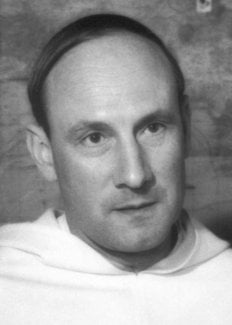
Georges Charles Clement Ghislain Pire (February 10, 1910-January 30, 1969), born in Dinant, Belgium, the first child of Georges and Berthe (Ravet) Pire, assigned his life to action in striving to achieve understanding among peoples of the world, to eliminate poverty and hopelessness in the emerging nations, to alleviate the lot of the refugees of the post-World War II period. His refugee work may well have stirred memories of his own childhood, for when he was four and a half, he and his family fled from Belgium before the advancing German troops in 1914, spending four years in France and returning to find their home a charred ruin.
In Dinant where his father was a civic official, Georges Pire studied classics and philosophy at the Collège de Bellevue and at eighteen entered the Dominican monastery of La Sarte in Huy, Belgium, where he took the name Henri Dominique and said his final vows on September 23,1932.
He continued his studies at the Collegio Angelico, the Dominican university in Rome, was ordained in 1934, and granted the doctorate in theology in 1936. After a year of study in the social sciences at the University of Louvain in Belgium, he returned to the monastery at Huy to teach sociology and moral philosophy.
In 1938, the Reverend Father Pire began his long service of organizational work for the unfortunate by founding the Service d’entr’aide familiale [Mutual Family Aid] and Stations de plein air de Huy [Open Air Camps] for children. During and after World War II the stations were more than camps; they were missions that fed thousands of Belgian and French children.
Father Pire himself during World War II was chaplain to the resistance movement, agent for the intelligence service, and participant in the underground escape system that returned downed Allied flyers to their own forces. For his services, this man of peace was awarded the Military Cross with Palms, the Resistance Medal with Crossed Swords, the War Medal, and the National Recognition Medal.
Constantly supplementing his duties as curé of La Sarte, Father Pire decided early in 1949 to study the refugee problem. He visited the camps for refugees in Austria, wrote a book, Du Rhin au Danube avec 60,000 D. P., and founded an organization, Aid to Displaced Persons.
There were three levels of action in Father Pire’s work for the refugees. There was, first, his «sponsoring» movement in which interested people could «sponsor» a family of refugees, sending parcels and letters of encouragement; by 1960 there were some 18,000 sponsors. On a second level there were his homes for the aged, four of them, all situated in Belgium: at Huy (1950), Esneux (1951), Aertslaer (1953), and Braine-le-Comte (1954).
It was evident, however, that the refugees needed to have the opportunity to put down roots, to gain economic independence, to achieve psychological wholeness. Consequently, Father Pire conceived the idea of building small villages for them, to be located on the outskirts of a city where these communities would be free to grow, not in the center of a city where they might degenerate into ghettoes. Using private contributions from the «hearts of men», he constructed seven «European Villages», each for about 150 people: at Aix-la-Chapelle, Germany (1956); Bregenz, Austria (1956); Augsburg, Germany (1957); Berchem-Sainte-Agathe, Belgium, (the Fridtjof Nansen Village, 1958); Spiesen in the Saar (the Albert Schweitzer Village, 1958); Wuppertal, Germany (the Anne Frank Village, 1959); Euskirchen, Germany (1962). All seven of these villages still exist, each now housing about twenty D. P. families.
In 1957, Aid to Displaced Persons, the organization charged with executive authority in carrying out activities on behalf of the refugees, became Aid to Displaced Persons and European Villages, an international charitable association, with self-governing sections in ten European states. The funds spent by this organization on activities for the relief of refugees in 1958 and in later years were raised by a continuous crusade called Europe of the Heart, a crusade aimed at the hearts of all men regardless of religious, national, racial, and linguistic barriers.
After winning the Nobel Peace Prize, Father Pire pursued more aggressively a worldwide application of effort. Beginning June 5, 1959, the crusade was henceforth carried on by an official organization known as The Heart Open to the World. Its program is both abstract and concrete, welding human attitudes and specific actions. The objective is international fraternity; the technique is that of «fraternal dialogue»; the agencies are the University of Peace, World Friendships, World Sponsorships, and Islands of Peace.
Father Pire founded the University of Peace at Huy in 1960 and by 1965 had completed a major building, with dormitory space for fifty, a large conference room and several small ones, kitchen and dining facilities. The University is open to anyone who wishes to devote himself to constructive work for peace. He may enroll in «long sessions,» of two weeks held in the summer or in «short sessions» of two days scheduled throughout the year, or even in individual sessions to hear lectures given in four languages – French, English, German, and Dutch – and to participate in face-to-face fraternal dialogue. About 4,000 people from forty countries have taken part in the sessions of the University.
World Friendships is an agency that encourages fraternal dialogue carried on at a distance by correspondence between people of different heritages. About 6,500 are enrolled in this program. World Sponsorships enables people to sponsor, with material help, refugee families in Africa or in Asia. This program, emphasizing education of children and adolescents, now has about 400 enrolled sponsors or «godparents».
After a Pakistan visit in 1960, Father Pire inaugurated a new venture that would combine local self-help with private international aid in order to increase food production, improve medical services, and develop educational and recreational programs. His idea was to select a rural area made up of several villages, to encourage the people of the area to form organizations that would require intervillage collaboration for specified purposes, to provide these organizations with outside technical experts and some material aid, to devise plans of action with targets to be reached in five or six years, and finally, at the end of the specified period, to turn over the entire program to the initiative of the local inhabitants. The first of these ventures, running from 1962 to 1967, was at Gohira in East Pakistan; the second, begun in 1969, is a six-year program at Kalakkad, near the southern point of the Indian land mass. Father Pire called these programs Islands of Peace.
Throughout his thirty-two years of work for peace and human dignity, Father Henri Dominique Pire lived simply in the monastery at Huy, discharging his religious duties and continuing to lecture. He died at fifty-eight at Louvain Roman Catholic Hospital on January 30, 1969, of complications following surgery.
| Selected Bibliography |
| Bartlett, R.M., «Heart Open to the World», Christian Century, 78 (August 9, 1961) 955-956. |
| Current Biography, 20 (1959) 362-364. |
| Houart, Victor, The Open Heart: The Inspiring Story of Father Pire and the Europe of the Heart. London, Souvenir Press, 1959. |
| Northcott, Cecil, «Profile: Father Dominique Pire», Contemporary Review, 1160 (1962) 130-131. |
| «Père Pire’s Peace Corps», America, 109 (October 5, 1963) 373. |
| Pire, Dominique Georges, Building Peace, in collaboration with Dr. Charles Dricot. Preface by Prof. Robert Oppenheimer. Translated from the French by Graeme M. Ogg. London, Transworld, 1967. (Bâtir la paix. Verviers, Belgium, Gérard, 1966.) |
| Pire, Dominique Georges, Europe of the Heart: The Autobiography of Father Dominique Pire, as told to Hugues Véhenne. Translated from the French by John L. Skeffington. London, Hutchinson, 1960. (Souvenirs et entretiens du R. P. Dominique Pire. Bruxelles, 1959.) |
| Pire, Dominique Georges, Vivre ou mourir ensemble. Avant-propos, introduction… de Raymond Vander Elst. Bruxelles, Presses Académiques Européennes, 1969. |
| Weyergans, Franz, Le Père Pire et l’Europe du Coeur. Paris, Éditions Universitaires, 1938. |
This autobiography/biography was written at the time of the award and first published in the book series Les Prix Nobel. It was later edited and republished in Nobel Lectures. To cite this document, always state the source as shown above.
Nobel Prizes and laureates
Six prizes were awarded for achievements that have conferred the greatest benefit to humankind. The 14 laureates' work and discoveries range from quantum tunnelling to promoting democratic rights.
See them all presented here.