Manne Siegbahn
Biographical
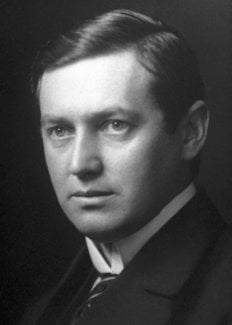
Karl Manne Georg Siegbahn was born on the 3rd of December, 1886, at Örebro in Sweden. His father was Nils Reinhold Georg Siegbahn, a stationmaster of the State Railways, and his mother was Emma Sofia Mathilda Zetterberg.
After receiving a high-school education he entered the University of Lund in 1906, where he obtained his doctor’s degree, in 1911, on the thesis “Magnetische Feldmessung”. From 1907 to 1911 he served as Assistant to Professor J. R. Rydberg in the Physics Institute of the University, afterwards he was appointed lecturer and (in 1915) Deputy Professor of Physics. On the death of Rydberg, he was appointed Professor (1920). In 1923 he became Professor of Physics at the University of Uppsala. In 1937 came his appointment as Research Professor of Experimental Physics, at the Royal Swedish Academy of Sciences. When the Physics Department of the Nobel Institute of the Academy came into being, that same year, Siegbahn was made its first Director.
Siegbahn’s early work (1908-1912) was concerned with problems of electricity and magnetism.
From 1912 to 1937 his research work was mainly devoted to X-ray spectroscopy. He developed new methods, and designed instruments for this purpose. His improvements and new constructions of air pumps and X-ray tubes enabled a considerable increase of the radiation intensity, and the numerous spectrographs and crystal or linear gratings which he constructed, have resulted in a highly increased accuracy of his measurements. In this way, a large number of new series within the characteristic X-radiations of elements could be discovered. The new precision technique thus developer by Siegbahn led to a practically complete knowledge of the energy and radiation conditions in the electron shells of the atoms, while at the same I time a solid empirical foundation was created for the quantum-theoretical interpretation of attendant phenomena. Siegbahn’s findings in this field havt been summarized by him in his book Spektroskopie der Röntgenstrahlen, 1923 (rev. ed., 1931; ed. in English, 1924), a classic in scientific literature. As a measure of the high precision achieved by Siegbahn’s spectrographs (which are held at a constant temperature and read, in tenths of seconds, by means of two microscopes mounted diametrically opposite one another on a precision goniometer) may be mentioned the fact that his energy-level values, arrived at thirty years ago, still serve for many purposes.
The research activity in the Institute under Siegbahn’s leadership was directed towards problems of nuclear physics. For this purpose a cyclotron was constructed capable of accelerating deuterons of up to 5 to 6 MeV (1939), which was soon to make place for a larger one for deuteron energies of up to 30 MeV. In addition to this, a high-tension generator for 400,000 volts was built, as a provisional measure, during the War (transformed into a plant for 1.5 million volts in 1962). For the purpose of studying the energy and radiation of the different radioactive isotopes an electromagnetic separator has been constructed at the Institute, and several new types of ß-spectrographs for various purposes have been designed and built. With these technical resources, and after suitable methods had been developed, a number of important projects for research were taken up. The radiation processes of unstable atomic nuclei and nuclear reactions of various kinds have been studied and exact measurements made of the magnetic properties of atomic nuclei. Other projects tackled by Siegbahn and his staff include the construction of an electron microscope of a new pattern and an automatically working ruling-engine for scratching well-defined gratings (with up to 1,800 lines per mm), especially for X-rays and the extreme ultraviolet field. A large number of young scientists, including many from foreign countries, have taken part in the progressively developed research work to study the atomic nucleus and its radioactive properties.
Siegbahn travelled a great deal and visited practically all important centres of scientific activity in Europe (1908-1922), Canada and the United States (1924-1925), where he, on invitation of the Rockefeller Foundation, gave lectures at the Universities of Columbia, Yale, Harvard, Cornell, Chicago, Berkeley, Pasadena, Montreal, and several other universities. After World War II, he visited the main nuclear research institutes in the U.S.A. during the years 1946 and 1953 (Berkeley, Pasadena, Los Angeles, St. Louis, Chicago, M.I.T. Boston, Brookhaven, Columbia, etc.).
As member of the Commission Internationale des Poids et Mesures (1937) he took part in annual meetings of this Commission in Paris; he was elected honorary member of this Commission when he left his membership ( 1956). Siegbahn was President of the International Union of Physics, during the period 1938-1947. Other honours, in addition to the Nobel Prize in Physics (1924) awarded to Professor Siegbahn included the Hughes Medal (1934) and the Rumford Medal (1940) from the Royal Society, London; the Duddel Medal from the Physical Society, London (1948). He is honorary doctor in Freiburg (1931), Bukarest (1942), Oslo (1946), Paris (1952) and the Technical Faculty in Stockholm (1957). He is Member of the Royal Society, London and Edinburgh, of the Academie des Sciences, Paris, and of several other academies.
Professor Siegbahn married Karin Högbom in 1914. They have two sons: Bo (b. 1915), at present (1964) Ambassador at Marocco; and Kai (b. 1918), since 1954 Professor of Physics at the University of Uppsala, on the same Chair that his father held during 1923-1937.
This autobiography/biography was written at the time of the award and first published in the book series Les Prix Nobel. It was later edited and republished in Nobel Lectures. To cite this document, always state the source as shown above.
Manne Siegbahn died on September 26, 1978.
Nobel Prizes and laureates
Six prizes were awarded for achievements that have conferred the greatest benefit to humankind. The 14 laureates' work and discoveries range from quantum tunnelling to promoting democratic rights.
See them all presented here.

