Christian Anfinsen
Biographical
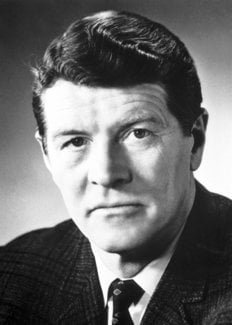
Born in Monessen, Pennsylvania, March 26, 1916 Dr. Anfinsen obtained a B.A. degree from Swarthmore College in 1937 and an M.S. in organic chemistry in 1939 from the University of Pennsylvania. He spent the year 1939-40 as a Visiting Investigator at the Carlsberg Laboratory in Copenhagen. In 1943, he received a Ph.D. from Harvard Medical School in biochemistry and spent the next seven years at Harvard Medical School; first as Instructor and then as Assistant Professor of Biological Chemistry. During this time, he spent a year (1947-48) as a Senior Fellow of the American Cancer Society working with Dr. Hugo Theorell at the Medical Nobel Institute. Dr. Anfinsen left Harvard in 1950 to become Chief of the Laboratory of Cellular Physiology and Metabolism in the National Heart Institute of the National Institutes of Health. He was again at Harvard Medical School as Professor of Biological Chemistry in 1962-63 and then returned to the National Institutes of Health to assume his present position.
In Anfinsen’s early work, he and Steinberg studied the non-uniform labelling in newly synthesized proteins – a technique which later permitted Dintzis, Canfield and others to determine that proteins are synthesized sequentially from the amino-terminal and in vivo, and to calculate the rate at which amino acids are polymerized.
In the mid 1950’s Anfinsen began to concentrate on the problem of the relationship between structure and function in enzymes. On the basis of studies on ribonuclease with Sela and White, he proposed that the information determining the tertiary structure of a protein resides in the chemistry of its amino acid sequence. Investigations on reversible denaturation of several proteins served to verify this proposal experimentally. It was demonstrated that, after cleavage of disulfide bonds and disruption of tertiary structure, many proteins could spontaneously refold to their native forms. This work resulted in general acceptance of the “thermodynamic hypothesis”. Studies on the rate and extent of renaturation in vitro led to the discovery of a microsomal enzyme which catalyzes sulfhydryl-disulfide interchange and thereby accelerates, in vitro, the refolding of denatured proteins containing disulfide bonds. In the presence of this enzyme the rate of renaturation approaches that sufficient to account for folding of newly completed polypeptide chains during protein biosynthesis. These findings have given important impetus to studies on the organic synthesis of proteins, since they demonstrate that, under physiological conditions of environment, attainment of the native structure rests solely upon the correct sequential polymerization of the amino acids.
In addition to his research activities, Dr. Anfinsen is an editor of Advances in Protein Chemistry, served on the Editorial Board of the Journal of Biological Chemistry and wrote “The Molecular Basis of Evolution” which was published in 1959. He is active as a member of the Board of Governors of the Weizmann Institute of Science in Rehovot, Israel, and was elected President of the American Society of Biological Chemists for the Academic Year 1971-72. His honors include a Rockefeller Foundation Public Service Award in 1954, a Guggenheim Fellowship in 1958, election to the National Academy of Sciences in 1963 and the Royal Danish Academy in 1964, and Honorary Doctor of Science degrees from Swarthmore College (1965), Georgetown University (1967), and New York Medical College (1969).
In recent years, Anfinsen has devoted himself primarily to comprehensive investigations of an extracellular nuclease of Staphylococcus aureus. He and his colleagues have determined the sequence of its 149 amino acids and have described its fundamental enzymological, physical, and immunological properties. They have used an extensive range of spectroscopic and chemical techniques, including new methods of affinity labeling and cross-linking, to delineate the identity and relationship of amino acids in its active site. Dr. Anfinsen has collaborated closely with a crystallographic group at M.I.T., under Professor F.A. Cotton, which has determined the three-dimensional structure of nuclease at high resolution.
This autobiography/biography was written at the time of the award and later published in the book series Les Prix Nobel/ Nobel Lectures/The Nobel Prizes. The information is sometimes updated with an addendum submitted by the Laureate.
Addendum, January 2003
(kindly provided by Libby Anfinsen)
| Honors received | |
| 1969 | Honorary Fellow, Weizmann Institute of Science, Rehovot, Israel Leon Lecture, University of Pennsylvania Hadassah Myrtle Leaf Award |
| 1970 | EMBO Lecture for Sweden Visiting Fellow, All Souls College, Oxford, England |
| 1972 | Jubilee Lecture, British Biochemical Society, England Nobel Prize in Chemistry |
| 1973 | Doctor of Science, (Honorary) University of Pennsylvania |
| 1974 | Mathers Lectures, Indiana University, Bloomington, Indiana Feinberg Graduate School, Christian B. Anfinsen Scholarship established Scientific Advisory Committee of Weizmann Institute Chairman |
| 1975 | Doctor of Science (Honorary), Gustavus Adolphus College – Lecture Kempner Lectureship, University of Texas Medical Branch, Galveston, Texas Participant, Encounter for the Universality of UNESCO, Paris |
| 1976 | Bicentennial Exhibit Chosen for 20th Century Scientist, Maryland Academy of Science |
| 1977 | Doctor of Science, (Honorary), Brandeis University Naff Lectures, University of Kentucky, Lexington, Kentucky |
| 1978 | Doctor of Science, (Honorary), Providence College, Rhode Island Herbert A. Sober Memorial Lectureship Consultant to ABC Cancer Foundation |
| 1979 | Berson Memorial Lecture, Mount Sinai School of Medicine, New York City, New York Fritz Lippmann Life Sciences Medal, Paris, France |
| 1980 | Case Institute of Technoogy, Centennial Medal |
| 1981 | Pontifical Academy of Science, The Vatican NIH Scientist Emeritus Award Fogarty International Symposium in honor of CBA on Contributions of Chemical Biology to Biomedical Science |
| 1982 | Doctor of Medicine, M.D. (Honorary), University of Naples, Italy Doctor of Science, (Honorary) Yeshiva University, New York City, New York |
| 1984 | Distinguished Scientist Lectures Series, Bard College, New York Theobald Smith Lecture Award, Albany College of Medicine, New York |
| 1985 | Hebrew University of Jerusalem Medal |
| 1986 | National Library of Medicine Medal, Bethesda, Maryland |
| 1987 | Doctor of Science (Honorary), Adelphi University, New York |
| 1988 | Genetic Engineering Lectures, Kon Kuk University, Seoul, Korea |
| 1990 | Pioneer in Science Award, Bar Ilan University, Ramat Aviv, Israel Participant in Oslo Conference, “Anatomy of Hate”, Norwegian Nobel Committee & Elie Wiesel Fund |
| 1991 | Morris Brown College Research Symposium Award, Outstanding Nobelist University of Texas Medical Branch, Centennial Symposium Medal, Galveston, Texas |
| 1992 | Protein Folding Symposium to Honor Christian B. Anfinsen, NIH, Bethesda, Maryland |
| 1993 | Doctor of Science, University of Las Palmas, Canary Islands (Honorary) |
| 1994 | National Institutes of Health/Israel Alumni Association Lectureship established in honor of Christian B. Anfinsen, Rehovot, Israel: Memorial Biennial Lecture Johns Hopkins University Lectureship honoring CBA established, Baltimore, Maryland National Institutes of Health Anfinsen Lectureship established Department of Health, Education and Welfare, Distinguished Service Medal Department of Health, Education and Welfare, Superior Service Medal |
Christian Anfinsen died on May 14, 1995.
Copyright © The Nobel Foundation 2003Nobel Prizes and laureates
Six prizes were awarded for achievements that have conferred the greatest benefit to humankind. The 14 laureates' work and discoveries range from quantum tunnelling to promoting democratic rights.
See them all presented here.