Kenichi Fukui
Facts
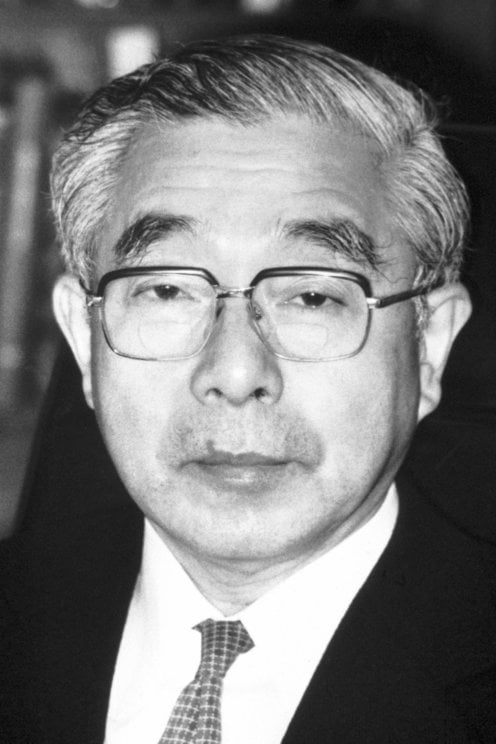
Photo from the Nobel Foundation archive.
Kenichi Fukui
Nobel Prize in Chemistry 1981
Born: 4 October 1918, Nara, Japan
Died: 9 January 1998, Kyoto, Japan
Affiliation at the time of the award: Kyoto University, Kyoto, Japan
Prize motivation: “for their theories, developed independently, concerning the course of chemical reactions”
Prize share: 1/2
Work
In chemical reactions, molecules composed of atoms meet and form new compounds. Electrons orbiting around the atoms’ nuclei play an important role here. In 1952, Kenichi Fukui developed a theory that showed that the properties of the orbits of electrons that are most weakly bonded to the atom are critically important in understanding chemical reactions. In later, more developed theories, Fukui and Roald Hoffmann proved independently of one another how the symmetrical properties of electron orbitals explain the course of chemical reactions.
Nobel Prizes and laureates
Six prizes were awarded for achievements that have conferred the greatest benefit to humankind. The 14 laureates' work and discoveries range from quantum tunnelling to promoting democratic rights.
See them all presented here.