George Paget Thomson
Facts
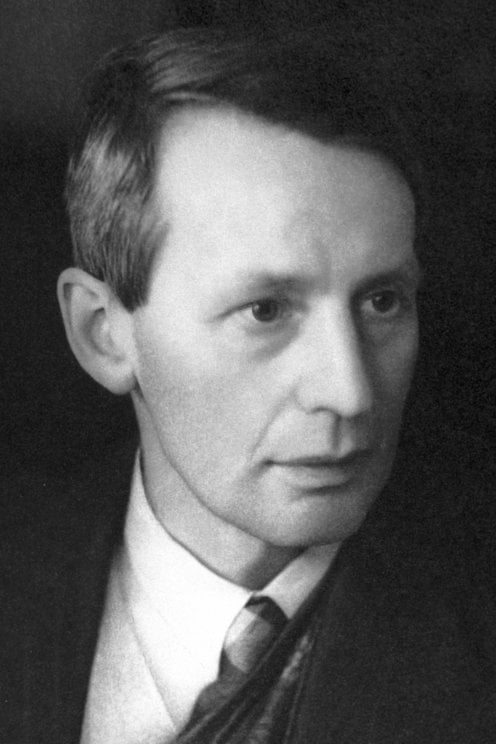
Photo: Bassano, Ltd. Nobel Foundation archive
George Paget Thomson
Nobel Prize in Physics 1937
Born: 3 May 1892, Cambridge, United Kingdom
Died: 10 September 1975, Cambridge, United Kingdom
Affiliation at the time of the award: London University, London, United Kingdom
Prize motivation: “for their experimental discovery of the diffraction of electrons by crystals”
Prize share: 1/2
Work
In the beginning of the 19th century, quantum physics evolved from the idea that energy is conveyed in only certain fixed amounts. An early finding indicated that light can be regarded as both waves and particles. Later it was proposed that matter, such as electrons, also can be described as both waves and particles. In 1927 G.P. Thomson and Clinton Davisson demonstrated, independently of one another, that electrons could be described as waves. When an electron beam passed through a nickel crystal, diffraction patterns appeared.
Nobel Prizes and laureates
Six prizes were awarded for achievements that have conferred the greatest benefit to humankind. The 14 laureates' work and discoveries range from quantum tunnelling to promoting democratic rights.
See them all presented here.