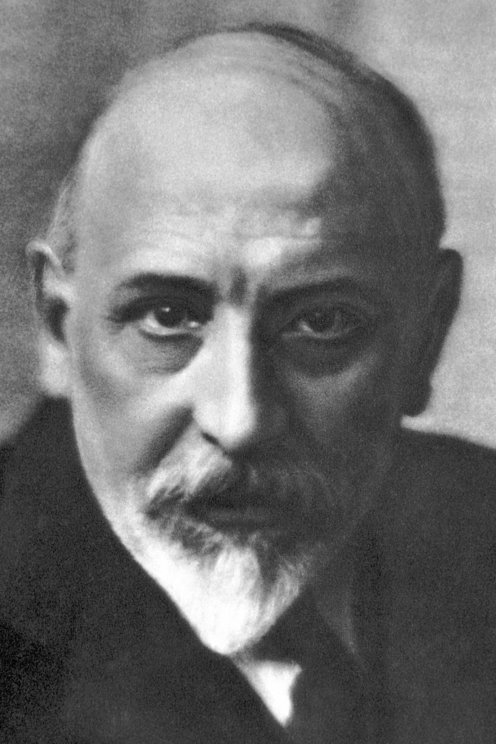
Willard Frank Libby
Nobel Prize in Chemistry 1960for his method to use carbon-14 for age determination in archaeology, geology, geophysics, and other branches of science.
A help in solving crimes and a revealer of history’s secrets: radiocarbon dating is one of the keys that unlocks our world.

There would be heaps of the stuff in sewage. Willard Libby was sure of it.
It was the mid-1940s, and the US chemist’s goal was to find a radioactive form of carbon, carbon-14, in nature. He had realised that, if it were there, it would leave a slowly decaying trace in dead plants and animals – so finding out how much was left in their remains would reveal when they died.
But Libby had to prove that carbon-14 existed in the wild in concentrations that matched his estimates. Other scientists had only ever detected carbon-14 after synthesising it in a lab.
Libby reasoned that living things would deposit it in their excrement, which is why he turned to sewage. Sewage produced by the people of Baltimore, to be precise. And he found what he was looking for.
Libby didn’t know it then but the idea that you could use radioactive carbon – radiocarbon – to date things would have all kinds of diverse applications.
But how does carbon-14 come into existence in the first place? Libby understood that it was being produced constantly by cosmic rays striking nitrogen atoms in the Earth’s atmosphere and changing their structure. The resulting carbon-14 atom quickly combines with oxygen to make radioactive carbon dioxide (CO2).
Back on the ground, plants absorb some of that radioactive CO2 in the air as they grow, as do the animals – including humans – that eat them. While a plant or animal is alive, it keeps replenishing its internal store of carbon-14 but, when it dies, that process stops. Because radiocarbon decays at a known rate, measuring how much is left in organic material will tell you the material’s age. A clock that starts ticking the moment something dies.
Once Libby confirmed there was carbon-14 in the methane gas from Baltimore sewers, he went on to detect radiocarbon in many different things, allowing him to prove how old they were – from the linen wrappings of the Dead Sea Scrolls to a piece of a ship found in the tomb of Sesostris III, an Egyptian king who lived nearly 4,000 years ago.
“This is a problem where you won’t tell anybody what you’re doing. It’s too crazy,” Libby later said. “You can’t tell anybody cosmic rays can write down human history. You can’t tell them that. No way. So we kept it secret.”
But once he had proved it worked, he let the world know. And, in 1960, Libby was awarded the Nobel Prize in Chemistry.
His technique works on organic material that is up to 50,000 years old. Older than that, and there is too little carbon-14 left. Carbon-14’s gradual decay is what makes radiocarbon dating possible – but that also means you can only go back so far.

Radiocarbon dating is now central to our understanding of history.
“In terms of putting things in order, in terms of being able to compare between different regions in particular, and understand that pace of change, it has been really important,” explains Rachel Wood, who works in one of the world’s most distinguished radiocarbon dating labs, the Oxford Radiocarbon Accelerator Unit.
She and her colleagues date materials including human bones, charcoal, shells, seeds, hair, cotton, parchment and ceramics, but also stranger substances. “We do the odd really unusual thing, like fossilised bat urine,” she says.
The lab uses a device called an accelerator mass spectrometer to directly quantify the carbon-14 atoms in a sample – unlike Libby, who was only able to measure the radiation emitted and thereby infer how much carbon-14 a sample contained. The accelerator can also date tiny samples, in some cases a single milligram, whereas Libby needed much more material.
Removing carbon-containing contaminants can take weeks, but once done the accelerator readily spits out a sample’s estimated age.
“It’s really exciting to be able to see the results immediately.”
Rachel Wood, Oxford Radiocarbon Accelerator Unit.
Radiocarbon dating has settled some long-standing arguments. Take the human skeleton discovered by theologian and geologist William Buckland in Wales in 1823. Buckland insisted it was no more than 2,000 years old, and for more than a century, no-one could prove he was wrong. Radiocarbon dating eventually showed it was actually between 33,000 and 34,000 years old – the oldest known buried human remains in the UK.
More recent human remains have also revealed their secrets thanks to this technology.
In 1975, a 13-year-old girl called Laura Ann O’Malley was reported missing in New York. Remains found in a California riverbed in the 1990s were thought to have originated in a historic grave until radiocarbon dating earlier this year showed they belonged to someone born between 1964 and 1967, who most likely died between 1977 and 1984. This fitted the timeline of O’Malley’s disappearance, and DNA analysis confirmed the remains were hers.
Forensic analyses often rely on the “bomb pulse” method of radiocarbon dating, which is possible due to the hundreds of atmospheric nuclear weapons tests that occurred during the 1950s and 1960s.
The blasts sent vast quantities of additional carbon-14 into the air, but these artificially high levels have been falling ever since. And so, by comparing carbon-14 measurements with that downward-sloping curve, it is possible to date materials from the mid-20th Century onwards very precisely – to within a year or so, in some cases.
“I don’t know of any other technique that comes close to that,” says Sam Wasser at the University of Washington. “It’s extraordinarily useful.”
Wasser has analysed radiocarbon dating results from ivory samples as part of efforts to crack down on the illegal wildlife trade. The data can show whether the elephants died before or after the 1989 ban on ivory sales, whatever traffickers may claim.

One man jailed on this evidence is Edouodji Emile N’Bouke, convicted in Togo in 2014. While DNA tests uncovered the geographic origin of the ivory he trafficked, radiocarbon dating showed exactly when the elephants were poached. These two strands of evidence were “the smoking gun critical to bringing N’Bouke to justice,” the US State Department later said.
The same techniques have exposed artworks as forgeries. Take the painting of a village scene that one forger claimed was made in 1866. Radiocarbon dating confirmed that it had actually been painted, and artificially aged, during the 1980s.
This research has informed reports by the Intergovernmental Panel on Climate Change (IPCC), which in 2007 was awarded the Nobel Peace Prize – along with former US Vice President Al Gore – for its work disseminating information about climate change.
“It’s also very useful for people who want to use climate models to predict what the climate may potentially be like in the future,” says Tim Heaton at the University of Leeds. Scientists can use radiocarbon records to establish how Earth’s climate changed over time, and check climate models against those results, validating the models’ accuracy.
But another clock is ticking. Fossil fuels contain copious quantities of carbon but no carbon-14 – the organisms that became coal, natural gas and oil, died so long ago that the carbon-14 they once contained has long since decayed. That means fossil fuel emissions are diluting the carbon-14 in Earth’s atmosphere today, which has a direct effect on how much radiocarbon ends up in living things.
Heather Graven at Imperial College London says that, in the worst-case scenario of extremely high emissions during the next century or so, the accuracy of radiocarbon dating could crumble.
“Something that’s freshly produced will have the same [radiocarbon] composition as something that’s maybe 2,000 years old,” she says. Radiocarbon dating wouldn’t be able to tell the two apart.
She spent many years working to heighten the precision of radiocarbon dating, by making painstaking measurements of the radiocarbon found in tree rings, for example, to reveal variations in atmospheric levels of carbon-14 across millennia.
Extremely precise curves of radiocarbon levels are now available dating back 14,000 years or so. But fossil fuel emissions may eventually bring this era of incredible precision to an end.
By Chris Baraniuk, BBC World Service. This content was created as a co-production between Nobel Prize Outreach and the BBC.
Published February 2026
The Nobel Prize, National Geographic Documentary Films and Academy Award-winning filmmaker Orlando von Einsiedel have collaborated on a 5-part short documentary series, celebrating the ongoing impact and influence of Nobel Peace Prize laureates around the world. Watch the films here.
In 1998, Makur Diet lost his leg to a bullet in war-damaged South Sudan. Despairing for his future, Makur was close to committing suicide, until he was given a prosthetic leg. Makur realised that he now had a chance to do something good in the world and decided to devote his life to helping other amputees. At an International Committee of the Red Cross (ICRC) centre in South Sudan, Makur makes prosthetic legs and gives hope to other persons who have lost a limb. He is helping to rebuild his country, one leg at a time.
Makur works at an International Committee of the Red Cross centre in South Sudan. The ICRC have received the Nobel Peace Prize in 1917, 1944 and 1963.
In the chaos of the world’s largest refugee camp, Kamal Hussein is a beacon of hope. From his small ramshackle hut, and armed only with a microphone, he has taken it upon himself to try and reunite the thousands of Rohingya families who have been torn apart by violence and ethnic cleansing in Myanmar. However, in finding lost family members and bringing them back together, he is not just helping them. He is also finding peace for himself.
Kamal’s work is funded by the United Nations High Commissioner for Refugees, recipient of the Nobel Peace Prize in 1954 and 1981.
In an area of Iraq destroyed by ISIS, Hana Khider leads an all-female team of Yazidi deminers in their attempts to clear the land of mines. Their job involves painstakingly searching for booby traps in bombed out buildings and fields, where one wrong move means certain death. Even though the devastations caused by ISIS still are evident and the local people are suffering, they are trying to forget the past and remain hopeful.
Hana works for the Mines Advisory Group, an organisation who are part of the International Campaign to Ban Landmines, a coalition awarded the Nobel Peace Prize in 1997.
How would natural habitats develop without human interference? In this documentary we follow an international team of scientists and explorers on an extraordinary mission in Mozambique to reach a forest that no human has set foot in. The team aims to collect data from the forest to help our understanding of how climate change is affecting our planet. But the forest sits atop a mountain, and to reach it, the team must first climb a sheer 100m wall of rock.
The scientist’s work is based on research conducted by the Intergovernmental Panel on Climate Change, recipient of the Nobel Peace Prize in 2007.
Here you get to follow the two South African musicians; Tsepo Pooe, who grew up in Soweto Township; and Lize Schaap, who grew up in wealthy Pretoria. They are both part of a very special and unique orchestra, the Miagi Orchestra. Inspired by the legacy of 1993 Nobel Peace Prize laureate Nelson Mandela, the orchestra aims to help the nation overcome decades of violence, conflict and division through the power of music.
The story behind the 100-year-old discovery that continues to render Nobel Prizes.
Alone in the Martian desert, a robot was looking for answers. In 2012, Nasa’s Curiosity rover scooped up a small pile of sand, ingested it, and blasted it with X-rays. The intrepid bot was going to find out what that sand was made of, which could in turn reveal information about the historical presence of water on Mars – because any water in this dusty, red plain was long gone.

Nearly a century earlier, in 1915, William and Lawrence Bragg – a father and son team – had been awarded the Nobel Prize in Physics for their work on X-ray crystallography, a technique that makes it possible to determine the atomic and molecular structures of crystals by studying how X-rays diffract, or deviate, when they interact with them.
Many materials, from tiny proteins to metals, can form crystals, and X-ray crystallography became the gold standard for revealing how various forms of matter are put together.
Back on Earth, Michael Velbel at Michigan State University was waiting eagerly for data from Curiosity on Mars. This was the first time X-ray crystallography had ever been done on another planet.
“I was shadowing the mission all along,” recalls Velbel.

Curiosity’s analyses revealed details of the water content of minerals on Mars, which have given credence to – though not proved – the hypothesis that the planet had large bodies of water just a few hundred thousand years ago.
“We can finally get a grasp on that,” says Velbel.
Knowing what things are made of lets us do some amazing things. Analysis of atomic and molecular structures have helped scientists design drugs, unravel the secrets of DNA, and even make better batteries.
You can tell X-ray crystallography is important because it has played a role in numerous Nobel Prizes – some put the tally at more than two dozen. And yet few people know just how awesome a technique it is.
“A lot of people call me ‘Chrystal the Crystallographer’ – or ‘C-squared’” jokes Chrystal Starbird at the University of North Carolina at Chapel Hill. She remembers the first time she used X-ray crystallography to determine a molecular structure. “I was looking at something no-one else had looked at before. I was like, ‘Wow, how cool is that!’”
When Starbird does this kind of analysis, one key early step in the process is taking, say, a protein and working out how to grow crystals of it on a very small scale. Just as water forms ice crystals when it freezes, proteins can form very tiny crystals under certain conditions.
Those crystals are then harvested with tiny hair-like loops – which can be a very tricky procedure – and placed on an X-ray diffractometer.
The crystals are necessary because when you shine X-rays on their ordered structure, you get a regular diffraction pattern – precise markings specific to the chemical nature of the crystal in question.

However, proteins are much more complicated than water molecules so conditions must be just right for them to crystallise. Starbird may have to try hundreds of different approaches – using different chemicals, temperatures or humidity levels – before it works.
“I’m somebody who’s OK with delayed gratification,” she jokes.

One scientist who would probably have related to that was Dorothy Crowfoot Hodgkin. She spent 34 years using X-ray crystallography to work out the structure of insulin, beginning in the 1930s. Insulin is a hormone that helps control blood sugar levels but Type 1 diabetics are unfortunately unable to produce it.
In Hodgkin’s case, obtaining the insulin crystals wasn’t especially difficult. But because insulin contains no fewer than 788 atoms, it took a long time for her to map the entire structure using early X-ray crystallographic methods. Her achievement made it much easier to mass-produce insulin for the treatment of diabetes.
By the time Hodgkin had finally finished, in 1969, she had already been awarded the 1964 Nobel Prize in Chemistry for her X-ray crystallographic studies. She had also determined the structures of penicillin – an important antibiotic – and vitamin B12.
She died in 1994. At a memorial service the following year, Max Perutz – who also received a joint Nobel Prize in Chemistry for crystallographic work – said, “Her X-ray cameras bared the intrinsic beauty beneath the rough surface of things.” He praised both her kindness and her “iron will” to succeed.
“She was a terrific inspiration.”
Elspeth Garman at the University of Oxford, who knew Dorothy Crowfoot Hodgkin.
Garman describes an X-ray diffraction pattern as “an incredibly complicated reflection.”
The result is a pattern, which you can painstakingly convert into a topographical map of the structure, or a three-dimensional model.
Garman notes that many women have excelled at X-ray crystallography. She credits the Braggs, in part, for this. “They had the most amazing academic tree of women that they encouraged and took on as graduate students when people in other fields didn’t,” she says.

Besides Hodgkin, there was also Rosalind Franklin, whose X-ray diffraction image of DNA was among many findings she made while trying to work out the structure of DNA. Some of her findings influenced Francis Crick, James Watson and Maurice Wilkins in their own endeavours on this subject. They were awarded the Nobel Prize in Physiology or Medicine for their work in 1962. Many argue Franklin never received sufficient credit.
X-ray crystallography has also been involved in more recent Nobel Prize-awarded work – including the 2020 Nobel Prize in Chemistry for genome-editing technology, which has roots in crystallographic studies of RNA.
One hugely important application of X-ray crystallography is in drug discovery. It has helped scientists find drugs for sickle-cell disease and even certain cancers, for example.
Rob van Montfort, group leader in the Centre for Cancer Drug Discovery at the UK’s Institute of Cancer Research, says crystallography can reveal which compounds could block or control key proteins in the body, and thus treat a disease.
“X-ray crystallography… provides pictures showing how, exactly, the compound binds to the molecule,” he explains.
Recent technological developments have allowed increasingly complex crystallography studies, Garman says.
At Diamond Light Source, a science facility in the UK, staff use X-ray beamlines to check the medicinal potential of compounds at high speed, by analysing potential binding-sites on a given protein. “Overnight, you could look at 200,” says Garman. “It’s absolutely staggering.”

Researchers have also used this approach to study battery materials – a key technology for the transition away from fossil fuels. Phil Chater, crystallography science group leader at Diamond Light Source, says X-ray crystallography reveals how the materials inside batteries can degrade over time.
Lithium-ion batteries work by allowing lithium ions to travel between layers of material – that’s how they charge up and discharge energy.
“Maintaining that [layer] structure is very important for the prolonged life of these batteries,” Chater says.
But crystallography allows you to see, sometimes, how layers are changing, affecting the ability of the ions to move in and out, he adds. Scientists can then search for ways of overcoming the problem.
X-ray crystallography has clearly made waves in many fields. But there’s an elephant in the room, says Garman.
There’s also artificial intelligence (AI). If AI can accurately predict molecular structures, there may be less need to use X-ray crystallography for this task. But Starbird cautions that there are many structures AI doesn’t predict well.
“I think people have a misconception that crystallography might be done soon, because we have AI – we’re not even close to that,” she says.
The Braggs, presumably, would be glad to hear this. And X-ray crystallography devices may go on even more exciting adventures in the future. Velbel suggests sending one to a distant comet orbiting our sun.
“Wow. I’d want to see what comet ice looks like,” he says, explaining that we might find exciting mixtures of unusual compounds if we could study it up-close. “I think it would be fascinating.”
By Chris Baraniuk, BBC World Service. This content was created as a co-production between Nobel Prize Outreach and the BBC.
Published February 2026
The Miagi Orchestra is a South African orchestra dedicated to helping the nation overcome decades of violence, conflict and division through the power of music.
The film follows two of its musicians: Tsepo Pooe, who grew up in Soweto Township; and Lize Schaap, who grew up in wealthy Pretoria. Through their eyes, and differing experiences of growing up in South Africa, we understand the enormous impact apartheid continues to have, but also see hope for a brighter future for the country. The Miagi Orchestra’s mission is inspired by the work and legacy of Nelson Mandela, recipient of the Nobel Peace Prize in 1993.
National Geographic Documentary Films, the Nobel Prize and Academy Award-winning filmmaker Orlando von Einsiedel have collaborated on a 5-part short documentary series, celebrating the ongoing impact and influence of Nobel Peace Prize laureates around the world.
Inspired by the Nobel Prize, and distributed by National Geographic Documentary Films, the five Orlando von Einsiedel-directed short documentaries, produced by Grain Media and Rideback, each gives center stage to the legacy of a different Nobel Peace Prize laureate.
In war-torn South Sudan, Makur Diet knows all too well the horror of conflict. Over ten years ago, he lost his leg to a bullet.
Despairing for his future, Makur was close to giving up, until one day he was given a prosthetic leg, and with it a new lease of life. Makur now devotes his life to helping others who have been injured in the war to walk again.
Makur works at an International Committee of the Red Cross centre in South Sudan. The ICRC have received the Nobel Peace Prize in 1917, 1944 and 1963.
National Geographic Documentary Films, the Nobel Prize and Academy Award-winning filmmaker Orlando von Einsiedel have collaborated on a 5-part short documentary series, celebrating the ongoing impact and influence of Nobel Peace Prize laureates around the world.
Inspired by the Nobel Prize, and distributed by National Geographic Documentary Films, the five Orlando von Einsiedel-directed short documentaries, produced by Grain Media and Rideback, each gives center stage to the legacy of a different Nobel Peace Prize laureate.
Lost and Found tells the inspiring story of humanity in the world’s largest refugee camp.
The film follows Kamal Hussein, a Rohingya refugee who has dedicated his life to reuniting children with their parents with the support of the double Nobel Prize-awarded organisation, the United Nations High Commissioner for Refugees (UNHCR.) Lost and Found, from National Geographic Documentary Films, is the result of a partnership between the Nobel Prize and Academy Award-winning director Orlando von Einsiedel (The White Helmets.)
National Geographic Documentary Films, the Nobel Prize and Academy Award-winning filmmaker Orlando von Einsiedel have collaborated on a 5-part short documentary series, celebrating the ongoing impact and influence of Nobel Peace Prize laureates around the world.
Inspired by the Nobel Prize, and distributed by National Geographic Documentary Films, the five Orlando von Einsiedel-directed short documentaries, produced by Grain Media and Rideback, each gives center stage to the legacy of a different Nobel Peace Prize laureate.
An international team of scientists and explorers, lead by Dr Julian Bayliss, go on an extraordinary mission in Mozambique to reach a forest that no human has set foot in.
The team, including some of the world’s foremost climate change experts, aims to collect data from the forest to help in our understanding of how climate change is affecting our planet. But the forest sits atop a mountain, and to reach it, the team must first climb a sheer 100m wall of rock. The scientists’ work is based on research conducted by the Intergovernmental Panel on Climate Change, recipients of the Nobel Peace Prize in 2007.
National Geographic Documentary Films, the Nobel Prize and Academy Award-winning filmmaker Orlando von Einsiedel have collaborated on a 5-part short documentary series, celebrating the ongoing impact and influence of Nobel Peace Prize laureates around the world.
Inspired by the Nobel Prize, and distributed by National Geographic Documentary Films, the five Orlando von Einsiedel-directed short documentaries, produced by Grain Media and Rideback, each gives center stage to the legacy of a different Nobel Peace Prize laureate.
In an area of Iraq destroyed by ISIS, Hana Khider leads an all-female team of Yazidi deminers in their attempts to clear the land of mines. Their job involves painstakingly searching for booby traps in bombed out buildings and fields, where one wrong move means certain death.
Hana works for the Mines Advisory Group, an organisation who are part of the ‘International Campaign to Ban Landmines’, a coalition awarded the Nobel Peace Prize in 1997.
National Geographic Documentary Films, the Nobel Prize and Academy Award-winning filmmaker Orlando von Einsiedel have collaborated on a 5-part short documentary series, celebrating the ongoing impact and influence of Nobel Peace Prize laureates around the world.
Inspired by the Nobel Prize, and distributed by National Geographic Documentary Films, the five Orlando von Einsiedel-directed short documentaries, produced by Grain Media and Rideback, each gives center stage to the legacy of a different Nobel Peace Prize laureate.
Whether it is scientific innovation, healthy diets or pollution-free cities, the future we want will be determined by what we prioritise today, and how societies are organised to deliver those priorities.
On a warm November morning in Bengaluru, a packed auditorium of students sat on the edge of their seats as Nobel Prize laureates and other world-leading experts discussed the science and institutions needed to drive change. Hands shot up to ask questions about democracy, youth empowerment and how the rules and regulations that governments create shape the prosperity of a country.
In 2024, the Sveriges Riksbank Prize in Economic Sciences in Memory of Alfred Nobel was awarded to Daron Acemoglu, Simon Johnson and James A. Robinson “for studies of how institutions are formed and affect prosperity.” Their research shows how former European colonies have thrived or struggled depending on the governance systems colonial powers imposed. This award became the spark for the Nobel Prize Dialogue in India, where Robinson and 2021 chemistry laureate David MacMillan met hundreds of students to discuss science and institutions.
Robinson challenged the familiar “one-way street” narrative of economic development, proposed by leading British philosophers and economists from the eighteenth century onwards. In that narrative, Western societies, stretching back to the ancient Greeks, solved social and economic challenges and the rest of the world copied. In this worldview, the only way to achieve economic progress and human flourishing was through adopting liberal governance philosophies. This story has been persuasive and for good reason: life expectancy in wealthy liberal economies has grown markedly in the last century.

But Robinson pointed out that many European ideas and innovations – whether the idea is “democracy” or the “printing press” – are often taken from elsewhere and adapted. Or the new idea is the direct result of cultures interacting, says Robinson. He called this the “two-way street” but argued that this is no longer the only way of innovating. Other economic models, notably China, have also delivered rapid progress for society without adopting liberal ideals. On top of that, in recent decades gross inequality has become a destabilising influence in many liberal societies, he said.
What does this mean for the future we want? From an institutional point of view, the future is less clear. Economic models that have dominated for over a century are being questioned. For Robinson, this offers possibilities, but can also be profoundly unsettling.

David MacMillan brought a different perspective to the table. MacMillan is convinced that the solutions to many of the challenges facing humanity, from disease prevention to zero-carbon societies, will likely have chemistry at their heart.
Chemical reactions are at the center of most major industrial chemical processes – and most of these are driven by catalysts. For MacMillan the science of catalysts is one of the most exciting areas of chemistry, offering huge potential. For example, Earth’s population of eight billion people is dependent on the catalyst behind the Haber-Bosch process (Nobel Prize in Chemistry 1918) to produce nitrogen fertilisers. Indeed, half the nitrogen in our bodies comes from synthetic fertilisers.
“Everything you see in this room is the result of a chemical reaction.”
David MacMillan, Nobel Prize in Chemistry 2021
To realise the full potential of chemistry will require much greater investment in chemistry – and India is well placed to grow its chemistry community.
If we can match the sky-high optimism of this generation with fairer institutions, better wealth redistribution, youth empowerment and long-term investment in research and education – then the future we want becomes the future we collectively create.
Read more and watch a video from the Nobel Prize Dialogue in India
Här kan du hitta citat om Nobel Center-projektet i Stockholm.

“Det nya Nobelhuset blir en viktig mötesplats, ett nav i internationellt akademiskt liv, där Sverige genom Nobelprisets starka lyskraft intar en plats i hjärtat av kunskaps- och vetenskapssamhället. Det är ett hus där kunskap blir till, där forskning delas och perspektiv bryts, för möten mellan Nobelpristagare och studenter, mellan den främsta expertisen inom aktuell forskning på Nobelprisens områden och en intresserad allmänhet.” – Astrid Söderbergh Widding, ordförande för Nobelstiftelsen
“I Nobel Center blir det möjligt att lyfta fram äldre uppfinningar, innovationer och idéer som förts vidare och har haft en dramatisk påverkan på var vi befinner oss idag. Om man kan se kopplingen från förr till vår samtid, tror jag att många unga också kan se hur idag påverkar framtiden – vilket är där de unga kommer in.” – David MacMillan, Nobelpriset i kemi 2021

“Nobel Center kommer att bli en viktig mötesplats för kunskap, inspiration och nya perspektiv, både för människor i Sverige och internationellt. Nobelpriset är redan starkt förankrat globalt och tydliggör vilken betydelse vetenskap, kultur och fredsarbete har för en positiv samhällsutveckling.
Stefan Persson, ordförande i Erling-Perssons Stiftelse
Genom Nobel Center görs dessa värden tillgängliga för en ännu bredare publik och kan samtidigt inspirera och bidra till återväxten av nya generationer forskare i Sverige, vilket är av avgörande betydelse för oss som kunskapsnation. Att projektet nu går in i nästa fas är mycket glädjande, och för oss på Erling-Perssons Stiftelse känns det angeläget att fortsatt, tillsammans med Knut och Alice Wallenbergs Stiftelse, kunna stötta och bidra till att denna viktiga satsning förverkligas.”

“Det nya Nobelhuset blir en internationell symbol för kunskap – välkomnande, varmt och öppet för alla. Nobelpristagarnas insatser visar hur kunskap kan förändra världen. Det som är omöjligt idag, kan vara möjligt imorgon. Vårt mål är att göra den kraften tillgänglig för fler. Det blir ett hus för vetenskap, litteratur och fred, ett kraftcentrum för det som Nobelpriserna står för och en inspiration både för oss besökare idag och för kommande generationer.” – Hanna Stjärne, vd för Nobelstiftelsen
”Nya Slussen utvecklas till en av Stockholms mest levande platser och kommande hem för ett världskänt besöksmål med berättelser om upptäckter och utveckling för mänsklighetens största nytta. I samverkan med Nobel Center skapas en unik plats där besökare i mötet med vetenskap, konst och historia kan uppleva och samtala om mänskligt liv från dåtid till framtid.”
Karin Wanngård (S), finansborgarråd Stockholms stad
“Med projektet skapas för första gången ett hem för aktiviteterna kopplade till Nobelpriset. Vi har utformat ett öppet hus för vetenskap, litteratur och dialog – en byggnad som är anpassad för detta uppdrag på flera nivåer. Med sitt framträdande läge vid Slussen får huset en tydlig publik närvaro, djupt förankrad i platsen och i stadens vardagsliv, samtidigt som den speglar Nobelprisets globala betydelse. I en tid då expertis och debatt är viktigare än någonsin, är vår förhoppning att Nobel Center ska bli en central plats för kunskap och utbyte.” – David Chipperfield, grundare av David Chipperfield Architects

“Att finansieringen för Nobel Center nu är säkrad är ett viktigt steg för Sverige som kunskaps- och forskningsnation. Nobelpriset står för nyfikenhet, mod och långsiktighet – värden som både stärker svensk forskning och utbildning och gör vårt land mer attraktivt för de bästa forskarna och studenterna. Vi ser fram emot att, tillsammans med Erling-Perssons Stiftelse, Nobelstiftelsen och Stockholms Stad, förverkliga en plats mitt i Stockholm som är öppen för alla och som kan inspirera nya generationer och skapa dialog över gränser.”
Peter Wallenberg Jr, ordförande i Knut och Alice Wallenbergs Stiftelse

“Jag tror att det nya Nobel Center kan bli en fantastisk plats för att främja kontakten mellan forskare och vetenskap i allmänhet, och den yngre generationen. Jag tycker att det viktigaste målet med centret är att inspirera nästa generation inom vetenskap, litteratur och fred.” – Anne L’Huillier, Nobelpriset i fysik 2023
“Som nod för Alfred Nobels arv och Nobelprisen kommer Nobelhuset att attrahera alla som är nyfikna på forskningen och gärningen bakom priserna. Kungl. Vetenskapsakademien ser fram emot att samarbeta med Nobelstiftelsen för att fylla huset med spännande och banbrytande forskning och aktiviteter som sprider kunskap. Som forskare är vi glada att få berätta om hur fascinerande världen av forskning och vetenskap är.”
Ellen Moons, Ständig sekreterare Kungl. Vetenskapsakademien
“Det är viktigt att låta unga människor veta vad det innebär att vara forskare. Om man fortsätter att följa sin väg kan man ha turen att göra stora upptäckter — och om man har en otrolig tur, kan en av dessa upptäckter leda till ett Nobelpris. ” – Richard Roberts, Nobelpriset i fysiologi eller medicin 1993

“Som en av huvudstadens mest prominenta byggnader blir Nobel Center ett arkitektoniskt tillskott av internationell rang. Genom David Chipperfields signaturarkitektur förs samtida gestaltning samman med kulturhistoriskt värdefulla miljöer på ett ansvarsfullt och självklart sätt – en kvalitet som är särskilt viktig i en stad präglad av historiska lager.”
Torleif Falk, stadsarkitekt i Stockholm

“I det här huset får vi möjlighet att på djupet utforska Nobelpristagarnas insatser och deras avgörande betydelse för vår förståelse av världen, människan och samhällets utveckling.” – Thomas Perlmann, sekreterare i Nobelförsamlingen vid Karolinska Institutet och i Nobelkommittén för fysiologi eller medicin
“Ett Nobel Center kan ytterligare uppmärksamma vikten av banbrytande forskning och nyttan som den kan göra i samhället. Det kommer också kunna bli en viktig samlingspunkt för forskare och besökare från hela världen.”
Lotta Edholm, gymnasie-, högskole- och forskningsminister