Eugene Wigner
Facts
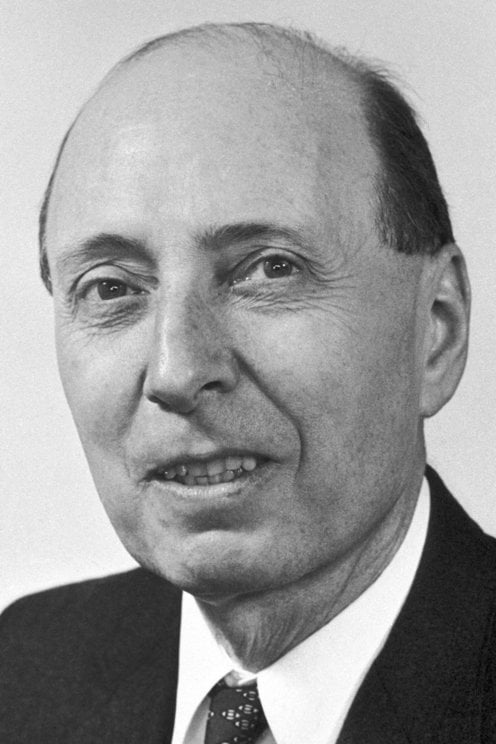
Photo: Ulli Steltzer. Nobel Foundation archive
Eugene Paul Wigner
Nobel Prize in Physics 1963
Born: 17 November 1902, Budapest, Austria-Hungary (now Hungary)
Died: 1 January 1995, Princeton, NJ, USA
Affiliation at the time of the award: Princeton University, Princeton, NJ, USA
Prize motivation: “for his contributions to the theory of the atomic nucleus and the elementary particles, particularly through the discovery and application of fundamental symmetry principles”
Prize share: 1/2
Work
After discovery of the neutron, it became evident that the atomic nucleus is made up of nucleons—protons and neutrons—that are affected by a cohesive force. In 1933 Eugene Wigner discovered that the force binding the nucleons together is very weak when the distance between them is great, but very strong when the nucleons are close to one another as in the atomic nucleus. Wigner also described several characteristics of the nucleons and the nuclear force, including the fact that the force between two nucleons is the same, regardless of whether they are protons or neutrons.
Nobel Prizes and laureates
Six prizes were awarded for achievements that have conferred the greatest benefit to humankind. The 14 laureates' work and discoveries range from quantum tunnelling to promoting democratic rights.
See them all presented here.