Physics
Popular information
Popular information
Quantum properties on a human scale The Nobel Prize laureates in physics for 2025, John Clarke, Michel H. Devoret and John M. Martinis, used a series of experiments to demonstrate that the bizarre properties of the quantum world can be made concrete in a system big enough to be held in the hand. Their superconducting…
more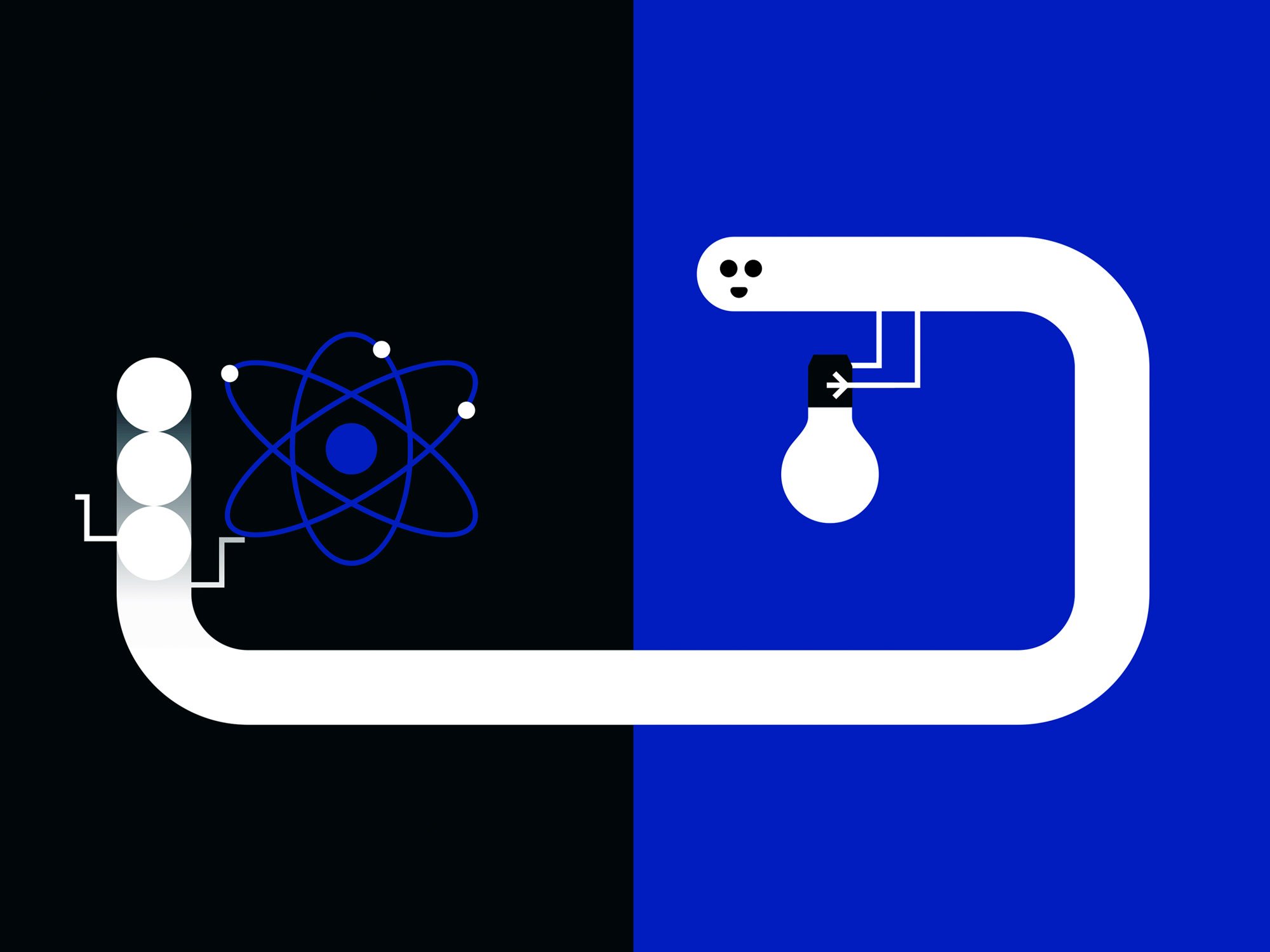
Pressmeddelande: Nobelpriset i fysik 2025
Press release
Swedish 7 oktober 2025 har beslutat utdela Nobelpriset i fysik 2025 till John ClarkeUniversity of California, Berkeley, USA Michel H. DevoretYale University, New Haven, CTUniversity of California, Santa Barbara, USA ochGoogle Quantum AI, Santa Barbara, CA, USA John M. MartinisUniversity of California, Santa Barbara, USA och Qolab, Los Angeles, CA, USA ”för upptäckten av makroskopisk…
morePress release
Press release
English 7 October 2025 has decided to award the Nobel Prize in Physics 2025 to John ClarkeUniversity of California, Berkeley, USA Michel H. DevoretYale University, New Haven, CT andUniversity of California, Santa Barbara andGoogle Quantum AI, Santa Barbara, CA, USA John M. MartinisUniversity of California, Santa Barbara, USA and Qolab, Los Angeles, CA, USA “for…
more


Transcript from an interview with Andrea Ghez
Interview
Interview with the 2020 Nobel Prize laureate in physics Andrea Ghez on 12 December 2022 during the Nobel Week in Stockholm, Sweden. How has life changed since you became a laureate? Andrea Ghez: The last two years have been very much a rollercoaster. It’s a really interesting time to win the Nobel Prize during 2020…
moreJohn Hopfield – Podcast
Podcast
Nobel Prize Conversations “I’ve never been part of the gang. I was a one man band playing little tunes.” Meet physics laureate John Hopfield in a podcast recorded at his cottage in Selborne, England. Together with host Adam Smith, he reflects on the value of interdisciplinary work and how chemists and physicists might collaborate more…
moreDidier Queloz on being a scientist
“Science is done by feeling good and getting ideas” 16 students from all over the world, and from different disciplines within science, joined a conversation with , focusing on the topic of being a scientist. The topics ranged from hobbies and creativity to social responsibility and underrepresented students. The conversation was moderated by Carin Klaesson,…
more