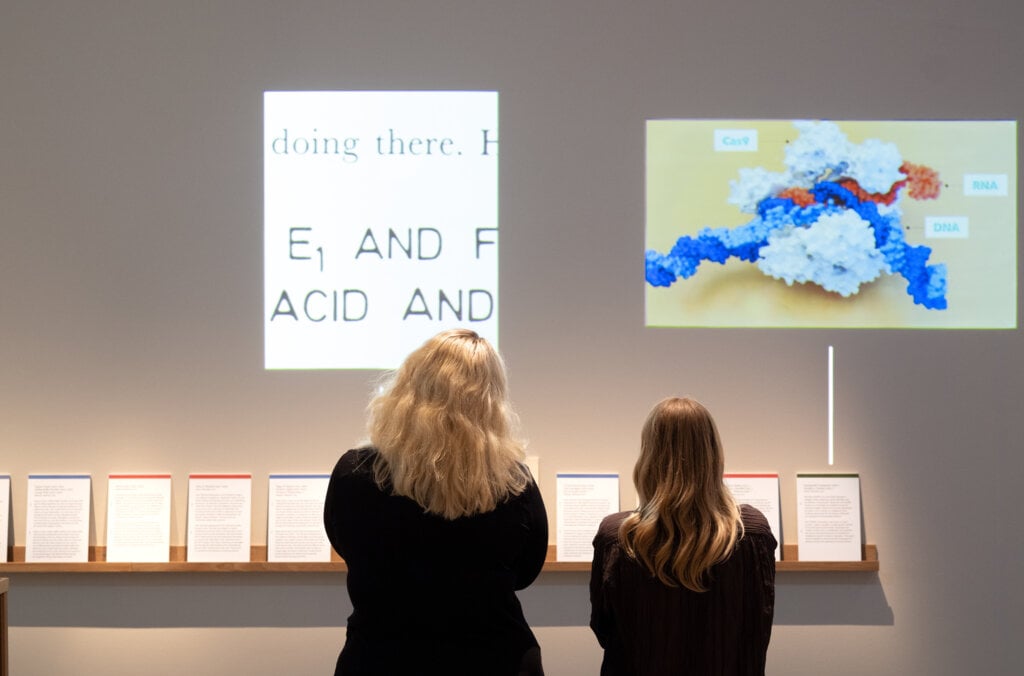
Within the Karolinska Institutet heritage collections, a rich assortment of historical materials can be found in the form of books, paintings, images and instruments – artefacts used in groundbreaking medical discoveries foundational to today’s research. Materials from these collections are now on display in the exhibition Cells, nerves, genes at the Nobel Prize Museum.
The Nobel Prizes in Physiology or Medicine awarded in the period 1931–1933 are at the center of Cells, nerves, genes. That award-winning research, the culmination of centuries of efforts to discover the smallest building blocks of life, then served as a catalyst for current and future research. The exhibition highlights several groundbreaking medical discoveries that have opened doors to previously unknown worlds, and laid the foundations for present‑day research.
“The Karolinska Institutet heritage collections are like a treasure chest filled with gems from the past 500 years. We are delighted to have the opportunity to present a selection of these treasures at the Nobel Prize Museum,” says Eva Åhrén, Head of Medical History and Heritage at Karolinska Institutet.
“We are very pleased to present these remarkable historical artefacts. They are essential pieces in understanding our own time and the history of medicine, and many of them are also beautiful and unique works of art,” says Anna Rastner, Museum Director of the Nobel Prize Museum.
Among other objects, illustrations by Spanish neuroscientist Santiago Ramón y Cajal is on display in the exhibition. Here, seventeenth‑century engravings and modern photomicrographic images demonstrate the strong links between scientific representation and artistic expression, the impact of technological developments, and how research both examines – and is shaped by – its contemporary context.
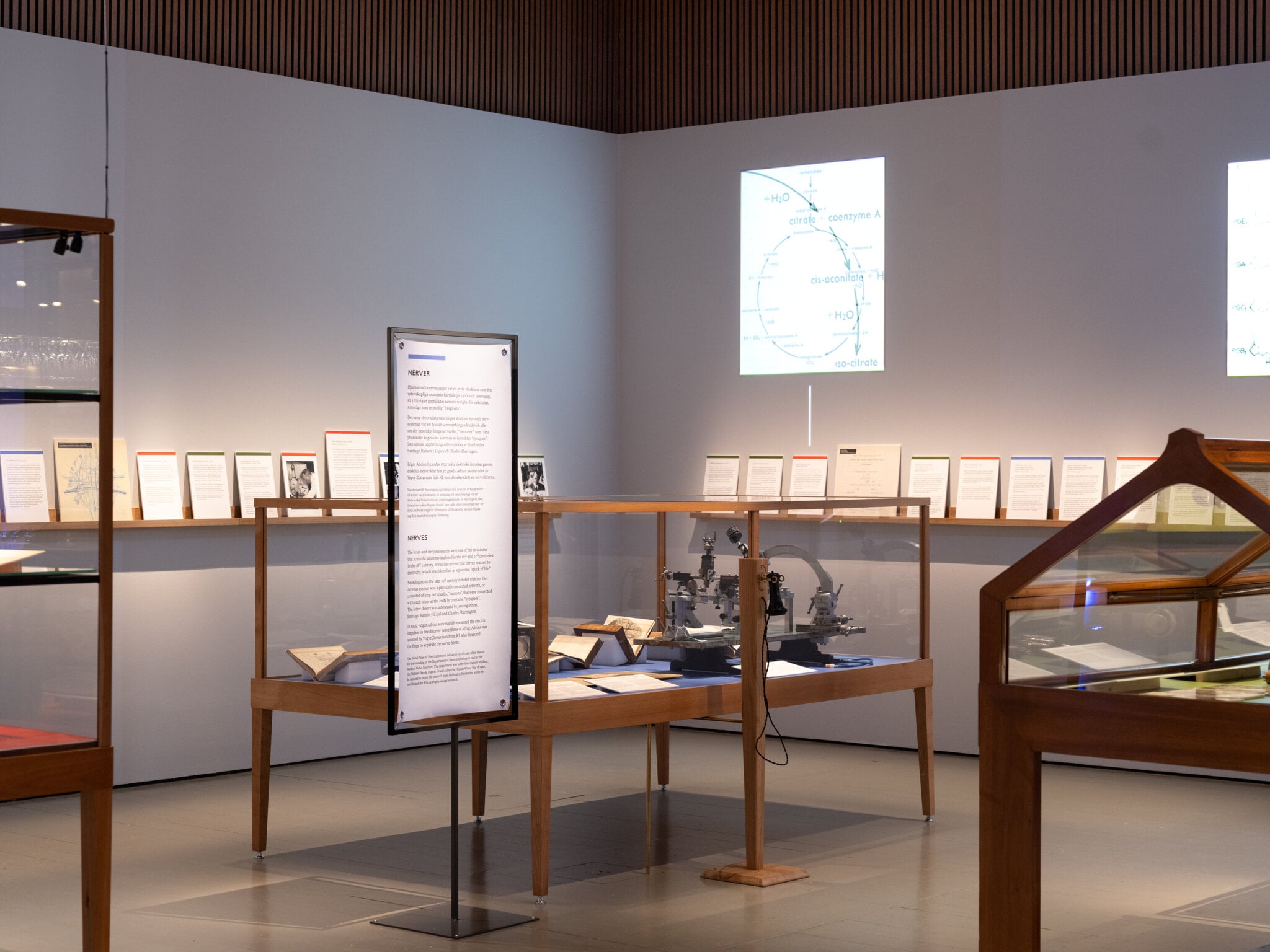
The exhibition Cells, nerves, genes is a collaboration between the Nobel Prize Museum and Medical History and Heritage at the Karolinska Institutet University Library.
The historical books in the exhibition come from the Hagströmer Library, the Historical Library of Karolinska Institutet. The exhibited objects belong to Medical History and Heritage, but many of these have been acquired by the Medical Nobel Institute (Medicinska Nobelinstitutet), which is now part of the Karolinska Institutet institutional structure.
About the Medical History and Heritage
Medical History and Heritage, which is a part of the University Library, is responsible for collecting and preserving the cultural heritage of Karolinska Institutet, as well as making the collections accessible to scholars, students, KI staff and the general public. Two units, Research and Collections and the Hagströmer Library, collect and preserve experimental equipment, artifacts, rare books and documents from Karolinska Institutet. Medical History and Heritage also develops and communicates knowledge about KI:s history.