How we can shape the future we want – learnings from India
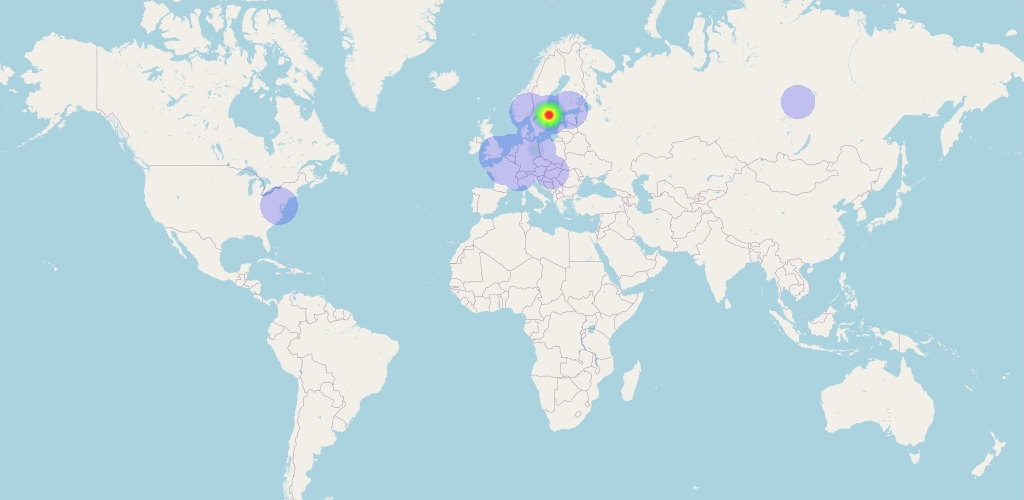
Discover who nominated this laureate for the Nobel Prize, and if the laureate nominated anyone else for the prize.
Use the map to explore which countries the nominations came from, as well as finding out where the nominated person or organisation came from.
Nominated for the Nobel Prize in
- Physics 1901, by Adolf von Baeyer
- Physics 1901, by August Sundell
- Physics 1902, by Friedrich von Hefner-Alteneck
- Physics 1902, by August Sundell
- Physics 1902, by Jacobus Henricus Van´t Hoff
- Physics 1903, by Christian Christiansen
- Physics 1903, by Friedrich von Hefner-Alteneck
- Physics 1903, by Edvard Hjelt
- Physics 1903, by Selim Lemström
- Physics 1903, by August Sundell
- Physics 1903, by Jacobus Henricus Van´t Hoff
- Physics 1903, by Emil Warburg
- Chemistry 1901, by Johan Rosenberg
- Chemistry 1901, by Per Cleve
- Chemistry 1901, by Otto Pettersson
- Chemistry 1902, by Waldemar Brögger
- Chemistry 1902, by Heinrich Goldschmidt
- Chemistry 1902, by Thorstein Hiortdahl
- Chemistry 1902, by Johan Rosenberg
- Chemistry 1902, by Johan Herman Lie Vogt
- Chemistry 1903, by Carl Bergstrand
- Chemistry 1903, by Waldemar Brögger
- Chemistry 1903, by Per Cleve
- Chemistry 1903, by Emil Fischer
- Chemistry 1903, by Heinrich Goldschmidt
- Chemistry 1903, by Friedrich von Hefner-Alteneck
- Chemistry 1903, by Thorstein Hiortdahl
- Chemistry 1903, by Member of the Nobel Committee for chemistry
- Chemistry 1903, by Johan Rosenberg
- Chemistry 1903, by Karl von Than
- Chemistry 1903, by Jacobus Henricus Van´t Hoff
- Chemistry 1903, by Johan Herman Lie Vogt
- Physiology or Medicine 1912, by E London
- Physiology or Medicine 1914, by E London
Submitted nominations for the Nobel Prize in
- Physics 1901, nominee: Philipp E.A. v. Lenard
- Physics 1902, nominee: Pieter Zeeman
- Physics 1908, nominee: Ernest Lord Rutherford
- Physics 1913, nominee: Hermann Frahm
- Physics 1915, nominee: William Henry Bragg
- Physics 1915, nominee: Henri Deslandres
- Physics 1919, nominee: Albert Einstein
- Physics 1927, nominee: John Fleming
- Chemistry 1907, nominee: Ernest Lord Rutherford
- Chemistry 1908, nominee: Ernest Lord Rutherford
- Chemistry 1909, nominee: Wilhelm Ostwald
- Chemistry 1911, nominee: Marie Curie
- Chemistry 1913, nominee: Theodore Richards
- Chemistry 1914, nominee: Theodore Richards
- Chemistry 1915, nominee: Henry Moseley
- Chemistry 1920, nominee: Jean Perrin
- Chemistry 1924, nominee: Jean Perrin
- Chemistry 1927, nominee: Heinrich Otto Wieland
Explore a visualisation of the nominations
Search for nominees and nominators in the nomination archive
Whether it is scientific innovation, healthy diets or pollution-free cities, the future we want will be determined by what we prioritise today, and how societies are organised to deliver those priorities.
On a warm November morning in Bengaluru, a packed auditorium of students sat on the edge of their seats as Nobel Prize laureates and other world-leading experts discussed the science and institutions needed to drive change. Hands shot up to ask questions about democracy, youth empowerment and how the rules and regulations that governments create shape the prosperity of a country.
In 2024, the Sveriges Riksbank Prize in Economic Sciences in Memory of Alfred Nobel was awarded to Daron Acemoglu, Simon Johnson and James A. Robinson “for studies of how institutions are formed and affect prosperity.” Their research shows how former European colonies have thrived or struggled depending on the governance systems colonial powers imposed. This award became the spark for the Nobel Prize Dialogue in India, where Robinson and 2021 chemistry laureate David MacMillan met hundreds of students to discuss science and institutions.
Challenged the familiar narrative
Robinson challenged the familiar “one-way street” narrative of economic development, proposed by leading British philosophers and economists from the eighteenth century onwards. In that narrative, Western societies, stretching back to the ancient Greeks, solved social and economic challenges and the rest of the world copied. In this worldview, the only way to achieve economic progress and human flourishing was through adopting liberal governance philosophies. This story has been persuasive and for good reason: life expectancy in wealthy liberal economies has grown markedly in the last century.
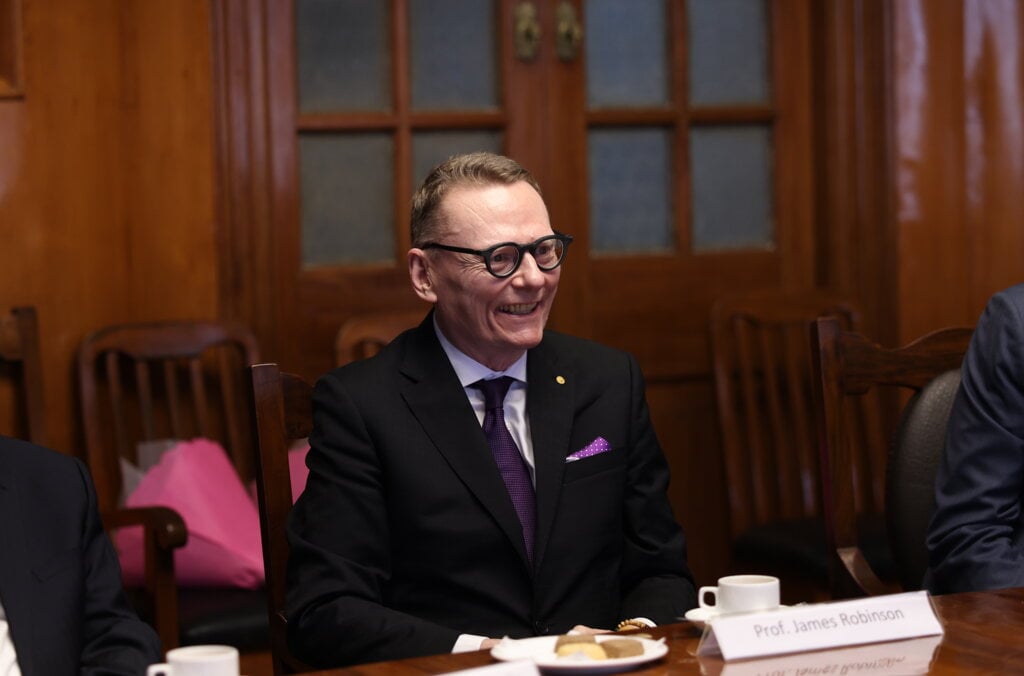
But Robinson pointed out that many European ideas and innovations – whether the idea is “democracy” or the “printing press” – are often taken from elsewhere and adapted. Or the new idea is the direct result of cultures interacting, says Robinson. He called this the “two-way street” but argued that this is no longer the only way of innovating. Other economic models, notably China, have also delivered rapid progress for society without adopting liberal ideals. On top of that, in recent decades gross inequality has become a destabilising influence in many liberal societies, he said.
What does this mean for the future we want? From an institutional point of view, the future is less clear. Economic models that have dominated for over a century are being questioned. For Robinson, this offers possibilities, but can also be profoundly unsettling.
Catalysing action
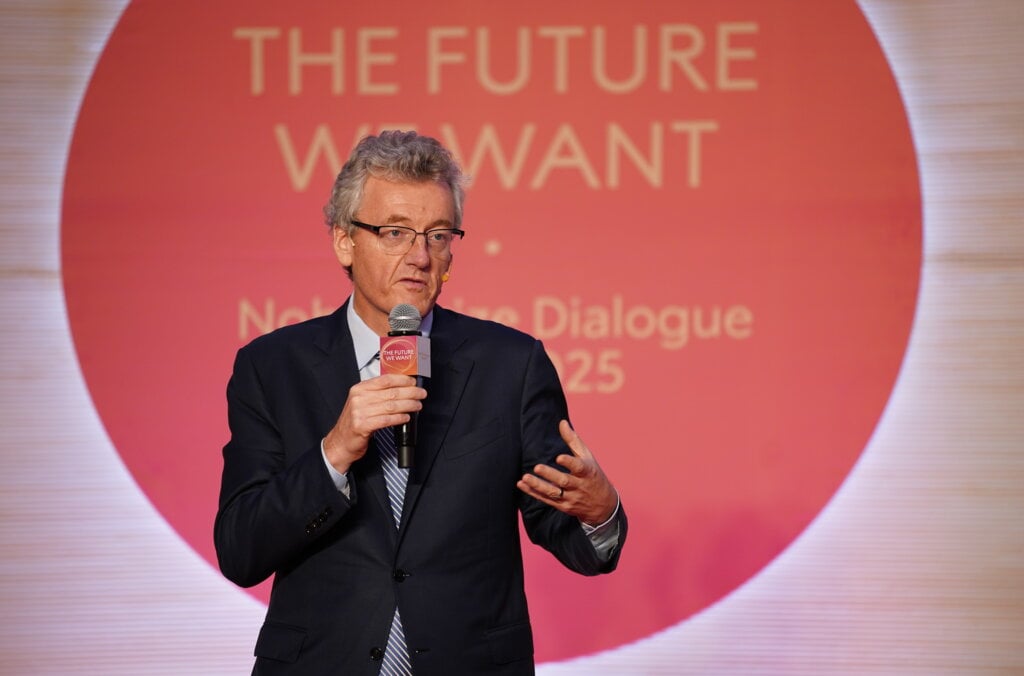
David MacMillan brought a different perspective to the table. MacMillan is convinced that the solutions to many of the challenges facing humanity, from disease prevention to zero-carbon societies, will likely have chemistry at their heart.
Chemical reactions are at the center of most major industrial chemical processes – and most of these are driven by catalysts. For MacMillan the science of catalysts is one of the most exciting areas of chemistry, offering huge potential. For example, Earth’s population of eight billion people is dependent on the catalyst behind the Haber-Bosch process (Nobel Prize in Chemistry 1918) to produce nitrogen fertilisers. Indeed, half the nitrogen in our bodies comes from synthetic fertilisers.
“Everything you see in this room is the result of a chemical reaction.”
David MacMillan, Nobel Prize in Chemistry 2021
To realise the full potential of chemistry will require much greater investment in chemistry – and India is well placed to grow its chemistry community.
If we can match the sky-high optimism of this generation with fairer institutions, better wealth redistribution, youth empowerment and long-term investment in research and education – then the future we want becomes the future we collectively create.
Read more and watch a video from the Nobel Prize Dialogue in India
Nobel Prizes and laureates
Six prizes were awarded for achievements that have conferred the greatest benefit to humankind. The 14 laureates' work and discoveries range from quantum tunnelling to promoting democratic rights.
See them all presented here.