Harold C. Urey
Facts
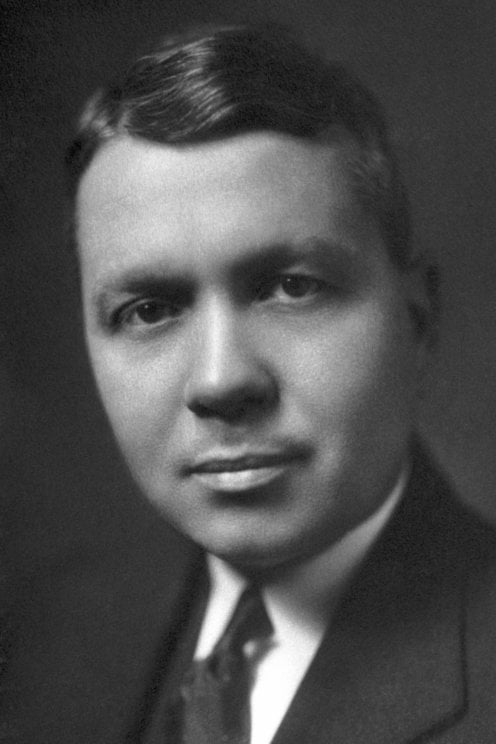
Photo from the Nobel Foundation archive.
Harold Clayton Urey
Nobel Prize in Chemistry 1934
Born: 29 April 1893, Walkerton, IN, USA
Died: 5 January 1981, La Jolla, CA, USA
Affiliation at the time of the award: Columbia University, New York, NY, USA
Prize motivation: “for his discovery of heavy hydrogen”
Prize share: 1/1
Work
Elements occur as various isotopes, variations of elements with different atomic weights. Harold Urey wondered if the smallest atom, hydrogen, had different isotopes, and he calculated how they ought to be constituted if that were the case. By distilling liquid hydrogen, a hydrogen isotope was extracted in 1932 that was twice as heavy as regular hydrogen. It was called deuterium. Water that contains deuterium, so-called heavy water, proved to have other chemical properties that differed from regular water, and in various ways deuterium became significant in nuclear technology.
Nobel Prizes and laureates
Six prizes were awarded for achievements that have conferred the greatest benefit to humankind. The 14 laureates' work and discoveries range from quantum tunnelling to promoting democratic rights.
See them all presented here.

