Plastics that imitate metals


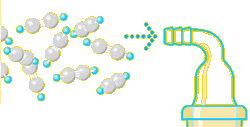 |
Plastics are polymers, molecules formed of many identical units bound to each other like pearls in a necklace. For a polymer to be electrically conductive it must “imitate” a metal – the electrons in the bonds must be freely mobile and not bound fast to the atoms. One condition for this is that the polymer consists of alternate single and double bonds, termed conjugated double bonds. Polyacetylene is the simplest possible conjugated polymer. It is obtained by polymerisation of acetylene, shown to the left. |
Nobel Prizes and laureates
Six prizes were awarded for achievements that have conferred the greatest benefit to humankind. The 14 laureates' work and discoveries range from quantum tunnelling to promoting democratic rights.
See them all presented here.