Aleksandr Solzhenitsyn
Facts
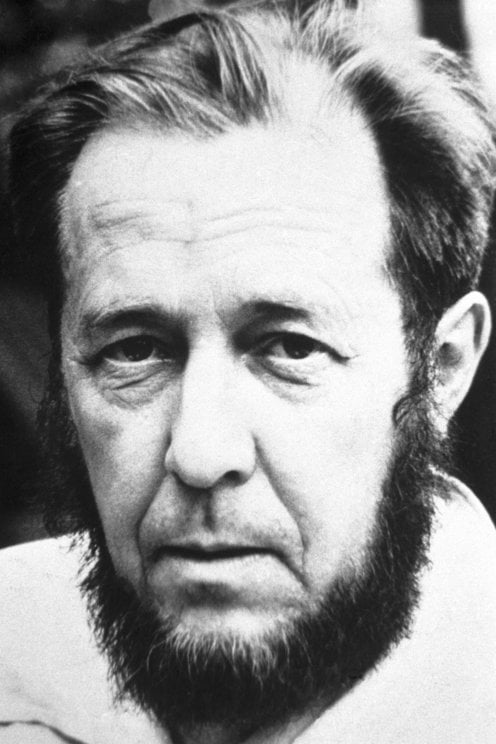
Photo: Eduard Gladkov. Nobel Foundation archive
Aleksandr Isayevich Solzhenitsyn
Nobel Prize in Literature 1970
Born: 11 December 1918, Kislovodsk, Russia
Died: 3 August 2008, Troitse-Lykovo, Russia
Residence at the time of the award: USSR (now Russia)
Prize motivation: “for the ethical force with which he has pursued the indispensable traditions of Russian literature”
Language: Russian
Prize share: 1/1
Life
Aleksandr Solzhenitsyn grew up in Rostov in Russia. He began writing fiction at an early age, but studied physics and mathematics. During service in the army during the Second World War, he was arrested for having criticized Stalin in letters he had written. He was put in prison camps, exiled and also suffered from cancer. In exile, he worked as a teacher of mathematics and physics, but in secret he wrote books that were later published. He was forced to leave the Soviet Union in 1974, but returned to Russia in 1994.
Work
A literary work is a reflection of its time and its author's origin and situation. Aleksandr Solzhenitsyn's works grew out of Russia's narrative traditions and reflect Soviet society. His debut, One Day in the Life of Ivan Denisovich, and several of his later works, focus on life in the Soviet gulag camps. Solzhenitsyn's books often lack an obvious main character, moving instead between different characters at the center of the plot. This reflects a humanist view of the universality of human experience.
Nobel Prizes and laureates
Six prizes were awarded for achievements that have conferred the greatest benefit to humankind. The 14 laureates' work and discoveries range from quantum tunnelling to promoting democratic rights.
See them all presented here.