Paul Ehrlich
Facts
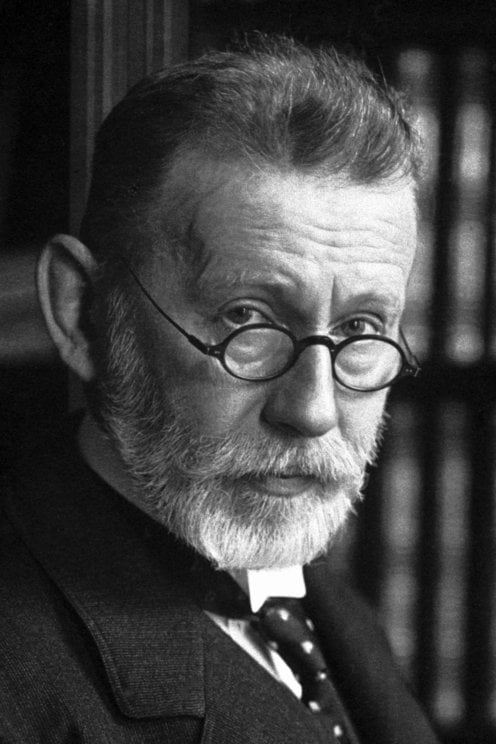
Photo: Alfred Krauth. Nobel Foundation archive
Paul Ehrlich
Nobel Prize in Physiology or Medicine 1908
Born: 14 March 1854, Strehlen, Prussia (now Strzelin, Poland)
Died: 20 August 1915, Bad Homburg vor der Höhe, Germany
Affiliation at the time of the award: Goettingen University, Göttingen, Germany; Königliches Institut für experimentelle Therapie (Royal Institute for Experimental Therapy), Frankfurt-on-the-Main, Germany
Prize motivation: “in recognition of their work on immunity”
Prize share: 1/2
Work
Our immune system protects us from attacks by microorganisms. As part of its defenses, the immune system forms antibodies in the blood that neutralize poisons, or toxins, that are formed by bacteria. One of Paul Ehrlich’s contributions to immunology was the transfer of blood serum with antibodies to treat and counteract diphtheria, which he carried out with Emil von Behring. Ehrlich speculated that cells have a kind of receptor that binds to the harmful substances. The receiving elements are knocked off of the cell and become antibodies.
Nobel Prizes and laureates
Six prizes were awarded for achievements that have conferred the greatest benefit to humankind. The 14 laureates' work and discoveries range from quantum tunnelling to promoting democratic rights.
See them all presented here.