James E. Rothman
Facts
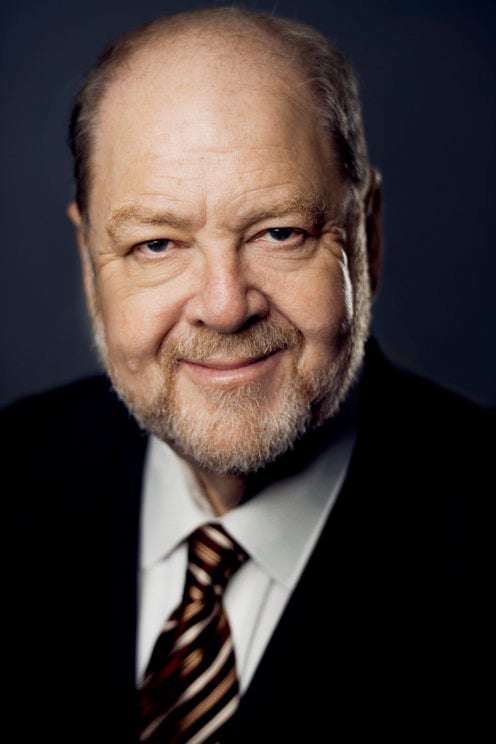
© Nobel Prize Outreach. Photo: A. Mahmoud
James E. Rothman
Nobel Prize in Physiology or Medicine 2013
Born: 3 November 1950, Haverhill, MA, USA
Affiliation at the time of the award: Yale University, New Haven, CT, USA
Prize motivation: “for their discoveries of machinery regulating vesicle traffic, a major transport system in our cells”
Prize share: 1/3
Life
James Rothman was born in Haverhill, Massachusetts in the United States. He studied at Yale University in New Haven, Connecticut, and later received his Ph.D. from Harvard University in Cambridge, Massachusetts, in 1976. Rothman has worked at the Massachusetts Institute of Technology, Stanford University, Princeton University, Memorial Sloan-Kettering Cancer Center, and Columbia University. James Rothman is married with one daughter and one son.
Work
The cells inside our bodies produce a host of different molecules that are sent to specific sites. During transport, many of these molecules are grouped together in tiny sac-like structures called vesicles. These vesicles help transport substances to different places inside the cell and send molecules from the cell’s surface as signals to other cells in the body. During the 1980s and 1990s, James Rothman showed how vesicles fuse with specific surfaces in the cell so that transports arrive at the correct destination.
Nobel Prizes and laureates
Six prizes were awarded for achievements that have conferred the greatest benefit to humankind. The 14 laureates' work and discoveries range from quantum tunnelling to promoting democratic rights.
See them all presented here.

