Mary E. Brunkow
Interview
Interview, December 2025
Interview with the 2025 Nobel Prize laureate in physiology or medicine Mary Brunkow on 6 December 2025 during Nobel Week in Stockholm, Sweden.
Mary Brunkow answers the following questions (the links below lead to a clip on YouTube):
00:13 Can you tell us about your childhood?
02:03 Was there a single defining moment when you decided to pursue science?
04:20 What drew you into science?
05:51 What do you think about the importance of collaboration in science?
09:11 Is diversity in science important?
10:38 What characteristics do you need to be a successful scientist?
11:14 What advice would you give to a young researcher?
12:29 How important is it that we keep investing in doing basic research?
13:44 Could you describe your career path?
18:36 Could you tell us about your co-laureate Fred Ramsdell?
20:29 What motivates you to conduct research?
21:13 What do you like to do in your spare time?
22:09 What sparks your creativity?
22:44 How did the news of your Nobel Prize reach you?
25:41 How does it feel knowing that your research has helped so many people?
First reactions. Telephone interview, October 2025
“It hasn’t quite hit me yet”
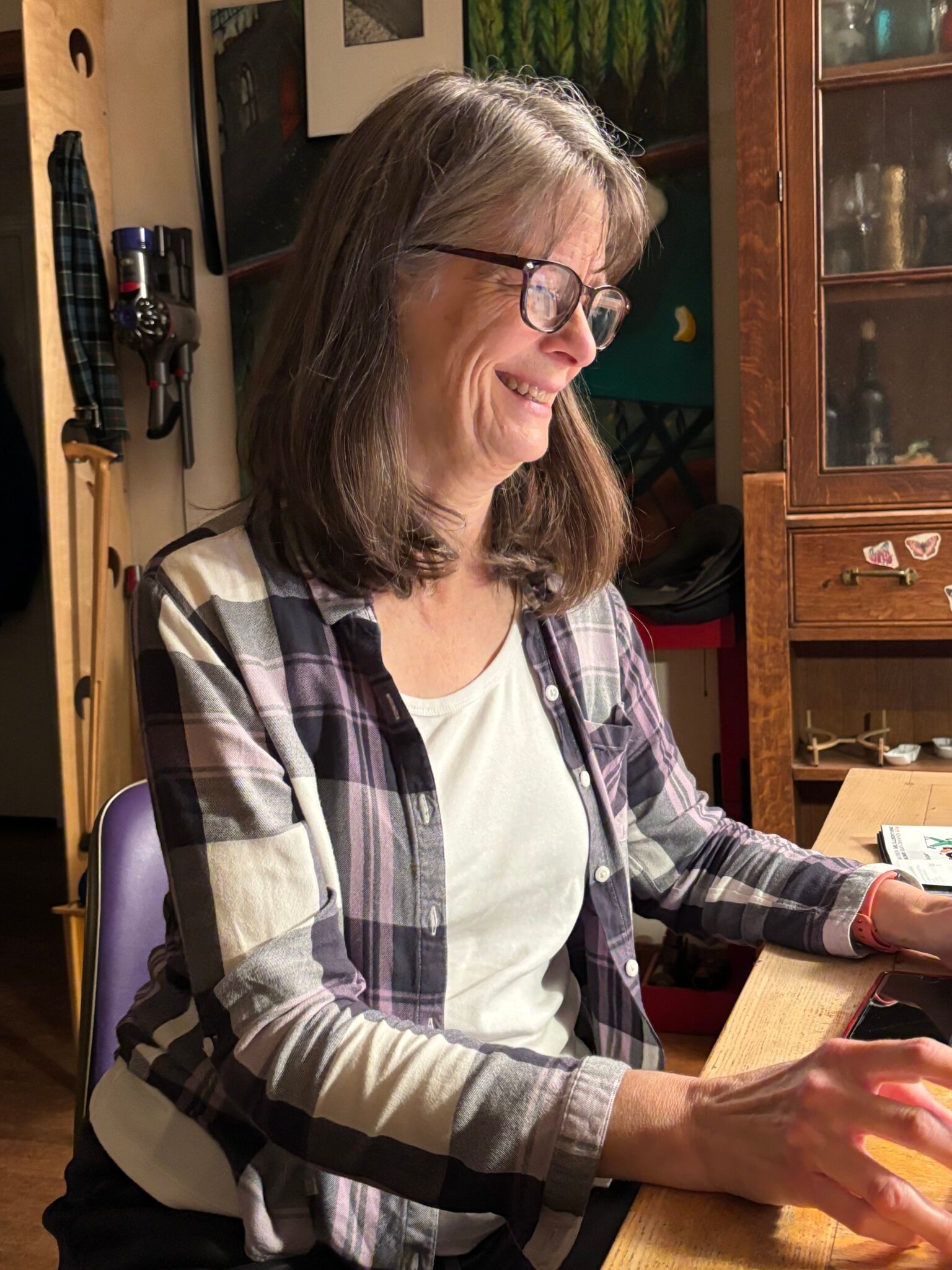
“My phone rang, and I saw a number from Sweden and thought, well that’s just spam of some sort, so I disabled the phone and went back to sleep.” Mary Brunkow clearly wasn’t expecting the call from Stockholm. This brief conversation with the Nobel Prize’s Adam Smith catches the new medicine laureate at her dining table at 4:30am, an hour and a half after she had heard the news. She talks about the power of genetics to unravel biology and how she feels it was an honour to have been one of the contributors to solving the puzzle of immune tolerance: “It takes a bunch of different brains, all working on it together, for sure!”
Interview transcript
Mary Brunkow: Hello.
Adam Smith: Hello, am I speaking to Mary Brunkow?
MB: Yes.
AS: This is Adam Smith calling from Nobelprize.org.
MB: Well, that’s pretty nice, hello. Hold on a second. Can I put you on speaker phone?
AS: How nice. As long as you don’t lose my call, we can. What am I speaking to? The kitchen at home? Where have we caught you?
MB: I’m sitting at the dining table.
AS: And how did this news reach you?
MB: Well, about an hour and a half ago, my phone rang and I saw a number from Sweden and thought, well, that’s just, you know, that’s spam of some sort. So I disabled the phone and went back to sleep, and I don’t know. And then my husband was upstairs and then I heard a voice and he’s talking to somebody in the living room and it’s the AP. It was someone on the front porch. And it’s the local news. So now it’s 4.30 am and I’m down, sitting at the dining table talking to you.
AS: How very lucky for me. And it sounds like your husband is there too. Are there others?
MB: No, just the husband and the dog. He just left for a minute because the dog is a bit confused about what’s going on.
AS: Yeah, right. The dog should not be up. Congratulations on the news of the award.
MB: Thank you. Thank you very much. Thank you.
AS: So I’m guessing that this was not something you were expecting to happen.
MB: Not at all. No.
AS: Early days, but have you had any possibility to think what it means to you?
MB: Well, what it means to me? Well, my head is just… It was an amazing team effort back when we did the work. My career in science has changed quite a bit since that work was done. And I don’t actually even work in that particular field anymore. So it’s an honor to have been a part of that initial work. I have been following what is happening in medicine and how that discovery could have helped in some small way. But otherwise, I don’t know what else to say. At this point, it’s still, you know, I’m sure it hasn’t quite hit me yet.
AS: I suppose one thing though is that, I mean, you’re an amazing geneticist and cloning a gene, finding that gene, back in 1998 was a very different business from finding genes now. It was quite a search you had to undertake.
MB: Yeah, it’s amazing how much the science has changed. And how we would do it today is, you know, completely different from how we had to do it back then. Yeah.
AS: And it’s a testament to the power of genetics to sort out problems in biology to tell us more about how we work.
MB: Absolutely. So we approached it from the point of view of trying to understand the cause of a phenotype that was observed in mice. So we were taking advantage of a mouse mutation that leads to an interesting immune defect that then we also were able to link that to a human disease that is found, very rarely, in children. And so definitely the power of genetics. And it was obvious that there was some genetic overlap between the human and the mouse conditions. And that certainly helped, but really it was once we had some idea of the genetics and a genetic location for where the mutant gene would be, then it was really a molecular slog, to get to that exact mutation, because it was just a very small genetic alteration that results in quite a profound change in the immune system.
AS: Indeed. But having the foresight to see the link between the scurfy mouse and the disease, IPEX disease, and just, following your hypothesis, it all paid off, but it takes a special art.
MB: It sure did.
AS: Yeah. For patients, hopefully. In the end.
MB: Yeah. Yeah. And it takes a bunch of different brains all working on it together, for sure.
AS: Exactly. We’ll have a chance to speak about all this at greater length later, and I must give you back to the others waiting. Thank you very much indeed.
MB: Thank you.
AS: Enjoy the rest of your day. Thank you so much.
MB: Okay, thank you. Bye-bye.
AS: Bye.
Did you find any typos in this text? We would appreciate your assistance in identifying any errors and to let us know. Thank you for taking the time to report the errors by sending us an e-mail.
Nobel Prizes and laureates
Six prizes were awarded for achievements that have conferred the greatest benefit to humankind. The 14 laureates' work and discoveries range from quantum tunnelling to promoting democratic rights.
See them all presented here.

