Wangari Maathai
Facts
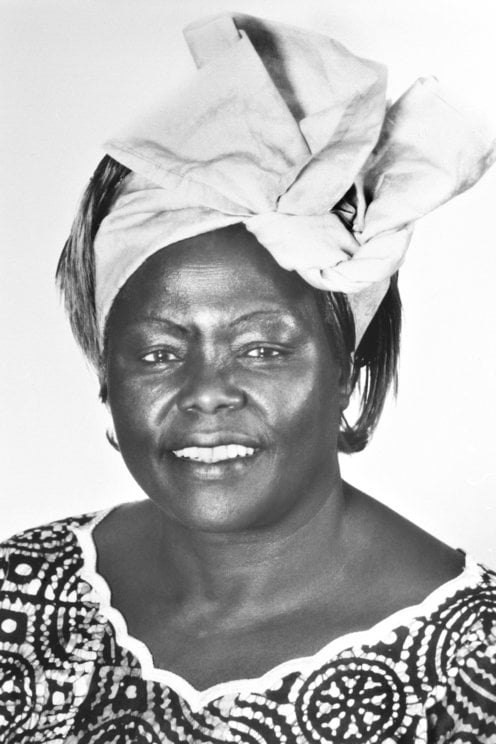
Photo from the Nobel Foundation archive.
Wangari Muta Maathai
Nobel Peace Prize 2004
Born: 1 April 1940, Nyeri, Kenya
Died: 25 September 2011, Nairobi, Kenya
Residence at the time of the award: Kenya
Prize motivation: “for her contribution to sustainable development, democracy and peace”
Prize share: 1/1
Sustainable Development, Democracy and Peace
Wangari Maathai was the first African woman to receive the Nobel Peace Prize. She was also the first female scholar from East and Central Africa to take a doctorate (in biology), and the first female professor ever in her home country of Kenya. Maathai played an active part in the struggle for democracy in Kenya, and belonged to the opposition to Daniel arap Moi's regime.
In 1977 she started a grass-roots movement aimed at countering the deforestation that was threatening the means of subsistence of the agricultural population. The campaign encouraged women to plant trees in their local environments and to think ecologically. The so-called Green Belt Movement spread to other African countries, and contributed to the planting of over thirty million trees.
Maathai's mobilisation of African women was not limited in its vision to work for sustainable development; she saw tree-planting in a broader perspective which included democracy, women's rights, and international solidarity. In the words of the Nobel Committee: “She thinks globally and acts locally.”
Nobel Prizes and laureates
Six prizes were awarded for achievements that have conferred the greatest benefit to humankind. The 14 laureates' work and discoveries range from quantum tunnelling to promoting democratic rights.
See them all presented here.