Artturi Virtanen – Nobel Lecture
Nobel Lecture, December 12, 1945
The Biological Fixation of Nitrogen and the Preservation of Fodder in Agriculture, and Their Importance to Human Nutrition
Read the Nobel Lecture
Pdf 545 kB
Artturi Virtanen – Banquet speech
Artturi Virtanen’s speech at the Nobel Banquet in Stockholm, December 10, 1945 (in Swedish)
Kungliga högheter, mina damer, mina herrar.
Vid Nobelfestligheterna ha pristagarna säkerligen från första början ganska regelbundet talat om fred, den goda viljan samt frihet. Detta temas aktualitet har varierat från år till år. Nu är det kanske aktuellare än någonsin förr. Emellertid skilja sig i detta nu olika synpunkter på begreppen fred och frihet i så hög grad från varandra, att man på stora delar av jordklotet icke ens fritt kan tala om frihet och en rättvis fred. Ordet frihet användes visserligen mycket – och speciellt just nu – men ofta med den innebörd, som framgår av följande spanska strofer från 166o-talet:
El pensamiento libre
proclamo en alta vos
y muera el que no piense
igual quo pienso yo.”
som i svensk översättning lyda:
Med hög röst proklamerar jag tankefrihet
död åt den, som icke tänker som jag.
Detta föreställningssätt, som innebär en återgång till sekelgamla tider av förtryck och mörker, är den värsta följden av världens kaotiska tillstånd. Den hotar nämligen att förgöra den europeiska anda, på vilken den bästa delen av vår kultur grundar sig.
Den vetenskapliga forskningen strävar till att behandla företeelser så objektivt som möjligt. Den bemödar sig att uppbygga sina teorier kritiskt på grundval av alla kända fakta. Förutsättningen härför är ovillkorlig tankefrihet. Den vetenskapliga forskningens moral bör vara lika i alla fall, den kan med andra ord icke anse samma princip vara i det ena fallet oriktig i det andra fallet riktig. Vetenskapen arbetar således på annat sätt än politiken, som för ändamålsenlighetens skull hos en del folk lovordar vissa egenskaper och känslor, t.ex. fosterlandskärlek, och handlingar sådana som oeftergivlig offervilja, och hos andra folk deklarerar dem som brottsliga. Denna brist på objektivitet gör förhållandena folken emellan osäkra, ja man kan säga omoraliska.
Folken erhålla nu för tiden av vetenskapen de metoder och redskap, som under fredliga tider möjliggöra ett blomstrande liv på jorden, men dessa kunna i krigstid tyvärr även användas till att förgöra liv – i en förut oanad utsträckning. Konflikten mellan det vetenskapliga tänkandets objektivitet och det politiska tänkandets hänsynslösa subjektivitet hotar leda till mänsklighetens undergång. Enda medlet att förebygga detta synes vara att tillämpa det objektiva tänkesättet även på de mellanfolkliga förhållandena, alltså på den s.k. politiken. Det är förvisso uppenbart, att denna objektivitet måste bli bristfällig – såsom naturligt är då det är fråga om människans gärning. Den grund man bör bygga på vid ordnandet av de mellanfolkliga förbindelserna borde dock liksom inom vetenskapen vara objektivitet. Ett allmänt godkännande av ett sådant krav skulle främja mänsklighetens tillfrisknande. De uppenbara orättvisorna kunde då rättas till utan krig och folken emellan kunde en god vilja uppnås, som icke skulle vara influerad av konjunkturerna.
Vetenskapen har nu ett större ansvar för världens öde än någonsin förr, emedan den ger de mest förödande vapen i händerna på politiken. Men då den så gör bär den även ansvaret för dessa vapen. Vetenskapens plikt är att se till, att den icke utnyttjas till att förtrycka friheten, utan att den må utgöra ett stöd för folkens frihet och ett fredligt samarbete.
Vid utdelningen av Nobelprisen har Sverige alltjämt förmått bibehålla en hög, objektiv standard. Utan att fästa avseende vid propaganda, dikterad av politisk ändamålsenlighet, ha de instanser, som enligt Nobels testamente välja Nobelpristagarna, oavsett nationalitet utfört sitt uppdrag enbart på basen av saklig värdering. Svenska Vetenskapsakademien och Svenska Akademien visa sålunda vägen för andra av lidelser förvirrade folk, till ära för Sverige och till nytta för mänsklighetens utveckling.
Prior to the speech, Professor A.H.T. Theorell, Director of the Department of Biochemistry at the Nobel Institute of Medicine, addressed the laureate: “To you, Artturi Virtanen, we give our congratulations. For the first time a representative of our old Finnish brother-nation has been crowned with Nobel’s laurels for feats on the arena of natural science. The problems that you have solved must have appeared especially important in the country of the peasant Paavo, where all too often, according to the well-known line of your national poet Runeberg, you have had to ‘blanda dubbelt bark i brödet’. Your method has, however, proved of great value far beyond the frontiers of your own country, and is a weightly contribution to the realization of the ideal ‘freedom from want’.”
Artturi Virtanen – Documentary
Artturi Virtanen – Nominations
Award ceremony speech
Presentation Speech by Professor A. Westgren, Chairman of the Nobel Committee for Chemistry of the Royal Swedish Academy of Sciences, on December 10, 1945
Your Majesty, Royal Highnesses, Ladies and Gentlemen.
In our northern latitudes we have to feed our most useful domestic animals in winter with preserved fodder, generally hay. But for a long time it has been common knowledge that hay alone is insufficient to keep the animals in perfect condition. To be able even in winter to produce good quality milk in sufficient quantity our cows need concentrated fodder. Thus, so far they have been fed in most cases on oil cakes imported from warmer countries. Obviously, replacing these products imported from other countries by an indigenous feeding stuff would offer appreciable economic advantages for our agriculture.
This is precisely the achievement of the AIV method elaborated by Virtanen and denoted by the initials of his name. Therefore the Swedish Academy of Sciences has decided that his research and discoveries in the field of agricultural and nutrition chemistry, and particularly his method of preserving animal fodder, have qualified him for the Nobel Prize for Chemistry, 1945.
For a long time Virtanen had been seeking to make what contribution he could to improving the supply of feeding stuffs in his country. With the indomitable tenacity which marks the sons of Finland he never lost sight of that objective and stubbornly persisted in carrying out his research programme.
Leguminous plants such as clover, vetch and lucern are green fodder which, when harvested in due season, provide cattle with the vitamins and proteins necessary for them to achieve full production capacity. In seeking to achieve by rational and economic cultivation a green fodder with the maximum protein content Virtanen was led to study the conditions of nitrogen assimilation and of protein formation in vegetable organisms. Displaying great ingenuity, he attempted to solve the difficult problem of the process whereby the leguminous plants fix atmospheric nitrogen by means of bacteria contained in their tubers. The original aim of these studies has still not been achieved but their results are already valuable and hold promise of being very important.
In his attempts to improve the availability of feeding stuffs in Finland, Virtanen also founded on purely theoretical data his method of preserving green fodder, a method which avoids protein loss and minimizes vitamin loss.
It had long been known that the addition of organic or mineral acids to ensilage inhibited the breathing of the vegetable cells as well as all the fermentation processes. There have been frequent endeavours to turn this phenomenon to practical account. However, these attempts were carried out empirically and without serious study of the conditions for conserving the nutrient value of the fodder, or for using it as an animal feeding stuff. By his systematic, thorough studies Virtanen was the first to solve this problem.
To preserve fodder Virtanen uses hydrochloric acid with the addition of sulphuric acid. After painstaking, protracted studies he determined the limiting degrees within which the acidity must be kept in order to achieve the required result. The following beneficial results are simultaneously obtained. The breathing of the plant cells, which consume readily soluble carbohydrates is reduced to a minimum, particularly if the fodder is well stacked. The lactic-acid fermentation ceases or remains at an insignificant level. The butyric-acid fermentation, which decreases the attractiveness of the fodder and lowers the quality of the milk, ceases. Protein decomposition, which is apt to cause heavy financial losses, ceases almost altogether. The content of vitamin A and carotin is maintained and vitamin B and vitamin C are also well preserved. Vitamin-rich milk and butter are very important for public health and AIV fodder provides an effective means of improving this supply of vitamins. Because of these fodders “summer milk can be produced the whole year round”. AIV fodder has no deleterious effect on the animals which readily consume it. Some weeks after the silo has been charged the mineral acids are neutralized and fixed in the form of salts by the basic products contained in the fodder, while harmless organic acids are liberated. AIV fodder has frequently assisted in improving the condition of animals, their fertility and resistance to disease.
One merit of the AIV method is that it also enables second crops of grass gathered in the autumn to be ensilated, regardless of the atmospheric conditions, and thus permits economic use of this fodder which, more often than not, cannot be used as hay.
Virtanen is not an office-bound scientist. Himself a farmer, he has tried out the most appropriate ways of applying his ensilation system.
This system has become established in Finland. A flight nowadays over the farming areas of southern Finland shows one or more pits near almost every farm. The observer may perhaps think that they are the traces left by the bombardments of the last war. Nothing of the sort. They are silos filled with AIV fodder. In Sweden too the AIV method is becoming increasingly appreciated. Between 1932, the year when it was applied for the first time, and today, the quantities of green fodder prepared by the AIV method have doubled or tripled every four years. Last year they rose to 295,000 tons. The use of the method has increased appreciably during recent years in Denmark and Great Britain. It is also applied in Norway and Holland. In America as well it has stimulated growing interest and is each year being increasingly practised. In America and Germany large quantities of silage are prepared by methods which may be considered as variants of the AIV method. Virtanen’s studies provide a firm basis for future research in the matter of silage.
Professor Virtanen. I do not think I am wrong to say that it is in your ardent patriotism that we must look for the most powerful force inspiring your great scientific achievement. During your years of effort Finland remained for you as for the noble commandant in Runeberg’s poem: “the sullen, needy, humble, and holy Fatherland”. By your work you have confirmed that the person who places his sincerity and a tireless zeal at the service of his kin and of his country, without thought of himself and without seeking for personal profit, also serves the interests of humanity. Perhaps your eyes are fixed more attentively than ever on the difficult biochemical problems which you have set yourself to solve and to which you have made so many important contributions. For that reason we are certain that your studies will again bear fresh fruit. It is a joy for our Academy to be able to give you new means of attaining the aims which you have set yourself. We warmly wish you prosperity and I would ask you to receive from the hands of His Majesty the King, the Nobel Prize for Chemistry for the year 1945.
The Nobel Prize in Chemistry 1945
Artturi Virtanen – Biographical
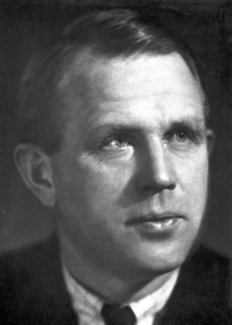
Artturi Ilmari Virtanen was born in Helsinki on the 15th of January, 1895, as the son of Kaarlo Virtanen and Serafiina Isotalo. He was educated at the Classical Lyceum at Viipuri, Finland. After finishing school, he studied chemistry, biology, and physics at the University of Helsinki, where he took his M.Sc. in 1916 and obtained his D.Sc. in 1919. Subsequently he studied physical chemistry in Zurich in 1920 under G. Wiegner, bacteriology in Stockholm in 1921 under Chr. Barthel, and enzymology in Stockholm during 1923-1924 under H. von Euler. Since 1923, his interest turned to biochemistry.
He was first-assistant of the Central Laboratory of Industries at Helsinki during 1916-1917, and chemist in the Laboratory of Valio, Finnish Cooperative Dairies’ Association, during 1919-1920. In 1921 he became Director of this laboratory, and in 1931 of the Biochemical Research Institute at Helsinki. After having been docent in chemistry at the University of Helsinki since 1924, he was appointed Professor of Biochemistry at the Finland Institute of Technology at Helsinki in 1931, and at the University of Helsinki in 1939. Since 1948 he has been member and President of the State Academy of Science and Arts in Finland.
Professor Virtanen is a member of the Finnish, Norwegian, Swedish, Flemish, Bavarian, and Pontifical Academies of Science, and of the Swedish and Danish Academies of Engineering Sciences. He is an honorary member of learned societies in Finland, Sweden, Austria, Edinburgh, and the U.S.A., and holds honorary degrees of the Universities of Lund, Paris, Giessen, and Helsinki, the Royal Technical College at Stockholm, and the Finland Institute of Technology. Numerous medals and other distinctions have been conferred upon him from Sweden, Finland, Belgium, and Italy.
Virtanen established the indispensability of cozymase in lactic and propionic acid fermentations, as well as the phosphorylation of sugar (1924). In these works the similarity of different fermentation processes as to the first stages in the decomposition of sugar became apparent. Together with his collaborators he continued the fermentation experiments, special attention being paid to the mechanism of different bacterial fermentations. The fermentation of dioxyaceton to glycerol and glyceric acid in the presence of phosphates by the effect of Coli bacteria (1929) was the first sugar fermentation which was elucidated chemically from beginning to end. In this work attention was also paid to the adaptive formation of enzymes, which phenomenon his collaborator H. Karström treated in great detail in his doctor’s thesis (constitutive and adaptive enzymes). The phenomenon of adaptation, and in connection with it the uptake of nutrients by cells, is still subjected to investigations in his laboratory. The concept that almost all proteins in bacterial cells are enzyme proteins led to investigations on the relation between the protein content and enzymic activity of cells.
Since 1925, the biological nitrogen fixation which takes place in the root nodules of leguminous plants has been subjected to many-sided investigations in his laboratory. The importance of the red pigment, leghaemoglobin, in active root nodules for the fixation of nitrogen was proved.
The formation of vitamins in plants, as well as the ability of plants to utilize organic nitrogen compounds as their nitrogen source, have been treated in many publications from his laboratory.
Since the end of the 1940’s, the chemical composition of higher plants has been given special attention in his laboratory. A large number of new amino acids have been isolated from different plants, and have been characterized chemically. Numerous organic sulphur compounds, which may be of importance for the nutrition of man and domestic animals, have also been isolated from vegetables and fodder plants.
The application of biochemistry to agriculture and the dairy industry belongs to the practical activities of his laboratory. Among works performed in this field are the creation of a theoretical basis for the preservation of fresh fodder and the development of a practical method on this basis (the AIV method), with the aim to promote an effective utilization of protein-rich crops, and to produce milk of the same vitamin content in winter as that produced on summer pastures. Investigations aiming at the improvement of the quality of dairy products also have to be mentioned as belonging to the field of applied research.
Virtanen married Lilja Moisio in 1920; they have two sons, Kaarlo and Olavi.
This autobiography/biography was written at the time of the award and first published in the book series Les Prix Nobel. It was later edited and republished in Nobel Lectures. To cite this document, always state the source as shown above.
Artturi Virtanen died on November 11, 1973.