Dudley R. Herschbach – Photo gallery

The three chemistry laureates Dudley Herschbach, Yuan T. Lee and John Polanyi, 1986.
Photo: Boo Jonsson. Nobel Foundation Archive.
John C. Polanyi – Photo gallery
The three chemistry laureates Dudley Herschbach, Yuan T. Lee and John Polanyi, 1986.
Photo: Boo Jonsson. Nobel Foundation Archive.

John Polanyi at Nobel Week Dialogue, 9 December 2019.
© Nobel Media. Photo: Anna Svanberg.

Nobel Prize laureates Steven Chu, John Polanyi and Tawakkol Karman in a discussion at Nobel Week Dialogue, 9 December 2019.
© Nobel Media. Photo: Henrik Jansson
Yuan T. Lee – Photo gallery
The three chemistry laureates Dudley Herschbach, Yuan T. Lee and John Polanyi, 1986.
Photo: Boo Jonsson. Nobel Foundation Archive.

Yuan T. Lee at a press conference at the Royal Swedish Academy of Sciences, 1986.
Photo: Boo Jonsson. Photo from the Nobel Foundation Archive

Yuan T. Lee (right) at the Royal Swedish Academy of Sciences, December 1986.
Photo: Boo Jonsson. Photo from the Nobel Foundation Archive.
Yuan T. Lee – Biographical
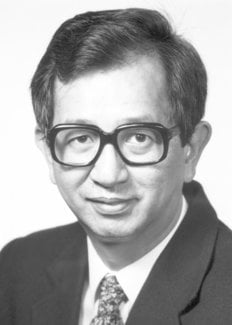
Yuan Tseh Lee was born on November 19, 1936 in Hsinchu, Taiwan. His father is an accomplished artist and his mother a school teacher.
He started his early education while Taiwan was under Japanese occupation – a result of a war between China and Japan in 1894. His elementary education was disrupted soon after it started during World War II while the city populace was relocated to the mountains to avoid the daily bombing by the Allies. It was not until after the war when Taiwan was returned to China that he was able to attend school normally as a third year student in grade school.
His elementary and secondary education in Hsinchu was rather colorful and full of fun. In elementary school, he was the second baseman on the school’s baseball team as well as a member of the ping-pong team which won the little league championship in Taiwan. In high school he played on the tennis team besides playing trombone in the marching band.
Besides his interest in sports during this time, he was also an avid and serious reader of a wide variety of books covering science, literature, and social science. The biography of Madame Curie made a strong impact on him at a young age. It was Madame Curie’s beautiful life as a wonderful human being, her dedication toward science, her selflessness, idealism that made him decide to be a scientist.
In 1955, with his excellent academic performance in high school, Lee was admitted to the National Taiwan University without having to take the entrance examination, a practice the Universities took to admit the best students. By the end of his freshman year he had decided chemistry was to be his chosen field. Although the facilities in the Taiwan University were less than ideal, the free and exciting atmosphere, the dedication of some professors, and the camaraderie among fellow students in a way made up for it. He worked under Professor Hua-sheng Cheng on his B.S. thesis which was on the separation of Sr and Ba using the paper electrophoresis method.
After graduation in 1959, he went on to the National Tsinghua University to do his graduate work. He received his Master’s degree on the studies of the natural radioisotopes contained in Hukutolite, a mineral of hot spring sediment under Professor H. Hamaguchi’s guidance. After receiving his M.S. he stayed on at Tsinghua University as a research assistant of Professor C.H. Wong and carried out the x-ray structure determination of tricyclopentadienyl samarium.
He entered the University of California at Berkeley as a graduate student in 1962. He worked under the late Professor Bruce Mahan for his thesis research on chemi-ionization processes of electronically excited alkali atoms. During his graduate student years, he developed an interest in ion-molecule reactions and the dynamics of molecular scattering, especially the crossed molecular beam studies of reaction dynamics.
Upon receiving his Ph.D. degree in 1965, he stayed on in Mahan’s group and started to work on ion molecule reactive scattering experiments with Ron Gentry using ion beam techniques measuring energy and angular distributions. In a period of about a year he learned the art of designing and constructing a very powerful scattering apparatus and carried out successful experiments on N2+ + H2 –> N2H+ + H and obtained a complete product distribution contour map, a remarkable accomplishment at that time.
In February 1967, he joined Professor Dudley Herschbach at Harvard University as a post-doctoral fellow. He spent half his time working with Robert Gordon on the reactions of hydrogen atoms and diatomic alkali molecules and the other half of his time on the construction of a universal crossed molecular beams apparatus with Doug McDonald and Pierre LeBreton. Time was certainly ripe to move the crossed molecular beams method beyond the alkali age. With tremendous effort and valuable assistance from the machine shop foreman, George Pisiello, the machine was completed in ten months and the first successful non alkali neutral beam experiment on Cl + Br2 –> BrCl + Br was carried out in late 1967.
He accepted the position as an assistant professor in the Department of Chemistry and the James Franck Institute of the University of Chicago in October 1968. There he started an illustrious academic career. His further development as a creative scientist and his construction of a new generation state-of-the-art crossed molecular beams apparatus enabled him to carry out numerous exciting and pioneering experiments with his students. He was promoted to associate professor in October 1971 and professor in January 1973.
In 1974, he returned to Berkeley as professor of chemistry and principal investigator at the Lawrence Berkeley Laboratory of the University of California. He became an American citizen the same year.
In the ensuing years, his scientific efforts blossomed and the scope expanded. His world leading laboratory now contains seven very sophisticated molecular beams apparati which were specially designed to pursue problems associated with reaction dynamics, photochemical processes, and molecular spectroscopy. His laboratory has always attracted bright scientists from all over the world and they always seem to enjoy working together. He takes great pride in the fact that more than fifteen of his former associates are serving as professors in major universities, and many others are making great contributions at the national laboratories and in the private sector.
Lee and his wife, Bernice Wu, whom he first met in elementary school have two sons, Ted (born in 1963), Sidney (born in 1966) and a daughter, Charlotte (born in 1969).
| Among some of the awards and recognitions he has received over the years include: |
| Alfred P. Sloan Fellow, 1969-1971 |
| Camille and Henry Dreyfus Foundation Teacher Scholar Grant, Recipient 1971-1974. |
| Fellow, American Academy of Arts and Science, 1975. |
| Fellow, American Physical Society, 1976. |
| John Simon Guggenheim Fellow, 1976-1977. |
| Member, National Academy of Sciences, 1979. |
| Member, Academia Sinica, Taiwan, China, 1980. |
| Honorary Professor, Institute of Chemistry, Chinese Academy of Science, Beijing, China, 1980. |
| Honorary Professor, Fudan University, Shanghai, China, 1980. |
| Miller Professorship, University of California, Berkeley, California, 1981-1982. |
| Ernest O. Lawrence Award, U.S. Department of Energy, 1981. |
| Sherman Fairchild Distinguished Scholar, California Institute of Technology, 1983. |
| Harrison Howe Award, Rochester Section, American Chemical Society, 1983. |
| Peter Debye Award of Physical Chemistry, American Chemical Society, 1986. |
| National Medal of Science, 1986. |
| Honorary Professor, Chinese University of Science and Technology, Hofei, Anhuei, China, 1986. |
| Honorary Doctor of Science Degree, University of Waterloo, 1986. |
This autobiography/biography was written at the time of the award and later published in the book series Les Prix Nobel/ Nobel Lectures/The Nobel Prizes. The information is sometimes updated with an addendum submitted by the Laureate.
Addendum, March 2006
After receiving the Nobel Prize in 1986, Yuan Tseh Lee continued his research in chemical dynamics. Aside from research on reactive scatterings, his research group has made major contributions in the elucidation of various photochemical processes as well as in the determination of the structure of various protonated molecular clusters by obtaining infrared spectra. Many new instruments were developed for these purposes. He also directed much of his attention to the advancement of international scientific developments and to the promotion of general public affairs. As a professor of chemistry at the University of California at Berkeley from 1986 to 1993, Lee on different occasions served as Co-Chair of the Chancellor’s Asian-American Affairs Committee at UC Berkeley, Member of the California Council on Science and Technology, and Member of the California Institute of Technology Board of Trustees. At the national level, he served on the Secretary of Energy Advisory Board and the Welch Foundation Science Advisory Board.
In January 1994, after 32 years of research and teaching in the U.S., he took the important step of returning to his home country, Taiwan, to serve as President of Academia Sinica. Originally founded on the Chinese mainland in 1928, Academia Sinica has long been the most prominent research institution in Taiwan; at present, it has over 30 research institutes, covering the humanities, social sciences as well as the physical and biological sciences. During his tenure as President of Academia Sinica, Lee has worked hard to improve the quality of research in that institution. He believes the research conducted at Academia Sinica in several fields, including his own, now rivals the best works done in other parts of the world.
Lee has also taken an active role in promoting scientific and cultural developments in Taiwan. From 1994 to 1996, he was the chair of the national committee for educational reform. From 1996 to 2000, he led a national organization for community empowerment in Taiwan. From 2000 to 2002, he chaired a nonpartisan group that gave advice on matters concerning cross-strait relations (i.e. relations between Taiwan and China) to President Chen Shui-bian, whose electoral victory in 2000 marked the first change in the ruling party since World War II. Since his return to Taiwan, Lee has established several new foundations and aided existing organizations that support educational and research activities. He has also traveled extensively around the world to attend scientific conferences and hold lectures.
Lee is scheduled to retire from his position as President of Academia Sinica in October 2006. Thereafter, he plans to work at the Institute of Atomic and Molecular Sciences and the Genomics Research Center, both at Academia Sinica. So far he has received 32 honorary doctoral degrees from universities around the world.
Addendum, January 2018
Yuan Tseh Lee is President Emeritus at the Institute of Atomic and Molecular Sciences Academia Sinica, Taiwan.
Born in Taiwan in 1936, he received his B.S. degree from Taiwan University in 1959 and Doctorate from University of California, Berkeley in 1965. He joined Dudley Herschbach at Harvard University as a postdoctoral fellow in 1967 and has had faculty appointments at University of Chicago and University of California, Berkeley. He was University Professor and Principal Investigator at University of California, Berkeley and the Lawrence Berkeley Laboratory before he became President of Academia Sinica (1994-2006). From 2011 to 2014 he served as President of the International Council for Science (ICSU).
He has received numerous awards and honours, including the 1986 Nobel Prize in Chemistry for his contributions concerning the dynamics of chemical elementary processes.
Copyright © The Nobel Foundation 2006Yuan T. Lee – Interview
Interview transcript
Welcome to this interview Professor. I want to start off by asking you a little bit about your childhood and what made you want to take the way to becoming a scientist. Was there something particular in your childhood?
Yuan T. Lee: I was born in Taiwan before the end of the Second World War, so when I was young, airplanes from America started bombing Taiwan every day. That was when I started my elementary school. So war certainly influenced everybody’s lives. And the bombing and airplane flying – all those scientific things came to our minds very early. But after the end of the Second World War Taiwan returned to China. At that time China was very chaotic. Very weak. Everybody believed there was only democracy in science would save China. I’m also interested in using my bare hands. And also the creations. So when I went to High School and read a book on Madam Curie I thought that it would be a good thing to become a scientist so that’s why I decided to become a scientist.
That was a way for you to work for humanity and for peace in the world.
Yuan T. Lee: That’s right. Very ‘idealistic’ person.
You really wanted to bring that up in your own life as well I believe.
 I decided that I wanted to become somebody useful to humanity through science …
Yuan T. Lee: In high school I became ill and rested for about a month and didn’t go to school so I re-examined my life. And at the end of the bed period of one month I decided that I wanted to become somebody useful to humanity through science. And I also saw very unreasonable situations in Taiwan. I thought it would be a good thing to get together people with idealistic mind to transform the society. So I had two things in my mind all along. One is to become a good scientist. The second thing is help to transform the society. I might be ‘revolutionary’.
That is interesting. I want to come back to that, but we could just briefly say that you did return. You went to America, you returned, and you’ve been back in Taiwan for 11 years now. Can you see these changes? Can you feel that you have influenced?
Yuan T. Lee: When I went to America in 1962 I didn’t plan to stay in America for so long. But after I got my PhD people gave me a professorship and it went on and on and before I knew it I found myself to be 57 years old and I had spent 32 years in America. I decided to go back to help because Taiwan needed my help more than California. So I did go there. Taiwan is a small place with 23 million people – a small island. According to physical law, if you push the acceleration is invert in proportion to the mass so Taiwan is relatively small. With many people returning to Taiwan from America, tried to push science and such a transformation, and it seems to be moving.
Which is the greatest challenge do you think for Taiwan in the field that you are working?
Yuan T. Lee: I think history goes through the democratisation. In 1996 Taiwan allowed people to elect a president for the first time in the history of China. So -96 was an important change. But by the year 2000 it was the first time the ruling party, which has been in power for 50 years, has been overthrown by popular vote. So that really marked another phase of democratisation. So when I went back, what I was really happy to see was the society become more democratic. So human power would be liberated because of the democratic process.
You came back with a Nobel Prize and of course you have many students today and I would imagine that some of them are also going to America to do some of their research and then come back. How do you feel that somebody is going away for a while? Is it a loss for Asia?
… it’s the brain circulation …Yuan T. Lee: In the 1960s and 70s it certainly was a big brain drain. Many people went to America and stayed there. But now, during the last ten years, I asked many established scientists including the member of National Academy of Sciences, several of them returned during the last years to Taiwan. And so I would like to look at it this way: it’s the brain circulation. Young people go out and they learn something and then they come back.
On the other hand, the situation in Taiwan improves more and more students like to stay at home rather than go abroad. So now we are sitting looking at scholarships, who is supported, and sending them out to foreign countries. We really need them to see the world before settling down in Taiwan.
That’s a good thing that they go out, and it’s something you would recommend to young students.
Yuan T. Lee: A country like America also should look at the student coming from Asia as part of the brain circulation rather than one way street.
Somebody said that the students that come from overseas to America sometimes are so focused and so strong in their minds that they are actually better students than the American students.
Yuan T. Lee: In Asia, in order to survive, people have to work very hard. Especially if you go to a country like America the only way you can survive or climb up the social ladder is through hard work to establish yourself. And for many students who are interested in science this is no problem because science is so interesting and so you work very hard and enjoy yourself. And sometimes later you’re recognised and offered a position and on and on.
What did it mean to you that you were given the Nobel Prize back in 1986, the Nobel Prize in Chemistry?
Yuan T. Lee: I was really surprised, first of all. I have been enjoying science with all my students and actually I’ve had some kind of record in America. If you look at the faculty member produced in major universities, famous research universities like MIT, Caltech, Berkeley or the Chicago or Cornell, I have former students in all those universities among the chemistry faculty. I learned that I produced more professors for American universities than anybody else. So I really enjoy doing science and by the 1980s we know that we are doing the best because we see many chemical researchers and many things nobody else in the world can do. So we are very happy that we are leading the world and people from Europe and Japan came to do post doctoral research. And as a scientist knowing that you are doing well is quite satisfactory.
But in 1986 I received an award from chemical society, /- – -/ White House. At the time I was a US citizen. They gave me the National Medal of Sciences. And then the Nobel Foundation gave me the Nobel Prize. At the same time Wolf Foundation in Israel also wanted to give me a prize and I was really surprised. Life suddenly changed. I was a very shy person. Even if I see a lady my face become red. I was very shy. But after the prize I had to be in the limelight so often to give after dinner speeches and then gradually I got used to it. But I remember during the first three months I suffered so much so my wife said ‘Yuan, you enjoy so much working in the laboratory with students, why do you have to become an after dinner speaker?’. And she suggested maybe we should return the prize to the Nobel Foundation and then you can go back to the laboratory.
… I can talk to the President anytime I want …Well, that was my wife’s suggestion but I’m glad I didn’t do it since winning the Nobel Prize you have the different opportunities to serve different segments of the society. I went back to Taiwan and became the President of the Academy of Sinica in Taiwan. We run 30 different institutes in an assembly of academicians that belong to the office of the president. So I am certainly quite influential in Taiwan. I can talk to the President anytime I want. So I have been able to do quite a bit in Taiwan. That’s a good opportunity given by the Nobel Foundation.
Is there any special memories that you have from the time you went to Stockholm that you would like to share with us?
Yuan T. Lee: When I received the Nobel Prize people said ‘Yuan, you have to be a spokesperson. You have to speak for science. And people will ask you all sorts of questions that you don’t know the answer to but you still have to give the answer.’ That has been a big challenge for me so I studied very hard. Especially when I went back to Taiwan and took the position of the President of the Academia Sinica because academy cover humanity, social sciences, and physical sciences and biological sciences. As the President, as a spokesperson, I did learn quite a bit. So that was an exciting thing. Actually, Taiwan is a member of APEC, Asian Pacific Economical Corporation. Our president was not allowed to participate in APEC because men in China would not allow us to go. So I have been representing our president to attend APEC for the last three years. It was interesting.
First time I went there all the presidents of the countries of the pacific region including George Bush and all the people they are quite curious to see that a scientist, a Nobel Laureate, came to this political meeting and talking about economical development. It was quite interesting that they look at me in a very different way. As if I’m a different animal. Of course, for politicians scientists are very different. We all look at the things in the longer term. What is the truth? How can we do better? The politicians tend to think in short term. All they worry about is next year, maybe another election. They want to keep their position and so on and so forth. So that was interesting.
That’s a good suggestion. Maybe more Nobel Laureates should be doing what are you doing. The world would be a different place.
Yuan T. Lee: It would be a better place. I think so.
Definitely. That leads me to the next question which is about the environmental situation that we’re facing in the world today. You knowing so much about chemical reactions and so on, what do you think we are facing at the moment with global warming and ozone layer getting thinner? What is the reason for this and how can we as human being change it? Is it necessary for us to change the way we are living our lives?
Yuan T. Lee: Yes certainly. Let me say this. Human beings developing on the surface of the earth in a biosphere for quite a long time. The earth is infinity for human beings. But 250 years ago after the industrial revolution we invented so many machines and used so much energy and people become so comfortable with the science advances. Population went up during the last century by /- – -/ now we have six billion people living on earth. So if you look a the development of the history of mankind last century we went through a critical point. It means earth used to be infinity. Now you become finite. It’s finite because of all the people. It means human activity is starting to damage the ecosystem and that was not happening 200 years ago.
But now it’s happening. But people are now waking up. People didn’t realise that we are going through the transition almost like water become ice. There is a fresh transition taking place on earth. So if you look at the development of China, India, or Taiwan, Thailand. All follow the pattern of western development but that was the time that earth was infinity. Now earth is finite. So we really have to change. Change the use of the energy. Fossil energy is going to dry out and we have to depend on the solar energy or nuclear. And that we really have to make our mind to do a lot of research.
So I do see in the next 20 years because the petroleum will peak, demand will go up. There will be a gap between the demand and supply. And there will be an energy crisis on the one hand. On the other hand earth has become finite so we have to worry about how our earth consume the pollutions. So those two conditions will make it extremely difficult for human society. The only way out I can see is to learn to use energy efficiently. For example lighting in the room. We can use about 25 percent of the electricity to get the same light by using light emitting diode. You can use the combined hybrid automobile even at the present time will save you energy more than factor two.
… science and technology will help humanities but we have to learn to walk together …We do have enough technology to save energy. To use energy more efficiently. So that will go a long way. On the one hand, we have to learn to use the solar energy more efficiently but for the next 50 years saving energy, making energy more efficient, will be a very important way. As a scientist, I do believe that in spite of the fact that science and technology will help humanities but we have to learn to walk together as one community. Globalisation has gone halfway. So you do see economies is globalised but nation based competition still fiercely going /- – -/ so you see war, friction. Before the end of the century if we do not learn to operate as one community for the entire world I think the chances of humanity to survive on earth will be very, very small.
Do the politicians listen to you when you tell them this message?
Yuan T. Lee: They certainly listen and they seem to understand. But they look at the short-term effect. So nobody dare to change. I saw the President of Academy of Sciences of China, former academy of science president Dr Cho. I know him for 25 years now so when we met a couple of weeks ago I said we have been talking about China should develop a different way. Not following the pattern of western style. And keep on using the automobile and you should have the public transportation. But then he said ‘Yes we know but everybody believe that unless the automobile industry becomes successful it will not bring up the entire economy.’ So the automobile industry in Japan, Germany, you know you name it, China. It is producing millions and millions of automobile now. The question is where are you going to get the petroleum in the next 20 years.
The western world which has developed also coming to the developing world in their short interest.
Yuan T. Lee: That’s right. The same thing. so we all know that if the developed world were to give one percent of GDP to help developing world then the tornado of money flow from the under developed world to the developed world in a year about 100 billion dollars is flowing from the so called underdeveloped into developed world. Not the other way around. It takes about one percent of GDP to donate to the underdeveloped world to change the tide. So unless we do that the underdeveloped world will not have any chance. Corruption and also the way of imitating rich people in the developed world will keep the money flow out.
When you talk to your young students and ask them to look into the future for the future kind of research that is necessary, what fields would you suggest? Where will the big breakthroughs come in the next 20 years?
Yuan T. Lee: For quite a long time we have been interested in the origin of life. Creation of the universe. Structure of matters and the forces operating in the universe. Last century because we understand the motion of microscopic particles atomic physics developed and that influenced the chemistry. So my field of study doing molecular sketching certainly is based on the advancement made earlier in the 20th century. But now you look at the biology because of the advancement of chemistry, the advancement with the tools, it is now possible to understand many phenomena related to life. So I do believe that in the 21st century life sciences will be bring lots of excitement.
… you have to study chemistry better or physics better, otherwise you will not be able to go too far …So if I were to start again probably I will pay more attention to biological sciences even as a chemist. But it was interesting when I started out as a chemist many of my friends told me ‘Yuan, if you want to be a chemist you have to learn physics better otherwise you will not become a good chemist.’ So I studied lots of physics. And I entered areas called chemical physics. It’s an inter discipline area. That certainly helped me develop other things. Now if the young people ask me I will see biology certainly given you excitement but you have to study chemistry better or physics better, otherwise you will not be able to go too far.
Just one last question I believe that you’re a good sportsman as well. Do you get time for sport still?
Yuan T. Lee: Yes. Unless you do some exercise you will be melted away. I’m a tennis player. I play tennis. So probably you know this week is Wimbledon. It is going on. Last night I saw Davenport was playing with Cluster. Salapovo was playing with somebody else.
So that’s also something you would recommend to young students. Not only stay in the research laboratory.
Yuan T. Lee: You have to keep your body fit. In the laboratory we often work overnight or two days in a row in order to find something else so we don’t sleep. Unless you have a strong body you won’t be able to do it.
Thank you so much, Professor.
Yuan T. Lee: My pleasure.
Interview with Professor Yuan T. Lee by freelance journalist Marika Griehsel at the 55th meeting of Nobel Laureates in Lindau, Germany, June 2005.
Professor Lee talks about why he decided to become a scientist; his move to the USA and why he went back to Taiwan (2:26); the Nobel Prize and how it has affected his life (6:56); his engagement in environmental issues (12:55); finally, Lee gives some advice to young students (19:33).
Did you find any typos in this text? We would appreciate your assistance in identifying any errors and to let us know. Thank you for taking the time to report the errors by sending us an e-mail.
John C. Polanyi – Interview
Interview with John Polanyi by Sture Forsén at the meeting of Nobel Laureates in Lindau, Germany, June 2000.
John Polanyi talks about his family background; creative environments (1:55); interdisciplinary science, and the risk of industrial support to science (6:49); interest in science policy (14:06); and the responsibilities scientists have in trying to improve the world (17:57).
Transcript of the interview
I’m very pleased to have an opportunity to interview you, John Polanyi, at the Lindau meeting of the Nobel prize winners this 50-year anniversary. And John, you have a family background that I think is slightly unusual from other Laureates I’ve interviewed. Your father was a very famous physical chemist.
John Polanyi: I think that’s splendidly understated. I have an odd bunch of relatives. It wasn’t just my father. I mean my uncle, both uncles were intellectual types as was my father. And they spread themselves over political views and over subject areas from economics to politics to science to philosophy. And my father was both a chemist and a very ambitious philosopher, I think. He felt his major work was in philosophy though I was very impressed by his work as a chemist. So, all these influences helped me, stimulated me, amused me, encouraged me.
Not overwhelmed you?
John Polanyi: Oddly enough yes, because these people were very bright, and I don’t think I was that bright. But I enjoyed it all so much that I thought well, whatever I can do I’m happy with. So, I wasn’t overwhelmed, no.
To me it’s also striking how many scientists of Hungarian background are among the Nobel Laureates.
John Polanyi: Yes.
Is there an explanation? It cannot be a statistical fluke, I believe.
John Polanyi: I think so, yes. Hungarians tend to go abroad, tend to make a lot of noise and are very good at ping pong and winning Nobel Prizes.
Today we have had a session, a round table session on the creative environment and creativity in science. There were many views expressed there on how to best accomplish a creative environment. Would you like to comment, and how would you like to …, what is your, the elements of a creative environment?
John Polanyi: Gosh. I mean that was a very free ranging discussion today which covered all the things that we tend to chat about in the evening as scientists when we’re exhausted. And I wouldn’t dare to try to summarise the elements in it. I think probably the most stressed thing at the round table, and rightly so, was the need to have freedom in order that you can be opportunistic. Because you cannot make plans in science and then doggedly follow them. If you do that’s really a prescription for disaster.
Actually I once sat on a committee which was required to examine the progress of a group of scientists who formed the team, and we were supposed to see that they had followed the plan that they presented in order to get the money to do the research. And I said well, all right, I’ll do it, but only with one stipulation, that if they follow their plan, then we’ll not give them any more funds because clearly, they didn’t discover anything. And so, people were rather shocked. But this had a really rather serious aspect to it as far as I was concerned. I think that the freedom of scientists to pursue discoveries where nature gives an opportunity for learning something, that freedom is being more and more restricted.
And it’s understandable that in well-functioning democracies people want to see accountability. But then they go and introduce a form of accountancy which is inappropriate and damaging and they say, well the sort of thing I just said in that story. They say tell us what you’re going to discover, tell us what those discoveries will, how they will benefit mankind, how they will create prosperity. And this involves scientists in either saying well, that’s inappropriate which is dangerous because you don’t get the funds. And so we start telling these stories and they’re not really true stories, they’re sophisticated sort of science fiction. And when you start to lie about the way in which science is done and the justification for doing it, eventually these things come back to haunt you and people say well, where is the application that you said would come, and in fact it will come. If you put intellectual power into people’s minds that can be used for good and for ill, it’s partly our job to see that it’s used for good. But it can certainly be used.
The irony of course is that as a scientist one has to face two different groups of people, one of whom are very concerned that you are taking public money, you’re disappearing into your laboratory and then you are amusing yourself by learning something about nature perhaps. And then there’s another group of people who see you taking public money, disappearing into your laboratory and they say each time you go into the laboratory you come out with something terrible. And you produce opportunities which we don’t know how to handle, you’re making the world a very dangerous place. Well, you can’t have it both ways, that we are spending our time futilely indulging our curiosity and at the same time we are revolutionising practice to a degree that nobody can handle it.
So which is true? I would say the second is true. So long as you are willing, this was a term used around the round table this morning, as long as you are willing to trust the scientists, and you don’t have to trust them very far, you have to trust them for three years, four years, five years, and then you have to say what did you do? And that’s legitimate. And you have to be tough about it.
But judge them on the basis of their ability to add to the store of human knowledge in a way that’s going to make a difference to people’s thinking. If you do that, you’ll get new ideas and you’ll get them in a cost-effective way. And the problem really lies not with good scientists frittering their time away and wasting people’s money, it comes later with the fact that indeed the discoveries will be made but then we have to somehow decide how to use them. We, not just we scientists, but we human beings.
Let’s turn for a while to university education. I find, at least in my country, that it’s still very sort of conservative in the sense that there is chemistry, there is physics and there’s biology, and to me it seems that the borderlines between the subjects are so fussy today that we might perhaps need to reconsider some of our education systems. Have you had any thoughts about that?
John Polanyi: I’m not sure I caught your thought and I’m not sure I’m going to respond in an interesting way to it. You’re talking about the division between subject areas?
Yes.
John Polanyi: I don’t think that my thoughts on that are worth recording. I don’t see it as a new obstacle. I think that any enterprising scientist right away tries to jump over those alleged boundaries and realises the value of doing it. And if I had a fear in that connection it would be that people who try to micromanage science sometimes say well, we’ll give a grant to him because his work or her work is more inter-disciplinary, and this is less inter-disciplinary. Well, these sort of easy criteria of worth are very misleading, and to support science on stylistic grounds, to say this is good science because it involves a team, or this is good science because it is inter-disciplinary or this is good science because it involves networking, or a good management structure. I mean these are all peripherals. The quality of good science is A are you going to succeed, and B will it matter if you do, will it change anybody’s thinking or better still will it change a lot of people’s thinking. And so, these criteria … I don’t think we are in danger from the fact that we are being bludgeoned into staying within our discipline, no. I see a lot greater dangers than that.
Like for example?
John Polanyi: Like attempts to support science on the basis of their likely contribution to wealth and if that is done lightly in the sense that well here’s a broad field which might reasonably contribute to the building of molecular scale electronic circuitry. Well then, it’s a reasonable thing to do though one shouldn’t do it to excess because there will be areas which are important that one misses. But it goes much further than that and I think particularly in countries which are less sophisticated, less accustomed to dealing with science, and I would say my country is one of that sort, Canada, where the history of science is not long and rich and so on. And in Canada as I would guess in a number of other countries the notion has arisen that the way to get value for the tax payer for money put into science, is to validate each investment in university research by requiring that a matching portion of money come from industry.
And this sounds very plausible when you say it because industry after all knows where money is to be made, industry will see to it then that the university research occurs on topics that are going to make people rich. But it’s a very misguided thing to do. First of all it means that the time horizons for which people do research are much too short, because industries, if they are required to put cash into it, not just nice words, cash, then industry wants to see results in two to three years which might conceivably contribute to their profits. So you find yourself doing industry’s research and doing it not as well as they would do it because they really understand the market. You don’t, you just pretend to. Worse than that you find yourself doing patchwork of science and the strength of university science is, as I think the name implies, a certain universality, a certain breadth, an inter-connectedness therefore of things, not a patchwork quilt in which you do this for three years because it will benefit that country, company, and then you do this for three years because it will benefit that one. And so we lose the narrative power of university research, we lose the breadth, which is precisely the thing that industry values and should value.
So I regard this as being against the interests of industry and I will add one third thing which stems from this mistaken policy, and it’s equally serious, and not yet properly understood. And that is that if the researcher is beholden to, linked financially to a particular industry, then let’s take a happy situation in which the researcher working on something of interest to that industry comes up with the fact that what they’re doing is just marvellous and the product is excellent and just needs a little improvement. Who’s going to believe the university person? They were paid to say that. But of course if they say the opposite, which also happens, that it is dangerous, it is bad for the environment, it’s bad for the individual and all that, are they going to dare say that because the company will do everything to prevent them from saying it. That’s normal. So those links destroy the independence which we look for in our universities.
Would we as scientists have been too complacent about the changes that we have seen, about the requirements from governments that we should be more applied?
John Polanyi: I think that’s a very good question. I think the scientists are much too complacent and there are a whole lot of reasons for that. I mean one being that scientists want to be left alone to do science and if you start fighting battles of science policy you of course take large amounts of your time away from research. But there’s another reason and that is that biting the hand that feeds you is not encouraged, and it may be punished. And so people are loath to do that, not just for themselves, for their colleagues. You know, if I say this scheme which is actually helping your research and helping mine, but it’s a badly funded scheme because it just doesn’t take account of the fact that university research should be free. Anyway, so I argue against it and they cancel it, well not just I suffer but you suffer too. So a lot of people have a vested interest in scientists not complaining too loudly and they are not complaining sufficiently.
You have been active in many fields, not only science. You have been very active in science policy also. And what brought you into that field? And you have been also very much involved in the responsibility of scientists in society.
John Polanyi: Partly family background. Here were a bunch of people who were in various ways politically active. And then the whole thing, I mean as a student at Manchester University I was running a newspaper, this was as an undergraduate. And I was very conscious of the fact that, I don’t know, when I was 15 the world entered the atomic age and I used my newspaper when I went to university at the age of 17, Manchester University and studied chemistry. But I didn’t apply myself very much to chemistry. I read widely and ran this newspaper. And in the newspaper, I was saying, my newspaper, so I could get my articles in quite easily, I was saying that the world has changed with the advent of nuclear weapons and the whole role of war in human affairs needs to be reconsidered. I wish I had those articles, I don’t have them anymore. And that life motif really has run through my life surprisingly.
Then I went to Princeton for a couple of years and there I ran into Leo Szilard, and Szilard was one of the great minds and great eccentrics of the past decades and he impressed me enormously. And so, this added to the sort of family business. And Szilard was a guy who felt that you should take responsibility for the history of your time. Actually, partly through Szilard but partly through accidents I found myself in 1960, by then I had left Princeton and was a junior professor in Canada, I found myself at one of the fairly early Pugwash meetings in Moscow and there we were discussing how to hold the level of nuclear weapons at a lower level and accept the fact that deterrents existed. But not let the arms race go on and on because that itself would constitute an intolerable hazard. We failed of course in that, when I say we I was a very junior element in it, but the people there, myself included, helped lay the groundwork for thinking which subsequently was important.
But mainly I tell you that story because you can see that Leo Szilard led me into the political scene. Typical of him that when we were in Moscow it was December of 1960 and he was a bit dissatisfied with the outcome of this meeting we had, and he said well you and I, I was the least important person there, should stay behind and see Khrushchev. And so we stuck around. Khrushchev had flu and I got more and more depressed in the darkness of winter in Moscow and eventually I went back to Toronto leaving Szilard behind. He did see Khrushchev. But that was his sort of cast of mind. After all he wrote the letter I think that Einstein sent to Roosevelt. So I mean this was somebody who took history in his hands. I’ve never been able to, but I always felt the desire to do it and felt that life would be more meaningful if one tried at least.
You mentioned your involvement in the Pugwash movement. How much of your time did you spend on these issues?
John Polanyi: That’s very difficult to say but certainly not enough of my time. But I was involved in getting Pugwash moving in Canada but this was in the late 1950s and in that forum and in other forums I have been part of a sub group of the scientific community which has tried to, in the first place, tried to damp down the arms race by saying there are ways in which we could have arms control. Politicians tend to say it’s not been done, people will cheat, we’re safer just building a bigger weapon or a better weapon than our opponent. And so, I think that scientists have a role in saying the world can change, we should not rely always on winning the arms race with every other country because that way lies disaster. And scientists have been saying this but not a large enough group of scientists. That’s what Pugwash existed for.
So there were a succession of arms control issues in which scientists were providing technical advice, but they were doing much more than that. They were saying this is a rotten direction to go in, it’s dangerous, we should be going in that direction. It happened, in my country it happened with the question of should Canada get nuclear weapons, the United States actually wanted us to get them because we could help defend the US, this was late 1950s. Next question: should Canada build nuclear fallout shelters? I and other scientists said look, this is ridiculous, they aren’t going to work. But really what we were saying was we don’t want to live in a world in which we dig holes and all disappear in them. There must be a more happy, dignified outcome to the forward march of technology than that we all become underground creatures.
And so it went on. And most recently it has been the question of sophisticated missile defences. And it’s certainly true that under favourable conditions you can hit a bullet with a bullet and that you can hope to defend yourself poorly in that way. But under real circumstances where somebody does something surprising, there is a conflict, those circumstances you will never succeed in hitting a bullet with a bullet and it’s really part of every scientist’s experience that it is easier to make something malfunction, in this case we’re talking about a sophisticated defence system, than make it function. It is easier therefore for me to go into the lab where my student is and mess up his experiment than it is for him to make it work. And that being the case this anti-missile defence screen which has now been re-born as the US National Missile Defence which shortly will become the US and Canadian Missile Defence unless we argue against it, and thereafter will become the US Canada and Europe Missile Defence, and it won’t work. And what it will do is spend hundreds of billions of dollars on a direction which really offers no hope.
The direction that offers hope is to build up democracies, that requires spending money, give people in those countries the opportunity to reach levels of wealth which are satisfying so that they have countries which are open and to a degree contented. And at the same time establish an international rule of law which we’re trying to do, a new world is being born in which when the nationals of a certain country are victimised, other countries say this is intolerable, we’ve got to do something. That doesn’t mean they actually do something, but they say it and they mean it. Increasingly they will do something if we clamour for it. And I think that scientists, having gone so far along the path of saying what sort of world they think is a decent and civilised one, could help further that process and that’s what scientists in Pugwash and other similar groupings are trying to do.
And how do you see the role of the United Nations? The last few years there’s been obvious failures of the United Nations in Africa, they’ve not prevented these interminable wars.
John Polanyi: I see the role of the United Nations, for all its failures, as absolutely pivotal. I mean if it were to fail all we could do would be to re-found it. We must have it because there is no, there can be no organisation on earth that has a greater authority than one which includes virtually every country on earth. And that moral authority is needed to legitimise the last sensible use of force. If people are being terrorised and victimised and having their human rights massively infringed in some part of the world, the whole world today of course sees it, the whole world should and I think increasingly does feel a sense of responsibility to do something, the only body that can truly make the use of first persuasion and then the minimum force valid is the United Nations.
Now the United Nations Security Council which represents a broad range of humankind does make forceful statements of indignation over Somalia, Rwanda, Indonesia, Bosnia Herzegovina and so on, and goes further than making those statements. It has intervened but as you say it has failed much more often that it has succeeded. I think that we have to realise that none the less that is the direction to go in just, one doesn’t give up. I mean if the police force, the domestic police force in Sweden fails to catch the assassin of Olof Palme, you don’t say well I guess we can do without the police force now, they’ve failed. On the contrary, you try to improve them. And that, police forces in fact are a modern novelty, they’re 100 to 150 years old and they still fail all the time. And yet people are so surprised if the United Nations after such a short period in their business with so little support from many nations, including some great nations, fails. It can succeed and we have to see that it does.
Did you find any typos in this text? We would appreciate your assistance in identifying any errors and to let us know. Thank you for taking the time to report the errors by sending us an e-mail.
Dudley R. Herschbach – Nobel Lecture
Nobel Lecture, December 8, 1986
Molecular Dynamics of Elementary Chemical Reactions
Read the Nobel Lecture
Pdf 988 kB
Yuan T. Lee – Nobel Lecture
Nobel Lecture, December 8, 1986
Molecular Beam Studies of Elementary Chemical Processes
Read the Nobel Lecture
Pdf 728 kB
John C. Polanyi – Nobel Lecture
Nobel Lecture, December 8, 1986
Some Concepts in Reaction Dynamics
Read the Nobel Lecture
Pdf 1.34 MB
John C. Polanyi – Banquet speech
John C. Polanyi’s speech at the Nobel Banquet, December 10, 1986
Your Majesties, Your Royal Highnesses, Ladies and Gentlemen,
Late in his career as an actor Richard Burton was asked by an interviewer what it was in his work on the stage that had given him the keenest pleasure. Burton thought for a while, and then replied: “the applause”.
That is not so ignoble a confession as it sounds. The applause is a celebration not only of the actors but also of the audience. It constitutes a shared moment of delight.
In some countries the actors are permitted to participate in the applause. This is what, by mutual agreement, the three of us – Dudley Herschbach, Yuan Lee, and myself – wish to do tonight.
Alfred Nobel in inaugurating his prizes, and thereafter Your Majesties, the Nobel Foundation, and the people of Sweden in giving them this elegant and open-hearted expression, have shown the world how to celebrate.
What you have undertaken to celebrate is, of course, the truly remarkable aspect of this occasion. I know of no other place where Princes assemble to pay their respects to molecules. Yours is a rare enthusiasm, expressed with such a degree of conviction that the world has come to share it.
When, as we must often do, we fear science, we really fear ourselves. Human dignity is better served by embracing knowledge.
We three have known each other for decades. Now, because of you, we regard one another with a new sense of wonder. Because of you our wives hesitate for just an instant before summoning us to do the dishes. Thanks to you the wider community of reaction dynamicists, who share our interests and have contributed in a vital fashion to the development of this field, declare themselves proud.
We applaud you, therefore, for your discovery, which has made a memorable contribution to civilization – I refer, Your Majesties and our Swedish hosts, to the institution of this unique prize, for which we, in the company of many others, thank you.