Rudolf Eucken – Nobel Lecture
English
Nobel Lecture, March 27, 1909
Naturalism or Idealism?
The history of mankind knows of certain questions that are at once very old and always new: they are very old because any way of life contains an answer to them, and always new because the conditions on which those ways of life depend are constantly shifting and may at critical stages change so much that truths safely accepted for generations may become open problems causing conflict and bewilderment.
Such a question is the contrast between naturalism and idealism with which we are dealing today. The meaning of these words has been blunted by usage; they cause many a misunderstanding, and only through laziness do we put up with such catchwords. But their inadequacy cannot conceal the great contrast which lies behind them and which sharply divides men. This contrast concerns our attitude to the whole of reality and the resulting task that dominates our life; it concerns the question whether man is entirely determined by nature or whether he can somehow – or indeed essentially – rise above it. We are all agreed on the very close ties between man and nature which he should not abandon. But it has been argued and is still being argued vehemently whether his whole being, his actions and sufferings, are determined by these ties or whether he possesses life of another kind which introduces a new stage of reality. The one attitude characterizes naturalism, the other idealism, and these two creeds differ fundamentally both in their goals and in their pursuits of them. For if the additional life of man exists only in his imagination, we should eradicate all traces of it from human opinions and institutions. Instead, we should aim at the closest ties with nature and develop to a pure state the natural character of human life; for thus life would restore the ties with its true origins which it severed unjustly and to its lasting damage. But if one recognizes in man a new element beyond nature, the task will consist in giving it the strongest possible support and contrasting it clearly with nature. In this case life will take up its main position in the new element and look at nature from that point of view. This contrast in attitudes emerges nowhere as clearly as in the place of the soul in the two systems. Nature, of course, has its share in the life of the soul and in numerous manifestations deeply influences human life. But this natural life of the soul is peripheral, mere appendix to the material phenomena of nature. Its only purpose is the preservation of physical life, for man’s higher psychological development, his cleverness and resourcefulness, compensate for the brute strength, swiftness of movement, or sharpness of the senses in which animals excel. But even in its extreme form this life has neither purpose nor content in itself; it remains a conglomeration of disparate points. It does not coalesce in an inner community of life, nor does it constitute an inner world peculiar to itself. Thus action is never directed toward an inner purpose but toward the utilitarian purpose of preserving life. Naturalism, if it remains true to its purpose, reduces human life to that norm. Idealism, on the other hand, maintains the emancipation of inwardness; according to it the disparate phenomena of life coalesce in an all – embracing inner world. At the same time, idealism demands that human life should be governed by its peculiar values and goals, the true, the good, and the beautiful. In its view the subordination of all human aspiration to the goal of usefulness appears an intolerable humiliation and a complete betrayal of the greatness and dignity of man. Such divergent and even contradictory attitudes seem to be irreconcilable: we have to choose between harsh alternatives.
With regard to this choice the present time is undeniably divided against itself, particularly since profound changes in the setup of life have brought new aspects of the problem to light. Centuries of tradition had accustomed us to striving primarily for an invisible world and to valuing the visible world only to the degree of its relation to the invisible world. To the medieval mind man’s home is a transcendental world; in this world we are merely travellers abroad. We cannot penetrate it, nor does it give us any scope for achievements or hold us by any roots. In such a conception nature easily appears as a lower sphere which one approaches at one’s own peril. When Petrarch had climbed Mount Ventoux and was enraptured by the splendour of the Alps, he had serious doubts whether such delight at the creation was not an injustice to the Creator and did not deprive Him of the worship due to Him alone. Thus he took refuge with St. Augustine to regain the security of a religious mood.
These things have changed. We set greater store by the world of immediate experience and many things have helped to make it completely our home. Science has been the leader in this movement, for it has brought about a closer relationship with nature, resulting in many new impulses that have not only enriched parts of our life but have deeply affected its totality. The speculative and subjective thought of former ages was unable to analyze sensual perceptions and did not penetrate to the essence of things. Moreover, its recognition of certain regularities in nature lagged far behind the discovery of mathematical laws of nature first formulated by the genius of Kepler. And not only did it fail to penetrate nature, it failed equally to turn its powers to the use of man and to the advancement of his welfare. Occasional technical inventions were the result of chance rather than superior insight; on the whole, man remained defenceless against nature. Only a century ago men were still awkward and powerless in this regard. In that age of great poets and thinkers, how much time was wasted with overcoming natural obstacles, how inconvenient was travelling, and how cumbersome postal services. In all these respects our age has seen changes never dreamed of by history before. The accumulation of scientific knowledge since the seventeenth century was brought to a triumphant conclusion in the nineteenth. By unravelling the separate strands of natural processes and tracing them back to their ultimate elements, by formulating the effects of these elements in simple formulas, and finally by using the idea of evolution to combine what had been separated, scientific research has given us a closer and more direct experience of nature in all its aspects. At the same time the theory of evolution has shown man’s dependence on nature: understanding himself in nature, his own essence appeared to become clearer to him.
The change of concepts was accompanied by a change of the realities of life. Technology seized upon the results of science and caused a revolution in man’s relationship with his environment. Former ages had held that his position in the world was essentially determined and not subject to change; man had to suffer whatever dark fate or the will of God had decreed. Even if he could – and was expected to – alleviate suffering in individual instances, he was no match for the totality of suffering and there was no hope of either tearing up evil by the root or making life richer and more joyous. In our age, however, we are translating into action the conviction that by common effort mankind can raise the level of life, that a rule of reason can gradually replace the tyranny of irrational forces. Man may again feel victorious and creative. Even if his powers are limited at any given moment, that moment is only one in a long chain. The impossibilities of a former age have been realized in ours. We have witnessed surprising breakthroughs in our own age and can see no limit to this progressive movement. Man’s existence has been immeasurably enriched; it has become an attraction and a challenge for him.
Technological progress becomes even more exciting when it enters into the service of the social idea which demands that not only a small élite but humanity at large should profit by it. This demand creates an entirely new challenge, requiring tremendous energy but also giving rise to new complications and harsh contrasts which, in turn, intensify the passion of man’s work in this world and enrich its meaning. The transformation of environment has become the purpose of human life; life seems real only insofar as it deals with things. Man no longer needs the escape to an invisible world in order to find and realize exalted goals.
These facts are indisputable. Our material environment and our relation to it have assumed tremendous importance. Any philosophy and any course of action based on it must reckon with this fact. But naturalism goes beyond this fact, for it maintains that man is completely defined by his relationship with the world, that he is only a piece of the natural process. That is a different contention which requires careful examination. For history has taught us that our judgment is easily confused and exaggerated when revolutionary changes upset the old balance of things. Facts and opinions are confused by man, who is helpless against error and passion. At such a time, it becomes an urgent task to separate the facts from the interpretations given to them. Naturalism, too, is subject to such a scrutiny when it turns a fact into a principle, sees the totality of human life determined by man’s closer relation to nature, and adjusts all values accordingly.
The chief argument against such a limitation of human life is the result not of subjective reflection but of an analysis of the modern movement itself. The emergence and the progress of that movement reveal an intellectual capacity which, whether it manifests itself as intellectual and technical mastery of nature or as practical social work, proves the existence of a way of life that cannot be accounted for, if man is understood as a mere natural being. For in coming closer to nature man shows himself superior to it. As a mere part of nature, man’s existence would be a series of isolated phenomena. All life would proceed from and depend on contact with the outside world. There would be no way of transcending the limitation of the senses. There would be no place at all for any activity governed by a totality or superior unity, nor for any inner coherence of life. All values and goals would disappear and reality would be reduced to mere actuality. But the experience of human work shows a very different picture.
Modern science has not been the result of a gradual accumulation of sensual perceptions but a deliberate break with the entire stock of traditional knowledge. Such a break was deemed necessary because the old concepts had been too anthropomorphic, whereas a scientific understanding of nature presupposed an acknowledgment of its complete independence from man. But our concepts could not have formulated the independence of nature unless thought had emancipated itself from sensual impressions, and through analysis and new synthesis created a new view of nature. This re-creation was caused by the search for truth and the desire to identify with things as they are and thus to bring about an inner expansion of life. But how could nature be conceived in such a manner without the element of chance and distortion, inherent in the perspective of the individual, unless thought could operate independently of sensual perception? Logical thought, striving for a unified conception of the universe, transformed the immediate sensual perception; it provided the sensual existence with the foundation of a world of thought. Man’s tremendous intellectual achievement of a conception of nature in its totality proves his superiority over the natural world and the existence of another level of reality. Thus we may say that naturalism with its emphasis on nature is refuted nowhere with more cogency than in modern science as it transformed nature into an intellectual conception. The more we recognize the intellectual achievement and inner structure of modern science, the clearer becomes the distance from naturalism.
The superiority of man to mere nature is also proved by modern technology, for it demands and proves imaginative anticipation and planning, the tracing of new possibilities, exact calculations, and bold ventures. How could a mere natural being be capable of such achievements?
The social movement, too, reveals man as not entirely limited by a given order, but as a being that perceives and judges a given situation and is confident that it can change it essentially by its own efforts. We have come to set greater store by material things, but we value them not because of their sensual characteristics but because they serve us to enhance life and to dominate the world completely. We do not aim at an increase in sensual pleasures but at a situation in which any man and all men together can develop their full strength. The mere mention of a social idea implies common interests beyond the egotism of the individual, and this idea would never have reached the power it has had it not been conceived of both as a duty and as a privilege. The ethical element inherent in it gave it the power to win over minds, to attract enthusiastic disciples, and to prevail even over reluctance. But there is no place at all for such an ethical element in the realm of mere nature; thus the mere existence of a social movement refutes naturalism.
These considerations lead to the conclusion that naturalism is by no means an adequate expression of the modern way of life. On the contrary, that way of life has outgrown its origins and has revealed far greater spiritual independence than naturalism could acknowledge. Life itself has contradicted that interpretation of life. The fact that environment means more to us does not mean that we are a mere part of it. Naturalism makes the mistake of ascribing to nature itself the changes the mind effected in it. The mistake resulted from concentrating on the effects and ignoring the power which alone could produce them.
Still the fact remains that mind needs environment as an object to work on, and to that extent it is dependent on it. But does not such a situation confront life with an intolerable conflict? The transformation of the environment has released vast intellectual energies which fortify the claim of life for happiness and satisfaction. Will life not feel intolerably confined if man must deal only with the outside world, if he may never return to himself and use the results of his stupendous labours for his own welfare? The achievement itself is limited narrowly if its object is invariably outside ourselves and can never be taken into our own life. Scientific research in an external object can never lead to true, complete, and inner knowledge. As long as we regard man simply as a being next to us, there can be no inner community of mutual love. Energy that is not dominated by, and does not return to, a centre, will never constitute the content of life; it leaves us empty in the midst of bustling excitement. This is a common and painful modern experience. But is not such a sensation of emptiness itself proof that there are more profound depths within us which demand satisfaction? Thus we are faced with the question whether life does not somehow go beyond the position reached so far, whether it could not return from an occupation with outside objects to an occupation with itself and to the experience and shaping of itself. Only life’s own movement can give such an answer; let us see whether it is in the affirmative.
I think we can say confidently that it is. We need only regard clear and indisputable individual phenomena as a whole and appreciate that whole in its full significance in order to recognize that there is indeed a great movement within us which generates an essentially new way of life. Hitherto our discussion had seen life as something between subject and object, between man and world, between energy and thing. However, the thing was touched only from the outside; it remained inwardly foreign to us. But now intellectual activity takes a turn to the effect that the object is taken into the process of life, is incorporated into the soul and excites and moves us as part of our own life. The artist’s creative activity, for instance in Goethe, is an example of this. We call such creativity objective, but that is not to say that the outside world is pictured in its sensual being without any addition of the soul; rather, the external object becomes part of the soul. There is a fruitful relation of energy and object; they combine, enhance one another, and create a new complete living entity. In such life a soul is breathed into the object, or the soul that is in it is made to sound, and in effecting the object, energy loses its initial indeterminate character and assumes full definition. The poet appears as a magician who gives to things a language in which they proclaim their own being, but they come alive only in the soul of the poet, only in an inner world. Something similar to this artistic process occurs in practical life, in the relationship of men as it finds its expression in law and morality. The other man who at first seems a complete outsider is taken into the circle of our own life when we become capable of identifying ourselves with him. Nowhere is the process of making the seemingly strange your own as marked as in love, the highest relationship of two individuals. For here the gap between oneself and the other is completely bridged; what was strange becomes an integral part of one’s own life. Nor can we love our people, our country, or the whole of mankind unless we find in them our own life and being. In another direction the search for truth leads to a broadening of our inner life. For how could we desire so powerfully to recognize the object unless it did not somehow exist within our own life, unless the toil spent on it did not contribute to the perfection of our own being?
Thus the beautiful, the good, and the true agree in that the object becomes part of the inner process of life, but this cannot possibly happen without deep changes in the structure and meaning of that process. For now life is dealing primarily with itself; energy and object meet in it and demand a balance. However, there can be no balance unless both are comprehended in one whole, which finds its life and perfection in them. Thus life enters into a relationship with itself, it is structured in itself in different degrees and begets within itself a new depth, a comprehensive and persistent energy. If this happens, the whole can be present and effective in each detail. It is only in this way that convictions and attitudes are possible, and character and personality can manifest themselves in their manifold activities. The integration into the process of life gives to the object a new and higher form, and so life is not merely the representation or appropriation of a given reality; it enhances and creates; it does not find a world, but must make a world for itself.
Thus life faces not only the outside world, but itself. It creates its own realm of the mind. By combining with each other, the different movements produce an inner world, and this inner world, through a complete reversal of the initial situation, becomes the point of departure for all intellectual activity. This world is not a private world; the good, true, and beautiful are not peculiar to each individual. We live in a common world and the individual achievement is valid for all and becomes their possession. In this consists the greatness of that new world. The new life in the individual has a universal character, and in the quest for this life the individual more and more finds his true self and abandons his limited point of departure. Mere self-preservation becomes increasingly less satisfying.
If we look more closely at this development of life and consider its energies and forms, the complete reversal it caused and the new tasks it created, we cannot really doubt any more that it is not a mere figment of man’s imagination designed for his pleasure and comfort. It is obviously a new level of reality which creates new tasks for man. The movement toward the new goals, the development of a more intimate basic relationship with reality, and the grafting of an infinite life onto human existence cannot possibly be mere human creations. Man could not even imagine such things. There must be an impulse of life from the universe that embraces and carries us and gives us the strength to fight for the new reality, to introduce it into the world of natural reality, and to participate in the movement of the universe. Without being rooted in the actuality of the universe, our aspirations could never gain a firm foothold and direction. Life on our level could not exist within itself and enhance itself unless the totality of reality exists within itself and is in an inward motion.
The importance of man and the tension of his life increase immeasurably in this process of change. Belonging at first to the level of nature, he rises to a new level of reality in which he is active with the energy of the whole, and so he does not remain a mere part of a given order but becomes a stage on which worlds meet and search for their further development. And he is more than a stage. For although that movement of the world cannot arise out of him, it cannot be activated on this stage without his decision and action. He cooperates in the totality of worlds so that limitation and freedom, finiteness and infinity, meet in him. The world ceases to be foreign to him, and with the whole of its life it becomes his own and inmost essence.
It is this development of life to its full self-realization which idealism seizes upon and on which it models its goals and concentrates its efforts, even though the level of nature remains and man’s intellectual life can develop only in constant intercourse with it. But this does not dispose of the fundamental contrast that idealism, unlike naturalism, understands not mind by nature but nature by mind.
The ever-renewed conflict between the two convictions is due to the fact that the new world, however much it must be effective from the bottom of our souls, can be gained only in a constant struggle that always creates new complications. It is not only the individual who has to make this world his own; mankind at large has to fight for its more definite form, which is not given to us but has to be discovered and realized by ourselves. History knows of many approaches to this goal, but none has proved perfect in the end. We experience the world of the mind at first only separately and vaguely; it is our task to achieve a comprehensive form to give it a fully definite character and make it a complete and safe possession. Now at high points of history, humanity has made the attempt at such a synthesis of life that would embrace and give form to the whole of being. Success may seem to attend such an effort in its first surge, but soon obstacles arise, and as they grow it becomes clear that life does not in its entirety fit the measure prescribed for it. Individual movements free themselves from the projected structure, and the period of positive creation and coalescence of the elements is followed by a period of criticism and disintegration, so that the search for the unity of life leads to a new synthesis. Thus, epochs of concentration and expansion follow upon each other, and both serve man’s aspiration for a spiritual content of life. Past achievements will always appear too small, and the need for spiritual preservation of life will always lead to a new effort. In such tenacity of purpose, such continuous progress, and such struggle with infinity the tremendous greatness of mankind is realized.
The experience of European civilization since the Greek era has revealed this process with particular forcefulness. Greek life has its lasting importance in the cheerful energy with which it engaged upon an original synthesis of the entire range of our existence. It did so by means of art, in particular fine arts, and this synthesis served as a point of departure for the manifold ramifications of civilization. Science tried to determine the permanent artifice of the cosmos behind the chaos of shifting phenomena. Action was to turn the human commonwealth into a strictly measured and well-constructed work of art, and the individual was to combine in perfect harmony all the manifold energies and desires of his soul. These endeavours resulted in a thorough patterning of life. Activity was aroused everywhere, a balance of conflicting sides was achieved together with stability and an inner cheerfulness. All these achievements have become a permanent gain. But mankind could not stop at this. The experience of life created greater tasks, greater contrasts and conflicts than could be solved by it. It became apparent that an end had been set abruptly and prematurely, and that the soul had depths not fully sounded by it. The whole had rested on the assumption of the immediate presence and irresistible power of the intellect in human life, and a weaker age came to doubt this presence. A period of disintegration followed. The manifold elements separated, but despite all its negative aspects, this period prepared for a new synthesis. Such a synthesis appeared in original Christianity, where the whole of reality was subordinated to the moral idea, and the variety of life was made subject to the moral obligation. But considering man’s moral frailty and the lack of reason in the human world, the strength for the solution of such a task had to be derived from a superhuman order. Thus, the moral synthesis had at the same time a religious character and together with it affected the entire range of life. This concentration led to an enormous deepening of life; it created a pure inner world and first established the absolute supremacy of mind over nature.
But though this life remains valid in our world, its original form has encountered increasingly strong opposition ever since the beginning of the modern period. A new humanity full of high spirits found in it too little for the development of its power. At the same time, a desire for a universal culture that would embrace all branches of life with equal love, felt confined by that moral-religious synthesis. Hence a new synthesis arose, in which the basic idea is the unlimited development of all energies and in which the enhancement of life has become its purpose. This urge has set in motion whatever appeared to be at rest. Constant progress has affected not only nature, but man himself. Nothing seems to be more characteristic of man than his ability to rise toward the infinite by the powers of his mind despite his natural limitations. This life is still flooding about us from all sides and is penetrating ever more deeply into the ramifications of being. However, at the bottom of our souls and at the height of intellectual effort, new doubts are beginning to arise about this solution. First we have begun to doubt whether the entire range of being can really be turned into an upward movement, and whether this movement itself does not create new problems and complications that it could not cope with; whether the release of all energies has not conjured up contrasts and passions that are threatening the sanity of our existence. And even if we could suppress these doubts, other and greater ones arise from the question whether the transformation into incessant activity really exhausts life and satisfies the soul. For if motion does not find its balance in a state of rest superior to it from which it can be comprehended, the possibility of life’s existence within itself disappears. We can no longer assign any content to life; it is a constant and impatient longing for the remote which never returns to itself and forms itself. Nor can we defend ourselves against a boundless relativism, if the truth of today is superseded tomorrow. The restlessness and haste of such progressive activity cannot prevent a growing emptiness and the consciousness of it. Despite the greatness of technical achievements in particular fields, man in the entirety of his existence is doomed to decline: the powerful and individual personality will gradually disappear.
But as soon as we realize the limitations and defects of this modern synthesis of life, we cease to believe in it. The old order will disintegrate and the contrasts will again emerge in full power. Self-assured activity once more will give way to brooding reflection; we shall once more enter from a positive into a critical period.
If life thus lacks a dominating unity and a centre, while at the same time the transformation of the outside world achieves splendid triumphs, it is understandable if the balance of life is lost, and external successes gradually come to dominate the picture. The achievement makes us forget the power that produced it. Education works from the outside to the inside, and in the end man appears completely a product of his environment because the central energy could no longer cope with the affluence of the outside world. In such an atmosphere naturalism wields power over souls, and we fully understand how it gains ground as the expression of a peculiar situation. But it is precisely through our understanding of it that we are more firmly convinced that it is not the whole truth of human experience.
Its attempt to reduce man entirely to the level of nature can succeed only so long as human existence does not bring forth new energies and goals. But since we have recognized that man represents a new degree of reality which makes intellectual activity possible, we can no longer simply return to nature. The new reality may temporarily be lost in the consciousness of man, but the results of history are embedded in his soul, in the midst of all struggles, doubts, and errors. Even in the midst of negation they have put him far above the level of mere nature, and naturalism appears to be sufficient only because it borrows widely and unscrupulously from idealism. If these borrowings disappear and naturalism has to rely on its own resources, its inadequacies become glaring. There will be a decisive rebellion against an intolerably shallow view of life, accompanied by a strong movement toward idealism and the search for a new synthesis of life.
For certainly the new and strong desire for life’s existence within itself and for a rich inner world cannot be satisfied by a return to an earlier stage. There may be imperishable truths in the older syntheses of life, but how can we explain the tremendous shocks and the feeling of uncertainty about the whole of life if those truths, as they have been historically transmitted, contained the final truth? We have considered the deep changes that the modern age has brought about, and we have recognized the closer concatenation of man with his environment and the greater importance of that environment. At the same time, we have seen the harsh obstacles met by the striving for a complete intellectualization of existence, we feel the deep gap between the immediate being of man and the demands of intellectual life, and we realize that we must revise our image of man in order to reach the point of intellectual creativity. We can no longer hope to set the whole of existence in motion at one stroke. First of all we must try to form a nucleus of life and to fortify that position; then we shall have to cope with environment and gradually encroach upon it. The new insights and tasks of the modern age will be fully utilized in this endeavour, especially the tremendous progress made in human welfare which we owe to science. Only we must not assimilate these new elements in their immediate sensual form. We shall have to extract the nucleus of truth, and this can be done only in the context of our entire historical experience. Any conviction that is to carry mankind needs an open mind for the movements of the time, but such open-mindedness should not lead to helpless drifting in their wake.
A revival of idealism may well face many difficulties and obstacles, but the task is imperative and we cannot shirk it. Once mankind has attained an existence of life within itself it cannot resign it again; it has to use all its power and ingenuity to carry out that imperative demand. Once man has escaped from the fetters of natural life, he cannot possibly agree to them again; once risen to independent activity, he cannot again be the plaything of inscrutable powers; having penetrated to the universe and its infinity, he cannot again return to the limitations of a natural being; once the desire for an inner relationship to the world has stirred within him, external relationships will no longer satisfy him. Thus, there is an urge beyond naturalism in all directions.
The peculiar experiences and needs of our own time most strongly demand the revival of the movement toward idealism. The steady increase of work and the rush of the struggle for existence have obscured the meaning of life and deprived our life of a dominating goal. Can we hope to regain such a goal without a powerful concentration and elevation in the soul of man? There are senile features in the colorful picture of modern life, and there is a great urge for rejuvenation, for a production of pure and original beginnings. Would not such an urge be folly if man were wholly determined by the necessity of a natural process? The creativity of the mind has at all times been surrounded and often covered by petty interests, but it makes a considerable difference whether we can check such obscurantism or not. If we can, we need a goal that unites and elevates men; otherwise we are at the mercy of human pettiness, and there is far too much of it in our world today. In the confusion of everyday life little distinction is made between what is high and low, true or seeming, genuine or spurious. There is no sense of the substantial, no acknowledgement of the great either-or pervading human life. We shall have to separate the wheat from the chaff and in an act of concentration gather whatever the time contains in good and important things, the wealth of good will and readiness to sacrifice, so that these things will unite for a common effort and give to life a content worth living for. But how can we carry out such a separation and such a collection unless there is an inner synthesis of life that lifts mankind above the insecurity of individual reflection?
The contrast expressed in the struggle of naturalism and idealism is not confined to the general outline of life; it is found in any particular realm which represents a totality of conviction. It makes a tremendous difference whether man submits to a given existence and tries to improve it only in spots or whether, inspired by the belief in an ascending movement of the universe, he is able to contribute independently to that movement, to discover new goals, and to release new energies. Literature is a case in point, as I shall indicate in a few words. Naturalism cannot give to literature an inner independence or allow it an initiative of its own; for if literature is only a hand of life on the dial of time, it can only imitate and register events as they happen. By means of impressive descriptions it may help the time to understand its own desires better; but since creative power is denied to it, it cannot contribute to the inner liberation and elevation of man. At the same time it necessarily lacks dramatic power, which cannot exist without the possibility of an inner change and elevation. But the perspective and the task change completely if literature acknowledges the possibility of a decisive turn in human life, of the ascension to another level, and if it feels called upon to help bring about that ascension. In that case it can help to shape life and to lead the time, by representing and simultaneously guiding what is rising in man’s soul. Literature can clarify and confirm by drawing certain simple outlines in the bewildering chaos of the time and by confronting us with the chief problems of our intellectual existence and persuading us of their importance. It can raise our life to greatness above the hubbub of everyday life by the representation of eternal truths, and in the midst of our dark situation it can strengthen our belief in the reason of life. It can act in the way envisaged by Alfred Nobel when he gave to literature a place of honour in his foundation.
Thus there are strong reasons for our continued belief in idealism and for our attempt to give it a form that corresponds to the sum of our historical experiences. But such an attempt will never truly succeed unless it is considered a personal necessity and is carried out as a matter of intellectual self-preservation. Exhilaration, courage, and firm belief can arise only from such an acknowledgement of a binding necessity, not from a hankering after remote and alien goals, but from a belief in life as it is active within us and makes us participate inwardly in the large context of reality. Only such faith can enable us to cope with the enormous obstacles and fill us with the confidence of success.
The Nobel Foundation's copyright has expired.Du musst glauben, du musst wagen,
Denn die Götter leihn kein Pfand;
Nur ein Wunder kann dich tragen
In das schöne Wunderland.
Rudolf Eucken – Nobel Lecture
English
German
Nobel Lecture, March 27, 1909
Naturalismus oder Idealismus?
Die Erfahrung der Menschheit zeigt gewisse Fragen, die uralt sind und die zugleich sich immer wieder erneuern: uralt sind sie, weil alle Gestaltung des Lebens eine Antwort über sie in sich trägt, neu werden sie immer wieder, weil die Verhältnisse, an denen jene Gestaltung hängt, sich unablässig verschieben, ja an Wendepunkten so sehr verändern, dass zu einer offnen, die Geister verwirrenden und entzweienden Frage wird, was langen Zeiten als sichere Wahrheit galt.
Eine derartige Frage bildet der Gegensatz des Naturalismus und des Idealismus, der uns heute beschäftigen soll. Die Wörter haben durch übergrossen Gebrauch alles schärfere Gepräge eingebüsst, sie rufen manches Missverständnis hervor und halten sich nur durch den Vorteil der Bequemlichkeit, den solche eingebürgerte Schlagwörter haben; alle Unzulänglichkeit der Ausdrücke kann aber nicht den grossen Gegensatz verdunkeln, der hinter ihnen steht, und der die Menschen schroff entzweit. Es handelt sich bei ihm um unsere Stellung im Ganzen der Wirklichkeit und um die Aufgabe, die damit zur Beherrscherin unseres Lebens wird, es handelt sich um die Frage, ob der Mensch ganz und gar der Natur angehört, oder ob er sich zu irgendwelchem Mehr, zu einem wesentlichen Mehr ihr gegenüber erheben kann. Darüber nämlich sind wir heute einig, dass der Mensch den engsten Zusammenhang mit der Natur besitzt, und dass er diesen Zusammenhang durchaus nicht aufgeben darf; darüber aber lässt sich streiten und wird aufs härteste gestritten, ob sein ganzes Dasein, ob all sein Ergehen und Tun durch solchen Zusammenhang bestimmt wird, oder ob darüber hinaus ein andersartiges Leben in ihm durchbricht und eine neue Stufe der Wirklichkeit einführt; jenes ist das Bekenntnis des Naturalismus, dieses das des Idealismus, es muss sich ihnen damit auch das Ziel wie die Art des Handelns grundverschieden gestalten. Denn wo alles Mehr des Menschen eine blosse Erschleichung und Einbildung dünkt, da gilt es alles aufs gründlichste auszutreiben, was menschliche Meinungen und Einrichtungen davon enthalten, es gilt die Fäden mit der Naturumgebung möglichst enge zu knüpfen und den Naturcharakter des Menschenlebens zu höchster Reinheit auszubilden; damit scheint das Leben zu seiner echten Grundlage zurückgeführt, von der es sich mit Unrecht und zu schwerem eignen Schaden losriss. Wo dagegen im Menschen etwas Neues gegenüber der Natur anerkannt wird, da stellt sich die Aufgabe dahin, dies Neue zu kräftigster Entfaltung zu bringen und es von der Natur möglichst deutlich abzuheben, da wird das Leben seinen Hauptstandort in diesem Neuen suchen und von hier aus auch das Bild der Natur entwerfen. Dieser Gegensatz dürfte seinen greifbarsten Ausdruck in der verschiedenen Schätzung und Behandlung finden, die hier und dort das seelische Leben erfährt. Auch die Natur hat teil an diesem Leben, und wie es sich bei ihr gestaltet, so reicht es weit auch in das menschliche Dasein hinein. Aber dies natürliche Seelenleben ist eine blosse Begleiterscheinung, ein blosser Anhang des materiellen Naturprozesses, es ist nicht mehr als ein Mittel und Werkzeug zur Erhaltung des physischen Lebens; was dem einen Tier die Körperkraft, die Schärfe der Sinne, die Schnelligkeit der Bewegung leistet, dafür dient dem anderen eine stärkere Entwicklung seelischen Lebens in Klugheit und List. Aber auch bei höchster Steigerung hat dies Leben keine Aufgabe und keinen Inhalt bei sich selbst, auch bleibt es an ein Nebeneinander einzelner Punkte zerstreut und schliesst sich, so weit wir sehen, nicht zu einer inneren Gemeinschaft des Lebens zusammen, es bildet nicht eine eigentümliche Innenwelt. So kann auch das Handeln nie auf einen inneren Stand, sondern nur auf das Lebenerhaltende, das Nützliche gehen. Auf dieses Mass muss der Naturalismus, sofern er seiner Grundbehauptung treu bleibt, auch das menschliche Leben reduzieren. Der Idealismus dagegen verficht ein Selbständigwerden der Innerlichkeit, eine Verbindung der einzelnen Lebenserscheinungen zu einer allesumfassenden Innenwelt; er verlangt zugleich für das, was sich hier an eigentümlichen Werten und Zielen in Wahrem, Gutem und Schönem eröffnet, die Herrschaft über das menschliche Leben; die Unterordnung alles menschlichen Strebens unter die Zwecke der Nützlichkeit dünkt ihm eine unerträgliche Erniedrigung, eine völlige Preisgebung alles dessen, was die Grösse und Würde des Menschen ausmacht. Wo die Hauptrichtungen so weit auseinandergehen, ja sich so direkt widersprechen, da entfällt augenscheinlich alle Möglichkeit einer Vermittlung, da ist eine Entscheidung zwischen einem schroffen Entweder-Oder zu treffen.
Nun ist unleugbar bei dieser Frage die Gegenwart bei sich selbst zerfallen, sie ist es aber vornehmlich, weil im eignen Bestände des Lebens sich tiefe Wandlungen vollzogen haben, die das Problem in eine neue Beleuchtung rücken. Jahrtausendlange Ueberlieferung hatte uns gewöhnt, das Streben vorwiegend auf eine unsichtbare Welt zu richten und nur durch die Beziehung darauf, nur durch die Leistung dafür dem sichtbaren Dasein einen Wert beizumessen. So galt der mittelalterlichen Denkart als das Vaterland des Menschen eine jenseitige Welt, während das Diesseits zu einer Fremde, zu einem blossen Durchgangspunkte sank; es liess sich von uns nicht durchschauen, es gab uns nichts Grosses zu tun, es hielt uns nicht bei sich fest. Einer solchen Gesinnung erschien leicht die Natur als eine niedere Sphäre, mit der sich näher zu befassen gefährlich sei. Als Petrarca den Mont Ventoux bestiegen hatte und von der Pracht der Alpen hingerissen war, da erwachten in ihm ernstliche Zweifel, ob solches Entzücken am Geschaffenen nicht ein Unrecht gegen den Schöpfer, ein Raub an der ihm allein gebührenden Verehrung sei; so flüchtete er sich zum Kirchenvater Augustin, um die Sicherheit der religiösen Stimmung wiederzufinden.
Wie sehr hat sich das alles geändert, wie viel mehr ist uns das unmittelbare Dasein, die Welt der Erfahrung geworden, wie vieles wirkt zusammen, um sie uns zur vollen Heimat zu machen! Die Führerin dieser Bewegung aber ist die Naturwissenschaft. Sie hat uns zur Natur in ein unvergleichlich engeres Verhältnis gebracht, sie hat aus diesem Verhältnis unzählige neue Antriebe hervorgehen lassen, die unser Leben nicht nur im Einzelnen vielfach bereichern, sondern auch im Ganzen wesentlich verändern. Die ältere Denkweise sah die Natur durch das Medium einer spekulativen und subjektiven Betrachtung, sie schlang um die Wirklichkeit ein Netzwerk menschlicher Begriffe und Formeln, sie vermochte den sinnlichen Eindruck nicht zu zerlegen und drang daher nicht zum eignen Bestände der Dinge vor; auch blieb ihre Anerkennung gewisser Regelmässigkeiten in der Natur weit entfernt von der Ermittlung mathematischer Naturgesetze, wie sie zuerst dem genialen Kepler gelang. Mit der Durchleuchtung der Natur fehlte aber zugleich das Vermögen, ihre Kräfte in den Dienst des Menschen zu ziehen und zur Förderung seines Wohls zu verwerten, es war weniger überlegene Einsicht als der Zufall, welcher einzelne technische Erfindungen gelingen liess; im grossen und ganzen blieb der Mensch der Natur gegenüber im Stande der Wehrlosigkeit; wie ungeschickt, wie ohnmächtig war in dieser Hinsicht noch die Zeit vor hundert Jahren, der grosse Dichter und Denker innerlich einen so hellen Glanz verliehen, wie viel Zeit verstrich mit der Bewältigung äusserer Widerstände, wie schwerfällig war das Reisen, wie mühselig der briefliche Gedankenaustausch! In allen diesen Beziehungen sind Wandlungen eingetreten, wie die Weltgeschichte sie bis dahin auch nicht annähernd kannte. Was seit dem Beginn des I7ten Jahrhunderts an aufhellenden Gedanken in der Naturwissenschaft lag, das hat das itjte Jahrhundert zu voller Durchbildung und sicherer Herrschaft gebracht; indem die Forschung den Naturprozess in seine einzelnen Fäden zerlegte und bis auf kleinste Elemente zurückverfolgte, indem sie weiter in den Gesetzen einfachste Wirkformen dieser Elemente ermittelte und an ihnen einen festen Halt gewann, indem sie endlich mit Hilfe der Entwicklungsidee das Getrennte wieder verband und das Ganze vor unserem geistigen Auge entstehen liess, wurde die Natur uns unvergleichlich näher gebracht, und liess sie uns ihr Weben und Walten vom Grunde her miterleben. Zugleich aber zeigte die Entwicklungslehre den Menschen durch immer mehr Fäden mit diesem Naturprozess verknüpft; je mehr er sich von ihm aus verstand, desto klarer schien ihm sein eigenes Wesen zu werden.
Hand in Hand mit der Wandlung der Begriffe ging eine Wandlung des praktischen Lebens. Indem nämlich technisches Geschick das Ergebnis der Forschung ergriff und mit Herstellung neuer Verbindungen zur Förderung unseres Wohles wandte, ward das Gesamtverhältnis des Menschen zu seiner Umgebung verändert. In früheren Zeiten galt seine Lage in der Welt als im wesentlichen festgelegt und aller Wandlung entzogen; mochte ein dunkles Schicksal, mochte der Wille Gottes jene bereitet haben, der Mensch hatte sie hinzunehmen, wie er sie fand; wohl konnte und sollte er das Leid in den einzelnen Fällen lindern, dem Gesamtstande des Leides war er nicht gewachsen, und er konnte weder daran denken, das Elend in der Wurzel auszurotten, noch daran, das Leben wesentlich reicher und freudiger zu gestalten. Der Neuzeit dagegen hat sich mehr und mehr die Ueberzeugung befestigt und in fruchtbare Arbeit umgesetzt, dass wenn die Menschheit sich nur zu gemeinsamer Arbeit verbindet, sie den Gesamtstand zu heben, die Unvernunft aus unserem Bereiche mehr und mehr zu vertreiben, unser Dasein allmählich in ein Reich der Vernunft zu verwandeln vermag. Der Mensch darf sich in dem allen als ein siegreicher Eroberer, ja als ein Schöpfer fühlen; wohl zeigt der jeweilige Augenblick sein Vermögen begrenzt, aber der Augenblick ist nur ein Glied in der langen Kette der Zeiten; vieles, was früher durchaus unmöglich schien, hat sich später als möglich erwiesen, überraschende Wendungen haben wir selbst erlebt, man sieht nicht, was dieser vordringenden Bewegung endgültige Grenzen setzen könnte. Durch alle solche Leistungen ist das unmittelbare Dasein dem Menschen unvergleichlich mehr geworden; ebenso durch seine Erfolge wie durch seine Probleme zieht es ihn immer mächtiger an sich, hält es ihn immer zwingender fest.
Was immer aber die Arbeit in dieser Richtung wirkt, das erhält eine besondere Spannung durch die soziale Idee mit ihrem Verlangen, die Ergebnisse des Strebens nicht nur einem kleinen Kreise Auserwählter, sondern allen Einzelnen, allem, was Menschengesicht trägt, zuzuführen. Damit entstehen völlig neue Ausblicke und Aufgaben, welche einen gewaltigen Aufwand von Kraft verlangen; es ergeben sich freilich zugleich schwere Verwicklungen und schroffe Gegensätze, aber auch sie steigern die Bedeutung und die Leidenschaft des hierher gerichteten Wirkens. In all diesen Wandlungen wird das Leben immer mehr zur Arbeit an der Umgebung, nur in der Berührung mit den Dingen um uns scheint es volle Kraft und Realität zu erlangen; der Mensch braucht in diesen Zusammenhängen sich nicht mehr zu unsichtbaren Welten zu flüchten, um hohe Ziele zu finden und in volle Tätigkeit zu kommen.
Das alles bildet eine grosse Tatsache unbestreitbarer Art; dass das Verhältnis zur sinnlichen Umgebung und damit diese selbst uns unvergleichlich mehr geworden ist, das kann keinem Zweifel unterliegen; jede Weltanschauung und jede Lebensgestaltung wird diese Tatsache anzuerkennen und sich anzueignen haben. Aber über jene Tatsächlichkeit hinaus geht die Behauptung des Naturalismus weiter dahin, dass der Mensch ganz und gar in das Verhältnis zur Umgebung aufgehe, dass er ganz und gar ein blosses Stück des Naturprozesses werde, und das ist etwas wesentlich anderes, das will auf seine Berechtigung sorgfältigst geprüft sein. Ist es doch eine alte Erfahrung der Geschichte, dass wenn grosse Wendungen eintreten und das bisherige Gleichgewicht erschüttern, sie leicht das Urteil stürmisch fortreissen und den Blick für alles andere trüben; mit dem reinen Tatbestande verwebt sich dann leicht die Tendenz des Menschen mit all ihrer Wehrlosigkeit gegen Irrtum und Le idenschaft; zur dringlichen Aufgabe wird es alsdann, jenen echten Tatbestand von menschlicher Deutung und Zutat abzulösen. Eine solche Prüfung muss sich auch der Naturalismus gefallen lassen, wenn er, das Tatsächliche zum Prinzipiellen steigernd, die engere Verbindung des Menschen mit der Umgebung das Ganze seines Lebens bestimmen lässt und alle Grössen und Masse danach gestaltet.
*
Das Hauptbedenken gegen jene Absteckung des menschlichen Lebens erwächst nicht aus subjektiver Reflexion, sondern aus der Analyse der modernen Bewegung selbst, aus der deutlichen Herausstellung des geistigen Vermögens, das jene durch ihr Aufkommen und ihr Vordringen erweist; sowohl die intellektuelle und technische Bewältigung der Natur als die praktisch-soziale Arbeit zeigt, innerlich angesehen, eine völlig andere Art des Lebens, als der Mensch, als ein blosses Naturwesen verstanden, sie aufbringen könnte; sie zeigen ihn eben in der Annäherung an die Natur ihr wesentlich überlegen. Wäre der Mensch ein blosses Stück der Natur, der Natur, wie sie sich der exakten Forschung darstellt, so würde sein Dasein ein blosses Nebeneinander einzelner Vorgänge, alles Leben müsste aus der Berührung mit der Umgebung hervorgehen und an solcher Berührung haften, die sinnliche Gebundenheit wäre in keiner Weise zu überschreiten. Für irgendwelches Wirken aus dem Ganzen und von einer überlegenen Einheit her, für einen inneren Zusammenhang des Lebens wäre hier nicht der mindeste Platz; auch müssten alle Werte und Ziele entfallen, und alles Geschehen in reiner und blosser Tatsächlichkeit verlaufen. Nun zeigt aber die Erfahrung der menschlichen Arbeit ein völlig anderes Bild.
Die moderne Naturwissenschaft ist nicht aus einer allmählichen Anhäufung von sinnlichen Eindrücken hervorgegangen, sondern sie entstand in einem schroffen Bruch mit dem Ganzen des überkommenen Befundes; dieser Bruch ward als notwendig erkannt, weil die bisherige Fassung als viel zu anthropomorph erschien, und eine wissenschaftliche Begreifung der Natur nur bei Anerkennung ihrer vollen Selbständigkeit, ihrer Unabhängigkeit vom Menschen möglich dünkte. Diese Selbständigkeit konnte aber die Natur in unseren Begriffen nicht erlangen, ohne dass das Denken sich von den sinnlichen Eindrücken losriss, der Umgebung frei gegenübertrat und unter Auseinanderlegen und Wiederzusammenfassen eine gründliche Umwandlung des ersten Bildes vollzog. Es trieb aber zu solcher Umgestaltung vor allem ein Verlangen nach Wahrheit, ein Drang, sich in die Gegenstände selbst zu versetzen und damit ein inneres Weitwerden des Lebens zu gewinnen. Wie Hess sich aber in solcher Weise das Bild der Natur von der subjektiv-menschlichen Empfindung und auch von aller Zufälligkeit des betrachtenden Individuums befreien und in seinen eignen Verhältnissen erfassen, ohne dass das Denken ein selbständiges Wirken gegenüber der sinnlichen Empfindung erwies? Mochte es sich immerfort mit der sinnlichen Welt befassen, seine auf die Einheit des Weltbildes gerichtete logische Arbeit machte aus dem Sinnlichen selbst etwas anderes, als es im unmittelbaren Eindruck vorliegt, sie gab dem ganzen sinnlichen Dasein die Grundlage einer Gedankenwelt. Wer so die Natur als Ganzes denkt und soviel geistige Arbeit an ihr entfaltet, der steht nicht innerhalb, sondern über der Natur, der zeigt durch sein eignes Tun, dass die Aussenwelt nicht die ganze Wirklichkeit bildet. So lässt sich sagen, dass nichts den Naturalismus mit seiner Ausschliesslichkeit der Natur bündiger widerlegt als die moderne Naturwissenschaft mit ihrer Verwandlung der Natur in das Ganze eines Gedankenreiches; je mehr die geistige Leistung und das innere Gefüge der modernen Naturwissenschaft anerkannt wird, desto deutlicher wird ihr Abstand vom Naturalismus.
Nicht minder bekundet die moderne Technik ein Ueberlegenwerden des Menschen gegen alle blosse Natur. Denn sie verlangt und erweist ein Voraneilen der Phantasie, ein Entwerfen neuer Kombinationen, ein Aufspüren neuer Möglichkeiten, ein genaues Berechnen und kühnes Wagen; wie sollte ein blosses Naturwesen, ein Stück eines gegebnen Naturprozesses, solcher Leistungen fähig sein?
Auch die soziale Bewegung zeigt den Menschen nicht als ganz und gar von einer gegebenen Ordnung umfangen, sondern als ein Wesen, welches das Ganze des vorgefundenen Standes überschaut, einer Beurteilung unterzieht, sich zutraut, aus eigner Kraft es wesentlich zu verändern. Dabei ist uns das Materielle mehr geworden, aber es ist das nicht so sehr mit seinen sinnlichen Eigenschaften denn als Mittel der Steigerung des Lebens, der vollen Beherrschung der Dinge. Was erstrebt wird, ist nicht ein blosses Mehr des sinnlichen Genusses, sondern ein Stand, wo der Mensch, wo jeder Mensch zur vollen Entwicklung seiner Kräfte gelangt, und wo die gemeinsamen Verhältnisse dieser Aufgabe dienen. Schon dass immer von sozialer Idee gesprochen wird, bekundet, dass über allen Egoismus der Einzelnen hinaus allgemeine Interessen im Spiele sind, und es hätte jene Idee nun und nimmer die Macht erlangt, die sie erlangt hat, würde sie nicht als eine Sache einerseits des Rechts, andererseits der Pflicht behandelt. Dieser ihr innewohnende ethische Zug war es vornehmlich, was ihr die Macht über die Gemüter verlieh, ihr begeisterte Jünger gewann, auch die Widerstrebenden fortriss. Für ein solches ethisches Moment aber hat das Reich der blossen Natur nicht den allermin- desten Raum; so widerlegt auch die soziale Bewegung durch ihr eignes Dasein den Naturalismus.
Alle diese Erwägungen verbinden sich zu dem Ergebnis, dass der Naturalismus keineswegs der angemessene Ausdruck der Lebensbewegung der Neuzeit ist, dass vielmehr diese Bewegung seinen Massen ganz und gar entwachsen ist und weit mehr Selbständigkeit des Geisteslebens erwiesen hat, als er anzuerkennen vermag; das Leben selbst widerlegt jene Fassung des Lebens. Weil die Umwelt uns mehr geworden ist, sind wir damit nicht schon ein blosses Stück von ihr geworden. Der Naturalismus begeht den Fehler, der Natur selbst zuzuschreiben, was mit Hilfe geistiger Kraft aus ihr ward; es kam das namentlich daher, weil sein Augenmerk nur der Wirkung zugekehrt war; so übersah er die Kraft, die allein jene hervorbringen konnte.
Immerhin bleibt bestehen, dass hier die geistige Kraft sich nur an der Umgebung entfaltet und daher sich nicht von ihr ablösen kann. Aber es fragt sich, ob sich an dieser Stelle stehen bleiben lässt, ob nicht ein letzter Abschluss hier das Leben in einen unerträglichen Zwiespalt versetzt. Im Wirken zur Aussenwelt ist viel geistige Kraft hervorgebrochen, dies Anschwellen der Kraft steigert unvermeidlich den Anspruch des Lebens auf Glück und Befriedigung. Wird ein solches Wachstum des Lebens es nicht als eine schmerzliche, ja unerträgliche Beschränkung empfinden lassen, dass der Mensch sich nur mit der Umgebung befassen soll, dass er nie daraus zu sich selbst zurückkehren und die unsägliche Arbeit in einen Ertrag für sein eignes Befinden verwenden kann? Auch der Leistung selbst ist eine enge und starre Grenze gesetzt, wenn der Gegenstand unweigerlich draussen liegen bleibt, nie in unser eignes Leben verwandelt werden kann. Eine wissenschaftliche Arbeit, die nur mit einem fremden Stoffe zu tun hat, kann nie ein wahrhaftiges, volles, innerlich aneignendes Erkennen werden, und solange wir im Menschen nur ein neben uns befindliches Wesen sehen, kann sich keine innere Gemeinschaft gegenseitiger Liebe entfalten. Alle Betätigung der Kraft ergibt, wenn ein beherrschender und die Bewegung zu sich zurückziehender Mittelpunkt fehlt, keinen Inhalt des Lebens, sie lässt uns in aller stürmischen Hast und Aufregung innerlich leer; das erfahren wir heute deutlich und empfinden wir schmerzlich genug. Ist aber nicht solche Empfindung der Leere selbst ein Zeugnis dafür, dass noch eine weitere Tiefe in uns steckt und eine Befriedigung fordert? So gilt es die Frage aufzunehmen, ob nicht irgendwie das Leben den bis dahin erreichten Stand überschreite, ob es nicht irgendwo aus einer Beschäftigung mit draussen befindlichen Dingen zu einer Befassung mit sich selbst, zu einem Sichselbsterleben und Sichselbstgestalten werde. Eine Antwort auf diese Frage könnte nur die eigne Bewegung des Lebens geben; sehen wir, ob sie eine solche in bejahendem Sinne gibt.
Dies aber glauben wir zuversichtlich behaupten zu dürfen.
Wir brauchen nur Lebenserscheinungen, die im Einzelnen klar und unbestritten sind, in ein Ganzes zu fassen und dieses Ganze in seiner Bedeutung voll zu würdigen, um zu erkennen, dass in Wahrheit eine grosse Bewegung in uns vorgeht und eine wesentlich neue Art des Lebens erzeugt. So weit bis dahin die Betrachtung führte, verlief das Leben zwischen Subjekt und Objekt, zwischen Mensch und Welt, zwischen Kraft und Gegenstand; der Gegenstand wurde nur von aussen her berührt, innerlich blieb er uns fremd. Nun aber vollzieht das geistige Wirken und Schaffen eine Wendung dahin, dass der Gegenstand in den Lebensprozess aufgenommen, auf den eignen Boden der Seele versetzt wird und uns hier als ein Stück unseres eignen Lebens erregt und bewegt. Besonders deutlich zeigt dies das künstlerische Schaffen, wie es sich z. B. bei einem Goethe findet. Wir nennen dieses Schaffen ein gegenständliches und schätzen es wegen solcher Art; diese Gegenständlichkeit bedeutet aber keineswegs, dass die Aussenwelt ohne alle seelische Zutat in ihrem sinnlichen Dasein abgebildet werde, sondern es wird hier das, was zunächst ein bloss Aeusseres scheint, in den eignen Bereich der Seele aufgenommen; Kraft und Gegenstand treten hier in fruchtbarste Wechselwirkung und verbinden sich unter gegenseitiger Erhöhung zum Ganzen eines neuen Lebens. In diesem Leben wird dem Gegenstand eine Seele eingehaucht oder die ihm innewohnende Seele abgelauscht, die Kraft aber findet durch die Befassung mit ihm einen Weg von der anfänglichen Unbestimmtheit zu voller Durchbildung. Der Dichter erscheint hier wie ein Zauberer, der den Dingen eine Sprache zu verleihen vermag, worin sie ihr eignes Wesen verkünden, aber diese Belebung erfolgt nur in der Seele des Dichters, nur in einer Innenwelt. Aehnliches wie in der Kunst geschieht auch im praktischen Leben, im Verhältnis von Mensch zu Mensch, wie es in Recht und Moral zum Ausdruck gelangt. Der andere Mensch, der zunächst völlig draussen zu stehen scheint, wird hier in den eignen Lebenskreis aufgenommen, wir zeigen uns fähig, uns auf seinen Standort zu versetzen, von diesem aus zu denken und zu empfinden. Am deutlichsten ist solche innere Aneignung des scheinbar Fremden auf dem Höhepunkt des Verhältnisses von Persönlichkeit zu Persönlichkeit, wie die Liebe ihn darstellt. Denn hier ist augenscheinlich, dass die Kluft zwischen Eignem und Fremdem vollauf überbrückt und das Fremde ganz: und gar dem eignen Leben eingefügt ist. Auch unser Volk, unser Vaterland, das Ganze der Menschheit können wir nicht lieben, ohne in ihnen uoser eignes Leben und Wesen zu finden. In wieder anderer Richtung erweist das Streben nach Wahrheit eine entsprechende innere Erweiterung des Lebens. Denn wie könnte das Verlangen, den Gegenstand zu erkennen, eine so gewaltige Macht über uns üben, wenn er nicht irgendwie innerhalb unseres eigenen Lebens läge, wenn wir im Mühen um jenen nicht um die Vollendung unseres eigenen Wesens kämpften?
So sehen wir Schönes, Gutes und Wahres darin zusammenstimmen, dass der Gegenstand in den Lebensprozess innerlich aufgenommen wird ; es kann das aber unmöglich geschehen, ohne dass der Anblick und die Aufgabe dieses Prozesses sich völlig verändert. Denn nun hat das Leben an erster Stelle mit sich selbst zu tun, Kraft und Gegenstand treffen nun in ihm zusammen und . verlangen irgendwelche Ausgleichung; diese kann aber nur erfolgen, wenn beides von einem Ganzen umspannt wird, das sich in ihnen erlebt und durch sie vollendet. Damit erhält das Leben ein Verhältnis zu sich selbst, es tritt zu einer Abstufung auseinander und erzeugt bei sich selbst eine Tiefe, ein umfassendes und beharrendes Wirken. Alsdann kann an der einzelnen Stelle ein Ganzes gegenwärtig sein und sich wirksam erweisen; so allein werden Grössen wie Ueberzeugung und Gesinnung möglich, so kann durch alle Mannigfaltigkeit der Betätigungen sich eine Persönlichkeit, ein Charakter, eine geistige Individualität erweisen. Was aber in diesen Lebensprozess aufgenommen wird, das bleibt nicht unverändert, sondern es wird gegen den Anfangsstand wesentlich weitergebildet und erhöht; so ist hier das Leben nicht ein blosses Abbilden oder Aneignen einer vorhandenen Wirklichkeit, sondern es ist ein Steigern und Schaffen, es findet nicht eine Welt, es muss sie sich selbst bereiten.
So ist dies Leben nicht sowohl nach aussen als gegen sich selbst gekehrt und mit sich selbst befasst, so bildet es sich selbst einen geistigen Raum; ja indem die verschiedenen Bewegungen sich zusammenschliessen, entsteht eine Innenwelt, und diese Innenwelt wird, unter völliger Umkehrung der anfänglichen Art, zum Standort, von dem aus die geistige Arbeit geführt wird. Die Welt, die dabei entsteht, ist aber nicht eine private Sache des einzelnen Menschen, es hat nicht ein jeder sein besonderes Wahres, Gutes und Schönes, sondern das ist das Neue und Grosse, dass wir bei aller Verschiedenheit der Ausgangspunkte uns in einer gemeinsamen Welt befinden, und dass, was die einzelne Stelle erringt, über sie hinaus für alle gilt und zu einem Gesamtbesitze wird. So steigt in jedem Einzelnen ein neues Leben auf, das einen Weltcharakter trägt; je mehr dies das Streben des Menschen an sich zieht, desto mehr wird es zu seinem wahren Selbst, desto mehr erfolgt eine Ablösung des Lebens von dem kleinen Punkte, der es zu Anfang an sich band, desto weniger genügt ihm das Glück der natürlichen Selbsterhaltung.
Je mehr wir diese Weiterbildung des Lebens ins Ganze fassen, je mehr wir uns vergegenwärtigen, wie wesentlich neue Kräfte, wie völlig andere Lebensformen und Lebensbahnen in ihr erscheinen, ja wie sich mit ihr eine völlige Umkehrung vollzieht, je mehr auch die schweren Forderungen erhellen, welche sie an den Menschen stellt, desto weniger kann darüber ein Zweifel sein, dass sie nicht ein Machwerk des blossen Menschen, ein etwa zu Gunsten seines Geniessens und Behagens ersonne- nes Gebilde ist, sondern dass sich hier eine neue Stufe der Wirklichkeit auftut und für den Menschen zur Aufgabe wird. Eine Bewegung zu den neuen Zielen mit ihrer Entfaltung eines neuen und innigeren Grundverhältnisses zur Wirklichkeit, mit ihrer Einpflanzung eines unendlichen Lebens in das menschliche Sein kann unmöglich vom blossen Menschen erzeugt sein, es wäre nicht einmal zu verstehen, wie ihm auch nur eine Vorstellung von ihr in den Sinn kommen könnte; es muss uns vielmehr aus dem All ein Lebensstrom umfangen und tragen und uns die Kraft verleihen, einem andersgearteten Naturstande gegenüber für die neue Stufe der Wirklichkeit zu kämpfen, sie an unserer Stelle durchzusetzen und zugleich an delr Bewegung des Weltalls teilzunehmen. Ohne ein Wurzeln in solcher Tatsächlichkeit des Alls könnte unser geistiges Streben nie einen festen Halt und eine sichere Richtung gewinnen. Es gibt kein Beisich- selbstsein und kein Sichselbsterhöhen des Lebens bei uns, wenn es kein Bei- sichselbstsein und keine innere Bewegung des Ganzen der Wirklichkeit gibt.
Mit solcher Wandlung wird die Bedeutung des Menschen und die Spannung seines Lebens unermesslich gesteigert. Erkennen wir, dass in ihm, der zunächst der Natur angehört, eine neue Stufe der Wirklichkeit aufsteigt und in ihm mit der Kraft des Ganzen wirkt, so wird er aus einem blossen Stück einer gegebenen Ordnung ein Schauplatz, auf dem Welten zusammentreffen und eine Weiterbildung suchen. Ja, mehr als ein blosser Schauplatz. Denn so wenig jene Weltbewegung aus ihm entspringen kann, ihre Belebung an dieser Stelle kann nicht erfolgen ohne sein eigenes Entscheiden und Tun; so wird er zum Mitarbeiter am Ganzen der Welten, so stellt sich bei ihm der Gebundenheit eine Freiheit, der Begrenztheit eine Unendlichkeit gegenüber. Die Welt legt nunmehr die Fremdheit ab, die sie bis dahin für ihn hatte, und wird mit dem Ganzen ihres Lebens zu seinem eigensten und innersten Wesen.
Diese Weiterbildung des Lebens zu einem vollen Beisichselbstsein ist es, welche der Idealismus ergreift, und von wo aus er seine Ziele und Masse bildet. Dass daneben die Stufe der Natur verbleibt, und dass nur in steter Beziehung auf sie und in steter Auseinandersetzung mit ihr das geistige Leben sich beim Menschen zu entwickeln vermag, das kann er vollauf anerkennen. Aber immerhin bleibt hier der prinzipielle Gegensatz, dass nicht wie beim Naturalismus der Geist von der Natur, sondern umgekehrt die Natur vom Geiste aus verstanden und gewürdigt wird.
Dass immer wieder ein neuer Konflikt zwischen den beiden Ueber- zeugungen ausbricht, das kommt vornehmlich daher, dass die neue Welt, so sehr sie vom Grunde unseres Wesens her als eine Tatsache wirken muss, für die Tätigkeit des Menschen erst erkämpft werden muss, und dass dieser Kampf immer neue Verwicklungen bringt. Nicht nur hat der Einzelne jene Welt sich erst anzueignen, auch das Ganze der Menschheit muss um ihre nähere Gestalt erst kämpfen; diese kommt nicht als eine fertige an uns, sondern sie will von uns erst ermittelt und hergestellt sein. Und nun zeigt die weltgeschichtliche Erfahrung, dass dabei verschiedene Wege möglich sind, und dass, was anfänglich sicher zum Ziele zu führen schien, später als unzulänglich befunden wurde. Das geistige Leben ist uns zunächst in einem Nebeneinander und nur in vagem Umriss gegeben, es gilt eine umfassende und gestaltende Einheit erst zu erringen und damit dem Ganzen einen vollausgeprägten Charakter zu geben, es zugleich zu einem völlig sicheren Besitz zu machen. Nun wagt die Menschheit auf Höhepunkten der weltgeschichtlichen Arbeit den Versuch einer solchen allumfassenden Lebenssynthese und unternimmt es, von ihr aus alles Dasein durchzubilden. Im ersten, aufsteigenden Zuge mag solcher Versuch in Wahrheit das ganze menschliche Dasein in sich zu fassen scheinen, dann aber kommen Widerstände; je mehr sie wachsen, desto weniger lässt sich verkennen, dass nicht das Ganze des menschlichen Lebens in das vorgehaltene Mass hineingeht; so befreien sich schliesslich die einzelnen Bewegungen von der versuchten Bindung, und es folgt der Zeit des positiven Schaffens und des Zusammenstrebens der Elemente eine Zeit der Kritik und des Auseinandergehens, bis dann wieder das Verlangen nach einem Zusammenhalt des Lebens zu einer neuen Synthese treibt. So folgen einander Epochen der Konzentration und der Expansion, beide dienen dem Streben der Menschheit nach einem geistigen Lebensgehalt, immer wieder erscheint die dargebotene Leistung als zu klein, aber immer wieder wird aus zwingender Notwendigkeit geistiger Lebenserhaltung ein neuer Versuch gewagt und in solchem Festhalten des Zieles, in solchem Influssbringen und Vordringen des Lebens, in solchem Ringen mit der Unendlichkeit erscheint eine gewaltige Grösse der Menschheit.
Mit besonderer Deutlichkeit zeigen uns das die Erfahrungen unseres europäischen Kulturkreises seit der Höhe des griechischen Lebens. Dieses Leben hat darin eine Bedeutung bleibender Art, dass es mit frischer und froher Kraft eine eigentümliche Synthese des ganzen Umkreises unseres Daseins wagte; es vollzog sie aber an der Hand der Kunst, näher der plastischen Kunst, und gestaltete von da aus alle Verzweigung der Kulturarbeit. War die Wissenschaft bemüht, aus dem Chaos der wechselnden Erscheinungen das beharrende Kunstwerk des Kosmos herauszuheben, so sollte das Handeln die menschliche Gemeinschaft in ein genaubemessenes und wohlgefügtes Kunstwerk verwandeln, so sollte auch der Einzelne alle Mannigfaltigkeit der seelischen Kräfte und Triebe zu vollendeter Harmonie verbinden. Dadurch ist eine energische Durchbildung des ganzen Lebens erfolgt, überall ein Stand der Tätigkeit erweckt, ein Gleichgewicht der verschiedenen Seiten erstrebt, ist dem Leben zugleich mit der Festigkeit eine innere Freudigkeit verliehen; das alles sind Errungenschaften, die einen bleibenden Gewinn bedeuten. Aber doch hat die Menschheit hiemit nicht abschliessen können, denn es trieb die Erfahrung des Lebens grössere Aufgaben, grössere Gegensätze, grössere Konflikte hervor, als hier gelöst werden konnten, es zeigte sich, dass hier der Abschluss zu rasch und zu unmittelbar gewagt war, auch dass die Seele Tiefen hat, die hier nicht voll befriedigt wurden. Das Ganze ruhte auf der Ueberzeugung von der unmittelbaren Gegenwart und der unwiderstehlichen Kraft des geistigen Lebens im menschlichen Kreise, und solche Gegenwart geriet einer matteren Zeit immer mehr in Unsicherheit. So kam eine Epoche der Auflösung, eines Auseinandergehens der mannigfachen Elemente, aber bei aller Verneinung war diese Zeit zugleich die Vorbereitung einer neuen Synthese. Eine solche Synthese erschien im alten Christentum; hier ward die ganze Wirklichkeit unter die moralische Idee gestellt und alle Mannigfaltigkeit des Lebens auf die moralische Aufgabe bezogen. Bei starker Empfindung der moralischen Schwäche des Menschen und der Unvernunft der menschlichen Verhältnisse konnte aber die Kraft zur Lösung jener Aufgabe nur aus einer überweltlichen Ordnung kommen. So erhielt jene moralische Synthese zugleich einen religiösen Charakter und wirkte mit diesem verbunden über den ganzen Umkreis des Lebens. Diese Konzentration hat eine gewaltige Vertiefung des Lebens bewirkt, eine reine Innenwelt erzeugt und die volle Ueberlegenheit des Geisteslebens gegen die Natur erst sicher begründet; aber so sehr dies Leben auch für uns eine Gegenwart behält, in seiner alten Form ist es seit Beginn der Neuzeit auf immer stärkeren Widerspruch gestossen, eine von frischem Lebensmut erfüllte Menschheit fand hier zu wenig für die Entwicklung ihrer Kraft, und zugleich drängte ein Verlangen nach einer universalen, alle Zweige des Lebens mit gleicher Liebe umfassenden Kultur über jene moralisch-religiöse Fassung als zu eng und drückend hinaus. In Verfolgung dessen erwuchs eine neue Lebenssynthese, deren leitender Gedanke die freie Entfaltung aller Kräfte bis ins Unbegrenzte bildet, der die Steigerung des Lebens selbst zum Inhalt des Lebens wird. Aus solchem Drange ist alles in Bewegung versetzt, was bis dahin zu ruhen schien, ist nicht nur die Natur, sondern auch der menschliche Kreis in ein rastloses Fortschreiten gebracht, und scheint nichts den Menschen mehr auszuzeichnen, als dass er, das von Natur begrenzte Wesen, durch geistige Kraft zur Unendlichkeit aufstreben kann. Dies Leben umflutet uns noch heute von allen Seiten und dringt noch immer weiter in die Verzweigung des Daseins ein, aber im Grunde der Seele und auf der Höhe der geistigen Arbeit beginnen wir an ihm irre zu werden und fühlen uns von der hier gebotenen Lösung nicht mehr befriedigt. Zunächst ist uns in Zweifel geraten, ob sich der ganze Umkreis des Daseins in eine aufsteigende Bewegung verwandeln lässt, ob nicht aus der Bewegung selbst Probleme und Verwicklungen hervorgehen, denen sie nicht gewachsen ist, ob nicht die Befreiung aller Kräfte Gegensätze und Leidenschaften heraufbeschworen hat, welche mehr und mehr die Vernunft unseres Daseins gefährden. Aber auch wenn wir diese Zweifel unterdrücken könnten, andere ünd grössere entspringen aus der Frage, ob durch eine Umsetzung in unablässig fortschreitende Tätigkeit das Leben bis zum Grunde erschöpft und die Seele vollauf befriedigt werde. Denn wenn die Bewegung kein Gegenstück an einem ihr überlegenen Beharren hat, wenn sie sich nicht von hier aus überblicken und zusammenfassen lässt, so verschwindet alles Beisichselbstsein des Lebens und zugleich alle Möglichkeit, ihm irgendwelchen Inhalt zu geben; es wird dann ein hastiges Weiterund Weiterstreben, das nie zu sich selbst zurückkehrt, nie zur Bildung eines Wesens gelangt; auch kann es sich nicht eines schrankenlosen Relativismus erwehren, dem morgen unwahr wird, was heute als Wahrheit gilt. Bei solcher Unruhe und Hast kann alles Vordringen der Tätigkeit nicht eine innere Leere und ein wachsendes Gefühl dieser Leere verhindern; es muss hier der Mensch bei aller Grösse technischer Leistung nach besonderen Richtungen im Ganzen seines Wesens sinken, immer mehr wird es an kraftvollen Persönlichkeiten, immer mehr an ausgeprägten Individualitäten fehlen.
Sobald aber solche Grenzen und Verluste der modernen Lebenssynthese zu deutlicher Empfindung kommen, wird der Glaube an sie wanken und seine Herrschaft verlieren, der von dort gegebene Zusammenhang löst sich auf, und die Gegensätze kehren wieder ihre volle Schärfe hervor; das sichere Schaffen weicht mehr und mehr einer grübelnden Reflexion, und aus einer positiven Epoche sind wir wieder in eine kritische getreten.
Wenn so dem Leben eine beherrschende Einheit und ein Wirken aus dem Ganzen fehlt, zugleich aber die Arbeit an der Umgebung sich aufs grossartigste entwickelt und glänzende Erfolge erreicht, wie wir sahen, so ist begreiflich, dass das Gleichgewicht des Lebens verloren geht, dass jene Erfolge in seinem Bilde vorantreten und es am Ende gänzlich beherrschen; so wird über der Leistung die hervorbringende Kraft vergessen, die Bildung scheint ganz und gar von aussen nach innen zu gehen, der Mensch erscheint schliesslich ganz und gar als ein blosses Produkt der Umgebung. Das alles aber, weil die zentrale Kraft dem Zustrom der Aussenwelt bei weitem nicht gewachsen ist. Dies ist die Lage und Stimmung, welche dem Naturalismus Macht über die Seelen verleiht, wir verstehen durchaus, wie er als der Ausdruck einer besonderen Zeitlage Boden gewinnt, aber eben indem wir dies verstehen, finden wir uns in der Ueberzeugung bestärkt, dass er nicht das Ganze und Wesentliche der menschlichen Erfahrung vertritt.
Sein Versuch, den Menschen ganz und gar zur Natur zurückzuziehen, kann nur so lange aussichtsvoll scheinen, als das menschliche Dasein nichts wesentlich Neues an Kräften und Zielen bringt; nun aber haben wir erkannt, dass in ihm eine neue Stufe der Wirklichkeit einsetzt und zum Standort geistiger Arbeit wird; die Möglichkeit einer einfachen Rückkehr zur Natur ist damit ausgeschlossen. Dies Neue mag sich zeitweise dem Bewusstsein des Menschen verdunkeln, in seiner Seele verbleibt der Niederschlag der weltgeschichtlichen Arbeit; inmitten aller Kämpfe, Zweifel und Irrungen, die sie mit sich bringt, ja in der Verneinung selbst, hat sie ihn über den Stand der blossen Natur weit und sicher hinausgehoben; nur deshalb kann der Naturalismus zu genügen scheinen, weil er sich unbedenklich in weitestem Umfang aus der Atmosphäre des Idealismus zu ergänzen pflegt; je mehr diese Ergänzung verschwindet, je mehr der Naturalismus sich lediglich auf sein eignes Vermögen stellt und mit seinen Mitteln das ganze Leben bestreiten will, desto deutlicher wird seine Unzulänglichkeit, desto entschiedener wird der Kampf gegen ihn als gegen eine unerträgliche Verflachung des Lebens aufgenommen werden, desto kräftiger wird sich eine Bewegung zum Idealismus und zum Suchen einer neuen Lebenssynthese erheben.
Denn darüber kann kein Zweifel sein: wenn in der Zeit sich wieder ein starkes Verlangen nach einem Beisichselbstsein des Lebens und nach einer gehaltvollen Innenwelt regt, es lässt sich unmöglich durch ein einfaches Zurückgreifen auf frühere Lebensgestaltungen befriedigen. So gewiss in den älteren Lebenssynthesen unvergängliche Wahrheiten stecken, die der Menschheit nicht verloren gehen können, wie wäre die ungeheure Erschütterung, wie wäre das Unsicherwerden Uber das Ganze des Lebens begreiflich, wenn sie so, wie sie geschichtlich vorliegen, den letzten Ab- schluss enthielten? Wir überzeugten uns davon, wie tiefeingreifende Wandlungen die Neuzeit gebracht hat, wir erkannten eine weit engere Verkettung des Menschen mit seiner Umgebung, wir sahen die nächste Welt eine weit grössere Bedeutung gewinnen, wir erkannten zugleich, auf wie harte Widerstände das Streben nach einer völligen Vergeistigung des Daseins stösst, wir empfinden eine tiefere Kluft zwischen dem unmittelbaren Dasein des Menschen und den Forderungen des geistigen Lebens und müssen grössere Wandlungen im Bilde des Menschen vornehmen, um auf den Punkt des geistigen Schaffens zu kommen. Wir dürfen nicht mehr hoffen, in raschem Zuge das ganze Dasein in geistige Bewegung zu bringen, wir müssen vor allem danach streben, einen Kern des Lebens auszubilden und uns in ihm zu befestigen; von da aus gilt es der Aussen- welt gewachsen zu werden und allmählich gegen sie vorzudringen. Was immer die Neuzeit und Gegenwart an neuen Einsichten und Aufgaben brachte, das kann dabei volle Anerkennung finden, im besondern auch die gewaltige intellektuelle Klärung und die Steigerung des menschlichen Wohles, die der modernen Naturforschung verdankt wird, nur lässt sich das Neue nicht einfach so aufnehmen, wie es sich im unmittelbaren Eindruch darstellt und dabei leicht mit subjectiver Deutung und Tendenz zusammenrinnt, sondern sein reiner Wahrheitsgehalt ist erst herauszuarbeiten, und das kann nur im Zusammenhang mit der gesamten weltgeschichtlichen Erfahrung geschehen. Jede Ueberzeugung, welche die Menschheit gewinnen will, bedarf eines offnen Sinnes für die Bewegung der eignen Zeit, aber solche Offenheit bedeutet nicht ein wehr- und willenloses Dahintreiben auf den Wogen der Zeitoberfläche.
Mag eine Neubelebung des Idealismus noch so viel Widerstand finden und noch so viel Schwierigkeiten haben, die Aufgabe hält uns zwingend fest, wir können uns ihr nicht entziehen. Ist die Menschheit einmal zu einem Beisichselbstein des Lebens gelangt, so kann sie nicht wieder darauf verzichten, so muss sie mit ganzer Kraft auf Mittel und Wege sinnen, um die notwendige Forderung zu gelingender Durchführung zu bringen; ist der Mensch einmal aus den Verkettungen des Naturlebens herausgetreten, so kann er unmöglich sich in sie zurückbegeben; ist er zur Selbsttätigkeit emporgestiegen, so kann er nicht wieder sich von undurchsichtigen Mächten willenlos dahintreiben lassen; ist er zu einem Leben mit dem All und seiner Unendlichkeit vorgedrungen, so kann er unmöglich zur Begrenztheit eines blossen Naturwesens zurückkehren; ist das Verlangen nach einem inneren Verhältnis zur Welt in ihm mächtig geworden, so kann alles äussere Verhältnis zu ihr ihm nicht mehr genügen. So drängt es überall über die Masse des Naturalismus hinaus.
*
Im besondern fordern ein Wiederaufnehmen der Bewegung zum Idealismus die eigentümlichen Erfahrungen und Bedürfnisse unser eigenen Zeit. In dem unablässigen Anschwellen der Arbeit und in der Hast des Kampfes ums Dasein ist uns aller Sinn des Lebens verdunkelt und unserem Handeln ein beherrschendes Hauptziel verloren gegangen; können wir hoffen ein solches wiederzufinden, ohne dass in der Seele des ganzen Menschen eine energische Konzentration und eine durchgreifende Erhöhung erfolgt? Bei aller Buntheit neuer Bilder zeigt die Gegenwart manche greisenhaften
Züge, und es regt sich mächtig in ihr ein Verlangen nach einer Verjüngung des Lebens, nach einem Hervorbrechen reiner und ursprünglicher Anfänge; wäre dies Verlangen nicht eine Torheit, wenn den Menschen ganz und gar die Notwendigkeit eines Naturprozesses umfinge? Was an geistigem Schaffen aufkomnt, das pflegt zu allen Zeiten von kleinmenschlichen Interessen umsäumt und leicht überwuchert zu werden; das aber macht einen nicht geringen Unterschied, ob sich solcher entstellenden Ueber- wucherung entgegenarbeiten lässt oder nicht; zu jenem bedarf es aber notwendig eines die Menschen verbindenden und erhöhenden Zieles; verzichten wir darauf, so sind wir der Kleinheit des blossen Menschen rettungslos preisgegeben, und heute macht diese Kleinheit sich in unerträglicher Weise breit. Im hastigen Wirbel des Tageslebens pflegt Höheres und Niederes, Wesenhaftes und Scheinbares, Echtes und Unechtes ungeschieden durcheinanderzugehen, es fehlt der Sinn für das Substantielle, es fehlt die Anerkennung des grossen Entweder-oder, das durch das menschliche Leben geht. Nur bei einer energischen Scheidung der Geister werden wir auch wieder zu einer Sammlung kommen, worin sich das viele Gute und Bedeutende, das die Zeit enthält, die Fülle des redlichen Wollens und der Aufopferungsfähigkeit zu gemeinsamer Wirkung verbindet und dem Leben einen lebenswerten Inhalt gibt. Aber wie soll sich diese Scheidung und Sammlung vollziehen lassen, wenn nicht wieder eine Lebenssynthese innerer Art erfolgt und die Menschheit über die Unsicherheit der individuellen Reflexion hinaushebt?
Dabei beschränkt sich der Gegensatz, der im Kampf des Naturalismus und des Idealismus zum Ausdruck kommt, nicht auf den allgemeinen Umriss des Lebens, er erstreckt sich in alle Gebiete hinein, die ein Ganzes der Ueberzeugung vertreten. Durchgängig macht es einen gewaltigen Unterschied, ob der Mensch sich einem vorgefundenen Dasein ergibt und sich nur an ihm zu tun macht, oder ob er, vom Glauben an eine aufsteigende Bewegung des Alls erfüllt, selbstättig dabei mitzuwirken, neue Ziele zu eröffnen, neue Kräfte zu entbinden vermag. Das gilt auch von der Literatur, wie mit einigen Worten angedeutet sein mag. Der Naturalismus kann der Literatur keine innere Selbständigkeit verleihen und keine eigene Initiative gestatten, ihm bildet sie nur einen Zeiger des Lebens der Zeit, sie kann nur nachbilden, nur registrieren, was in ihm vorgeht, sie mag durch die Eindringlichkeit ihrer Schilderung die Zeit zu deutlicherem Bewusstein ihres Wollens bringen, eine schöpferische Kraft aber ist ihr versagt, so kann sie nicht zu innerer Befreiung und Erhöhung des Mensehen wirken. Zugleich muss ihrem Vermögen das Dramatische fehlen, da dieses nicht ohne die Möglichkeit einer inneren Wandlung, eines inneren Aufklimmens bestehen kann. — Völlig anders stellt sich die Aussicht und Aufgabe, wenn die Literatur eine grosse Wendung im menschlichen Leben, die Möglichkeit eines Aufsteigens zu einer neuen Stufe anerkennt und sich selbst berufen fühlt, zu diesem Aufsteigen mitzuwirken. Dann kann sie das Leben bilden helfen und die Zeit zu führen suchen, indem sie dem, was in den Seelen aufstrebt, eine Verkörperung verleiht und es zugleich in bestimmte Bahnen führt; dann kann sie klärend und befestigend wirken, indem sie aus dem wirren Chaos der Zeit einfache Grundzüge heraushebt, uns die Hauptbrobleme unserer geistigen Existenz vor Augen stellt und sie uns eindringlich macht; dann kann sie unser Leben gegenüber der blossen Alltagskultur durch Vergegenwärtigung ewiger Wahrheiten ins Grosse heben und uns inmitten alles Dunkels unserer Lage im Glauben an eine Vernunft unseres Daseins stärken, dann kann sie in dem Sinne wirken, wie er dem edlen Alfred Nobel vorschwebte, als er der Literatur einen Ehrenplatz in seiner Stiftung anwies.
*
So sprechen bewegende Gründe für ein Festhalten am Idealismus und für ein Streben, ihm eine den Erfahrungen der weltgeschicstlichen Arbeit entsprechende Gestalt zu geben. Aber in rechten Fluss kommen wird solches Streben nur, wenn es als eine persönliche Notwendigkeit ergriffen und als eine Sache geistiger Selbsterhaltung betrieben wird. Nur aus solcher Anerkennung einer zwingenden Notwendigkeit kann ein freudiger Mut und ein fester Glaube quellen, ein Glaube nicht an ferne und fremde Dinge, sondern an das in uns waltende Leben selbst, das uns über den nächsten Stand hinausführt und an den grossen Zusammenhängen der Wirklichkeit innerlich teilnehmen lässt. Nur ein solcher Glaube kann uns den ungeheuren Widerständen gewachsen machen und uns mit der frohen Zuversicht eines Gelingens erfüllen.
The Nobel Foundation's copyright has expired.Du musst glauben, du musst wagen,
Denn die Götter leihn kein Pfand;
Nur ein Wunder kann dich tragen
In das schöne Wunderland.
Rudolf Eucken – Nominations
Rudolf Eucken – Other resources
Links to other sites
On Rudolf Eucken from Pegasos Author’s Calendar
Rudolf Eucken – Biographical
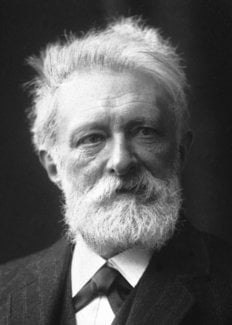
Rudolf Eucken (1846-1926) was born in Aurich, Germany. He studied philosophy, philology, and history at the universities of Göttingen and Berlin and wrote his dissertation on the language of Aristotle. He became a professor of philosophy at Basle in 1871 and from 1874 on held the chair of philosophy at Jena. Eucken was an idealist philosopher who developed his flexible system in many works. He revised his books and brought them up to date over a period of several decades, so that some of his works ran into more than a dozen editions. His main works were Geistige Stromungen der Gegenwart (1908) [Main Currents of Modern Thought ], Die Lebensanschauungen der grosser Denker (1890) [The Problem of Human Life as Viewed by the Great Thinkers from Plato to the Present Time ], Der Kampf um einen geistigen Lebensinhalt (1896) [The Struggle for a Spiritual Content of Life], Der Wahrheitsgehalt der Religion (1901) [The Truth of Religion ], Grundlinien einer neuen Lebensanschauung (1907) [Life’s Basis and Life’s Ideal: The Fundamentals of a New Philosophy of Life ], Present Day Ethics in their Relation to the Spiritual Life (the Deem Lectures given at New York University in 1913), and Der Sinn und Wert des Lebens (1908) [The Meaning and Value of Life ]. Eucken developed his philosophy of history in an essay entitled «Philosophie der Geschichte» (1907), which appeared in the series Die Kultur der Gegenwart [Contemporary Civilization].
This autobiography/biography was written at the time of the award and first published in the book series Les Prix Nobel. It was later edited and republished in Nobel Lectures. To cite this document, always state the source as shown above.
Rudolf Eucken died on September 14, 1926.
The Nobel Foundation's copyright has expired.Rudolf Eucken – Facts
Award ceremony speech
Presentation Speech by Harald Hjärne, Director of the Swedish Academy, on December 10, 1908
Alfred Nobel was a man of action who, during his successful business career in the competing markets of many countries and in the international trade centres, had developed an awareness of the inner contradictions and dangers of modern developments. Mankind still seemed to him to need help, and therefore he thought that the best investment for his own fortune would be to use ts interest to support those of whom the future would reveal that – in the words of his will – «mankind profited most from them».
The ambiguity of all human work and its tools or weapons challenged him to a personal deed in behalf of human progress. He knew the enormous usefulness f his own technical inventions for military purposes; therefore, he wanted to support any promising efforts toward international peace. How could his worldly mind have overlooked that all our civilization is full of strife, that it invites abuse as well as proper use, and that it can be turned toward evil as well as good?
His chief interest, however, was the intellectual sphere, despite its inherent contradictions. It appeared to him, the cosmopolitan familiar with the languages and civilizations of France and England, as a complex of arts and sciences, of exact natural science and humanistic belles-lettres. The former he sought to stimulate by supporting discoveries and inventions for the benefit of mankind. Turning to literature with the same philanthropic concern, he established a prize for what he called «excellence in works of an idealistic tendency».
Alfred Nobel was deeply influenced by the outlook of Victor Rydberg’s poetry and philosophy. He knew what ideals mean to the human mind, to the will that creates and maintains civilization, cultivates and reaps its fruits, and through the struggle and darkness of life breaks a path toward a new dawn of light and peace. Wherever such ideals are manifested in their infinite variety and strengthen the willingness of men to serve each other – whether in the poet’s inspiration, the philosopher’s attempt to solve the riddle of life, the historian’s biographies, or the work of any scholar or writer that looks toward those ideals as models in his freedom and independence – there one finds the literature that Alfred Nobel had in mind. This literature makes use of whatever art and science can offer, and from it mankind «profits the most» precisely because it mirrors the ideal truth without any regard for the useful. The creations and forms of this literature are as manifold s the ideals, and they are forever new and free.
The Swedish Academy has therefore felt that it acted with the sanction of Alfred Nobel when it decided this year to award the literary prize founded by Nobel to one of the most prominent thinkers of our age, Professor Rudolf Eucken, «in recognition of his earnest search for truth, his penetrating power of thought, his wide range of vision, and the warmth and strength of presentation with which in his numerous works he has vindicated and developed an idealistic philosophy of life».
For over thirty years Professor Eucken has been publishing profound contributions in several areas of philosophy. His activity as a writer has yielded increasingly many and important books as his basic philosophy has become both more coherent and more comprehensive. Particularly in recent years he has published the works that afford us the most thorough introduction to his thought; moreover, the wider public has received from him uncommonly lucid and powerful expositions of his attempts to resolve the most urgent problems of contemporary civilization. Thus he is in the midst of giving the final shape to his mature thought, and everywhere one can see new ideas which we hope he will be able to develop fully in the near future.
I cannot here give a detailed account of Eucken’s long and versatile career as a philosopher, because time is short and the subject difficult for one with little knowledge of most of his special fields. I can only make some generalizations and dwell in particular on the historical foundations of his Weltanschanung and his views on the meaning of historical processes. Professor Eucken considers history a decisive influence on his philosophy, and it was philological and historical studies that led him toward philosophy. Ever since his early days the actual life of man and society has meant much more to him than the abstractions of mere thought analysis. Unfortunately we shall have to omit many interesting ramifications of his thought in order to get a clear picture at least of its main results.
The confident and rising idealism today in the intellectual life not only of Germany but everywhere on the higher and freer levels of civilized life is very different from those proud constructions which bore that name and which went bankrupt half a century ago with Hegel’s magnificent system. It was an attempt to derive the inexhaustible wealth of life and the world from abstract categories and concepts by means of a daring dialectic, and to force all human research, all civilization, under the yoke of a complete system of thought. But closer analysis revealed this attempt to be beyond the competence of the philosophical search for truth, and in fact it accelerated the change to an equally dogmatic materialism.
We Swedes know that even at the zenith of dialectic absolutism Boström directed his logical criticisms toward its basic attitudes. By going back to earlier views both here and abroad, he developed a different outlook which has had its adherents in this country up to the present. There is an indisputable resemblance between his views and those developed by Professor Eucken in his writings. This is not surprising, for they both represent a basic type that since the earliest days of civilization – notwithstanding temporary eclipses – has preserved its vitality in the face of pantheistic abstractions as well as materialistic fear of thought. But this characteristic agreement in their basic views does not exclude independent and personal development; on the contrary it rather promotes it, and no branch of philosophy has produced so many marked profiles as realistic idealism. Socrates and Plato were led by this idealism to hold that philosophy is a search for truth rather than a fixed dogma, and this tireless search, by whatever means, has characterized philosophy throughout the ages. Thus Eucken and Boström reached their common goal by quite different means.
Since his youth Eucken has carefully observed the busy and steady philosophical attempts to reassess external and inner experience and to gain firm ground again after the collapse of the bold philosophical systems. Philosophy turned in different directions with varying expectations and success. Sometimes the motto was «Back to Kant», and the great metaphysical iconoclast served as a model for thorough studies of the limits of human knowledge, or else one listened hesitantly to his declaration of an eternal realm of reason based on unassailable moral postulates. Again there were attempts to give philosophy a safe position by tying it to the victorious advances of modern science or, more successfully, by independently questioning its presuppositions and methods. There were attempts to discover the secrets of the human soul in its manifestations, whether by observation or experiment, and there was hope that such research would lead toward the discovery of the proper relation of physical and psychological existence.
Eucken has been familiar with all these schools, but his main field has been historical and critical research on the emergence and development of mainstreams of thought in connection with the evolution and change of general culture. Like so many pioneers in his field, he has always been convinced that there can be no true progress without a proper regard for tradition and that there is more to the annals of philosophy than a kaleidoscope of systems rising and falling with equal suddenness. As Eucken has often emphasized, there can be no continuity in philosophy unless it grows like the other sciences and continually treats and develops the same problems, lest every mind should believe that he could start all over from the beginning only to be replaced by someone else in the same manner.
Apart from collections of monographs and essays in this field, Eucken as early as 1878 published the first comprehensive results of his method. In Grundbegriffe der Gegenwart [Basic Concepts of Modern Thought] he discusses the origin, formulation, and development of common modern concepts since the days of ancient philosophy and scholasticism. Such terms are «subjective nd objective», «experience and evolution», «monism and dualism», «mechanistic and organic», «law and individuality», «personality and character», «theoretical and practical», «immanence and transcendence». But he is not interested merely in definition of terms; he wants to describe the leading goals and attitudes of a period by elucidating, in his own words, «concepts as a mirror of their time». With each dissection the object becomes more clearly delineated. In the fourth edition, which appeared this year, the scope of the book has widened; it has become a thorough critique of the conflicts in modern civilization; accordingly, the title of the book has been changed to Geistige Strömungen der Gegenwart (1908) [Main Currents of Modern Thought]. Indeed, the author has developed his own basic ideas in it, and it is a rewarding labour to study them in their wealth and complexity.
A thinker who considers the perennial questions of human civilization from this point of view will soon learn that he cannot solve them either by ignoring their close interrelation or by limiting himself to epistemological questions. Undoubtedly these problems constantly impinge upon each other; they cover the whole of human existence, influence individuals that are particularly susceptible to their importance, and thereby exercise a reforming power over entire communities and ages. The attempt to trace them in their vital and seminal role amounts to giving a comprehensive survey of human intellectual history. At the same time such a project is more conducive to arousing and widening philosophical interest than a mere analysis of conflicting dogmas, schools, and sects. Eucken undertook such a task in Die Lebensanschauungen der grosser Denker: Eine Entwicklungsgeschichte des Lebensproblems der Menschheit von Plato his zur Gegenwart (1890) [The Problem of Human Life as Viewed by the Great Thinkers from Plato to the Present Time ]. This work, revised and expanded through seven editions, bears witness not only to the depth and scope of Eucken’s research but to his mastery of marshalling his thoughts and to the maturity of his style.
Eucken has developed his own philosophy in several works such as Der Kampf um einen geistigen Lebensinhalt: Neue Grundlegung einer Weltanschauung (1896) [The Struggle for a Spiritual Content of Life: New Principles of a Philosophy] and Grundlinien einer neuen Lebensanschauung (1907) [Life’s Basis and Life’s Ideal: The Fundamentals of a New Philosophy of Life] as well as the more popular Der Sinn und Wert des Lebens ( I908)[The Meaning and Value of Life ] and Einführung in eine Philosophie des Geisteslebens (1908) [Introduction to a Philosophy of the Mind]. The last mentioned work in particular is a masterly and lucid exposition of his views.
In recent years Eucken has also turned his attention to religious questions, in Der Wahrheitsgehalt der Religion (1901) [The Truth of Religion] and Hauptprobleme der Religionsphilosophie der Gegenwart (1907) [Main Problems of Contemporary Philosophy of Religion], the latter based on three lectures delivered during a theological summer institute at the University of Jena. This year he has developed his ideas about the philosophy of history at some length in a treatise that forms part of the great encyclopaedic work Die Kultur der Gegenwart [Contemporary Civilization]. According to hints in recent works he is now planning a thorough re-examination of ethical problems.
His deep insights into history and his significant attempts to relate his own thoughts on the forces of life to the evidence of history place Eucken far above the superficial attitudes that exaggerate and misinterpret the inner meaning of history. These attitudes, at the cost of an unprejudiced love of truth, have become all too common in this century of history.
Furthermore, Eucken sees a threat to civilization in the caricature of historicism, which partly intends to drag all firm goals and higher aims into the whirlpool of a misunderstood relativity and partly supports the frequent attempts to limit and paralyze the human will by fitting all human developments and achievements into a supposed naturalistic and fatalistic causal nexus. But in contrast to Nietzsche, for instance, he does not believe in the right or ability of the overweening individual to maintain his own will to power in the face of the obligations to the eternal majesty of moral laws. It is not the individual or the superman in his separate existence, but the strong character formed in the consciousness of free harmony with the intellectual forces of the cosmos, and therefore profoundly independent, that in Eucken’s view is called upon to liberate us from the superficial compulsion of nature and the never completely inescapable pressure of the historical chain of cause and effect.
In history as well as in his personal existence man has life of a higher nature, a life originating not in nature but existing in itself and through itself, a life of the mind, which is in reality beyond time but which is revealed to us only in temporal manifestations. All true development presupposes some basis of existence. To the extent to which man comes to participate in the intellectual life, he acquires a power that is eternal and above the vicissitudes of time. This eternal life is a realm of truth, for truths with a limited existence are unthinkable. At the same time it is an infinite whole of living power, far above the world as it appears to us but exercising its influence in the world for us and through us. It is not an abstract castle in the air to which we can escape on the wings of a mystical and supposedly logical imagination, but as a wholly living power it confronts our entire personality with an either-or, a choice of the will that makes the evolution of man and mankind a ceaseless struggle between the higher and the lower life.
History is the mirror of mankind’s victories and defeats in this struggle, the vicissitudes of which have been due to the self-determination of the free personality. Hence no philosophy of history can predict the future of this struggle. Even the civilization handed to us as a heritage does not survive by itself but demands our persistent and personal struggle for the true and genuine life of the mind. Nothing else can justify and support our endeavours for morality and art and our political and social work.
«Utilitarianism,» Eucken says, «which ever form it assumes, is irreconcilably opposed to true intellectual culture. Any intellectual activity degenerates unless it is treated for its own sake.» Although a great admirer and lover of art, Eucken has turned with equal severity against the aestheticism which is preached so loudly in our days and which «infects only reflective and pleasure-loving hedonists». «No art that values itself and its task can afford to condemn morality. A creative artist of the highest order has hardly ever been a follower of an aesthetic view of life.» Our Runeberg is a poet after his heart, for such an outlook «with its indifference to moral values and its arrogant exclusiveness is quite foreign to him». And only those nations, whether great or small, that have created and maintained a civilization full of genuine intellectual life have a contribution to make to mankind. A contribution may be made only by those nations whose future consists not in a vain endeavour to use aterial force and weapons to «transform quantity into quality», but in the ever growing revelation of eternal life within the limits of temporal existence.
Eucken does not reject a metaphysics that tries to express conceptually those things that are accessible to us in the infinite realm of truth and life. But he has not constructed an everlasting system, nor did he want to do so. His philosophy, which he himself calls a philosophy of action, operates primarily with the forces of human evolution and is therefore more dynamic than static. We may regard him as a Kulturphilosoph who fully meets the standards and needs of our age.
Professor Eucken – The lofty and scholarly idealism of your Weltanschauung, which has found such vigorous expression in your many and widely read works, has justified the Swedish Academy in awarding to you the Nobel Prize in Literature for this year.
The Academy greets you with sincere and respectful admiration and hopes that your future works, too, will bear ample fruit for the benefit of culture and humanity.
At the banquet, Harald Hjärne addressed, in German, his personal congratulations to Professor Eucken. He recalled Thuringia and, in particular, the University of Jena, the heart of German humanism, and the relations of that university with the history of the Swedish Reformation. In his reply, Mr. Eucken spoke enthusiastically about the idealism for which he had struggled and expressed his gratitude toward Sweden and the Swedish Academy.