André Gide – Nobel Lecture
André Gide did not deliver a Nobel Lecture.
André Gide – Banquet speech
As the Laureate was unable to be present at the Nobel Banquet at the City Hall in Stockholm, December 10, 1947, the speech was read by Gabriel Puaux, French Ambassador
(Translation)
«It would no doubt be of little purpose to dwell on my regrets at not being able to be present on this solemn occasion nor to have my own voice bear witness to my gratitude, compelled as I am to forgo a trip that promised to be both pleasant and instructive.
I have, as you know, always declined honours, at least those which as a Frenchman I could expect from France. I confess, gentlemen, that it is with a sense of giddiness that I suddenly receive from you the highest honour to which a writer can aspire. For many years I thought that I was crying in the wilderness, later that I was speaking only to a very small number, but you have proved to me today that I was right to believe in the virtue of the small number and that sooner or later it would prevail.
It seems to me, gentlemen, that your votes were cast not so much for my work as for the independent spirit that animates it, that spirit which in our time faces attacks from all possible quarters. That you have recognized it in me, that you have felt the need to approve and support it, fills me with confidence and an intimate satisfaction. I cannot help thinking, however, that only recently another man in France represented this spirit even better than I do. I am thinking of Paul Valéry, for whom my admiration has steadily grown during a friendship of half a century and whose death alone prevents you from electing him in my place. I have often said with what friendly deference I have constantly and without weakness bowed to his genius, before which I have always felt ‹human, only too human›. May his memory be present at this ceremony, which in my eyes takes on all the more brilliance as the darkness deepens. You invite the free spirit to triumph and through this signal award, given without regard for frontiers or the momentary dissensions of factions, you offer to this spirit the unexpected chance of extraordinary radiance.»
Copyright © Éditions Gallimard
Prior to the speech, Arne Tiselius, Deputy Chairman of the Nobel Foundation, made the following comment: «Unfortunately, Mr. André Gide, due to ill health, has had to give up his original intention to attend the ceremonies. We regret this, indeed, and would like to extend our reverence and our sympathy to the venerable master of French literature whose genius has so profoundly influenced our time.»
André Gide – Bibliography
| Works in French |
| Les Cahiers d’André Walter. – Paris : Didier-Perrin, 1891 |
| Le Traité du Narcisse. – Paris : Librairie de l’Art Indépendant, 1891 |
| Les Poésies d’André Walter. – Paris : Librairie de l’Art Indépendant, 1892 |
| La Tentative amoureuse. – Paris : Librairie de l’Art Indépendant, 1893 |
| Le Voyage d’Urien. – Paris : Librairie de l’Art Indépendant, 1893 |
| Paludes. – Paris : Librairie de l’Art Indépendant, 1895 |
| Les Nourritures terrestres. – Paris : Mercure de France, 1897 |
| Le Prométhée mal enchaîné. – Paris : Mercure de France, 1899 |
| Philoctète. – Paris : Mercure de France, 1899 |
| Feuilles de route, 1895-1896. – Bruxelles : Vandersypen, 1899 |
| Lettres à Angèle, 1898-1899. – Paris : Mercure de France, 1900 |
| Le Roi Candaule. – Paris : Revue Blanche, 1901 |
| L’Immoraliste. – Paris : Mercure de France, 1902 |
| Saül. – Paris : Mercure de France, 1903 |
| Prétextes : réflexions sur quelques points de littérature et de morale. – Paris : Mercure de France, 1903 |
| Amyntas. – Paris : Mercure de France, 1906 |
| Le Retour de l’enfant prodigue. – Paris : Vers et Prose, 1907 |
| La Porte étroite. – Paris : Mercure de France, 1909 |
| Oscar Wilde : In Memoriam (souvenirs); Le “De Profundis”. – Paris : Mercure de France, 1910 |
| Nouveaux Prétextes : réflexions sur quelques points de Littérature et de Morale. – Paris : Mercure de France, 1911 |
| Isabelle. – Paris : Nouvelle Revue Française/Marcel Rivière, 1911 |
| Bethsabé. – Paris : Bibliothèque de l’Occident, 1912 |
| Souvenirs de la cour d’assises. – Paris : Nouvelle Revue Française, 1914 |
| Les Caves du Vatican. – Paris : Nouvelle Revue Française, 1914. – 2 vol. |
| La Symphonie pastorale. – Paris : Gallimard, 1919 |
| Si le grain ne meurt. – Brügge : Sainte-Catherine, 1920-21. – 2 vol. |
| Morceaux choisis. – Paris : Gallimard, 1921 |
| Numquid et tu … ? – Brügge : Sainte-Catherine, 1922 |
| Dostoïevsky. – Paris : Plon-Nourrit, 1923 |
| Corydon. – Paris : Gallimard, 1924 |
| Incidences. – Paris : Gallimard, 1924 |
| Caractères. – Paris : A l’Enseigne de la Porte étroite, 1925 |
| Les Faux-Monnayeurs. – Paris : Gallimard, 1925 |
| Le Journal des Faux-Monnayeurs. – Paris : Eos, 1926 |
| Voyage au Congo. – Paris : Gallimard, 1927 |
| Le Retour du Tchad: Carnets de route. – Paris : Gallimard, 1928 |
| L’Ecole des femmes. – Paris : Gallimard, 1929 |
| Essai sur Montaigne. – Paris : Schiffrin/Pléiade, 1929 |
| Un Esprit non prévenu. – Paris : Kra, 1929 |
| Robert. – Paris : Gallimard, 1930 |
| Œdipe. – Paris : Gallimard, 1931 |
| Œu vres complètes d’André Gide / établie par L. Martin-Chauffier. – Paris : Gallimard, 1932-1939. – 17 vol. |
| Pages de journal (1929-1932). – Paris : Gallimard, 1934 |
| Les Nouvelles Nourritures. – Paris : Gallimard, 1935 |
| Nouvelles pages de journal (1932-1935). – Paris : Gallimard, 1935 |
| Geneviève. – Paris : Gallimard, 1936 |
| Retour de l’U.R.S.S. – Paris : Gallimard, 1936 |
| Retouches à mon Retour de l’U.R.S.S. – Paris : Gallimard, 1937 |
| Journal 1889-1939. – Paris : Gallimard, 1939 |
| Découvrons Henri Michaux. – Paris : Gallimard, 1941 |
| Théâtre. – Paris : Gallimard, 1942 |
| Interviews imaginaires. – Paris : Gallimard, 1942 |
| Pages de journal (1939-1942). – New York: Schiffrin, 1944 |
| Poussin. – Paris : Au Divan, 1945 |
| Thésée. – Paris : Gallimard, 1946 |
| Et nunc manet in te. – Neuchâtel: Richard Heyd, 1947 |
| Paul Valéry. – Paris : Domar, 1947 |
| Poétique. – Neuchâtel : Ides et Calendes, 1947 |
| Le procès; pièce tirée du roman de Kafka (traduction Vialatte) / par André Gide & J. L. Barrault. – Paris : Gallimard, 1947 |
| Préfaces. – Neuchâtel : Ides et Calendes, 1948 |
| Rencontres. – Neuchâtel : Ides et Calendes, 1948 |
| Les Caves du Vatican : farce en trois actes. – Neuchâtel : Ides et Calendes, 1948 |
| Eloges. – Neuchâtel : Ides et Calendes, 1948 |
| Notes sur Chopin. – Paris : L’Arche, 1948 |
| Feuillets d’automne. – Paris : Mercure de France, 1949 |
| Littérature engagée / textes réunis et présentés par Yvonne Davet. – Paris : Gallimard, 1950 |
| Journal, 1942-1949. – Paris : Gallimard, 1950 |
| Ainsi soit-il ou les jeux sont faits. – Paris : Gallimard, 1952 |
| Ne jugez pas. – Paris : Gallimard, 1969 |
| Le Récit de Michel / texte inédit présenté et annoté par Claude Martin. – Neuchâtel : Ides et Calendes, 1973 |
| Les Cahiers et les Poésies d’André Walter, avec des fragments inédits du Journal / éd. établie et présentée par Claude Martin. – Paris : Gallimard, 1986 |
| Un Fragment des “Faux-monnayeurs / éd. critique du manuscrit de Londres établie, présentée et annotéepar N. David Keypour. – Sainte-Foy-lès-Lyon: Centre d’Etudes Gidiennes, 1990 |
| À Naples : reconnaissance à l’Italie / postf. et notes de Claude Martin. – Fontfroide: Fata Morgana, 1993 |
| Le Grincheux. – Fontfroide: Fata Morgana, 1993 |
| L’Oroscope, ou Nul n’évite sa destinée : Scénario, fac-similé et transcription / éd. présentée par Daniel Durosay. – Paris : Jean-Michel Place, 1995 |
| Le Scénario d’Isabelle / André Gide, Pierre Herbart ; texte établi, présenté et annoté par Cameron D. E. Tolton. – Paris : Lettres modernes, 1996 |
| Journal, I : 1887-1925 / éd. établie, présentée et annot. par Éric Marty [et Martine Sagaert]. – Paris : Gallimard, 1996 |
| Journal, II : 1926-1950 / éd. établie, présentée et annot. par Martine Sagaert. – Paris : Gallimard, 1997 |
| Essais critiques / éd. présentée, établie et annotée par Pierre Masson. – Paris : Gallimard, 1999 |
| Le Ramier / avant-propos de Catherine Gide ; préf. de Jean-Claude Perrier ; postf. de David H. Walker. – Paris : Gallimard, 2002 |
| Souvenirs et voyages / édition présentée, établie et annotée par Pierre Masson, avec la collaboration de Daniel Durosay et Martine Sagaert. – Paris : Gallimard, 2001 |
| Translations into English |
| Prometheus Illbound / translated by Lilian Rothermere. – London: Chatto & Windus, 1919 |
| Strait Is the Gate / translated by Dorothy Bussy. – New York: Knopf, 1924 |
| Dostoyevsky / translated by Arnold Bennett. – London : Dent, 1925 |
| Montaigne: An Essay in Two Parts / translated by Stephen H. Guest and Trevor E. Blewitt. – New York: Liveright, 1929 |
| The School for Wives / translated by Dorothy Bussy. – New York: Knopf, 1929 |
| Travels in the Congo / translated by Dorothy Bussy. – New York: Knopf, 1929 |
| The Vatican Swindle / translated by Dorothy Bussy. – New York: Knopf, 1925. – Translation republished as Lafcadio’s Adventures, 1927; as The Vatican Cellars, 1952 |
| The Counterfeiters / translated by Dorothy Bussy. – New York: Knopf, 1927. – Translation republished as The Coiners, 1950 |
| The Immoralist / translated by Dorothy Bussy. – New York: Knopf, 1930 |
| Two Symphonies / translated by Dorothy Bussy. – New York: Knopf, 1931 |
| If It Die … / translated by Dorothy Bussy. – New York: Random House, 1935 |
| Return from the U.S.S.R. / translated by Dorothy Bussy. – New York: Knopf, 1937. – Translation republished as Back from the U.S.S.R, 1937 |
| Afterthoughts: A Sequel to “Back from the U.S.S.R.” / translated by Dorothy Bussy. – London: Secker & Warburg, 1938. – Translation republished as Afterthoughts on the U.S.S.R., 1938 |
| Imaginary Interviews / translated by Malcolm Cowley. – New York: Knopf, 1944 |
| The Journals of André Gide / translated by Justin O’Brien. – New York: Knopf, 1947-1951. – 4 vol. |
| Theseus / translated by John Russell. – London: Horizon, 1948 |
| The Fruits of the Earth / translated by Dorothy Bussy. – New York: Knopf, 1949 |
| Notes on Chopin / translated by Bernard Frechtman. – New York: Philosophical Library, 1949 |
| Oscar Wilde : In Memoriam (Reminiscences); “De Profundis” / translated by Bernard Frechtman. – New York: Philosophical Library, 1949 |
| Autumn Leaves / translated by Elsie Pell. – New York: Philosophical Library, 1950 |
| Two Legends: Theseus and Oedipus / translated by John Russell. – New York: Knopf, 1950 |
| The School for Wives; Robert; Geneviève, or The Unfinished Confidence / translated by Dorothy Bussy. – New York: Knopf, 1950 |
| The Trial, from the Novel of Franz Kafka / translated by Jacqueline and Frank Sundstrom. – London: Secker & Warburg, 1950 |
| The Secret Drama of My Life / translated by Keene Wallis. – New York: Boar’s Head Books, 1951 |
| Logbook of the Coiners / translated by Justin O’Brien. – London: Cassell, 1952 |
| My Theater / translated by Jackson Mathews. – New York: Knopf, 1952 |
| The Return of the Prodigal … / translated by Dorothy Bussy. – London: Secker & Warburg, 1953 |
| Marshlands and Prometheus Misbound : Two Satires. – New York: New Directions, 1953 |
| Amyntas / translated by Villiers David. – London: Bodley Head, 1958 |
| Pretexts : Reflections on Literature and Morality / translated by Angelo P. Bertocci and others; edited by Justin O’Brien. – New York: Meridian, 1959 |
| So Be It, or The Chips Are Down / translated by Justin O’Brien. – New York: Knopf, 1959 |
| Urien’s Voyage / translated by Wade Baskin. – New York: Philosophical Library, 1964 |
| The Notebooks of André Walter / translated by Wade Baskin. – New York : Philosophical Library, 1968 |
| The Immoralist / a new translation by Richard Howard. – New York, Knopf, 1970 |
| Oscar Wilde : a Study / translated from the French by Lucy Gordon. – New York : Gordon Press, 1975 |
| Selected letters of André Gide and Dorothy Bussy / edited by Richard Tedeschi. – Oxford : Oxford University Press, 1983 |
| Corydon / translated, and with a preface by Richard Howard. – New York : Farrar, Straus, Giroux, 1983 |
| Amyntas / translated from the French by Richard Howard with an afterword. – New York : Ecco Press, 1988 |
| The Immoralist / translated by Stanley Appelbaum. – Mineola, N.Y. : Dover Publications, 1996 |
| The Immoralist / translated by David Watson ; with an introduction by Alan Sheridan. – New York : Penguin Books, 2001 |
| Judge Not / translated from the French and with an introduction and notes by Benjamin Ivry. – Urbana : University of Illinois Press, 2003 |
| Recollections of Oscar Wilde / André Gide, Ernest La Jeunesse, Franz Blei ; translation and introduction by Percival Pollard. – New York : Mondial, 2007 |
| Critical studies (a selection) |
| Pierre-Quint, Léon, André Gide : sa vie, son oeuvre. – Paris : Stock, 1932. |
| Du Bos, Charles, Le dialogue avec André Gide. – Paris : Corrêa, 1947 |
| Naville, Arnold, Bibliographie des écrits de André Gide. – Paris : Matarasso, 1949 |
| Thomas, Lawrence, André Gide : the Ethic of the Artist. – London : Secker & Warburg, 1950 |
| Martin du Gard, Roger, Notes sur André Gide : 1913-1951. – Paris, 1951 |
| Herbart, Pierre, À la recherche d’André Gide. – Paris : Gallimard, 1952 |
| O’Brien, Justin, Portrait of André Gide : a Critical Biography. – London : Secker & Warburg, 1953 |
| Lafille, Jean Pierre Baptiste, André Gide romancier. – Paris : Hachette, 1954 |
| Delay, Jean, La jeunesse d’André Gide. – Paris : Gallimard, 1956-1963. – 2 vol. |
| Fowlie, Wallace, André Gide : His Life and Art. – New York : Macmillan, 1965 |
| Painter, George Duncan, André Gide : a Critical Biography. – London, 1968 |
| Gide : a Collection of Critical Essays. – Englewood Cliffs, N.J. : Prentice-Hall, 1970 |
| Fonvieille-Alquier, François, André Gide. – Paris, 1972 |
| Sheridan, Alan, André Gide : a Life In the Present. – London : Hamilton, 1998. |
| André Gide’s Politics : Rebellion and Ambivalence. – New York : Palgrave, 2000 |
| Lestringant, Frank, André Gide. Tome 1, L’inquiéteur. – Paris : Flammarion, 2011 |
| Perrier, Jean-Claude, André Gide ou La tentation nomade. – Paris : Flammarion, 2011 |
The Swedish Academy, 2011
André Gide – Nominations
André Gide – Other resources
Links to other sites
On André Gide from Pegasos Author’s Calendar
On André Gide from Catherine Gide Foundation
André Gide – Biographical
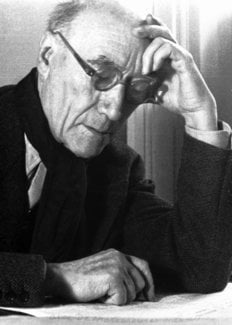
André Gide (1869-1951) came from a family of Huguenots and recent converts to Catholicism. As a child he was often ill and his education at the École Alsacienne was interrupted by long stays in the South, where he was instructed by private tutors. His Les Cahiers d’André Walter (1891) [The Notebooks of André Walter] opened the door to the symbolist literary circles of the day, but the decisive event of these years was a journey to Algeria, where a severe illness brought him to the verge of death and precipitated his revolt against his puritanical background. Henceforth his work lived on the never resolved tensions between a strict artistic discipline, a puritanical moralism, and the desire for unlimited sensual indulgence and abandonment to life. Les Nourritures terrestres (1897) [Fruits of the Earth], the drama Saul (1903), and later Le Retour de l’enfant prodigue (1907) [The Return of the Prodigal], are the chief documents of his revolt.
A result of Gide’s revolt was the unprecedented freedom with which he wrote about sexual matters in Corydon (privately published 1911, public version 1924), his autobiography Si le grain ne meurt (1924) [If It Die …], and Gide’s lifelong diary Journal 1889 à 1939 (1939), Journal 1939 à 1942 (1948), and Journal 1942 à 1949 (1950).
Gide divided his narrative works into soties such as Les Caves du Vatican (1914) [Lafcadio’s Adventures] and classically restrained récits, for example, La Porte étroite (1909) [Strait is the Gate] and La Symphonie pastorale (1919). The only work which he considered a novel was the structurally complex and experimental Les Faux Monnayeurs (1926) [The Counterfeiters].
Until the twenties Gide was known chiefly in avant-garde and esoteric literary circles (he was one of the founders of La Nouvelle Revue Française), but in his later years he became a highly influential, although always controversial figure. He travelled widely. His trip to the Congo led to a scathing report on economic abuses by French firms and resulted in reforms. If in the thirties Gide put off one part of the public by his sympathies with communism, his disillusioned report of his journey to Russia, Le Retour de L’U.R.S.S (1936), scandalized another. Gide’s interests went far beyond the confines of French literature. He translated Shakespeare, Whitman, Conrad, and Rilke. He was an influential literary critic (Prétextes, 1903; Nouveaux Prétextes, 1911) and was especially attracted to problematic writers like Dostoevsky, about whom he wrote a book (1923).
Among Gide’s last work was Thésée (1946), like the earlier Oedipe (1931) the reworking of an old myth. Gide’s collected works have been published in fifteen volumes (1933-39).
This autobiography/biography was written at the time of the award and first published in the book series Les Prix Nobel. It was later edited and republished in Nobel Lectures. To cite this document, always state the source as shown above.
André Gide died on February 19, 1951.
The Nobel Foundation's copyright has expired.André Gide – Facts
Award ceremony speech
Presentation Speech by Anders Österling, Permanent Secretary of the Swedish Academy
On the first page of the remarkable journal kept by André Gide for half a century, the author, then twenty years old, finds himself on the sixth floor of a building in the Latin Quarter, looking for a meeting place for «The Symbolists», the group of youths to which he belonged. From the window he looked at the Seine and Notre Dame during the sunset of an autumn day and felt like the hero of a Balzac novel, a Rastignac ready to conquer the city lying at his feet:«And now, we two!» However, Gide’s ambition was to find long and twisting paths ahead; nor was it to be contented with easy victories.
The seventy-eight-year-old writer who this day is being honoured with the award of the Nobel Prize has always been a controversial figure. From the beginning of his career he put himself in the first rank of the sowers of spiritual anxiety, but this does not keep him today from being counted almost everywhere among the first literary names of France, or from enjoying an influence that has persisted unabatedly through several generations. His first works appeared in the 1890’s; his last one dates from the spring of 1947. A very important period in the spiritual history of Europe is outlined in his work, constituting a kind of dramatic foundation to his long life. One may ask why the importance of this work has only so recently been appreciated at its true value: the reason is that André Gide belongs unquestionably to that class of writers whose real evaluation requires a long perspective and a space adequate for the three stages of the dialectic process. More than any of his contemporaries, Gide has been a man of contrasts, a veritable Proteus of perpetually changing attitudes, working tirelessly at opposite poles in order to strike flashing sparks. This is why his work gives the appearance of an uninterrupted dialogue in which faith constantly struggles against doubt, asceticism against the love of life, discipline against the need for freedom. Even his external life has been mobile and changing, and his famous voyages to the Congo in 1927 and to Soviet Russia in 1935 – to cite only those – are proof enough that he did not want to be ranked among the peaceful stay-at-homes of literature.
Gide comes from a Protestant family whose social position permitted him to follow his vocation freely and to devote greater attention than most others can afford to the cultivation of his personality and to his inner development. He described this family milieu in his famous autobiography whose title Si le grain ne meurt (1924) [If It Die… ] is taken from St. John’s words about the grain of wheat that must die before its fruition. Although he has strongly reacted against his Puritan education, he has nonetheless all his life dwelled on the fundamental problems of morality and religion, and at times he has defined with rare purity the message of Christian love, particularly in his short novel, La Porte étroite (1909) [Strait Is the Gate], which deserves to be compared with the tragedies of Racine.
On the other hand, one finds in André Gide still stronger manifestations of that famous «immoralism» – a conception which his adversaries have often misinterpreted. In reality it designates the free act, the «gratuitous» act, the liberation from all repressions of conscience, something analogous to what the American recluse Thoreau expressed, «The worst thing is being the slave dealer of one’s soul.» One should always keep in mind that Gide found some difficulty in presenting as virtue that which is composed of the absence of generally recognized virtues. Les Nourritures terrestres (1897) [Fruits of the Earth] was a youthful attempt from which he later turned away, and the diverse delights he enthusiastically sings of evoke for us those beautiful fruits of southern lands which do not bear keeping. The exhortation which he addresses to his disciple and reader, «And now, throw away my book. Leave me!», has been followed first of all by himself in his later works. But what leaves the strongest impression, in Nourritures as elsewhere, is the intense poetry of separation, of return, captured by him in so masterly a fashion in the flute-song of his prose. One rediscovers it often, for example in this brief journal entry, written later, near a mosque at Brusa on one May morning: «Ah! begin anew and on again afresh! Feel with rapture this exquisite tenderness of the cells in which emotion filters like milk… Bush of the dense gardens, rose of purity, indolent rose in the shade of plane trees, can it be thee thou hast not known my youth? Before? Is it a memory I dwell in? Is it indeed I who am seated in this little corner of the mosque, I who breathe and I who love thee? or do I only dream of loving thee?… If I were indeed real, would this swallow have stolen so close to me?»
Behind the strange and incessant shift in perspective that Gide’s work offers to us, in the novels as well as in the essays, in the travel diaries, or in the analyses of contemporary events, we always find the same supple intelligence, the same incorruptible psychology, expressed in a language which, by the most sober means, attains a wholly classic limpidity and the most delicate variety. Without going into the details of the work, let us mention in this connection the celebrated Les Faux Monnayeurs (1926) [The Counterfeiters], with its bold and penetrating analysis of a group of young French people. Through the novelty of its technique, this novel has inspired a whole new orientation in the contemporary art of the narrative. Next to it, put the volume of memoirs already mentioned, in which the author intended to recount his life truthfully without adding anything that could be to his advantage or hiding what would be unpleasant. Rousseau had had the same intention, with this difference, that Rousseau exhibits his faults in the conviction that all men being as evil as he, none will dare to judge or condemn him. Gide, however, quite simply refuses to admit to his fellows the right to pass any judgment on him; he calls on a higher tribunal, a vaster perspective, in which he will present himself before the sovereign eye of God. The significance of these memoirs thus is indicated in the mysterious Biblical quotation of the grain of wheat which here represents the personality: as long as the latter is sentient, deliberate, and egocentric, it dwells alone and without germinating power; it is only at the price of its death and its transmutation that it will acquire life and be able to bear fruit. «I do not think,» Gide writes, «that there is a way of looking at the moral and religious question or of acting in the face of it that I have not known and made my own at some moment in my life. In truth, I have wished to reconcile them all, the most diverse points of view, by excluding nothing and by being ready to entrust to Christ the solution of the contest between Dionysus and Apollo.»
Such a statement throws light on the intellectual versatility for which Gide is often blamed and misunderstood, but which has never led him to betray himself. His philosophy has a tendency toward regeneration at any price and does not fail to evoke the miraculous phoenix which out of its nest of flames hurls itself to a new flight.
In circumstances like those of today, in which, filled with admiring gratitude, we linger before the rich motifs and the essential themes of this work, it is natural that we pass over the critical reservations which the author himself seems to enjoy provoking. For even in his ripe age, Gide has never argued in favor of a full and complete acceptance of his experiences and his conclusions. What he wishes above all is to stir up and present the problems. Even in the future, his influence will doubtless be noted less in a total acceptance than in a lively controversy about his work. And in this lies the foundation of his true greatness.
His work contains pages which provoke like a defiance through the almost unequalled audacity of the confession. He wishes to combat the Pharisees, but it is difficult, in the struggle, to avoid shocking certain rather delicate norms of human character. One must always remember that this manner of acting is a form of the impassioned love of truth which, since Montaigne and Rousseau, has been an axiom of French literature. Through all the phases of his evolution, Gide has appeared as a true defender of literary integrity, founded on the personality’s right and duty to present all its problems resolutely and honestly. From this point of view, his long and varied activity, stimulated in so many ways, unquestionably represents an idealistic value.
Since Mr. André Gide, who has declared with great gratitude his acceptance of the distinction offered him, has unfortunately been prevented from coming here by reasons of health, his Prize will now be handed to His Excellency the French Ambassador.