Saint-John Perse – Bibliography
| Works in French |
| Eloges. – Paris: Editions de la Nouvelle Revue Française, 1911 |
| Amitié du prince. – Paris: Ronald Davis, 1924 |
| Anabase. – Paris: Gallimard, 1924. – Édition revue 1948 |
| Poème pour Valery Larbaud. – Liège: A la Lampe d’Aladdin, 1936 |
| Exil : poème. – Marseilles : Editions Cahiers du Sud, 1942 |
| Pluies. – Buenos Aires: Les Editions Lettres Françaises, 1944 |
| Quatre poèmes, 1941-1944. – Buenos Aires: Les Editions Lettres Françaises, 1944. – Republished as Exil, suivi de Poème à l’étrangère ; Pluies ; Neiges (Paris: Gallimard, 1945) |
| Vents. – Paris: Gallimard, 1946 |
| Amers. – Paris: Gallimard, 1957 |
| Chronique. – Marseilles: Cahiers du Sud, 1959 |
| Poésie : allocution au Banquet Nobel du 10 décembre 1960. – Paris: Gallimard, 1961 |
| Hommage à Rabindranath Tagore. – Liège : Editions Dynamo, 1962 |
| L’ordre des oiseaux. – Paris: Sociéte d’Editions d’art, 1962. – Republished as Oiseaux (Paris: Sociéte d’Editions d’art, 1962) |
| Valéry Larbaud; ou, L’Honneur littéraire. – Liège : Editions Dynamo, 1962 |
| Silence pour Claudel. – Liège : Editions Dynamo, 1963 |
| Au souvenir de Valery Larbaud. – Liège : Editions Dynamo, 1963 |
| Pour Dante. – Paris: Gallimard, 1965 |
| Chanté par celle qui fut là … – Paris : Privately Printed by Robert Blanchet, 1969 |
| Œuvres Complètes. – Paris : Gallimard, 1972 |
| Chant pour un équinoxe. – Paris: Gallimard, 1975 |
| Lettres à l’étrangère / textes réunis et présentés par Mauricette Berne. – Paris: Gallimard, 1987 |
| Correspondance Saint-John Perse-Jean Paulhan : 1925-1966 / éd. établie, présentée et annotée par Joëlle Gardes-Tamine. – Paris: Gallimard, 1991 |
| Correspondance 1955-1961 / Alexis Léger, Dag Hammarskjöld ; textes réunis et présentés par Marie-Noëlle Little. – Paris: Gallimard, 1993 |
| Lettres d’Alexis Léger à Gabriel Frizeau : 1906-1912 / introd., éd., notes et index par Albert Henry. – Brussels: Académie Royale de Belgique, 1993 |
| Correspondance 1942-1945 : Roger Caillois, Saint-John Perse / textes réunis et présentés par Joëlle Gardes Tamine. – Paris: Gallimard, 1996 |
| Courrier d’exil : Saint-John Perse et ses amis américains, 1940-1970 / textes réunis, trad. et présentés par Carol Rigolot. – Paris: Gallimard, 2001 |
| Lettres atlantiques : Saint-John Perse, TS Eliot, Allen Tate, 1926-1970 / textes réunis, traduits et présentés par Carol Rigolot. – Paris : Gallimard, 2006 |
| Translations into English |
| Eloges and Other Poems / translated by Louise Varèse ; introduction by Archibald MacLeish. – New York: Norton, 1944 |
| Anabasis / translated, with an introduction, by T. S. Eliot. – London : Faber, 1930 |
| Exile and Other Poems / translated by Denis Devlin. – New York : Pantheon, 1949 |
| Winds / translated by Hugh Chisholm. – New York : Pantheon, 1953 |
| Seamarks / translated by Wallace Fowlie. – New York : Pantheon, 1958 |
| Chronique / translated by Robert Fitzgerald. – New York : Pantheon, 1961 |
| On Poetry by St.-John Perse, Speech of Acceptance upon the Award of the Nobel Prize for Literature Delivered in Stockholm December 10, 1960 / translated by W. H. Auden. – Bollingen Foundation, 1961 |
| Birds / translated by Robert Fitzgerald. – New York: Pantheon, 1966 |
| Birds by Saint-John Perse / translated by J. Roger Little. – Durham, U.K. : North Gate Press, 1967 |
| St.-John Perse : Collected Poems / translated by W. H: Auden and others. – Princeton: Princeton University Press, 1971 |
| Song for an Equinox / translated by Richard Howard. – Princeton: Princeton University Press, 1977 |
| Letters : St.-John Perse / translated and edited by Arthur J. Knodel. – Princeton: Princeton University Press, 1979 |
| The Poet and the Diplomat : The Correspondence of Dag Hammarskjöld and Alexis Léger / edited by Marie-Noëlle Little ; translated by Marie-Noëlle Little and William C. Parker ; with a foreword by Brian Urquhart. – Syracuse, N.Y. : Syracuse University Press, 2001 |
| Critical studies (selection) |
| Frédéric, Madeleine, La répétition et ses structures dans l’oeuvre poétique de Saint-John Perse. – Paris : Gallimard, 1984 |
| Ostrovsky, Erika, Under the sign of ambiguity : Saint-John Perse/Alexis Leger. – New York : New York Univ. Press, 198 |
| Winspur, Steven, Saint-John Perse and the imaginary reader. – Genève : Librairie Droz, 1988 |
| Crouy-Chanel, Etienne de, Alexis Léger, ou, L’autre visage de Saint-John Perse. – Paris : Picollec, 1989 |
| Clerc, Gabrielle, Saint-John Perse ou de la poésie comme acte sacré. – Neuchâtel : Baconnière, 1990 |
| Caduc, Eveline, Index de l’oeuvre poétique de Saint-John Perse. – Paris : Champion, 1993 |
| Ventresque, Renée, Les Antilles de Saint-John-Perse : itinéraire intellectuel d’un poète. – Paris : L’Harmattan, 1993 |
| Sterling, Richard L., The Prose Works of Saint-John Perse : Towards an Understanding of His Poetry. – New York : Lang, cop. 1994 |
| Gardes-Tamine, Joëlle, Saint-John Perse ou La stratégie de la seiche. – Aix-en-Provence : Univ. de Provence, 1996 |
| Gallagher, Mary, La créolité de Saint-John Perse. – Paris : Gallimard, 1998 |
| Gardes-Tamine, Joëlle, Saint-John Perse : les rivages de l’exil : biographie . – Croissy-Beaubourg : Éditions aden, 2006 |
The Swedish Academy, 2007
Saint-John Perse – Nominations
Saint-John Perse – Banquet speech
English
French
Saint-John Perse’s speech at the Nobel Banquet at the City Hall in Stockholm, December 10, 1960
(Translation)
I have accepted in behalf of poetry the honour which has been given to it here and which I am anxious to restore to it. Without you poetry would not often be held in esteem, for there appears to be an increasing dissociation between poetic activity and a society enslaved by materialism. The poet accepts this split, although he has not sought it. It would exist for the scientist as well, were it not for the practical uses of science. But it is the disinterested thought of both scientist and poet that is honoured here. In this place at least let them no longer be considered hostile brothers. For they are exploring the same abyss and it is only in their modes of investigation that they differ.
When one watches the drama of modern science discovering its rational limits in pure mathematics; when one sees in physics two great doctrines posit, the one a general theory of relativity, the other a quantum theory of uncertainty and indeterminism that would limit forever the exactitude even of physical measurements; when one has heard the greatest scientific innovator of this century, the initiator of a modern cosmology that reduces the vastest intellectual synthesis to the terms of an equation, invoke intuition to come to the aid of reason and proclaim that «the imagination is the true seed bed of science», going even so far as to claim for the scientist the benefit of a true artistic vision: is one not justified in considering the tool of poetry as legitimate as that of logic?
In truth, every creation of the mind is first of all «poetic» in the proper sense of the word; and inasmuch as there exists an equivalence between the modes of sensibility and intellect, it is the same function that is exercised initially in the enterprises of the poet and the scientist. Discursive thought or poetic ellipsis – which of these travels to, and returns from, more remote regions? And from that primal night in which two men born blind grope for their ways, the one equipped with the tools of science, the other helped only by the flashes of his imagination, which one returns sooner and more heavily laden with a brief phosphorescence? The answer does not matter. The mystery is common to both. And the great adventure of the poetic mind is in no way secondary to the dramatic advances of modern science. Astronomers have been bewildered by the theory of an expanding universe, but there is no less expansion in the moral infinite of the universe of man. As far as the frontiers of science are pushed back, over the extended arc of these frontiers one will hear the poet’s hounds on the chase. For if poetry is not, as has been said, «absolute reality», it comes very close to it, for poetry has a strong longing for, and a deep perception of, reality, situated as it is at that extreme limit of cooperation where the real seems to assume shape in the poem. Through analogy and symbolism, through the remote illuminations of mediating imagery, through the interplay of their correspondences in a thousand chains of reactions and strange associations, and finally, through the grace of a language into which the very rhythm of Being has been translated, the poet invests himself with a surreality that cannot be that of science. Is there among men a more striking dialectic, one that engages them more completely? Since even the philosophers are deserting the threshold of metaphysics, it is the poets’s task to retrieve metaphysics; thus poetry, not philosophy, reveals itself as the true «daughter of wonder», according to the words of that ancient philosopher to whom it was most suspect.
But more than a mode of perception, poetry is above all a way of life, of integral life. The poet existed among the cave men; he will exist among men of the atomic age, for he is an inherent part of man. Even religions have been born from the need for poetry, which is a spiritual need, and it is through the grace of poetry that the divine spark lives forever in the human flint. When mythologies vanish, the divine finds refuge and perhaps even continuation in poetry. As in the processions of antiquity the bearers of bread yielded their place to the bearers of torches, so now in the domain of social order and of the immediacies of human need it is the poetic imagination that is still illuminating the lofty passion of peoples in quest of light. Look at man walking proudly under the load of his eternal task; look at him moving along under his burden of humanity, when a new humanism opens before him, fraught with true universality and wholeness of soul. Faithful to its task, which is the exploration of the mystery of man, modern poetry is engaged in an enterprise the pursuit of which concerns the full integration of man. There is nothing Pythian in such poetry. Nor is it purely aesthetic. It is neither the art of the embalmer, nor that of the decorator. It does not breed cultured pearls, nor does it deal in semblances and emblems, and it would not be satisfied by any feast of music. Poetry allies itself with beauty – a supreme union – but never uses it as its ultimate goal or sole nourishment. Refusing to divorce art from life, love from perception, it is action, it is passion, it is power, and always the innovation which extend borders. Love is its hearth-fire, insurrection its law; its place is everywhere, in anticipation. It wants neither to deny nor to keep aloof, it expects no benefits from the advantages of its time. Attached to its own destiny and free from any ideology, it recognizes itself the equal of life, which is its own justification. And with one embrace, like a single great, living strophe, it clasps both past and future in the present, the human with the superhuman planetary space with universal space. The obscurity for which it is reproached pertains not to its own nature, which is to illuminate, but to the night which it explores, the night of the soul and the mystery in which human existence is shrouded. Obscurity is banished from its expression and this expression is no less exacting than that of science.
Thus by his total adherence to that which is, the poet maintains for us a relationship with the permanence and unity of Being. And his lesson is one of optimism. For him the entire world of things is governed by a single law of harmony. Nothing can happen that by nature could exceed the measure of man. The worst upheavals of history are nothing but seasonal rhythms in a much vaster cycle of repetitions and renewals. And the Furies that cross the scene with lifted torches light only a fragment of the long historical process. Ripening civilizations do not die in the throes of one autumn: they merely change. Inertia is the only menace. The poet is the one who breaks through our habits. And in this way the poet finds himself tied to history despite himself. No aspect of the drama of his times is foreign to him. May he give all of us a clear taste of life in this great age. For this is a great and new time calling for a new self-appraisal. And, after all, to whom would we yield the honour of belonging to our age?
«Do not fear», says History, lifting one day her mask of violence, and with her hand making the conciliatory gesture of the Asiatic divinity at the climax of her dance of destruction, «Do not fear nor doubt, for doubt is sterile and fear servile. Listen instead to the rhythmic beat that my high innovating hand imposes on the great human theme in the constant process of creation. It is not true that life can renounce itself. There is nothing living which proceeds from nothingness or yearns for it. But neither does anything ever keep form or measure under the incessant flux of Being. The tragedy lies not in metamorphosis as such. The true drama of the age is in the widening gap between temporal and eternal man. Is man illuminated on one side going to grow dark on the other? And will his forced maturation in a community without communion be nothing but a false maturity?»
It is up to the true poet to bear witness among us to man’s double vocation. And that means holding up to his mind a mirror more sensitive to his spiritual possibilities. It means evoking in this our century a human condition more worthy of original man. It means, finally, bringing the collective soul into closer contact with the spiritual energy of the world. In the face of nuclear energy, will the poet’s clay lamp suffice for his purpose? Yes, if man remembers the clay.
Thus it is enough for the poet to be the bad conscience of his age.
Copyright © Éditions Gallimard
Prior to the speech, B. Lindblad, President of the Royal Academy of Sciences, made the following comment: «Mr. Saint-John Perse – With sublime intuition you know how to describe in brilliant metaphors the reaction of the soul of humanity to a world of inexhaustible richness. Your poetic opus covers past, present, and future with its wings; it reflects and illuminates all at once the genesis of our universe. You are one of the powerful defenders of the right of modern poetry to be recognized and accepted as a living force acting upon the emotional basis of the tumultuous world in which we live.»
Saint-John Perse – Banquet speech
English
French
Saint-John Perse’s speech at the Nobel Banquet at the City Hall in Stockholm, December 10, 1960
Your Majesties, Your Royal Highnesses, Your Excellencies, Ladies and Gentlemen.
J’ai accepté pour la poésie l’hommage qui lui est ici rendu, et que j’ai hâte de lui restituer.
La poésie, sans vous, ne serait pas souvent à l’honneur. C’est que la dissociation semble s’accroître entre l’œuvre poétique et l’activité d’une société soumise aux servitudes matérielles. Ecart accepté, non recherché par le poète, et qui serait le même pour le savant sans les applications pratiques de la science.
Mais du savant comme du poète, c’est la pensée désintéressée que l’on entend honorer ici. Qu’ici du moins ils ne soient plus considérés comme des frères ennemis. Car l’interrogation est la même qu’ils tiennent sur un même abîme, et seuls leurs modes d’investigation différent.
Quand on mesure le drame de la science moderne découvrant jusque dans l’absolu mathématique ses limites rationnelles; quand on voit, en physique, deux grandes doctrines maîtresses poser, l’une un principe général de relativité, l’autre un principe quantique d’incertitude et d’indéterminisme qui limiterait à jamais l’exactitude même des mesures physique; quand on a entendu le plus grand novateur scientifique de ce siècle, initiateur de la cosmologie moderne et répondant de la plus vaste synthèse intellectuelle en termes d’équations, invoquer l’intuition au secours de la raison et proclamer que «l’imagination est le vrai terrain de germination scientifique», allant même jusqu’à réclamer pour le savant le bénéfice d’une véritable «vision artistique» – n’est on pas en droit de tenir l’instrument poétique pour aussi légitime que l’instrument logique?
Au vrai, toute création de l’esprit est d’abord «poétique» au sens propre du mot; et dans l’équivalence des formes sensibles et spirituelles, une même fonction s’exerce, initialement, pour l’entreprise du savant et pour celle du poète. De la pensée discursive ou de l’ellipse poétique, qui va plus loin et de plus loin? Et de cette nuit originelle où tâtonnent deux aveugles-nés, l’un équipé de l’outillage scientifique, l’autre assisté des seules fulgurations de l’intuition, qui donc plus tôt remonte, et plus chargé de brève phosphorescence. La réponse n’importe. Le mystère est commun. Et la grande aventure de l’esprit poétique ne le cède en rien aux ouvertures dramatiques de la science moderne. Des astronomes ont pu s’affoler d’une théorie de l’univers en expansion; il n’est pas moins d’expansion dans l’infini moral de l’homme – cet univers. Aussi loin que la science recule ses frontières, et sur tout l’arc étendu de ces frontières, on entendra courir encore la meute chasseresse du poète. Car si la poésie n’est pas, comme on l’a dit, «le réel absolu», elle en est bien la plus proche convoitise et la plus proche appréhension, à cette limite extrême de complicité où le réel dans le poème semble s’informer lui-même. Par la pensée analogique et symbolique, par l’illumination lointaine de l’image médiatrice, et par le jeu de ses correspondances, sur mille chaînes de réactions et d’associations étrangères, par la grâce enfin d’un langage où se transmet le mouvement même de l’Etre, le poète s’investit d’une surréalité qui ne peut être celle de la science. Est-il chez l’homme plus saisissante dialectique et qui de l’homme engage plus? Lorsque les philosophes eux-mêmes désertent le seuil métaphysique, il advient au poète de relever là le métaphysicien; et c’est la poésie, alors, non la philosophie, qui se révèle la vraie «fille de l’étonnement», selon l’expression du philosophe antique à qui elle fut le plus suspecte.
Mais plus que mode de connaissance, la poésie est d’abord mode de vie – et de vie intégrale. Le poète existait dans l’homme des cavernes, il existera dans l’homme des âges atomiques parce qu’il est part irréductible de l’homme. De l’exigence poétique, exigence spirituelle, sont nées les religions elles-mêmes, et par la grâce poétique, l’étincelle du divin vit à jamais dans le silex humain. Quand les mythologies s’effondrent, c’est dans la poésie que trouve refuge le divin; peut-être même son relais. Et jusque dans l’ordre social et l’immédiat humain, quand les Porteuses de pain de l’antique cortège cèdent le pas aux Porteuses de flambeaux, c’est à l’imagination poétique que s’allume encore la haute passion des peuples en quête de clarté.
Fierté de l’homme en marche sous sa charge d’éternité ! Fierté de l’homme en marche sous son fardeau d’humanité, quand pour lui s’ouvre un humanisme nouveau, d’universalité réelle et d’intégralité psychique … Fidèle à son office, qui est l’approfondissement même du mystère de l’homme, la poésie moderne s’engage dans une entreprise dont la poursuite intéresse la pleine intégration de l’homme. Il n’est rien de pythique dans une telle poésie. Rien non plus de purement esthétique. Elle n’est point art d’embaumeur ni de décorateur. Elle n’élève point des perles de culture, ne trafique point de simulacres ni d’emblèmes, et d’aucune fête musicale elle ne saurait se contenter. Elle s’allie, dans ses voies, la Beauté, suprême alliance, mais n’en fait point sa fin ni sa seule pâture. Se refusant à dissocier l’art de la vie, ni de l’amour la connaissance, elle est action, elle est passion, elle est puissance, et novation toujours qui déplace les bornes. L’amour est son foyer, l’insoumission sa loi, et son lieu est partout, dans l’anticipation. Elle ne se veut jamais absence ni refus. Elle n’attend rien pourtant des avantages du siècle. Attachée à son propre destin, et libre de toute idéologie, elle se connaît égale à la vie même, qui n’a d’elle-même à justifier. Et c’est d’une même étreinte, comme une seule grande strophe vivante, qu’elle embrasse au présent tout le passé et l’avenir, l’humain avec le surhumain, et tout l’espace planétaire avec l’espace universel. L’obscurité qu’on lui reproche ne tient pas à sa nature propre, qui est d’éclairer, mais à la nuit même qu’elle explore; celle de l’âme elle-même et du mystère où baigne l’être humain. Son expression toujours s’est interdit l’obscur, et cette expression n’est pas moins exigeante que celle de la science.
Ainsi, par son adhésion totale à ce qui est, le poète tient pour nous liaison avec la permanence et l’unité de l’Être. Et sa leçon est d’optimisme. Une même loi d’harmonie régit pour lui le monde entier des choses. Rien n’y peut advenir qui par nature excède la mesure de l’homme. Les pires bouleversements de l’histoire ne sont que rythmes saisonniers dans un plus vaste cycle d’enchaînements et de renouvellements. Et les Furies qui traversent la scène, torche haute, n’éclairent qu’un instant du très long thème en cours. Les civilisations mûrissantes ne meurent point des affres d’un automne, elles ne font que muer. L’inertie seule est menaçante. Poète est celui-là qui rompt pour nous l’accoutumance. Et c’est ainsi que le poète se trouve aussi lié, malgré lui, à l’événement historique. Et rien du drame de son temps ne lui est étranger. Qu’ à tous il dise clairement le goût de vivre ce temps fort! Car l’heure est grande et neuve, où se saisir à neuf. Et à qui donc céderions-nous l’honneur de notre temps? …
«Ne crains pas», dit l’Histoire, levant un jour son masque de violence – et de sa main levée elle fait ce geste conciliant de la Divinité asiatique au plus fort de sa danse destructrice. «Ne crains pas, ni ne doute – car le doute est stérile et la crainte est servile. Ecoute plutôt ce battement rythmique que ma main haute imprime, novatrice, à la grande phrase humaine en voie toujours de création. Il n’est pas vrai que la vie puisse se renier elle-même. Il n’est rien de vivant qui de néant procède, ni de néant s’éprenne. Mais rien non plus ne garde forme ni mesure, sous l’incessant afflux de l’Etre. La tragédie n’est pas dans la métamorphose elle-même. Le vrai drame du siècle est dans l’écart qu’on laisse croître entre l’homme temporel et l’homme intemporel. L’homme éclairé sur un versant va-t-il s’obscurcir sur l’autre. Et sa maturation forcée, dans une communauté sans communion, ne sera-t-elle que fausse maturité? …»
Au poète indivis d’attester parmi nous la double vocation de l’homme. Et c’est hausser devant l’esprit un miroir plus sensible à ses chances spirituelles. C’est évoquer dans le siècle même une condition humaine plus digne de l’homme originel. C’est associer enfin plus largement l’âme collective à la circulation de l’énergie spirituelle dans le monde … Face à l’énergie nucléaire, la lampe d’argile du poète suffira-t-elle à son propos? Oui, si d’argile se souvient l’homme.
Et c’est assez, pour le poète, d’être la mauvaise conscience de son temps.
Copyright © Éditions Gallimard
Saint-John Perse – Facts
Saint-John Perse – Other resources
Links to other sites
On Saint-John Perse from Pegasos Author’s Calendar
Award ceremony speech
Presentation Speech by Anders Österling, Permanent Secretary of the Swedish Academy
The Nobel Prize laureate in literature for this year bears a name of unusual sound, which he chose at first to protect himself from the curious. Saint-John Perse is the poet’s name that was to be made internationally famous by a private man who in civil life is called Alexis Léger and, as such, was to acquire great prestige in another domain of public life. Thus his life is divided into two periods, one of which has ended whereas the other is continuing: Alexis Léger, the diplomat, has been transformed into Saint-John Perse, the poet.
Considered as a literary personage, he presents a biography remarkable in many respects. Born in 1887 in Guadeloupe, he belonged to a French family that came to settle there as early as the seventeenth century. He spent his childhood in this tropical Eden of the Antilles, all rustling with palms, but at the age of eleven he left for France with his family. He was educated at Pau and at Bordeaux, decided to take a degree in law, and in 1914 entered upon a diplomatic career. Sent first to Peking, he next found himself entrusted with increasingly important assignments. As Secretary General for the Ministry of Foreign Affairs for several years, with the rank of Councillor of State, he assumed major responsibilities during the political events that were the prelude to the Second World War.
After the defeat of France in 1940 he was abruptly suspended and went into exile, was considered a dangerous adversary by the Vichy regime, and was even deprived of his French citizenship. He found refuge in Washington, where he occupied a position as literary adviser to the Library of Congress. The French state was soon to reinstate him in his full rights, but the exile firmly refused to reenter diplomacy. In recent years, however, he has repeatedly returned to France for private reasons.
Here is a career which opens vast vistas and which presupposes in the one who succeeds in it a breadth of perspective acquired under many conditions, combined with a spiritual tone of uncommon dynamic quality. This international versatility, the hallmark of the great traveller, constitutes moreover one of the themes often repeated in the poet’s work. He owed his first success to the cycle of poems entitled Pour fêter une enfance (To Celebrate a Childhood), 1910, whose dazzling imagery evokes in the golden dawn of childhood memories the exotic paradise of Guadeloupe, its fabulous plants and animals. From China he brought back an epic poem, Anabase (Anabasis), 1924, which relates, in a form suggestive and hard as enamel, a mysterious warlike expedition into the Asian deserts. The same, uncompromisingly dense form, in which verse and prose are united in a solemn flow blending Biblical verse with the rhythm of the Alexandrine, is found again in the collections of poems which followed: Exil (Exile), 1942, and Vents (Winds), 1946, both written in America. They constitute an imposing statement of the uninterrupted cycle of degeneration and rejuvenation, while Amers (Seamarks), 1957, celebrates the sea, the eternal dispenser of power, the first cradle of civilizations.
These works are, it is true, of marked singularity, complicated in form and thought, but the master who created them is anything but exclusive, if one means by that that he immures himself in a satisfied autonomy and is interested only in himself. Quite the contrary; his dominating quality is the wish to express the human, seized in all its multiplicity, all its continuity; the wish to describe man, forever the creator, struggling from century to century against the equally perpetual insubordination of the elements. He identifies himself with all the races who have lived on our stormy planet. “Our race is old”, he said in a poem, “our face is nameless. And time knows much about all the men that we may have been… the ocean of things besets us. Death is at the porthole, but our route is not there”.
In this exaltation of man’s creative power, Saint-John Perse may sometimes recall the hymns of the German poet, Hölderlin, who also was a magician of speech, filled with the grandeur of the poetic vocation. It is very easy to treat this sublime faith in the power of poetry as a paradox in order to belittle it, especially when it seems to assert itself with a force inversely proportional to the need of arousing an immediate response to the thirst for human communion. On the other hand, Saint-John Perse is an eloquent example of the isolation and estrangement which in our era are a vital condition for poetic creation when its aim is high.
One can only admire the integrity of his poetic attitude, the lofty insistence with which he perseveres in the only mode of expression that allows him to realize his intentions, an exclusive but always pertinent form. The inexhaustible luxuriance of the picturesque style of his rhapsodies is intellectually demanding and may weary the reader of whom the poet demands such efforts of concentration. He takes his metaphors from all disciplines, from all eras, from all mythologies, from all regions; his cycles of poems call to mind those great sea shells from which a cosmic music seems to emanate. This expansive imagination is his strength. Exile, separation – evocations whose voiceless murmur gives his poetry its general tonality; and through the double theme of man’s strength and helplessness a heroic appeal can be perceived, an appeal which is perhaps expressed more distinctly than before in the poet’s latest work, Chronique (Chronicle), 1960, filled with a breath of grandeur, in which the poet recapitulates everything, at the end of the day, while making veiled allusions to the present state of the world. And he even makes a prophetic appeal to Europe to have it consider this fateful moment, this turning point in the course of history. The poem ends with these words: “Great age, here we are. Take measure of the heart of man”.
It is, then, correct to say that Saint-John Perse, behind an apparent abstruseness and symbols frequently difficult to grasp, brings a universal message to his contemporaries. One has every reason to add that in his own way he perpetuates a majestic tradition in French poetic art, especially the rhetorical tradition inherited from the classics. In short, this honour awarded to him only confirms the position he has acquired in letters as one of the great leaders in poetry.
The Nobel Prize in Literature 1960
Saint-John Perse – Biographical
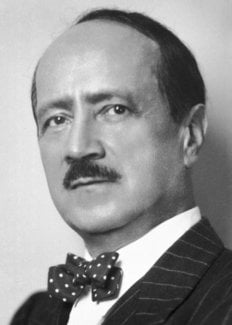
Saint-John Perse, born in 1887, pseudonym for Alexis Saint-Léger Léger, came from an old Bourguignon family which settled in the French Antilles in the seventeenth century and returned to France at the end of the nineteenth century. Perse studied law at Bordeaux and, after private studies in political science, went into the diplomatic service in 1914. There he had a brilliant career. He served first in the Peking embassy, and later in the Foreign Office where he held top positions under Aristide Briand and became its administrative head.
He left France for the United States in 1940 and was deprived of his citizenship and possessions by the Vichy regime. From 1941 to 1945, he was literary adviser to the Library of Congress. After the war he did not resume his diplomatic career and, in 1950, retired officially with the title of Ambassadeur de France. He has made the United States his permanent residence.
His literary work was published partly under his own name, but chiefly under the pseudonyms St. J. Perse and Saint-John Perse. After various poems that reflect the impressions of his childhood, he wrote Anabase (Anabasis), 1924, while in China. It is an epic poem which puzzled many critics and gave rise to the suggestion that it could be understood better by an Asian than by a Westerner. Much of his work was written after he settled in the United States: Exil (Exile), 1942, in which man and poet merge and imagery and diction are fully mastered; Poème l’Etrangère (Poem to a Foreign Lady), 1943; Pluies (Rains), 1943; Neiges (Snows), 1944; Vents (Winds), 1946, which are the winds of war and peace that blow within as well as outside of man; Amers (Seamarks), 1957, wherein the sea redounds as an image of the timelessness of man; and his abstract epic, Chronique (Chronicle), 1960.
This autobiography/biography was written at the time of the award and first published in the book series Les Prix Nobel. It was later edited and republished in Nobel Lectures. To cite this document, always state the source as shown above.
Saint-John Perse died on September 20, 1975.