Camilo José Cela – Photo gallery

Camilo José Cela receiving his Nobel Prize from H.M. King Carl XVI Gustaf of Sweden at the Stockholm Concert Hall on 10 December 1989
Photo from the Lars Åström archive

Laureates assembled at the Nobel Prize award ceremony in the Stockholm Concert Hall on 10 December 1989: Physics laureates Norman F. Ramsey, Hans G. Dehmelt and Wolfgang Paul, chemistry laureates Sidney Altman and Thomas R. Cech, medicine laureates J. Michael Bishop and Harold E. Varmus, literature laureate Camilo José Cela and economic sciences laureate Trygve Haavelmo.
Photo from the Lars Åström archive

Chemistry laureates Sidney Altman and Thomas R. Cech, medicine laureates J. Michael Bishop and Harold E. Varmus, literature laureate Camilo José Cela and economic sciences laureate Trygve Haavelmo at the 1989 Nobel Prize award ceremony.
Nobel Foundation. Photo: Lars Åström

Literature laureate Camilo José Cela in conversation with Queen Silvia of Sweden at the Nobel Prize banquet, 10 December 1989.
Photo from the Lars Åström archive

Camilo José Cela delivering his speech at the Nobel Prize banquet, 10 December 1989
Photo from the Lars Åström archive

Camilo José Cela on the dance floor at the Nobel Prize banquet, 10 December 1989.
Nobel Foundation. Photo: Lars Åström

Camilo José Cela delivering his Nobel Prize lecture at the Swedish Academy on 8 December 1989.
Photo from the Lars Åström archive

Camilo José Cela delivering his Nobel Prize lecture.
Nobel Foundation. Photo: Lars Åström

Camilo José Cela during Nobel Week, December 1989.
Nobel Foundation. Photo: Lars Åström

Nine of the ten Nobel Prize laureates of 1989 assembled at the Swedish Academy in Stockholm in December 1989. Back row: J. Michael Bishop, Sidney Altman, Harold E. Varmus, Thomas R. Cech, Wolfgang Paul and Hans G. Dehmelt. Front row: Norman F. Ramsey, Camilo José Cela and Trygve Haavelmo.
Photo from the Lars Åström archive

Portrait of Camilo José Cela when visiting the Nobel Foundation in December 1989.
Photo from the Lars Åström archive

Camilo José Cela takes a closer look at his Nobel Prize diploma during his visit to the Nobel Foundation in December 1989.
Photo from the Lars Åström archive

Literature laureate Camilo José Cela, at his home in Palma de Mallorca, Balearic Islands, Spain on 15 December 1961.
Photo by Gianni Ferrari/Cover/Getty Images
Camilo José Cela – Bibliography
| Works in Spanish |
| Novels |
| La familia de Pascual Duarte. – Madrid: Aldecoa, 1942 |
| Pabellón de reposo. – Madrid: Afrodisio Aguado, 1943 |
| Nuevas andanzas y desventuras de Lazarillo de Tormes. – Madrid: La Nave, 1944 |
| La colmena. – Buenos Aires: Emecé, 1951 |
| Mrs. Caldwell habla con su hijo. – Barcelona: Destino, 1953 |
| La catira. – Barcelona: Noguer, 1955 |
| Tobogán de hambrientos. – Barcelona: Noguer, 1962 |
| Vísperas, festividad y octava de San Camilo del año 1936 en Madrid. – Madrid: Alfaguara, 1969 |
| Oficio de tinieblas 5. – Barcelona: Noguer, 1973 |
| Mazurca para dos muertos. – Barcelona: Seix Barral, 1983 |
| Cristo versus Arizona. – Barcelona: Seix Barral, 1988 |
| La cruz de San Andrés. – Barcelona : Planeta, 1994 |
| Madera de boj. – Madrid : Espasa-Calpe, 1999 |
| Poetry and drama |
| Pisando la dudosa luz del dia. – Barcelona: Ed. del Zodíaco, 1945 |
| Cancionero de la Alcarria. – San Sebastían: Norte, 1948 |
| María Sabina. – Palma de Mallorca: Papeles de Son Armadans, 1967 |
| El caro de heno o El inventor de la guillotina. – Palma de Mallorca: Papeles de Son Armadans, 1969. – (Homenaje al Bosco ; 1) |
| María Sabina ; El carro de heno o El inventor de la guillotina. – 2. ed. – Madrid : Alfaguara, 1970 |
| Poesía completa. – Barcelona: Círculo de lectores, 1996 |
| La extracción de la piedra de la locura o El inventor del garrote. – Barcelona: Seix Barral, 1999. – Homenaje al Bosco ; 2) |
| Collections of short stories and miscellaneous writings |
| Esas nubes que pasan. – Madrid: Afrodisio Aguado, 1945 |
| Mesa revuelta. – Madrid: Ediciones de los Estudiantes Españoles, 1945 |
| El bonito crimen del carabinero, y otras invenciones. – Barcelona: José Janés, 1947 |
| San Juan de la Cruz / as Matilde Verdú. – Madrid: Hernando, 1948 |
| El gallego y su cuadrilla. – Madrid: Ricardo Aguilera, 1949 |
| Santa Balbina, 37, gas en cada piso. – Melilla: Mirto y Laurel, 1952 |
| Timoteo el incomprendido. – Madrid: Rollán, 1952 |
| Baraja de invenciones. – Valencia: Castalia, 1953 |
| Café de artistas. – Madrid: Tecnos, 1953 |
| Ensueños y figuraciones. – Barcelona: G. P., 1954 |
| Historias de Venezuela : La catira. – Barcelona: Noguer, 1955 |
| El molino de viento y otros novelas cortas. – Barcelona: Noguer, 1956 |
| Mis páginas preferidas. – Madrid: Gredos, 1956 |
| Cajón de sastre. – Madrid: Cid, 1957 |
| Nuevo retablo de Don Cristobita : invenciones, figuraciones y alucinaciones. – Barcelona: Destino, 1957 |
| La rueda de los ocios. – Barcelona: Mateu, 1957 |
| La obra literaria del pintor Solana. – Madrid: Papeles de Son Armadans, 1957 |
| Historias de España : los ciegos, los tontos. – Madrid: Arión, 1957 |
| Recuerdo de don Pío Baroja. – Mexico City: De Andrea, 1958 |
| La cucaña : memorias de Camilo José Cela. – Barcelona: Destino, 1959 |
| Cuadernos del Guadarrama. – Madrid: Arión, 1960 |
| Los viejos amigos. – 2 vol. – Barcelona: Noguer, 1960-1961 |
| Cuatro figuras del 98 : Unamuno, Valle-Inclán, Baroja, Azorín, y otros retratos y ensayos españoles. – Barcelona: Aedos, 1961 |
| Gavilla de fábulas sin amor. – Palma de Mallorca : Papeles de Son Armadans, 1962 |
| Garito de hospicianos o Guirigay de imposturas y bambollas. – Barcelona : Noguer, 1963 |
| El solitario y los sueños de Quesada / Camilo José Cela, Rafael Zabaleta. – Palma de Mallorca: Papeles de Son Armadans, 1963 |
| Toreo de salón : farsa con acompañamiento de clamor y murga. – Barcelona: Lumen, 1963 |
| Once cuentos de fútbol. – Madrid: Nacional, 1963 |
| Las compañías convenientes y otros fingimientos y cegueras. – Barcelona: Destino, 1963 |
| Izas, rabizas y colipoterras : drama con acompañamiento de cachondeo y dolor de corazón. – Barcelona: Lumen, 1964 |
| Páginas de geografía errabunda. – Madrid: Alfaguara, 1965 |
| A la pata de palo. – 4 vol. – Madrid: Alfaguara, 1965-1967 |
| Nuevas escenas matritenses. – 7 vol. – Madrid: Alfaguara, 1965-1966 |
| Madrid. – Madrid: Alfaguara, 1966 |
| Calidoscopio callejero, marítimo y campestre. – Madrid: Alfaguara, 1966 |
| Diccionario secreto. – T. 1-2. Madrid: Alfaguara, 1968-1972 |
| Al servicio de algo. – Madrid: Alfaguara, 1969 |
| Barcelona. – Barcelona: Alfaguara, 1970 |
| La Mancha en el corazón y en los ojos. – Barcelona: EDISVEN, 1971 |
| Obras selectas. – Madrid: Alfaguara, 1971 |
| La bola del mundo : escenas cotidianas. – Madrid: Sala, 1972 |
| A vueltas con España. – Madrid: Semanarios y Ediciones, 1973 |
| Balada del vagabundo sin suerte y otros papeles volanderos. – Madrid: Espasa-Calpe, 1973 |
| Cuentos para leer después del baño. – Barcelona: La Gaya Ciencia, 1974 |
| Prosa / edited by Jacinto Luis Guereña. – Madrid: Narcea, 1974 |
| Rol de cornudos. – Barcelona: Noguer, 1976 |
| Enciclopedia del erotismo. – Madrid: Ed. Sedmay, 1976 |
| La insólita y gloriosa hazaña del cipote de Archidona. – Barcelona: Tusquets, 1977 |
| Los sueños vanos, los ángeles curiosos. – Barcelona: Argos Vergara, 1979 |
| Album de taller. – Barcelona: Ambit, 1981 |
| El espejo y otros cuentos. – Madrid: Espasa-Calpe, 1981 |
| Los vasos comunicantes. – Barcelona: Bruguera, 1981 |
| Vuelta de hoja. – Barcelona: Destino, 1981 |
| El juego de los tres madroños. – Barcelona: Destino, 1983 |
| El asno de Buridán. – Madrid: El País, 1986 |
| Dedicatorias. – Madrid: Observatorio, 1986 |
| Conversaciones españolas. – Barcelona: Plaza y Janés, 1987 |
| Diccionario del erotismo. – 2 vol. – Barcelona: Grijalbo, 1988 |
| Los caprichos de Francisco de Goya y Lucientes. – Madrid: Silex, 1989 |
| El hombre y el mar. – Barcelona: Plaza y Janés, 1990 |
| Galicia. – Vigo: Ir Indo, 1990 |
| Discurso para unha xove dama amante dos libros. – Vigo: Ir Indo, 1991 |
| Cachondeos, escarceos y otros meneos. – Madrid: Ediciones Temas de Hoy, 1991 |
| Desde el palomar de Hita. – Barcelona: Plaza y Janés, 1991 |
| Páginas escogidas / edited by Darío Villanueva. – Madrid: Espasa-Calpe, 1991 |
| Torerías: El gallego y su cuadrilla, Madrid, Toreo de salón y otras páginas taurinas / edited by Andrés Amorós. – Madrid: Espasa Calpe, 1991 |
| El camaleón soltero. – Madrid: Grupo Libro 88, 1992 |
| El huevo del juicio. – Barcelona: Seix Barral, 1993 |
| Memorias, entendimientos y voluntades. – Barcelona: Plaza y Janés/Cambio 16, 1993 |
| El asesinato del perdedor. – Barcelona: Seix Barral, 1994 |
| La dama pájara y otros cuentos. – Madrid: Espasa-Calpe, 1994 |
| El color de la mañana. – Madrid: Espasa-Calpe, 1996 |
| Diccionario geográfico popular de España. – Madrid: Comunidad de Madrid/Fundación de Camilo José Cela, Marqués de Iria Flavia/Noésis, 1998 |
| Historias familiares. – Barcelona: Macia & Nubiola, 1998 |
| Travel books |
| Las botas de siete leguas. Viaje a la Alcarria. – Madrid : Revista de Occidente. 1948 |
| Avila. – Barcelona : Noguer, 1952 |
| Del Miño al Bidasoa : notas de un vagabundaje. – Barcelona: Noguer, 1952 |
| Vagabundo por Castilla. – Barcelona: Seix Barral, 1955 |
| Judíos, moros y cristianos : notas de un vagabundaje por Avila, Segovia y sus tierras. – Barcelona: Destino, 1956 |
| Primer viaje andaluz : notas de un vagabundaje por Jaén, Córdoba, Sevilla, Segovia, Huelva y sus tierras. – Barcelona: Noguer, 1959 |
| Viaje al Pirineo de Lérida : notas de un paseo a pie por el Pallars, Sobirá, el Valle de Arán y el Condado de Ribagorza. – Madrid: Alfaguara, 1965 |
| Nuevo viaje a la Alcarria. – Barcelona : Plaza & Janés, 1986 |
| Translations into English |
| The Hive / translated by J.M. Cohen in consultation with Arturo Barea. – New York : Farrar, Straus and Young, 1953. – Translation of La colmena |
| The Family of Pascual Duarte / translated and with an introd. by Anthony Kerrigan. – Boston : Little, Brown, 1964. – Translation of La familia de Pascual Duarte |
| Journey to the Alcarria / translated by Frances M. López-Morillas. – Madison, University of Wisconsin Press, 1964. – Translation of Viaje a la Alcarria |
| Pascual Duarte and His Family / translated by Herma Briffault. – New York : Las Americas Pub. Co, 1965. – Translation of La familia de Pascual Duarte |
| Mrs. Caldwell Speaks to Her Son / Mrs. Caldwell habla con su hijo, in the authorized English translation and with an introd. by J. S. Bernstein. – Ithaca, N.Y., Cornell University Press, 1968. – Translation of Mrs. Caldwell habla con su hijo |
| San Camilo, 1936 : the Eve, Feast, and Octave of St. Camillus of the year 1936 in Madrid / translated by J.H.R. Polt. – Durham : Duke University Press, 1991. – Translation of Visperas, festividad y octava de San Camilo del año 1936 en Madrid |
| Mazurka for Two Dead Men / translated by Patricia Haugaard. – New York : New Directions, 1992. – Translation of Mazurca para dos muertos |
| Boxwood / translated by Patricia Haugaard. – New York : New Directions, 2002. – Translation of Madera de boj |
| Critical studies (a selection) |
| Zamora Vicente, Alonso,Camilo José Cela : acercamiento a un escritor. – Madrid, 1962 |
| Ilie, Paul, La novelística de Camilo José Cela. – Madrid, 1963 |
| Kirsner, Robert, The Novels and Travels of Camilo José Cela. – Chapel Hill : Univ. of North Carolina Press, 1966 |
| Foster, David William, Forms of the Novel in the Work of Camilo José Cela. – Columbia, Mo. : Univ. of Missouri, 1967 |
| Huarte Morton, F., Ensayo de una bibliografía de “La familia de Pascual Duarte”. – Madrid, 1968 |
| Suárez Solís, Sara, El léxico de Camilo José Cela. – Madrid : Alfaguara, 1969 |
| Urrutia, Jorge, Cela: la familia de Pascual Duarte : los contextos y el texto. – Madrid : Sociedad General Española de Librería, cop. 1982 |
| Hernando Cuadrado, Luis Alberto, Camilo José Cela y el lenguaje popular venezolano. – Madrid : Castalia, 1983 |
| Charlebois, Lucile C., Understanding Camilo José Cela. – Columbia, S.C. : University of South Carolina Press, 1998 |
| Pérez, Janet, Camilo José Cela Revisited : the later novels. – New York : Twayne, 2000 |
| García Yebra, Tomás, Desmontando a Cela. – Madrid : Ediciones Libertarias, 2002 |
| Umbral, Francisco, Cela: un cadáver exquisito : vida y obra. – Barcelona: Planeta, 2002 |
| Gibson, Ian, Cela, el hombre que quiso ganar. – Madrid : Aguilar, 2003 |
The Swedish Academy, 2006
Camilo José Cela – Nobel Lecture
English
Nobel Lecture, December 8, 1989
(Translation)
Eulogy to the Fable
Distinguished Academicians,
My old friend and mentor Pío Baroja – who did not receive the Nobel Prize because the bright light of success does not always fall on the righteous – had a clock on his wall. Around the face of that clock there were words of enlightenment, a saying that made you tremble as the hands of the clock moved round. It said “Each hour wounds; the last hour kills”. In my case, many chimes have been rung in my heart and soul by the hands of that clock – which never goes back – and today, with one foot in the long life behind me and the other in hope for the future, I come before you to say a few words about the spoken word and to reflect in a spirit of goodwill and hopefully to good avail on liberty and literature. I do not rightly know at what point one crosses the threshold into old age but to be on the safe side I take refuge in the words of Don Francisco de Quevedo who said: “We all wish to reach a ripe old age, but none of us are prepared to admit that we are already there”.
However one cannot ignore the obvious. I also know that time marches inexorably onwards. So I will say what I have to say here and now without resorting to either inspiration or improvisation, since I dislike both.
Finding myself here today, addressing you from this dais which is so difficult to reach, I begin to wonder whether the glitter of words – my words in this case – has not dazzled you as to my real merit which I feel is a poor thing compared to the high honour you have conferred upon me. It is not difficult to write in Spanish; the Spanish language is a gift from the gods which we Spaniards take for granted. I take comfort therefore in the belief that you wished to pay tribute to a glorious language and not to the humble writer who uses it for everything it can express: the joy and the wisdom of Mankind, since literature is an art form of all and for all, although written without deference, heeding only the voiceless, anonymous murmur of a given place and time.
I write from solitude and I speak from solitude. Mateo Alemán in his Cuzmán de Alfarache and Francis Bacon in his essay Of Solitude, – both writing more or less at the same period – said that the man who seeks solitude has much of the divine and much of the beast in him. However I did not seek solitude. I found it. And from my solitude I think, work, and live – and I believe that I write and speak with almost infinite composure and resignation. In my solitude I constantly keep in mind the principle expounded by Picasso, another old friend and mentor, that no lasting work of art can be achieved without great solitude. As I go through life giving the impression that I am belligerent, I can speak of solitude without embarrassment and even with a certain degree of thankful, if painful, acceptance.
The greatest reward is to know that one can speak and emit articulate sounds and utter words that describe things, events and emotions.
When defining man, philosophers have traditionally used the standard medium of close genus and specific difference that is to say reference to our animal status and the origin of differences. From Aristotle’s zoon politikon to Descartes’ res cogitans such reference has been an essential means of distinguishing man from beast. But however much moral philosophers may challenge what I’m going to say, I maintain that it would not be difficult to find abundant evidence identifying language as the definitive source of human nature which, for better or worse, sets us apart from all other animals.
We are different from other animals, although since Darwin we know that we have evolved from them. The evolution of language is thus a fundamental fact which we cannot ignore.
The phylogenesis of the human species covers a process of evolution in which the organs that produce and identify sounds and the brain which makes sense of those sounds develop over a long period of time which includes the birth of Mankind. No subsequent phenomena, neither El Cantar de Mío Cid nor El Quijote, nor quantum theory, can compare in importance to the first time that the most basic things were given a name. However for obvious reasons I am not going to dwell here on the evolution of language in its primeval and fundamental sense. Rather I will deal with its secondary and accidental but relatively more important meaning for those of us who were born into a society whose tradition is more literary than secular.
Ethnologists such as the distinguished A. S. Diamond believe that the history of language, of all languages, follows a pattern in which at the very beginning sentences are simple and primitive but go on to become more complicated in terms of syntactic and semantic variations. By extrapolating from this historically verifiable trend, it can be deduced that this increasing complexity evolves from the initial stage where communication relies mainly on the verb, building up to the present situation where it is nouns, adjectives and adverbs that give flavour and depth to the sentence. If this theory is correct and if we apply a little imagination, we might conclude that the first word to be used was a verb in its most immediate and urgent tense, namely the imperative.
And indeed the imperative still retains considerable importance in communication. It is a difficult tense to use. It must be handled with care since it requires a highly detailed knowledge of the rules of the game which are not always straightforward. A badly-placed imperative can bring about the exact opposite of the desired objective. John Langshaw Austin’s famous triple distinction (locutionary, illocutionary and perlocutionary language) is an erudite demonstration of the thesis that perlocutionary language tends to provoke specific behaviour on the part of the interlocutor. It is useless to issue an order if the person to whom it is addressed dissembles and ends up doing whatever he likes.
Thus from zoon politikon to res cogitans sufficient distinctions have been drawn between the beast that grazes and the man that sings albeit not always in well-measured tones.
In Plato’s Dialogue which bears his name, Cratylus hides Heraclitus among the folds of his tunic. The philosopher Democritus through his interlocutor Hermogenes speaks of the concepts of fullness and emptiness. The same can be said of Protagoras the anti-geometrician who irreverently maintained that “Man is the measure of all things”: what they are and how they are, what they are not and how they are not.
Cratylus was concerned with language – what it is and what it is not – and developed those ideas at some length in his discourse with Hermogenes. Cratylus believes that what things are called is naturally related to what they are. Things are born or created or are discovered or invented. From their very beginning they contain essentially the exact term which identifies them and distinguishes them from everything else. He seems to be trying to tell us that this distinction is unique and comes from the same ovum as the thing itself. Except in the reasoned world of the etymologist, a dog has always been a dog in all the ancient languages and love has been love since first it was felt. The boundaries of paradox in the thoughts of Cratylus in contrast to Heraclitus’ hypotheses are hidden in the dovetailed indivisibility or unity of opposites, their harmony (day and night), the constant movement and reaffirmation of their substance. The same is true of words as things in their own right (there is no dog without the cat and no love without hate).
Conversely Hermogenes thought that words were mere conventions established by humans for the reasonable purpose of understanding one another. Man is confronted with things or they are presented to him. Faced with something new, man gives it a name. The significance of things is not the spring in the woods but the well dug by man. The parabolic frontier of the senses, and of expression, as expounded by Hermogenes and concealed by Democritus and at times by Protagoras, comes up time and again: is man who measures and designates all things generic or individual? Is the measurement of those things a mere epistemological concept? Are things only physical matter or are they also feelings and concepts? By reducing being to illusion, Hermogenes kills off truth in the cradle; the contradictory conclusion that the only possible propositions are those which man formulates by himself and to himself, renders real what is true and what is not true. You will recall that according to Victor Henry’s famous aporia man can give a name to things but he cannot take them over; he can change the language but he cannot change it any way he wishes. Referring in perhaps overcautious terms to the exactitude of names Plato seems to sympathise obliquely with Cratylus’ position: things are called what they have to be called (an organic and valid theory that is on the verge of being acknowledged in pure reason as a principle) and not what man decides they should be called according to which way the wind is blowing at any given time (this being a changing or even fluctuating corollary, dependent on the changing suppositions present at the same time as, or prior to, a given thing).
This attitude, originally romantic and consequently demagogical, was the starting point for the Latin poets, headed by Horace. It gave rise to all the ills which have afflicted us in this field since that time and which we have not been able to remedy. Ars Poetica, verses 70 to 72, sings of the prevalence of usage in the evolution of language (not always a welcome development):
Multa renascentur quae iam cecidere cadentque
quae nunc sunt in honore vocabula, si volet usus,
quem penes arbitrium est et ius et norma loquendi.
This time-bomb, however pleasing in its charity, had several complex consequences leading finally to the supposition that language is made by the people – and inevitably by the people alone – and that it is futile to try and subject language to the precise and reasonable rules of logic. This dangerous assertion by Horace that usage determines what is right and acceptable in language created a rubbish-dump clogged with overgrown efforts in which the shortcut became the highway along which man progressed bearing the banner of language blowing freely and trembling in the breeze, obstinately continuing to confuse victory with the subservience inherent in its very image.
While Horace was partly right (and we should not deny that), he was also wrong in a number of ways and we should not try to hide that either. But we should also acknowledge the contribution of Cratylus and Hermogenes by refining their principles. Cratylus’ position falls within what is referred to as natural or ordinary or spoken language, which is the product of the constant use of a historical and psychological path, while Hermogenes’ proposition fits into what we understand as artificial or specialized language or jargon, deriving from a more or less formal arrangement or from some formal method based on logic but with no historical or psychological tradition behind it – at least at the time it is conceived. The first Wittgenstein, the author of the Tractatus, is a celebrated modern exponent of Hermogenes’ proposition. Thus in that sense it would not be illogical to talk of Cratylian or natural or human language and of Hermogenean or artificial or parahuman language. Like Horace my point of reference is obviously the former, the language of life and literature, without technical or defensive obstacles. Max Scheler – and indeed phenomenologists generally – is also referring to what I will now call Cratylian language when he talks about language as an indication or announcement or expression, as is Karl Bühler when he classifies the three functions of language as symptom, signal and symbol.
It goes without saying that Hermogenean language naturally accommodates its original artificiality. On the other hand Cratylian language does not adapt to extraneous territory where there are often hidden pitfalls alien to its essential transparency.
It is dangerous to admit that in the final analysis natural, Cratylian language is the offspring of a magical marriage between the people and chance. Because people do not create language they determine its development. We can say, albeit with considerable reservations, that people solve to a certain extent the puzzle of language by giving names to things; but they also adulterate and hybridize it. If people were not subject to those hidden pitfalls referred to earlier this issue would be much more urgent and linear. What is not put forward but which nevertheless lies hidden within the true heart of the matter is one and the same and already determined; and neither I nor anyone else can change that.
The Cratylian language, the structure or system described by Ferdinand de Saussure as “langue”, is the common language of a community (or rather more in than of a community), is formed and authenticated by writers and regulated and generally orientated by Academies. These three estates – the community, the writer and the Academies – do not always fulfil their respective duties. Very often they invade and interfere in other areas. It would appear that neither the Academies, nor the writers nor the community are happy with their own roles. While not competent to do so they prefer to define the role of others which, perhaps even rightly in principle, will always be unclear and ill-defined and, even worse, end up dissipating and obscuring the subject of their attention, namely the language and the verb which should be essentially transparent. The algebraic and mere instrument with no value other than its usefulness, in the final analysis as in Unamuno’s Love and Pedagogy.
The final determining factor, the State, which is neither the community nor the writers nor the Academies, conditions and constrains everything, intervenes in a~thousand different ways (administrative jargon, government pronouncements, television, etc.) compounding, more by bad example than by inhibition, disorder and disarray, chaos and confusion.
But no-one says anything about popular, literary, academic, state and other excesses. Language evolves not in its own way which in principle would be appropriate, but is rather pushed around by the opposing forces surrounding it.
The community to whom Horace’s lines are recited eventually believe that this is how a language should evolve and tries to incorporate phrases, styles and expressions that are neither intuitive nor the product of their subconscious – which at least might produce something valid or plausible – but rather deliberately and consciously invented, or, even worse, imported (at the wrong time and against sound common sense).
Writers, obviously with some exceptions, follow the often defective usage in their own environment and introduce and sanction expressions that are cumbersome and, worse still, divorced from the essential spirit of the language.
The Academies’ problems stem from the basis on which they operate: as institutions they tend to be conservative and afraid of being challenged.
The erosion of the Cratylian language by Hermogenean influences is becoming more pronounced and there is a danger that it will desiccate that living language and render the natural language artificial. As I have already said, this threat is caused by invented, gratuitously incorporated or inopportunely resurrected or revitalised language.
There seems to be some political reason behind the impetus that now leads, as it has in the past, gaily to abandon the principles of a language in the face of a blunt attack by those besieging it. In my view the risks outweigh the possible benefits – which are somewhat Utopian – that might accrue at some future unspecified date. While I am far from being a purist, I would like to call on writers in the first instance and then on Academies and on States to a lesser degree to put an end to the chaos. There is undoubtedly a continuity in language that supersedes any classifications we wish to establish but that does not constitute grounds for tearing down the natural frontiers of language. If we allow that we would be admitting to a defeat that has not yet taken place.
Let us rally our genius in defence of language, all languages, and let us never forget that confusing procedure with the rule of Law, just as observing the letter rather than the spirit of the Law, always leads to injustice which is both the source and consequence of disorder.
Thought is intrinsically linked to language. Moreover, freedom is also probably linked to certain linguistic and conceptual patterns. Together they provide the broad framework for all human endeavour; those that seek to explore and expand human frontiers, also those that seek to undermine the status of man. Thought and liberty are found in the minds of heroes and villains alike.
But this generalisation obscures the need for greater precision if we are to arrive at an understanding of the real meaning of what it is to think and to be free. Insofar as we are able to identify the phenomena that take place in the mind, thinking for man means thinking about being free. There has been much argument regarding the extent to which this freedom or liberty is something concrete or whether it is just another slick phenomenon produced by the human mind. But such argument is probably futile. A wise Spanish philosopher has pointed out that the illusion and the real image of freedom are one and the same thing. If man is not free, if he is bound by chains that psychology, biology, sociology and history seek to identify, as a human being he also carries within himself the idea, which may be an illusion but which is absolutely universal, that he is free. And if we wish to be free we will organise our world in much the same way as we would if we were free.
The architectural design on which we have tried to build successfully or otherwise the complex framework of our societies, contains the basic principle of human freedom and it is in the light of that principle that we value, exalt, denigrate, castigate and suffer: the aura of liberty is the spirit enshrined in our moral codes, political principles and legal systems.
We know that we think. We think because we are free. The link between thought and freedom is like a fish biting its own tail or rather a fish that wants to get hold of its own tail; because being free is both a direct consequence of and an essential condition for thought. Through thought man can detach himself as much as he wants from the laws of nature; he can accept and submit to those laws, for example like the chemist who has gone beyond the boundaries of phlogiston theory will base his success and prestige on such acceptance and submission. In thought however, the realms of the absurd lie side by side with the empire of logic because man does not think only in terms of the real and the possible. The mind can shatter its own machinations into a thousand pieces and rearrange them into a totally different image.
Thus one can have as many rational interpretations of the world based on empirical principles as the thinker wishes primarily on the basis of the promise of freedom. Free thinking in this narrow sense is that antithesis of the empirical world and finds expression in the fable. Thus the capacity to create fables would appear to be the third element in the human status – the others being thought and freedom – and this capacity can turn things round in such a way that things which before they became the subject of a fable were not even untruths become truths.
Through the process of thought man begins to discover hidden truth in the world, he can aim to create his own different world in whatever terms he wishes through the medium of the fable. Thus truth, thought, freedom and fable are interlinked in a complicated and on occasion suspect relationship. It is like a dark passageway with several side-turnings going off in the wrong direction; a labyrinth with no way out. But the element of risk has always been the best justification for embarking on an adventure.
The fable and scientific truth are not forms of thought. They are rather heterogeneous entities which cannot possibly be compared with one another since they are subject to completely different rules and techniques. Consequently, it is not appropriate to brandish the standard of literature in the struggle to free men’s minds. Literature should rather be regarded as a counterweight to the newfound slavish submission to science. I would go further and say that I believe that a prudent and careful distinction must be drawn between those forms of science and literature which join together to confine man within rigid limits which deny all ideas of freedom, and that we must be daring and offset those forms by other scientific and literary experiences aimed at engendering hope. By unreservedly trusting in the superiority of human freedom and dignity, rather than suspect truths which dissolve in a sea of presumption, would be an indication that we have progressed. However in itself it is not enough. If we have learned anything it is that science is incapable of justifying aspirations to freedom and that on the contrary it rests on crutches that tilt it in exactly the opposite direction. Science should be based solely on the most profound exigencies of human freedom and will. That is the only means of enabling science to break away from utilitarianism which cannot withstand the pitfalls of quantity and measurement. This leads us to the need to recognise that literature and science although heterogeneous cannot remain isolated in a prophylactic endeavour to define areas of influence and this for two reasons, namely the status of language (that basic instrument of thought) as well as the need to define the limits of and distinguish between that which is commendable and laudable and that which must be denounced by all committed individuals.
I believe that literature as an instrument for creating fables is founded on two basic pillars which provide it with strength to ensure that literary endeavour is worthwile. Firstly aesthetics, which impose a requirement on an essay, poem, drama or comedy to maintain certain minimum standards which distinguish it from the sub-literary world in which creativity cannot keep pace with the readers’ emotions. From socialist reality to the innumerable inconstancies of would-be experimentalists, wherever aesthetic talent is lacking the resulting sub-literature becomes a monotonous litany of words incapable of creating a genuine worthwhile fable.
The second pillar on which literary endeavour rests is ethics which complements aesthetics and which has a lot to do with all that has been said up to now regarding thought and freedom. Of course ethics and aesthetics are in no way synonymous nor do they have the same value. Literature can balance itself precariously on aesthetics alone – art for art’s sake – and it could be that aesthetics in the long run may be a more comprehensive concept than ethical commitment. We can still appreciate Homer’s verses and medieval epic canticles although we may have forgotten or at least no longer automatically link them with ethical behaviour in ancient Greek cities or in feudal Europe. However art for art’s sake is by definition an extremely difficult undertaking and one which always runs the risk of being used for purposes which distort its real meaning.
I do believe that ethical principle is the element which makes a work of literature worthy of playing the noble role of creating a fable. But I must explain clearly what I mean because the literary fable as a means of expressing the links between man’s capacity to think and the perhaps Utopian idea of being free cannot be based on just any kind of ethical commitment. My understanding is that a work of literature can only be subject to the ethical commitment of the person, the author, to his own idea of freedom. Of course no-one, not even the cleverest and most balanced literary author, can ever (or rather cannot always) overcome his humanity; anyone can have a blind spot and freedom is a suffficiently ambiguous concept and many blinding errors can be committed in its name. Nor can an aesthetic sense be acquired from a textbook. Thus, the literary fable must be based on both a sense of ethics and a commitment to aesthetics. That is the only way it can acquire a significance that will transcend ephemeral fashions or confused appreciation that can quickly change. The history of man is changing and tortuous. Consequently, it is diffficult to anticipate ethical or aesthetic sensibilities. There are writers who are so tuned in to the feeling of their time that they become magnificent exponents of the prevailing collective trend and whose work is a conditional reflex. Others take on the thankless and not suffciently applauded task of carrying freedom and human creativity further along the road, even if in the end that too may lead nowhere.
This is the only way in which literature can fulfil its role of closely identifying its commitment to the human status and, if we wish to be absolutely precise in this thesis, the only endeavour that can unreservedly be called true literature. However, human society cannot be linked to geniuses, saints and heroes alone.
In this task of seeking out freedom, the fable has the benefit of the well-known characteristic of the intrinsic malleability of the literary story. The fable does not need to subject itself to anything that might restrict its scope, novelty and element of surprise. Thus, unlike any other form of thought it can wave the Utopian banner high. Perhaps that is why the most avid authors of treatises of political philosophy have opted to use the literary story to convey Utopian propositions that would not have found ready acceptance outside the realms of fiction at the time they were written. There are no limits to the Utopianism that the fable can express since by its very nature the fable itself is based on Utopianism.
However, the advantages of literary expression are not confined to the ease with which it can convey Utopian propositions. The intrinsic plasticity of the story, the malleability of the situations, personalities and events it creates provide a superb foundry from which one can, without undue risk, set up an entire factory, or, to put it another way, a laboratory in which men conduct experiments on human behaviour in optimum conditions. But the fable does not restrict itself to expressing the Utopian. It can also analyse carefully what it means and what its consequences are in the myriad different alternative situations ranging from learned prediction to the absurd that creative thought can produce.
The role of literature as an experimental laboratory has been often highlighted in science fiction; speculation about the future that has subsequently been realised. Critics have heaped praise on novelists who have a talent for predicting in their fables the basic coordinates which subsequently have been substantiated. But the real usefulness of the fable as a test-tube lies not in its anecdotal capacity for accurately predicting something technical but as a means of conveying in a timely, direct or negative fashion all possible facets of a world that may be possible now or in the future. It is the search for human commitment, for tragic experiences, that can shed light on the ambiguity of blindly choosing options in the face of the demands placed upon us by our world, now or in the future, that turns the fresco of literature into an experimental laboratory. The value of literature as a means of carrying out experiments on behaviour has little to do with prediction since human behaviour only has a past, present and future in a very specific, narrow sense. There are, however, basic aspects of our nature which have an impressive permanency about them and which cause us to be deeply moved by an emotional story from a completely different age to the one we live in. It is this “universal man” that is the most prized figure in literary fable, an experimental workshop in which there are no frontiers and no ages. It is the Quixotes, the Othellos, the Don Juans that illustrate to us that the fable is a game of chess played over and over again, a thousand times with whatever pieces destiny throws up at any given time.
In absolute terms it might appear that this detracts from the so-called freedom I am advocating and indeed that would be the case if one did not take account of the role of that imperfect, voluble and confused personality, the author, the man. The magic of Shylock would never have emerged without the genius of Bard, whose unreliable memory was of course far more inconsistent than that of the characters to whom he gave life and to whom in the end he denied death. And what of those anonymous scholars and jugglers whom we remember only for the result produced by their talents. There is undoubtedly something that must be remembered over whatever sociology or history tries to impose upon us and that is that thus far and insofar we can conceive of the future of mankind, works of literature are very much subject to the needs of the author; that is to say to a single source of those ethical and aesthetic insights I referred to earlier, an author who acts as a filter for the current which undoubtedly emanates from the whole surrounding society. It is perhaps this link between Man and Society that best expresses the very paradox of being a human being proud of his individuality, and at the same time tied to the community that surrounds him and from which he cannot disengage himself without risking madness. There is a moral here; the limitations of literature are precisely those of human nature and they show us that there is another status, identical in other ways, which is that of gods and demons. Our mind can imagine demiurges and the ease with which human beings invent religions clearly demonstrates that this is so. Our capacity to create fables provides a useful literary means of illustrating those demiurges, as indeed we have done constantly since Homer wrote his verses. But even that cannot lead us to mistake our nature or put out once and for all the tenuous flame of freedom that burns in the innermost being of the slave who can be forced to obey but not to love, to suffer and die but not to change his most profound thoughts.
When the proud, blind rationalist renewed in enlightened minds the biblical temptation, the last maxim of which promised “You will be as gods” he did not take account of the fact that Man had already gone much further down that road. The misery and the pride that for centuries had marked Man’s efforts to be like the gods had already taught Man a better reason; that through effort and imagination they could become Men. For my part, I must say proudly that in this latter task, much of which still remains to be accomplished, the literary fable has always been, and in all circumstances proved to be, a decisive tool; a weapon that can cleave the way forward in the endless march to freedom.
Translated by Mary Penney.
Camilo José Cela – Banquet speech
Camilo José Cela’s speech at the Nobel Banquet, December 10, 1989
Your Majesties, Your Royal Highness, Your Excellencies, Ladies and Gentlemen,
The Swedish Academy is honouring me by inscribing my name in the margins of the roll of illustrious personages of contemporary world literature. It is an honour which is out of all proportion to my skill and ability. Apart from showing my gratitude with all my heart, I would like to be permitted to make clear that, if I have dared to arrive where I am now, it is only because I understand that the Prize is not just being awarded to me, but also to my contemporaries who write in the glorious language which is our tool: Spanish. I do not wish to dwell on this very sincere confession, for, since my teacher has been Miguel de Cervantes, I know full well that an argument, however good, does not seem so successful when propounded at length.
When on my way to Stockholm, in response to your benevolence, I asked myself about the reasons which brought me here. I surmised that your purpose was to reward the occupation rather than the person. If so, you have not erred, for, according to Cervantes – Cervantes once and for ever – the goal of literature is to give justice its rightful place by rendering to everyone what is his, and by understanding and upholding good laws. Literature is hazardously and irreversibly, my life, my death and my suffering, my vocation and my servitude, my constant yearning and my well-merited consolation. How peaceful my conscience becomes after I have said this!
Amongst the names honoured by the Nobel Prize, there are illustrious scientific personages, both global and contemporary, who are guided by the same praiseworthy aims which distinguish and characterize all of us: peace in our heads and our hearts, and solidarity between human beings and between peoples. I am aware that we have not reached the goal that we are aiming at, and that there are still many steps to be taken in serenity and good sense, with constancy, no doubt, but also with luck. I propose that we never wander off this salubrious road.
I raise a toast to the King and Queen of Sweden, who reign over a nation at peace; to the people of Sweden, who love peace, to the Swedish Academy and other Nobel Institutions, who sponsor peace; and to all those in the entire world who defend and proclaim peace. I raise a toast to peace.
Camilo José Cela – Nobel Lecture
Conferencia de Nobel 1989
Elogio de la Fabula
Señores académicos
Mi viejo amigo y maestro Pió Baroja, que se quedó sin el Premio Nobel porque la candelita del acierto no siempre alumbra la cabeza del justo, tenía un reloj de pared en cuya esfera lucían unas palabras aleccionadoras, un lema estremecedor que señalaba el paso de la horas: Todas hieren, la última mata. Pues bien: han sonado ya muchas campanadas en mi alma y en mi corazón, las dos manillas de ese reloj que ignora la marcha atrás, y hoy, con un pie en la mucha vida que ya he dejado atrás y el otro en la esperanza, comparezco ante ustedes para hablar con palabras de la palabra y discurrir, con buena voluntad y ya veremos si también con suerte, de la libertad y la literatura. No sé donde pueda levantar su aduana la frontera de la vejez pero, por si acaso, me escudo en lo dicho por don Francisco de Quevedo: todos deseamos llegar a viejos y todos negamos haber llegado ya. Porque sé bien que no se puede volver la cara a la evidencia, y porque tampoco ignoro que el calendario es herramienta inexorable, me dispongo a decirles cuanto debo decir, sin dejar el menor resquicio ni a la inspiración ni a la improvisación, esas dos nociones que desprecio.
En este trance en el que hoy me encuentro, hablando ante ustedes desde esta tribuna tan difícil de alcanzar, me asalta la duda de si el brillo de la palabra -en este caso, de mi palabra — no habrá podido confundirles sobre mi verdadero mérito, que pienso que es harto escaso para el alto galardón con que lo habéis distinguido. No es difícil escribir en español, ese regalo de los dioses del que los españoles no tenemos sino muy vaga noticia, y me reconforta la idea de que se haya querido premiar a una lengua gloriosa y no a un humilde oficiante de ella y servidor de lo que con ella puede expresarse: para gozo y lección de todos los hombres, que la literatura es un arte de todos y para todos, aunque se escriba sin obedecer a nadie y sin escuchar más que el sordo y anónimo rumor de nuestro rincón y nuestro tiempo.
Escribo desde la soledad y hablo también desde la soledad. Mateo Alemán, en su Guzmán de Alfarache, y Francis Bacon, en su ensayo Of Solitude, dijeron -y más o menos por el mismo tiempo- que el hombre que busca la soledad tiene mucho de dios o de bestia. Me reconforta la idea de que no he buscado, sino encontrado, la soledad, y que desde ella pienso y trabajo y vivo -y escribo y hablo-, creo que con sosiego y una resignación casi infinita. Y me acompaña siempre en mi soledad el supuesto de Picasso, mi también viejo amigo y maestro, de que sin una gran soledad no puede hacerse una obra duradera. Porque voy por la vida disfrazado de beligerante, puedo hablar de la soledad sin empacho e incluso con cierta agradecida y dolorosa ilusión.
El mayor premio que se alcanza a recibir es el de saber que se puede hablar, que se pueden emitir sonidos articulados y decir palabras señala-doras de los objetos, los sucesos y las emociones.
Tradicionalmente, el hombre ha venido siendo definido por los filósofos echando mano del socorrido medio del género próximo y la diferencia específica, es decir, aludiendo a nuestra condición animal y el origen de las diferencias. Desde el zoón politikón de Aristóteles al alma razonable cartesiana, ésos han sido los señalamientos imprescindibles para distinguir entre brutos y humanos. Pues bien, por mucho que los etólogos puedan poner en tela de juicio lo que voy a mantener, no sería difícil encontrar autoridades suficientes para situar en el rasgo del lenguaje esa definitiva fuente de la naturaleza humana que nos hace ser, para bien y para mal, diferentes del resto de los animales.
Somos distintos de los animales y, desde Darwin, sabemos que procedemos de ellos. La evolución del lenguaje tiene, pues, un primordial aspecto que no podemos dejar de lado. La filogénesis de la especie humana incluye un proceso de evolución en el que los órganos que producen e identifican los sonidos y el cerebro que les presta sentido, van formándose en un lento tiempo que incluye el propio nacer de la humanidad. Ninguno de los fenómenos posteriores, desde el Cantar de Mió Cid y el Quijote a la teoría de los quanta, es comparable en trascendencia al que supuso el nombrar por primera vez las cosas más elementales. Sin embargo, y pos razones obvias, no voy a referirme aquí a la evolución del lenguaje en ese sentido primigenio y fundamental, sino en otro, pudiera ser que más secundario y accidental, pero de importancia relativa muy superior para quienes hemos nacido en una comunidad con tradición literaria más que secular.
En opinión de etnolinguistas tan ilustres como A. S. Diamond, la historia de las lenguas, de todas las lenguas, navega a través de una secuencia en la que las oraciones comienzan, en sus más remotos orígenes, siendo simples y primitivas para acabar con el tiempo complicándose tanto en su sintaxis como en el contenido semántico que son capaces de ofrecernos. A fuerza de extrapolar la tendencia históricamente comprobable, se supone también que ese avance hacia la complejidad pasa por un momento inicial en el que la mayor parte del peso comunicativo recae sobre los verbos, hasta llegar a la actual situación en la que les substantivos, los adjetivos y los adverbios son quienes salpican y dan densidad al contenido de la frase. Si esta teoría es cierta y si dejamos volar un poco la imaginación, pudiéramos pensar que la primera palabra fue un verbo en su más inmediato y urgente uso, esto es, en imperativo.
El imperativo tiene todavía, claro es, una considerable importancia en la comunicación y es un difícil tiempo de verbo con el que debe tenerse sumo cuidado puesto que obliga a conocer muy en detalle las no siempre sencillas reglas del juego. Un imperativo nial colocado puede llevarnos a resultados exactamente opuestos a los deseados, porque en la triple distinción que John Langshaw Austin hi/.o famosa (lenguaje locucionario, ilocucionario y perlocucionarío) ya quedó expuesta con suficiente sagacidad la tesis del lenguaje perlocudonario como el tendente a provocar una determinada conducta en el interlocutor. No sirve para nada el que se ordene algo si aquel a quien se dirige el mandato disimula y acaba haciendo lo que le da la gana.
Desde el zoón politikón al alma razonable han quedado suficientemente delimitados los campos en los que pace la bestia o canta el hombre, no siempre con muy templada voz.
Cratilo, en el Diálogo platónico al que presta su nombre, esconde a Herácloto entre los pliegues, de su túnica. Por boca de su interlocutor Hermógenes habla Demócrito, el filósofo de lo lleno y lo vacío, y quizá también Protágoras, el antigeómetra, que en su impiedad llegó a sostener que el hombre es la medida de todas las cosas: de las que son, en cuanto son, y de las que no son, en cuanto no son.
A Cratilo le preocupó el problema de la lengua, eso que es tanto lo que es como lo que no es, y sobre su consideración se extiende en amena charla con Hermógenes. Cratilo piensa que los nombres de las cosas están naturalmente relacionados con las cosas. Las cosas nacen -o se crean, o se descubren, o se inventan- y en su ánima habita, desde su origen, el adecuado nombre que las señala y distingue de las demás. El significante — parece querer decirnos- es noción prístina que nace del mismo huevo de cada cosa; salvo en las razonables condiciones que mueven las etimologías, el perro es perro (en cada lengua antigua) desde el primer perro y el amor es amor, según indicios, desde el primer amor. La linde paradójica del pensamiento de Cratilo, contrafigura de Heráclito, se agazapa en el machihembrado de la inseparabilidad -o unidad- de los contrarios, en la armonía de lo opuesto (el día y la noche) en movimiento permanente y reafirmador de su substancia -las palabras también, en cuanto objetos en sí (no hay perro sin gato, no hay amor sin odio).
Hermógenes, por el contrario, piensa que las palabras son no más que convenciones establecidas por los hombres con el razonable propósito de entenderse. Las cosas aparecen o se presentan ante el hombre, y el hombre, encarándose con la cosa recién nacida, la bautiza. El significante de las cosas no es el manantial del bosque, sino el pozo excavado por la mano del hombre. La frontera parabólica del sentir -y del decir- de Hermógenes, máscara de Demócrito y a ratos de Protágoras, se recalienta en no pocos puntos: el hombre, eso que mide (y designa) todas y cada una de las cosas, es el género o el individuo?; la medida de aquellas cosas, ¿es un concepto no más que epistemológico?; las cosas, ¿son las cosas físicas tan sólo o también las sensaciones y los conceptos? Hermógenes, al reducir el ser al parecer, degüella a la verdad en la cuna; como contrapartida, el admitir como única proposición posible la que formula el hombre por sí y ante sí, hace verdadero -y nada más que verdadero- tanto a lo que es verdad como a lo que no lo es. Recuérdese que el hombre, según famosa aporía de Víctor Henry, da nombre a las cosas pero no puede arrebatárselo: hace cambiar el lenguaje y, sin embargo, no puede cambiarlo a voluntad.
Platón, al hablar -quizá con demasiada cautela- de la rectitud de los nombres, parece como inclinar su simpatía, siquiera sea veladamente, hacia la postura de Cratilo: las cosas se llaman como se tienen que llamar (teorema orgánico y respetuoso al borde de ser admitido, en pura razón, como postulado) y no como los hombres convengan, según los vientos que soplen, que deban llamarse (corolario movedizo o, mejor aún: fluctuante según el rumbo de los mudables supuestos presentes -que no previos- de cada caso).
De esta segunda actitud originariamente romántica y, en sus consecuencias, demagógica, partieron los poetas latinos, con Horacio al frente, y se originaron todos los males que, desde entonces y en este terreno, hubimos de padecer sin que pudiéramos ponerle remedio.
En el Ars poética, versos 70 al 72, se canta el triunfo del uso sobre el devenir (no siempre, al menos, saludable) del lenguaje.
Multa renascentur quae iam cecidere, cadentque
quae nunc sunt in honore vocabula, si volet usus,
quem penes arbitrium est et ius et norma loquendi.
Esta bomba de relojería -grata, sin embargo, en su aparente caridad tuvo muy ulteriores y complejos efectos: el último, el de suponer que la lengua la hace el pueblo y, fatalmente, nadie más que el pueblo, sin que de nada valgan los esfuerzos, que por anticipado deben ahorrarse, para reducir la lengua a norma lógica y limpia y razonable. Esta arriesgada aseveración de Horacio -en el uso está el arbitrio, el derecho y la norma del lenguaje-convirtó, al desbrozarlo de trabajosas malezas, el atajo en camino real, y por él marchó el hombre, con la bandera del lenguaje en libertad tremolando al viento, obstinándose en confundir el triunfo con la servidumbre que entraña su mera apariencia.
Si Horacio tenía su parte de razón, que no hemos de regatearle aquí, y su lastre de sinrazón, que tampoco hemos de disimularlo en este trance, también a Cratilo y a Hermógenes, afinando sus propósitos, debemos concederles lo que es suyo. La postura de Cratilo cabe a lo que viene llamándose lenguaje natural u ordinario o lengua, producto de un camino histórico y psicológico casi eternamnente recorrido, y el supuesto de Hermógenes conviene a aquello que entendemos como lenguaje artificial o extraordinario o jerga, fruto de un acuerdo más o menos formal, o de alguna manera formal, con fundamento lógico pero sin tradición histórica ni psicológica, por lo menos en el momento de nacer. El primer Wittgen-stein -el del Tractatus– es un conocido ejemplo de la postura de Hermógenes en nuestros días. En este sentido, no sería descabellado hablar de lenguaje cratiliano o natural o humano y de lenguaje hermogeniano o artificial o parahumano. Es obvio que me refiero, como se refería Horacio, al primero de ambos, esto es, a la lengua de vivir y de escribir: sin cortapisas técnicas ni defensivas.
También al lenguaje que ahora llamo cratiliano alude Max Scheler -y en general los fenomenólogos- cuando habla del lenguaje como mención o como anuncio o expresión, y Karl Bühler al ordenar las tres funciones del lenguaje: la expresión, la apelación y la representación.
Ni que decir tiene que el lenguaje hermogeniano admite naturalmente su artificio original, mientras que el lenguaje cratiliano se resiente cuando se le quiere mecer en cunas que no le son peculiares y en las que, con frecuencia, se agazapan contingencias un tanto ajenas a su diáfano espíritu.
Es arriesgado admitir, a ultranza, que la lengua natural, el lenguaje cratiliano, nazca de las mágicas nupcias del pueblo con la casualidad. No; el pueblo no crea el lenguaje: lo condiciona. Dicho sea con no pocas reservas, el pueblo, en cierto sentido, adivina el lenguaje, los nombres de las cosas, pero también lo adultera e hibridiza. Si sobre el pueblo no gravitasen aquellas contingencias ajenas a que poco atrás aludía, el planteamiento de la cuestión sería mucho más inmediato y lineal. Pero el objeto no propuesto y que, sin embargo, esconde el huevo de la verdad del problema es uno y determinado y no está a mi alcance, ni al de nadie, el cambiarlo por otro.
El lenguaje cratiliano, la lengua, estructura o sistema de Ferdinand de Saussure, nace en el pueblo – más entre el pueblo que de él-, es fijado y autorizado por los escritores, y es regulado y encauzado por las Academias en la mayoría de los casos. Ahora bien: estos tres estamentos -el pueblo, los escritores y las Academias- no siempre cumplen con su peculiar deber y, con frecuencia, invaden o interfieren ajenas órbitas. Diríase que las Academias, los escritores y el pueblo no representan a gusto su papel sino que prefieren, aunque no les competa, fingir el papel de los demás que — pudiera ser que incluso por razón de principio- queda siempre borroso y desdibujado y, lo que es peor, termina por difuminar y velar el objeto mismo de su atención: el lenguaje, el verbo que se precisaría esencialmente diáfano. O algebraico y a modo de mero instrumento, sin otro valor propio que el de su utilidad, en el extremo Unamuno de Amor y pedagogía.
Un último factor determinante, el Estado, aquello que sin ser precisamente el pueblo, ni los escritores, ni las Academias, a todos condiciona y constriñe, vene a incidir por mil vías dispersas (la jerga administrativa, los discursos de los gobernantes, la televisión, etc.) sobre el problema, añadiendo -más por su mal ejemplo que por su inhibición -confusión al desorden y caos al desbarajuste.
Sobre los desmanes populares, literarios, académicos, estatales, etc. nadie se pronuncia, y la lengua marcha no por donde quiere, que en principio sería cauce oportuno, sino por donde la empujan las encontradas fuerzas que sobre ella convergen.
El pueblo, porque le repiten los versos de Horacio a cada paso, piensa que todo el monte es orégano y trata de implantar voces y modos y locuciones no adivinadas intuitiva o subconscientemente -lo que pudiera ser, o al menos resultar, válido y plausible- sino deliberada y conscientemente inventadas o, lo que es aún peor, importadas (a destiempo y a contrapelo del buen sentido).
Los escritores, a remolque del uso, vicioso con frecuencia, de su contorno (señálense en cada momento las excepciones que se quieran), admiten y autorizan formas de decir incómodas a la esencia misma del lenguaje o, lo que resulta todavía más peligroso, divorciadas del espíritu del lenguaje.
El problema de las Academias está determinado por los ejes sobre los que fluctúan: su tendencia conservadora y el miedo a que se les eche en cara.
La erosión del lenguaje hermogeniano sobre el lenguaje cratiliano acentuándose más y más a medida que pasa el tiempo, entraña el peligro de disecar lo vivo, de artificializar lo natural. Y este riesgo puede llegar -repito- tanto por el camino de la pura invención como por el de la gratula incorporación o el de la resurrección o vivificación a destiempo.
Razones muy minúsculamente políticas parecen ser el motor que impulsa e impulsó a las lenguas, a todas las lenguas, a claudicar, con la sonrisa en los labios, ante los repetidos embates de quienes las asedian. Entiendo que el riesgo corrido es desproporcionado a los beneficios, un tanto utópicos, que en un futuro incierto pudieran derivarse y, sin preocupaciones puristas que están muy lejos de mi ánimo, sí quisiera alertar a los escritores, antes que a nadie, a la Academia, en seguimiento, y al Estado, subsidiariamente, para que pusiesen coto al desbarajuste que nos acecha. Existe un continuo del lenguaje que salta por encima de las clasificaciones que queramos establecer, sin duda alguna, pero esta evidencia no nos autoriza a hacer tablarrasa de sus fronteras naturales. Suponer lo contrario sería tanto como admitir la derrota que todavía no se ha producido.
Agudicemos nuestro ingenio en defensa de la lengua — repito: de todas las lenguas — y recordemos siempre que confundir el procedimiento con el derecho, como tomar la letra por el espíritu, no conduce sino a la injusticia, situación que es fuente — y a la vez, secuela — del desorden.
El pensamiento, con su apéndice inseparable del lenguaje, y la libertad, que probablemente pudiera también unirse a ciertas formas lingüísticas y conceptuales, forman esa especie de marco general en el que caben todas las empresas humanas: las que se destinan a explorar y ampliar las fronteras de lo humano y también aquellas otras que, por el contrario, no buscan sino abdicar de la propia condición del hombre. El pensamiento y la libertad fundan por igual el ánimo de héroes y villanos. Pero esa condición general oculta la necesidad de mayores precisiones si tenemos que acabar entendiendo qué es lo que significa, en realidad, pensar y ser libre. Pensar, en la medida en que sabemos identificar los fenómenos de la conciencia, resulta para el hombre “pensar en ser libre”. Se han consumido multitud de argumentos para establecer hasta qué punto es esa libertad algo cierto, o en qué medida no constituye sino otro de los fenómenos que taimadamente acuña el pensamiento humano, pero es ésa una controversia probablemente inútil. Un filósofo español ha sabido advertirnos que tanto el espejismo como la imagen auténtica de la libertad significan la misma cosa. Si el hombre no es libre, si queda sujeto a unas cadenas causales que tienen su raíz en la base material que estudian la psicología, la biología, la sociología o la historia, cuenta también en su condición de ser humano con la idea, quizá ilusoria pero absolutamente universal, de su propia libertad. Y si creemos ser libres, vamos a organizar nuestro inundo de forma muy parecida a como lo haríamos si, finalmente, resultamos serlo. Los elementos arquitectónicos en que hemos ido apoyando, con mayor o menor fortuna, el entramado complejo de nuestras sociedades, establecen el postulado fundamental de la libertad humana, y pensando en él valoramos, ensalzamos, denigramos, castigamos y padecemos: con el aura de la libertad como espíritu que infunde los códigos morales, los principios políticos y las normativas jurídicas.
Sabemos que pensamos y pensamos porque somos libres. En realidad es un pez que se muerde la cola o, mejor dicho, un pez ansioso por atrapar su propia cola, el que liga la relación entre pensamiento y libertad; porque ser libre es tanto una consecuencia inmediata como una condición esencial del pensamiento. Al pensar, el hombre puede desligarse cuanto desee de las leyes de la naturaleza: puede aceptarlas y someterse a ellas, claro es, y en esa servidumbre basará su éxito y su prestigio el químico que ha traspasado los límites de la teoría del flogisto. Pero en el pensamiento cabe el reino del disparate al lado mismo del imperio de la lógica, porque el hombre no tan sólo es capaz de pensar el sentido de lo real y lo posible. La mente es capaz de romper en mil pedazos sus propias maquinaciones y recomponer luego una imagen aberrante por lo distinta. Pueden así añadirse a las interpretaciones racionales del mundo sujetas a los sucesos empíricos cuantas alternativas acudan al antojo de aquel que piensa, por encima de todo, bajo la premisa de la libertad. El pensamiento libre, en este significado restringido que se opone al mundo empírico, tiene su traducción en la fábula. Y la capacidad de fabular aparecería, pues, como un tercer compañero capaz de añadirse en la condición humana al pensamiento y la libertad, gracias a esa pirueta que concede carácter de verdad a lo que, hasta la presencia de la fábula, ni siquiera fue simple mentira.
A través del pensamiento el hombre puede ir descubriendo la verdad que ronda oculta por el mundo, pero también puede crearse un mundo diferente a su medida y los términos que llegue a desear, puesto que la presencia de la fábula se lo permite. Verdad, pensamiento, libertad y fábula quedan así ligados por medio de una relación difícil y, en ocasiones sospechosa, de un oscuro pasadizo que contiene no pocos equívocos en forma de sendero — y aun de laberinto — del que no se sale jamás. Pero la amenaza del riesgo siempre ha sido la mayor fuente de argumentos para justificar la aventura.
La fábula y la verdad científica no son formas del pensamiento sino que, contrapuestas, constituyen no más que entidades heterogéneas e imposibles de comparación recíproca puesto que apelan a códigos diferentes y se someten a técnicas muy diversas. No cabría, pues, esgrimir el estandarte de lo literario en la tarea pendiente de la liberación de los espíritus, si es que hay que lomarlo como contrapartida de esa novísima esclavitud de la ciencia. Creo que, muy al contrario, se trata de ir distinguiendo con muy prudente diligencia entre aquella ciencia y aquella literatura que, al alimón, encierran al hombre dentro de las paredes rígidas contra las que acaba por estrellarse toda idea de libertad y voluntad, y atreverse a contraponerlas a esas otras experiencias científicas y literarias que pretenden ceñirse a la esperan/a. El confiar ciegamente en el sentido superior de la libertad y la dignidad del hombre frente a aquellas sospechosas verdades que acaban por disolverse en un mar de presunción sería, pues, testimonio de haber avanzado un paso en el camino. Pero no basta. Si algo hemos aprendido es que la ciencia no solamente resulta incapaz de justificar las pretensiones de libertad, sino que, además, necesita de las muletas que le permitan un apoyo exactamente contrario. Las exigencias más profundas de los valores de la libertad y voluntad humanas son las únicas capaces de fundamentar la ciencia y permitirle, con tales armas, escaparse de un utilitarismo que no puede resistir la trampa de la cantidad y la medida. En esa idea aparece la necesidad de reconocer que la literatura y la ciencia, aun siendo heterogéneas, no pueden permanecer aisladas en una profiláctica labor de definición de áreas de influencia. No pueden hacerlo por un doble motivo, que atiende tanto a la condición del lenguaje (esa herramienta básica del pensamiento), como a la necesidad de ir acotando y distinguiendo tanto lo que es encomiable y digno de elogio como lo que, por el contrario, tiene que sufrir la denuncia de todos los que aceptan el compromiso con su propio ser.
A mí me parece que la literatura, como máquina de fabular, se apoya en dos pilares que constituyen el armazón necesario para que la obra literaria resulte valiosa. En primer lugar, un pilar estético, que obliga a mantener la narración (o el poema, o el drama, o la comedia) por encima de unos mínimos de calidad que ocultan, por debajo de ellos, un mundo subliterario en el que la creación resulta difícilmente acompasable con las emociones de los lectores. Desde el realismo socialista a las múltiples veleidades pretendidamente experimentalistas, la ausencia de talento estético convierte esa subliteratura en un monótono engarce de palabras incapaces de lograr fábula valedera alguna.
Pero una segunda columna, esta vez de talante ético, asoma también en la consideración del fenómeno literario, prestando a la calidad estética un complemento que tiene mucho que ver con todo lo dicho hasta ahora respecto al pensamiento y la libertad. Los presupuestos ético y estético no tienen, claro es, ni igual sentido ni tampoco idéntica valía. La literatura puede instalarse en un difícil equilibrio sobre una única dimensión estética que justifique el arte por el arte, y pudiera ser que la calidad de la emoción estética fuere, a la larga, una condición de más dilatada vida que el compromiso ético. Todavía podemos apreciar los poemas homéricos y los cantares épicos medievales, mientras que ya hemos olvidado, al menos en forma de conexión automática, el sentido ético que tuvieron en las ciudades helénicas y los feudos europeos. Pero el arte por el arte es, en sí mismo, un dificilísimo ejercicio, siempre amenazado de usos espurios capaces de tergiversar su real significado.
Creo que el presupuesto ético es el elemento que convierte la obra literaria en algo verdaderamente digno del papel excelso de la fabulación. Pero convendría entender bien el sentido de lo que estoy diciendo, porque la fábula literaria, en tanto que expresión de aquellos lazos que unían la capacidad humana de pensar con la vivencia quizá utópica del ser libre, no puede reflejar cualquier tipo de compromiso ético. Entiendo que la obra literaria tan sólo admite el compromiso ético del hombre, del autor, con sus propias intuiciones acerca de la libertad. Claro es que cualquier hombre, y el más astuto y equilibrado de los autores literarios, no es nunca capaz (quizá fuera mejor decir: no es siempre capaz) de superar su propia condición humana; cualquier hombre, digo, está amenazado de ceguera, y el sentido de la libertad es lo suficientemente ambiguo como para que en su nombre puedan cometerse los más aciagos errores. Tampoco la calidad estética puede aprenderse según los esquemas de los manuales. La fábula literaria está condenada a acertar tanto en su intuición ética como en su compromiso estético, porque tan sólo de esa manera podrá tener un significado aceptable en términos ajenos a una posible moda pasajera o a una confusión rápidamente enmendable. En tanto que la historia del hombre es móvil y sinuosa, ni la intuición ética ni la estética pueden anticiparse fácilmente. Existen autores cuya sensibilidad para captar emociones colectivas les llevan a convertirse en magníficos ejemplos de la onda colectiva imperante, y dan a su obra un carácter de reflejo condicionado. Otros, por el contrario, echan sobre sus hombros la tarea ingrata y a menudo no lo bastante aplaudida de situar la libertad y la creatividad humana un poco más arriba en ese camino que quizá tampoco lleve a ninguna parte. Inútil es decir que tan sólo en este caso la literatura cumple su función más exactamente identificada con el compromiso marcado por la condición humana y, si exigimos un rigor absoluto en estas tesis, tan sólo ella podría llamarse con todos los honores verdadera literatura. Pero la sociedad humana no puede estar vinculada no más que a los genios, los santos y los héroes.
En esa tarea de búsqueda de la condición libre, la fábula cuenta con las notorias ventajas que le proporciona, precisamente, la maleabilidad interna del relato literario. La fábula no necesita sujetarse a imposición alguna que pueda limitar ambiciones, novedades y sorpresas y, en tanto que esto es así, puede permitirse como ningún otro medio del pensamento el mantener bien alto el estandarte de la utopía. Quizá por ello los más sesudos tratadistas de la filosofía política han decidido enmascarar bajo la forma del relato literario aquellas propuestas utópicas que en su momento no habrían sido aceptadas fácilmente sin los ropajes de la ficción. Una fábula no tiene límites para la utopía, en tanto que ella misma está por necesidad anclada en la condición utópica.
Pero no tan sólo en la facilidad para la propuesta utópica cuenta con ventajas la expresión literaria. La plasticidad interna del relato, la maleabilidad de las situaciones, los personajes y los acontecimientos, resulta un magnífico crisol para aventurar sin mayores riesgos todo un taller o, si se prefiere, un laboratorio en el que los seres humanos ensayan su conducta en condiciones inmejorables para el experimento. La fábula no se limita a indicar la utopía; puede también analizar cuidadosamente cuál es su discurrir y sus consecuencias en todas aquellas alternativas, desde la sesuda previsión hasta el disparate, que el pensamiento creador pueda sugerir.
El papel de la literatura como laboratorio experimental ha sido resaltado numerosas veces gracias a la ficción científica, a la especulación acerca de épocas futuras que luego nos ha tocado vivir. La crítica ha repetido hasta la saciedad su admiración por el talento anticipador de novelistas que han sabido incluir en sus fábulas las coordenadas básicas de un mundo que luego ha seguido las pautas allí enunciadas. Lo verdaderamente útil de la fábula como crisol experimental no es la anécdota del acierto en la anticipación técnica, sino el retrato, tanto puntual y directo como en negativo, capaz de trasmutar los colores de un mundo posible, ya sea futuro o actual. Es el hecho en sí de la búsqueda de compromisos humanos, de experiencias trágicas y de situaciones capaces de sacar a la luz de la siempre ambigua necesidad de optar ciegamente ante las solicitaciones del mundo que nos rodea o puede rodearnos, lo que compone el fresco de la literatura como laboratorio experimental. En realidad el valor de la literatura con experimento de conductas tiene poco que ver con las anticipaciones porque la conducta de los hombres sólo tiene pasado, presente y futuro en un sentido específico y limitado. Hay otros aspectos fundamentales de nuestra forma de ser que resultan, por el contrario, de una pasmosa permanencia, y nos permiten de tal forma conmovernos con una narración emocional radicalmente ajena a nosotros en términos temporales. Es el “hombre universal” el que tiene ese premio mayor de la fabulación literaria, en un taller experimental que no conoce ni fronteras ni tiempos. Son los quijotes, los ótelos y los donjuanes quienes nos enseñan que la fábula no es más que un ajedrez jugado mil veces distintas con las piezas que el destino puede en cualquier momento hacer aparecer.
Podría pensarse en la más absoluta de las determinaciones como sustrato de la pretendida libertad que estoy pregonando, y así sucedería sin duda alguna de no mediar la presencia de ese ser imperfecto, voluble y confuso que es el autor en tanto que hombre, en tanto que persona. La magia de un Shylock no hubiera jamás aparecido sin el bardo genial cuya dudosa memoria es mucho más inconsistente, por supuesto, que la del personaje a quien proporcionó la vida y privó, al alimón, de la muerte. ¿Y qué decir de los anónimos clérigos y juglares de los que no conservamos más que el resultado de su talento? Sin duda hay una cosa que merece ser recordada por encima de toda cuanta determinación sociológica o histórica quiera imponérsenos: que hasta el momento, y en la medida en que podemos imaginarnos el futuro de la humanidad, la obra literaria está estrechamente sujeta a la necesidad de un autor, de una fuente individual de aquellas intuiciones éticas y estéticas a las que antes me refería, como filtro de la corriente que sin duda procede de toda la sociedad que la rodea. Es esta conexión entre el hombre y la sociedad la que mejor expresa quizá la propia paradoja del ser humano sujeto al orgullo de su condición de individuo y amarrado, a la vez, a una envoltura colectiva de la que no puede desembarazarse sin riesgo de locura. Cabría extraer una posible moraleja: la que señala los límites de lo literario como aquellos que constituyen precisamente las fronteras de la naturaleza del hombre y enseñan más allá la condición, idéntica por otro lado, de dioses y demonios. Nuestro pensamiento puede imaginar los demiurgos, y la facilidad de las culturas humanas para inventar religiones es una muestra cierta de ello; nuestra capacidad para la fábula puede proporcionar la base literaria útil para ilustrarlas, cosa que desde los poemas homéricos no hemos dejado de hacer. Pero ni siquiera de esa forma podríamos llegar a confundir nuestra naturaleza y acabar de una vez para todas con la tenue llama de libertad que late en la conciencia íntima de un esclavo a quien se puede obligar a obedecer, pero no a amar, y a sufrir hasta la muerte, pero no a cambiar sus pensamientos profundos.
Cuando el ciego orgullo racionalista fue capaz de renovar en los espíritus ilustrados la tentación bíblica, la sentencia última que prometía “Seréis como dioses” no tuvo en cuenta que el ser humano había conseguido ya ir mucho más lejos por ese camino. Las miserias y los orgullos que habían jalonado durante siglos la tarea de volverse como dioses había ya enseñado a los hombres una lección mejor: que mediante el esfuerzo y la imaginación podían llegar a ser como hombres. Y no puedo dejar de proclamar, con orgullo, que en esa tarea, por cierto pendiente en una parte bien considerable, la fábula literaria ha resultado ser una herramienta decisiva en todo tiempo y en cualquier circunstancia: un arma capaz de enseñarnos a los hombres por dónde puede seguirse en la carrera sin fin hacia la libertad.
* Disclaimer
Every effort has been made by the publisher to credit organizations and individuals with regard to the supply of audio files. Please notify the publishers regarding corrections.
Camilo José Cela – Other resources
Links to other sites
On Camilo José Cela from Pegasos Author’s Calendar
Press release

Swedish Academy
The Permanent Secretary
Press release
October 19, 1989
The Nobel Prize in Literature 1989
Camilo José Cela
This year’s Nobel Prize for literature goes to the Spanish writer Camilo José Cela. With him is rewarded the leading figure in Spain’s literary renewal during the postwar era.
The background of Cela’s experience is the cruel Spanish civil war, which divided the country into two factions whose borders could cut right through ties of family and friendship. He himself was drawn into the fighting and was badly wounded.
Cela is a restless spirit. In him is united a marked fondness for experiment with a provocative attitude. At the same time he can be included in an old Spanish tradition of hilarious grotesqueness – which is often the other side of despair. Compassion for man’s hopeless suffering is there, but tightly controlled.
The basic features of his attitude are evident already in the book which made his name – The Family of Pascual Duarte (1942). It is a powerful, in parts gruesome novel, which in spite of being censored and banned had an almost unparalleled impact. After Don Quixote it is probably the most read novel in Spanish literature.
We seldom meet any characters in his books which are drawn in any detail. Instead, often like Mahfouz in Midaq Alley, Cela captures the crowd, the buzzing. As in The Hive (1951). The effect is attained by means of a feverish montage, which is reflected in other authors.
A sensation was caused in 1969 by San Camilo, which tells of the week before the outbreak of the civil war. The decisive factor was that the mighty flow of words with its pictures of violence and sexual obsession within the small sphere seemed to reflect happenings on the national plane.
In Oficio deTinieblas 5 (Requiem of Darkness 5) 1973 and Mazurca para dos muertos (Mazurca for Two Dead) 1983 the experiments with form of language and content – in different ways – have been carried very far. The books are at once challenging and defiantly dark but also secretly enticing. The latter is a macabre but cheerfully obscene dance of death that is valid far beyond the depiction of Galician everyday life.
Especially noteworthy is what Cela has done as publisher of the literary magazine Papeles de Son Armadans. Many is the writer who has found an open forum here during years of hardship. In search of the Spain that Cela saw disappear in those years he roamed far and wide. Perhaps the most enjoyable of all the accounts of his travels – at the same time humorous masterpieces – are Journey to the Alcarria (1948) and Del Mino al Bidasoa (From Mino to Bidasoa) 1952.
Bio-biographical notice
Camilo José Cela y Trulock
Cela was born on 11 May 1916 in Galicia (northwest Spain) in a family with many members. Mostly, it belonged to the upper middle class but also had certain aristocratic roots. His father was a Spaniard, his mother of English birth but also with some Italian blood – Cela is said to count with pride both English pirates and Italian politicians among his ancestors. When he was nine, the family settled down for good in Madrid. After leaving school, he began medical studies but, with greater interest, attended literary lectures in the philosophical faculty. The studies were broken off, however, by the civil war. Owing to pulmonary tuberculosis, he made his way to his native district, where the nationalists were in control, and he was enrolled as a private on their side but was exempted after having been badly wounded. After the war, he returned to Madrid to resume his studies, this time, in law, but came to devote more and more time to writing. In 1942, he published the novel that made his name – La familia de Pascual Duarte. Since then he has devoted himself entirely to literature. From 1954 to quite recently, he lived on Mallorca. In 1956 and until 1979, he published the quality magazine, Papeles de Son Armadans in which, during the Franco era, he could give space to the young opposition. He now lives in Guadalajara, a small town 55 km northeast of Madrid.
Cela’s oeuvre probably comprises about 70 volumes and includes ten novels, all of more or less experimental nature, about twenty collections of stories, as well as a large number of accounts of his travels and collections of essays, and much else. After his first book, mentioned above, Cela’s foremost works are the novels, Pabellón de reposo, a story about a sanatorium, (1943), La colmena – a Madrid cafe – which was first published in Buenos Aires in 1951 and was banned in Spain until 1963, Mrs Caldwell habla con su hijo (1953), La catira, with themes from Venezuela, (1955), San Camilo 1936, (1969), Oficio de tinieblas 5 (Requiem of darkness – a collage of 1194 numbered longer or shorter pieces), (1973), and Mazurca para dos muertos (Mazurca for two dead), (1983). Among the accounts of his travels, special mention must be made of Viaje a la Alcarria, (1948), and Del Miño al Bidasoa, (1952). His collected works have been published in 17 volumes until now, 1962-1986.
Cela has been a member of the Spanish Academy since 1957, and he is honorary doctor at a large number of foreign universities. In 1984, he received el Premio Nacional de Literatura, and in 1987 his works were rewarded with el Premio Principe de Asturias de las Letras.
| Selected Bibliography |
| Obra complete. T. 1-17. Barcelona: Destino, 1962-1986. |
| Novels |
| La familia de Pascual Duarte. Madrid: Aldecoa, 1942. |
| Pabellón de reposo. Madrid: Afrodisio Aguado, 1943. |
| Nuevas andanzas y desventuras de Lazarillo de Tormes. Madrid: La Nave, 1944. |
| La colmena. Buenos Aires: Emecé, 1951. |
| Mrs. Caldwell habla con su hijo. Barcelona: Destino, 1953. |
| La catira. Barcelona: Noguer, 1955. |
| Tobogán de hambrientos. Barcelona: Noguer, 1962. |
| San Camilo, 1936: Visperas, festividad y octava de San Camilo del año 1936 en Madrid. Madrid: Alfaguara, 1969. |
| Oficio de tinieblas 5; o novela de tesis escrita para ser contáda por un coro de enfermos…Barcelona: Noguer, 1973. |
| Mazurca para dos muertos. Barcelona: Seix Barral, 1983. |
| Cristo versus Arizona. Barcelona: Seix Barral, 1988. |
| Short Stories |
| El molino de viento y otros novelas cortas. Barcelona: Noguer, 1956. |
| Nuevo retablo de don Cristobita: Invenciones, figuraciones y alucinaciones. Barcelona: Destino, 1957. |
| Gavilla de fábulas sin amor. Palma de Mallorca: Papeles de Son Armadans, 1962. |
| El solitario y los sueños de Quesada de Rafael Zabaleta. Palma de Mallorca: Papeles de Son Armadans, 1963. |
| Once cuentos de fútbol. Madrid: Ed. Nacional, 1963. |
| Izas, rabizas y colipoterras. Barcelona: Lumen, 1964. |
| Nuevas escenas matritenses. Serie 1-7. Madrid: Alfaguara, 1965-66. |
| Travels |
| Viaje a la Alcarria. Madrid: Revista de Occidente, 1948. |
| Avila. Barcelona: Noguer, 1952. |
| Del Miño al Bidasoa: Notas de un vagabundaje. Barcelona: Noguer, 1952. |
| Judíos, moros y cristianos: Notas de un vagabundaje por Avila, Segovia y sus tierras. Barcelona: Destino, 1956. |
| Primer viaje andaluz: Notas de un vagabundaje por Jaén, Córdova, Sevilla, Huelva y sus tierras. Barcelona: Noguer, 1959. |
| Viaje al Pirineo de Lérida: Notas de un paseo a pie por el Pallars Sobira, el Valle de Aran y el Condado de Ribagorza. Madrid: Alfaguara, 1965. |
| Verse |
| Pisando la dudosa luz del día. Barcelona: Ed. del Zodíaco, 1945. |
| Cancionero de la Alcarria. San Sebastían: Norte, 1948. |
| Marla Sabina, Palma de Mallorca: Papeles de Son Armadans, 1967. |
| Play |
| El caro de heno o el inventor de la guillotina. Palma de Mallorca: Papeles de Son Armadans, 1969. |
| Other |
| La cucaña – memorias. Barcelona: Destino, 1959. |
| Diccionario secreto. T.1-2. Madrid: Alfaguara, 1968-72. |
| Enciclopedia del erotismo. Madrid: Ed. Sedmay, 1976-77. |
| English Translations |
| Pascual Duarte’s Family. [1942.] Tr.: John Marks. London: Eyre and Spottiswoode, 1946; – The Family of Pascual Duarte. Tr.: Anthony Kerrigan. Boston: Little, Brown and Co., 1963; London: Weidenfeld and Nicolson, 1965; New York: Abon Books, 1 966; Chicago: Bard-Avon, 1972; – Pascual Duarte and His Family. Tr.: Herma Briffault. New York: Las Americas, 1965. Bilingual ed. |
| Rest Home. [Pabellón de reposo. 1943.] Tr.: Herma Briffault. New York: Las Americas, 1961. Bilingual ed. |
| The Hive. [La colmena 1951.] Tr.: J.M. Cohen & Arturo Barea London: Gollancz; New York: Farrar, Strauss, 1953, 1965; New York: Ecco Press, 1983. |
| Mrs. Caldwell Speaks to Her Son.[1953.] Tr.: Jerome Bernstein. Ithaca: Cornell Univ. Press, 1968. |
| On genes, gods, and tyrants: the biological causation of morality. Tr.: Penelope Lock. Dordrecht: Reldel, 1988. |
| Journey to the Alcarria [1948.] Tr.: Frances M. López Morillas. Madison: Univ. of Wisconsin Press, 1964. |
| Avila. [1952.] Tr.: John Forrester. Barcelona: Noguer, 1952, 1964. |
| Madrid. [1967.] Tr.: Sabine R. Ulibarre. Madrid: Alfaguara, 1967. |
Award ceremony speech
Presentation Speech by Professor Knut Ahnlund, of the Swedish Academy, December 10, 1989
Translation from the Swedish text
Your Majesties, Your Royal Highnesses, Ladies and Gentlemen,
Camilo José Cela has written upwards of a hundred books, a veritable library in itself, filled with the most astounding contrasts, popular, crudely humorous tales side by side with some of the darkest and most desolate works in European literature.
Once Cela was a young poet in a Madrid on the verge of civil war. More than almost any writer he was at the center of those agonizing events, both as one of those responsible for them and as a resistance fighter. It was after serving in the trenches, being wounded and lying awhile in field hospitals, after the war was over and he had come home and Spain had embarked on her many dreary years under the new regime, that he made his debut – as a prose writer. In high quarters there was a desire to see edifying books, preferably cheerful and sunny ones. Cela’s first novel was about a multiple murderer who relates his life history before his execution. La familia de Pascual Duarte, Pascual Duarte’s Family, was printed secretly in a garage in Burgos in 1942, and by the time it had come to the authorities’ notice the edition was almost sold out. Gradually the censors became resigned; next to Don Quixote it must be the most widely read of all Spanish novels. This story of a matricide can be read as an allegory, a fairy tale about Spain’s monstrous sufferings and furious internal strife.
It opened the sluice-gates. Cela’s works grew in range and splendor. If they had anything in common it was the swarms of characters appearing in them; it was hardly a matter of the hierarchy of main characters and secondary ones that is customary in novels. On the stage where the author lets dramas of life and of Spain play themselves out under grim starlight, one could argue, with only slight exaggeration, that there were only secondary characters.
La Colmena or The Beehive, with more than 300 characters, depicts Madrid life during the first sad years of the Franco era. It was Cela’s boldest challenge hitherto to the authorities’ repression of free expression. Although it was translated into many languages, the Spaniards themselves were long denied access to it.
Eighteen years later, in 1969, when Cela published his novel San Camilo 1936, the mesh of censorship had numerous gaps and tears in it, so this book was at last published where it was written. To some extent, the Madrid of The Beehive still exists in San Camilo 1936, but illumined by streaks of visionary light, and swatched in an apocalyptic glow. The action takes place in Madrid during the week immediately on the eve of the Civil War. Here we encounter the young man with the sad burning eyes, see him mingling with the city’s crowds or staring into the mirror of his own bitter reflections. To a great extent the narrative is an incantation, an exorcization, an invocation, and so it points forward to the work which must be Cela’s most obscure, Oficio de Tinieblas 5 – a poetic apocalypse, a major poem eleven hundred and ninety-four verses long, an overall vision of life’s dark absurd anti-logic, arranged in a form similar to the Mass.
In Mazurca para dos Muertos, Cela, after his forays into the border lands where language and existence meet chaos, came back to the realities of Spanish life which he had depicted in so many facets. It is an account of the lives of ordinary people in the green and damp Galicia where he lived as a child. But most of all, perhaps, it is a tale about Death, an imagistic fresco depicting the tumult, insanities, comedy and tragedy of human life, always against the background of death, which in the end gathers everything and everyone to itself. Its great, crude humor is part of a tradition that goes back to Aristophanes, Rabelais and Shakespeare, yet it resembles nothing we have ever read in that line.
In his classical travel books from the forties and fifties, redolent with a quieter humor, we meet a more gentle pliant Cela; Cela the vagabond, looking for milieux and cultures that at the time were in the process of disappearing.
As a whole, what we have before us is an extraordinary rich, weighty and substantial body of writings that possess great wildness, license and violence, but which nonetheless in no way lack sympathy or common human feeling, unless we demand that those sentiments should be expressed in the simplest possible way. Cela has renewed and revitalized the Spanish language as few others have done in our modern age. As a creator of language he is in the tradition of Cervantes, Góngora, Quevedo, Valle-Inclán and Garcia Lorca, Spanish has not really been quite the same language since those writers have put their marks in its great book.
Dear Camilo José Cela,
I have devoted a few brief minutes to describing a body of work so great and varied as to defy any summary. Your contribution to the rights of creative imagination spans nearly half a century, including long periods under difficult conditions, but in the end it won out. In recent years the wealth of Latin American literature has been widely discussed everywhere. Perhaps too little attention has been paid, however, to its counterpart in the country where Spanish was first spoken. Personally, and on behalf of the Swedish Academy, may I congratulate you most cordially, and may I ask you to receive from the hands of His Majesty the King this year’s Nobel Prize in Literature.
The Nobel Prize in Literature 1989
Camilo José Cela – Biographical
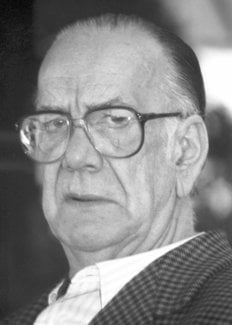
Camilo José Cela Trulock was born on 11 May, 1916, in Iria Flavia, district of Padron, province of la Coruña.
Principal works:
Poetry: Pisando la dudosa luz del dia (1956; 1st ed. 1945).
Novels: La familia de Pascual Duarte (1942), Pabellón de reposo (1943), Nuevas andanzas y desventuras de Lazarillo de Tormes (1944), La colmena (1951), Mrs. Caldwell habla con su hijo (1952), La catira (1955), Tobogán de hambrientos (1962), San Camilo I936 (1969), Oficio de tinieblas 5 (1973), Mazurca para dos muertos (1983), Cristo versus Arizona (1988).
Novelettes: Timoteo, el incomprendido (1952), Santa Balbina, 37, gas en cada piso (1952), Café de artistas (1953), El molino de viento (1956), La familia del héroe (1965), El ciudadano Iscariote Reclús (1965).
Collections of short stories, fables, sketches, and miscellaneous writings: El gallego y su cuadrilla (1949), Nuevo retablo de Don Cristobita (1957). Los viejos amigos (1960), Gavilla de fabulas sin amor (1962), El solitario y los suerios de Quesada (1963), Toreo de salon (1963), Once cuentos de futbol (1963), Izas, rabizas y colipoterrus (1964), Nuevas escenas matritenses (seven series, 1965 and 1966), Rol de cornudos (1976).
Travel books: Viaje a la Alcarria (1948), Del Mino al Bidasoa (1952), Judios, moros y cristianos (1956), Primer viaje andaluz (1959), Viaje al Pirineo de Lérida (1965), Nuevo viaje a la Alcarria (1986).
Collections of articles: Mesa revuelta (1945),Cajón de sastre (1957), Cuatro figuras del 98 (1959), Garito de hospicianos (1963), Las companies convenientes (1963), Al servicio de algo (1969), Los sueños vanos, los ángeles curiosos (1979), Los vasos comunicantes (1981), Vuelta de hoja (1981), El juego de los tres madroños (1983), El asno de Buridán (1986).
Plays: María Sabina (1967), El carro de heno o el inventor de la guillotina (1969).
Lexicographic works: Diccionario secreto (I, 1968; II, 1971).
Collected works: Obras completas. 25 vols. (1989-1990).
Founder and director of the journal Papeles de Son Armadans (1956-1979).
Doctor honoris causa at the universities of Syracuse (New York, USA), Birmingham (Great Britain), John F. Kennedy (BuenosAires,Argentina), Palma de Mallorca, Santiago de Compostela, the Interamericana University (San Juan, Puerto Rico), and the Hebrew University of Jerusalem. Former professor at the University of Palma de Mallorca.
Member of the Real Academia Española.
Member of the Hispanic Society of America, the Society of Spanish and Spanish-American Studies and the Académie du Monde Latin. Honorary member of the Real Academia Gallega, the Real Academia de Buenas Letras (Barcelona), the Real Academia de Bellas Artes de San Sebastián (Palma de Mallorca), the American Association of Teachers of Spanish and Portuguese, the Cultural Institute Israel – Ibero-America, Spain and Portugal (Jerusalem), the Asociación National de Profesores y Entrenadores de Judo (Madrid), and the Asociación de la Prensa de Madrid (1979; after being expelled in 1952). Corresponding member of the Academia Porteea del lunfardo (Buenos Aires), president of the Amistad España – Israel association (Madrid), honorary president of the Cultura Latinaassociation (Paris).
Honorary postman. Honorary doctor of forensic medicine. Senator by royal appointment in the constituent assembly (1977-1978).
Favourite son of Padron. Adopted son of Palma de Mallorca, of Madrid and of Torremejia (Badajoz). Honorary citizen of the State of Texas.
Awards and honours: Premio de la Crítica, Premio National de Literatura, Gran Cruz de la Orden de Isabel la Caólica, Premio Principe de Asturias.
This autobiography/biography was written at the time of the award and first published in the book series Les Prix Nobel. It was later edited and republished in Nobel Lectures. To cite this document, always state the source as shown above.
Camilo José Cela died on January 17, 2002.