Nobel Prize in Physics 2024
John Hopfield – Podcast
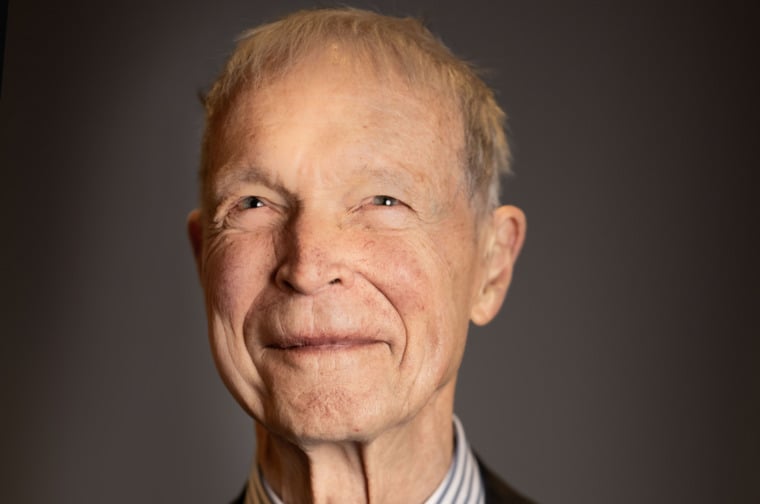

In this conversation, conducted in January 2021, immunologist Peter Doherty speaks about how we should learn from the current corona pandemic to be better prepared for and preferably prevent future pandemics.
The host of this podcast is nobelprize.org’s Adam Smith.
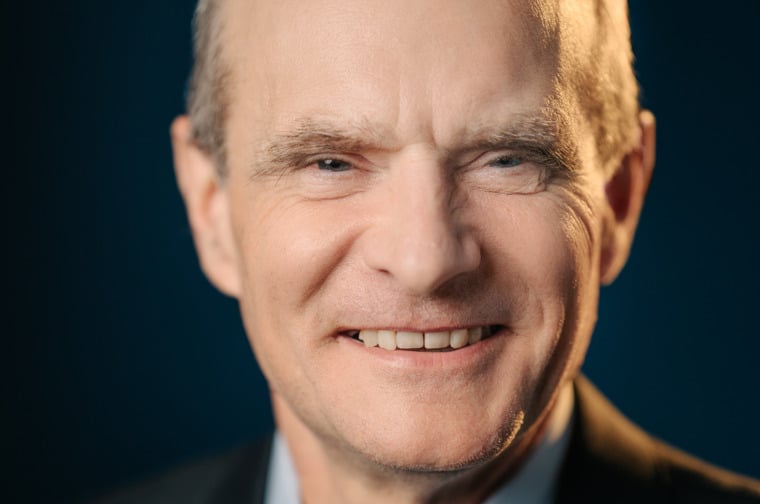
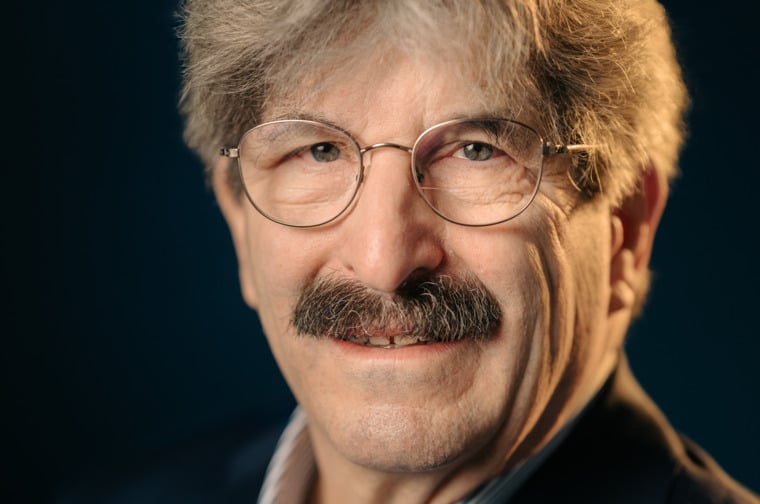

Peter Doherty receiving his Nobel Prize from H.M. King Carl XVI Gustaf of Sweden at the Stockholm Concert Hall on 10 December 1996.
Nobel Foundation. Photo: Lars Åström

All laureates assembled at the Nobel Prize award ceremony in the Stockholm Concert Hall on 10 December 1996. From left: physics laureates David M. Lee, Douglas D. Osheroff and Robert C. Richardson, chemistry laureates Robert F. Curl Jr., Sir Harold W. Kroto and Richard E. Smalley, medicine laureates Peter C. Doherty and Rolf M. Zinkernagel, literature laureate Wislawa Szymborska and economic sciences laureate James A. Mirrlees.
Photo from the Lars Åström archive

Peter C. Doherty showing his Nobel Prize medal after the award ceremony, 10 December 1996.
Nobel Foundation. Photo: Lars Åström

Peter C. Doherty and Rolf M. Zinkernagel showing their Nobel Prize medals after at the award ceremony in Stockholm, Sweden on 10 December 1996.
Photo from the Lars Åström archive

Peter C. Doherty being interviewed outside the Concert Hall in Stockholm, Sweden on 10 December 1996.
Nobel Foundation. Photo: Lars Åström

Peter C. Doherty proceeds into the Blue Hall of the Stockholm City Hall for the Nobel Prize banquet, 10 December 1996.
Nobel Foundation. Photo: Lars Åström

Peter C. Doherty and Sweden's Princess Christina at the Nobel Banquet, 10 December 1996.
Photo from the Lars Åström archive

Peter C. Doherty at the Nobel Prize banquet in the Stockholm City Hall, 10 December 1996.
Nobel Foundation. Photo: Lars Åström

Peter C. Doherty at a reception at the Swedish Academy during Nobel Week, December 1996.
Photo from the Lars Åström archive

Peter Doherty and Rolf Zinkernagel at the Royal Swedish Academy of Sciences in 1996.
Photo: Boo Jonsson

Ten Nobel Laureates of 1996 assembled in Stockholm in December 1996. Back row: Sir Harold W. Kroto, Douglas D. Osheroff, Rolf M. Zinkernagel, James A. Mirrlees, Robert F. Curl Jr. and Richard E. Smalley. Front row: Peter C. Doherty, Wisława Szymborska, David M. Lee and Robert C. Richardson.
Photo from the Lars Åström archive

Nine Nobel Laureates of 1996 assembled in Stockholm in December 1996. Back row: Sir Harold W. Kroto, Rolf M. Zinkernagel, Richard E. Smalley. Peter C. Doherty, Douglas D. Osheroff. Front row: James A. Mirrlees, Robert F. Curl Jr., David M. Lee and Robert C. Richardson.
Nobel Foundation. Photo: Lars Åström

Rolf M. Zinkernagel receiving his Nobel Prize from King Carl XVI Gustaf of Sweden at the Nobel Prize award ceremony, 10 December 1996.
Nobel Foundation. Photo: Lars Åström

Rolf M. Zinkernagel after receiving his Nobel Prize from King Carl XVI Gustaf of Sweden at the Nobel Prize award ceremony, 10 December 1996.
Photo from the Lars Åström archive
All laureates assembled at the Nobel Prize award ceremony in the Stockholm Concert Hall on 10 December 1996. From left: physics laureates David M. Lee, Douglas D. Osheroff and Robert C. Richardson, chemistry laureates Robert F. Curl Jr., Sir Harold W. Kroto and Richard E. Smalley, medicine laureates Peter C. Doherty and Rolf M. Zinkernagel, literature laureate Wislawa Szymborska and economic sciences laureate James A. Mirrlees.
Photo from the Lars Åström archive

Peter C. Doherty and Rolf M. Zinkernagel after receiving their prizes at the Nobel Prize award ceremony in Stockholm, Sweden on 10 December 1996.
Photo from the Lars Åström archive
Peter C. Doherty and Rolf M. Zinkernagel showing their Nobel Prize medals after at the award ceremony in Stockholm, Sweden on 10 December 1996.
Photo from the Lars Åström archive

Rolf M. Zinkernagel at the Nobel Banquet, 10 December 1996.
Photo from the Lars Åström archive

Rolf M. Zinkernagel delivering his speech of thanks at the Nobel Prize banquet in the Stockholm City Hall, 10 December 1996.
Photo from the Lars Åström archive

Portrait of Rolf Zinkernagel, 1996.
Photo: Boo Jonsson
Peter Doherty and Rolf Zinkernagel at the Royal Swedish Academy of Sciences in 1996.
Photo: Boo Jonsson

Rolf M. Zinkernagel takes a closer look at his Nobel Diploma during his visit to the Nobel Foundation in December 1996. On this occasion, the Laureates retrieve the Nobel diploma and Medal, which have been displayed in the Golden Hall of the City Hall following the Nobel Prize Award Ceremony. The Laureates also discuss the details concerning the transfer of their prize money.
Photo from the Lars Åström archive

Rolf M. Zinkernagel during his visit to the Nobel Foundation in December 1996.
Photo from the Lars Åström archive
Ten Nobel Laureates of 1996 assembled in Stockholm in December 1996. Back row: Sir Harold W. Kroto, Douglas D. Osheroff, Rolf M. Zinkernagel, James A. Mirrlees, Robert F. Curl Jr. and Richard E. Smalley. Front row: Peter C. Doherty, Wislawa Szymborska, David M. Lee and Robert C. Richardson.
Photo from the Lars Åström archive
Nine Nobel Laureates of 1996 assembled in Stockholm in December 1996. Back row: Sir Harold W. Kroto, Rolf M. Zinkernagel, Richard E. Smalley. Peter C. Doherty, Douglas D. Osheroff. Front row: James A. Mirrlees, Robert F. Curl Jr., David M. Lee and Robert C. Richardson.
Nobel Foundation. Photo: Lars Åström
Viruses, such as those that cause the common cold or flu, are a particularly devious form of intruder to tackle. Once they enter their host, these infectious agents find cells to hide in while they reproduce in order to infiltrate more targets. Fortunately for us our internal defence system has a trick up its sleeve to seek out this hidden threat. It recruits a specialized form of white blood cell, T killer lymphocytes, that can identify and destroy virus-infected cells, and yet can somehow leave normal healthy cells unharmed.
Investigating how this form of virus scan works turned out to provide profound insights into how the immune system functions at the cellular level, and it is for these achievements that Peter Doherty and Rolf Zinkernagel received the 1996 Nobel Prize in Physiology or Medicine. Investigating how mice are protected against infection from a viral agent that can cause the disease meningitis, they were surprised to find that virus-killing T lymphocytes taken from a mouse could only execute their destructive effect in infected cells belonging to the same strain. Doherty and Zinkernagel proposed that lymphocytes ignored infected cells in other strains because they need to simultaneously recognise two distinct signals on their suspected target – a specific molecule belonging to the concealed virus, and a specific protein marker found on all host cells that signifies that it belongs to itself. Closer inspection revealed that the virus’ molecule actually distorts the host’s marker protein by attaching to it, and this altered self protein informs the T lymphocytes that the cell is infected.
Doherty and Zinkernagel’s findings finally unmasked the true purpose of these self-recognition protein molecules, the major histocompatibility antigens. As early as the 1940s, researchers investigating adverse effects in organ transplants had pointed out that the body rejects foreign, incompatible tissues by recognizing that they carry different versions of the major histocompatibility antigens from their own. Why these proteins create a barrier to transplantation was far from obvious, but the discoveries of Doherty and Zinkernagel revealed that this is merely an unavoidable side-effect of their true biological function. Acting as a surveillance system to distinguish self from non-self, these major histocompatibility antigens allow immune cells to make their crucial life-or-death decision in the face of numerous threats.
This Speed read is an element of the multimedia production “Immune Responses”. “Immune Responses” is a part of the AstraZeneca Nobel Medicine Initiative.
| Peter C. Doherty, born October 15, 1940, Australia | |
| Address: | Department of Immunology, St. Jude Children’s Research Hospital, 332 North Lauderdale, Memphis, Tennessee 38105-2794, USA |
| Academic Education | |
| 1962 | BVSc University of Queensland, Australia |
| 1966 | MVSc University of Queensland, Australia |
| 1970 | PhD University of Edinburgh, Scotland |
| Appointments and Professional Activities | |
| 1963-67 | Veterinary Officer, Animal Research Institute, Brisbane, Australia |
| 1967-71 | Scientific Officer, Senior Scientific Officer, Department of Experimental Pathology, Moredun Research Institute, Edinburgh, Scotland |
| 1972-75 | Research Fellow, Department of Microbiology, The John Curtin School of Medical Research, Australian National University, Canberra, Australia |
| 1975-82 | Associate Professor/Professor, The Wistar Institute, Philadelphia, PA |
| 1982-88 | Professor and Head, Department of Experimental Pathology, The John Curtin School of Medical Research, Australian National University, Canberra |
| 1988- | Chairman, Department of Immunology, St. Jude Children’s Research Hospital, Memphis, TN |
| 1992- | Adjunct Professor, Departments of Pathology and Pediatrics, University of Tennessee, College of Medicine, Memphis, TN |
| Fellowships and Awards | |
| 1983 | Fellowship of the Australian Academy of Science (FAA) |
| 1983 | Paul Ehrlich Prize, Germany |
| 1986 | Gairdner Foundation International Award, Canada |
| 1987 | Fellow of the Royal Society of London (FRS) |
| 1993 | Alumnus of the Year, University of Queensland |
| 1995 | The Albert Lasker Medical Research Award |
The Nobel Assembly at the Karolinska Institute
| Rolf M. Zinkernagel, born January 6, 1944, Basel, Switzerland | |
| Address: | Institute of Experimental Immunology, Department of Pathology, University of Zurich, University Hospital, Sternwartstrasse 2, 8091 Zurich, Switzerland |
| Academic Education | |
| 1962-1968 | University of Basel, Faculty of Medicine |
| 1968 | National Board Examination, University of Basel, Faculty of Medicine |
| 1970 | MD Thesis, University of Basel, Faculty of Medicine |
| 1975 | PhD Thesis, Australian National University, Canberra, Australia |
| Appointments and Professional Activities | |
| 1969-1970 | Postdoctoral Fellow, Laboratory for Electron Microscopy, Institute of Anatomy, University of Basel |
| 1971-1973 | Postdoctoral Fellow, Institute of Biochemistry, University of Lausanne, Switzerland |
| 1973-1975 | Visiting Fellow, Department of Microbiology, The John Curtin School of Medical Research, Australian National University, Canberra, Australia |
| 1976-1979 | Associate (Assistant Professor), Department of Immunopathology, Research Institute of Scripps Clinic, La Jolla, California |
| 1977-1979 | Adjunct Associate Professor, Department of Pathology, UCSD, USA |
| 1979 | Member (Full Professor), Department of Immunopathology, Scripps Clinic and Research Foundation |
| 1979-1988 | Associate Professor, Department of Pathology, University of Zurich, University Hospital, Zurich |
| 1988-1992 | Full Professor, Department of Pathology, University of Zurich, University Hospital, Zurich |
| 1992- | Head, Institute of Experimental Immunology, Zurich |
| Fellowships and Awards | |
| 1981 | Cloetta Stiftung, Zurich |
| 1982 | Jung Stiftung, Hamburg |
| 1983 | Paul Ehrlich Prize, Frankfurt |
| 1985 | Mack-Forster Prize, Europ Ass Clin Inv |
| 1986 | Gairdner Foundation International Award, Toronto |
| 1987 | Institute for Cancer Research, New York |
| 1988 | Louis Jeantet Foundation, Geneva |
| 1988 | Naegeli Stiftung, Zurich |
| 1992 | Christoforo Colombo Award, Genova |
| 1995 | The Albert Lasker Medical Research Award |
The Nobel Assembly at the Karolinska Institute
On Rolf M. Zinkernagel from the American Association of Immunologists
Rolf M. Zinkernagel’s work from ResearchGate
On Rolf Zinkernagel from Universität Zürich
Peter C. Doherty’s page at St. Jude Children’s Research Hospital
An interview with Peter C. Doherty from the Australian Academy of Science
On Peter C. Doherty from the Peter Doherty Institute for Infection and Immunity
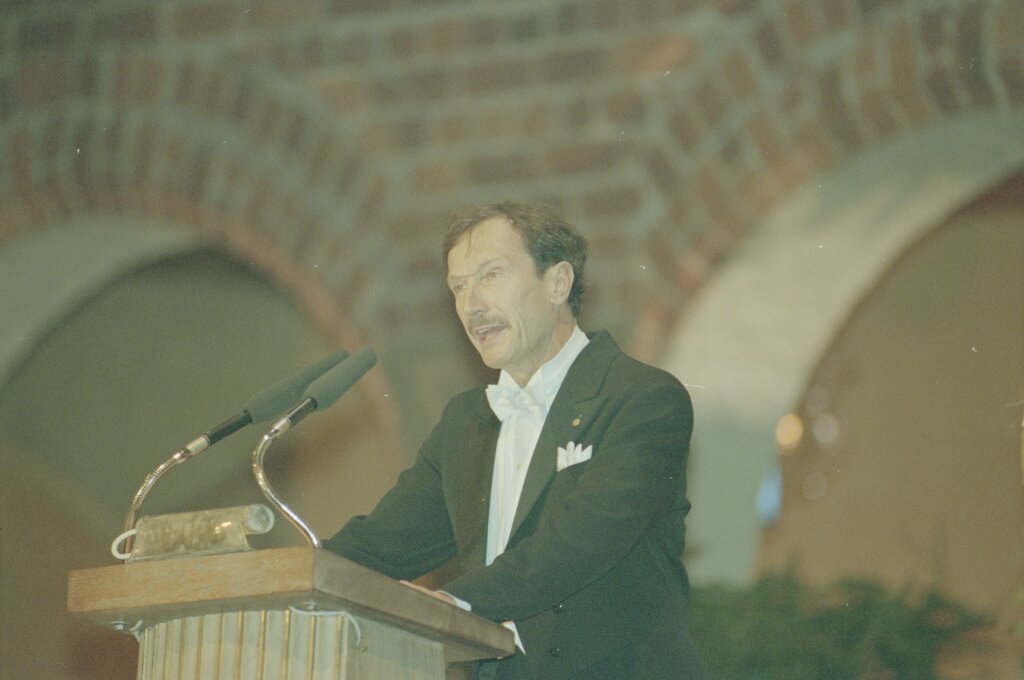
Rolf M. Zinkernagel’s speech at the Nobel Banquet, December 10, 1996
Your Majesties, Your Royal Highness, Ladies and Gentlemen,
May I express Peter Doherty’s and my own gratitude for having been chosen among many immunologists to share this true high point in our careers as researchers, and may I convey our admiration and respect to Alfred Nobel who died 100 years ago. This is a very special day to commemorate.
When I arrived in Canberra in 1973, Peter Doherty greeted me with the usual Australian confusion: Switzerland? I know, sure, I like Sweden, I sure would once like to go to Stockholm. That we are now both together with our families and mentors here in Stockholm gives us the greatest pleasure of our life.
Why are we both in Stockholm? I suppose because Peter and I, as young 30-year old post-docs had no fixed ideas about the immunological mechanisms at work and little respect for dogmas.
As you know, in science there are collectors, classifiers, compulsory tidiers-up and permanent contestors, detectives, some artists and many artisans, there are poet-scientists and philosophers and even a few mystics. Peter is a Celt and a true Australian and to the chagrin of his wife and of mine, he is a mystic. I am very Swiss and to the chagrin of my family, I am a true collector. We are both a bit crazy, which is necessary, but not sufficient to do science but – we think – that we are both kept reasonably sane by our wives, children and collaborators.
To ask questions, to search for answers, to do research – I mean re-search in nature, what is already there, but has not been revealed so far is the most fascinating and the most exciting thing we can dream of doing and what we would like to continue doing. We researchers are a bit like musicians – and the Nobel Foundation and this assembly tell us we are reasonably good musicians – who are re-creating as best as possible what true creators, as a Mozart or Rossini once have conceived. Peter, let us face it: We have been very lucky! Had we not found the rules of restricted immune T cell recognition, somebody else would have later. Without Isaak Stern or Luciano Pavarotti, we would still have Mozart’s violin concerto or Don Giovanni, but we all recognise that without Mozart The Enchanted Flute would not exist.
To have had the unique chance to find something we did not know before and to be recognised for this here today is a great moment for both of us.
We thank the Nobel Foundation for bestowing this prize upon us. This honours not only us, but basic research and a high human good that needs our full support. That is the urge to find out more about the basic principles of nature and disease.
Peter C. Doherty held his Nobel Lecture on 8 December 1996, at Karolinska Institutet, Stockholm. He was presented by Professor Hans Wigzell, Member of the Nobel Committee for Physiology or Medicine.
Read the Nobel Lecture
Pdf 1.32 MB