Nobel Prize in Physics 2024
John Hopfield – Podcast
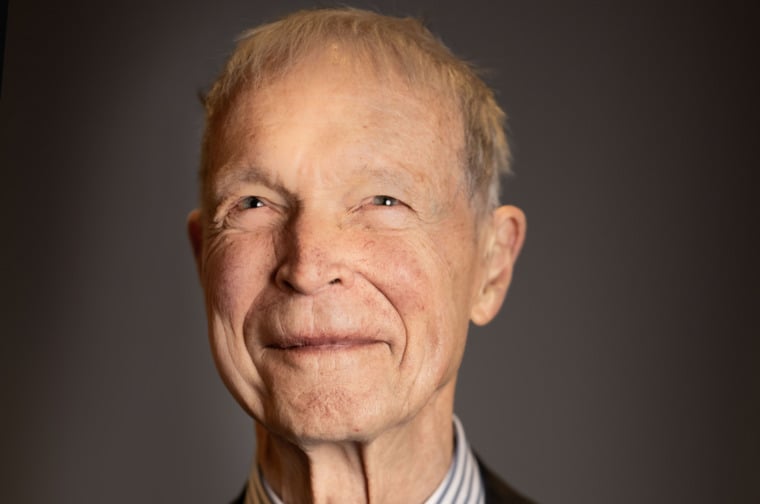

Carol Greider achieved success in molecular biology in the same way she overcame dyslexia as a child: with persistence and creativity. She discovered telomerase, an enzyme that is key to the ageing process and the growth of cancer cells, and has major implications for medical research.
Born in 1961 to two scientists, Carol Greider struggled at West Davis (California) Elementary School. Because of difficulty spelling and sounding out words, she was put in remedial classes.
“I thought of myself as ‘stupid’ because I needed remedial help.”
Carol Greider
Since she couldn’t learn to read the traditional way, she found another: she taught herself to memorise words and letter order, circumventing her inability to sound out words.
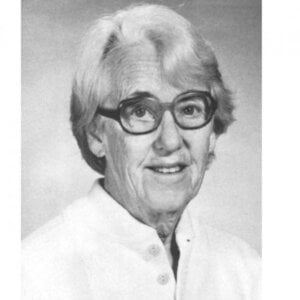
Carol and her brother walked to school every day. They were independent children, even more so after their mother died in 1967, when Carol was six. When she was ten, the family spent a year in Heidelberg, Germany, where her father had a research sabbatical. Her grades were bad, especially in English, but she relished taking the city bus to school and learning her way around a new place. In junior high and high school, Greider found that her memorisation skills, honed by necessity, gave her an advantage in history and biology.
After high school, she decided to study Marine Ecology at the College of Creative Studies at UC Santa Barbara, under the watchful eye of a former colleague of her mother’s: Beatrice Sweeney. Sweeney guided Greider to her first position in a laboratory. Greider took to it at once: “I saw that laboratory work was about people and interactions as well as about science.”
“Anytime we do… experiments, there are going to be three or four new questions that come up when you think you’ve answered one.”
Carol Greider
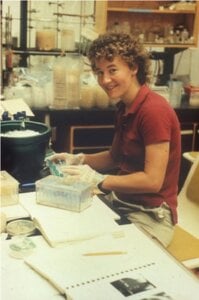
After a year abroad spent in part at a lab at the Max Planck Institute, Greider decided to pursue a graduate degree. Her dyslexia again proved to be an obstacle – her graduate school entrance test scores were low – and again proved ultimately to be a boon, in determining her course of study. Of the eight programs she applied to, only two accepted her: Caltech and UC Berkeley.
When she visited Berkeley, she met Elizabeth Blackburn, and her choice was made. She would go join Blackburn’s lab and her study of telomeres.
By the early 1980s, Blackburn had described the molecular structure of the telomere, the pieces of DNA at the ends of chromosomes that protect the chromosomes from shortening when it replicates. But she wanted to know how telomeres themselves keep from getting shorter during cell division – or if they do get shorter, how they get long again.

Carol Greider as a grad student in Elizabeth Blackburn’s lab at UC Berkeley, USA.
Photo: © Nobel Prize Outreach. Blakeway Productions

Carol Greider with another grad student in Elizabeth Blackburn’s lab at UC Berkeley, USA.
Photo: © Nobel Prize Outreach. Blakeway Productions
Using Tetrahymena, a fresh-water single-celled organism with a large number of telomeres, Greider set out to look for a hypothetical enzyme that relengthened shortened telomeres.

Greider used telomerase RNA clones from previous experiments in order to sequence the DNA that was extracted from the Tetrahymena cells. This had the added effect of producing significantly darker bands than before. The third gel in this sequence of gels posted here.
Photo: Courtesy of BGI Nobel Laureates Archives at Cold Spring Harbor Laboratory

This electrophoresis gel had an enzyme, PCG1, incorporated into it. The enzyme allowed Greider to label certain areas of the gel that corresponded to certain nucleotides, specifically Adenine, Guanine, Thymidine, and Cytosine. Second in this sequence of gels posted here.
Photo: Courtesy of BGI Nobel Laureates Archives at Cold Spring Harbor Laboratory

Greider was sequencing DNA strands and labelling the DNA repeats in each gel. The seventh gel in this sequence.
Photo: Courtesy of BGI Nobel Laureates Archives at Cold Spring Harbor Laboratory
She made extracts from Tetrahymena cells and examined whether artificial telomeres could be elongated by enzymes present in the extracts. After about nine months of trying variations on these experiments, she identified the first signs of her enzyme on Christmas Day, 1984. They named it “telomerase” and published their findings in the scientific journal Cell.
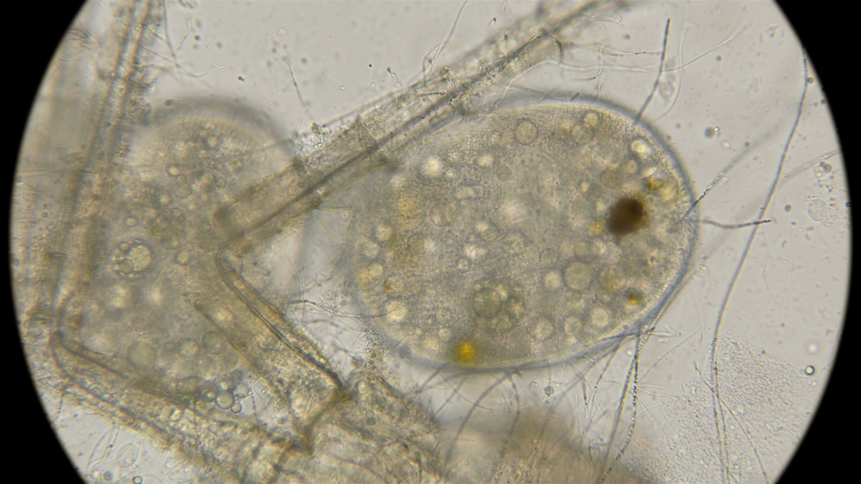
At the age of 23, before she’d even earned her PhD, Greider had made the discovery that would earn her the 2009 Nobel Prize in Physiology or Medicine.
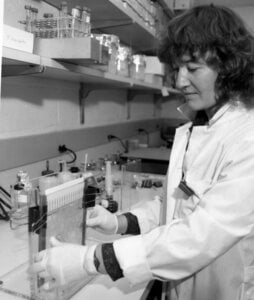
But that honour wouldn’t come for another 25 years. Meanwhile, Greider’s continued work with telomerase made the enzyme’s impact on medical research abundantly clear. With her PhD in molecular biology at 27, she took a fellowship at Cold Spring Harbor Laboratory (CSHL).
She discovered that shortened telomeres were implicated in many diseases and played a role in the inability of cells to divide after a certain number of divisions – and therefore in cellular ageing. She also found that telomerase activity factored in cancer cell growth. In other words, telomeres and telomerase lay at the heart of major topics of medical research: ageing and cancer.

Carol Greider at the American Academy of Achievement Program in San Antonio in 2001.
Photo: © American Academy of Achievement

Carol Greider holds a flask of mouse tumour cells in culture media, for a study examining how telomeres change in tumour cells.
Photo: © Matt Roth
During her time at Cold Spring Harbor, Greider met science writer Nathaniel Comfort, whom she married in 1992. In 1997, when Greider was 36, they moved to Baltimore, when Johns Hopkins University hired her as associate professor of molecular biology and genetics. She is still at Johns Hopkins, now as the Director of Molecular Biology and Genetics. Her lab continues to focus on understanding telomerase and the consequences of telomere dysfunction.
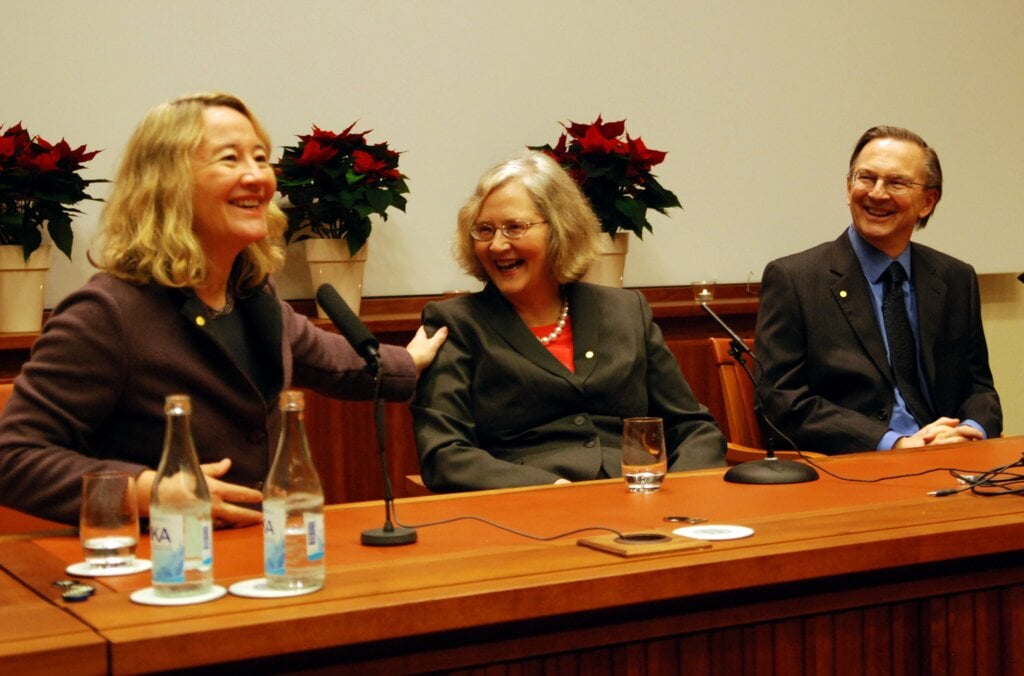
When it was announced that she had been awarded the Nobel Prize in 2009, Greider brought her two children with her to the press conference. Being a mother is important to her, as are institutional policies that support mothers.
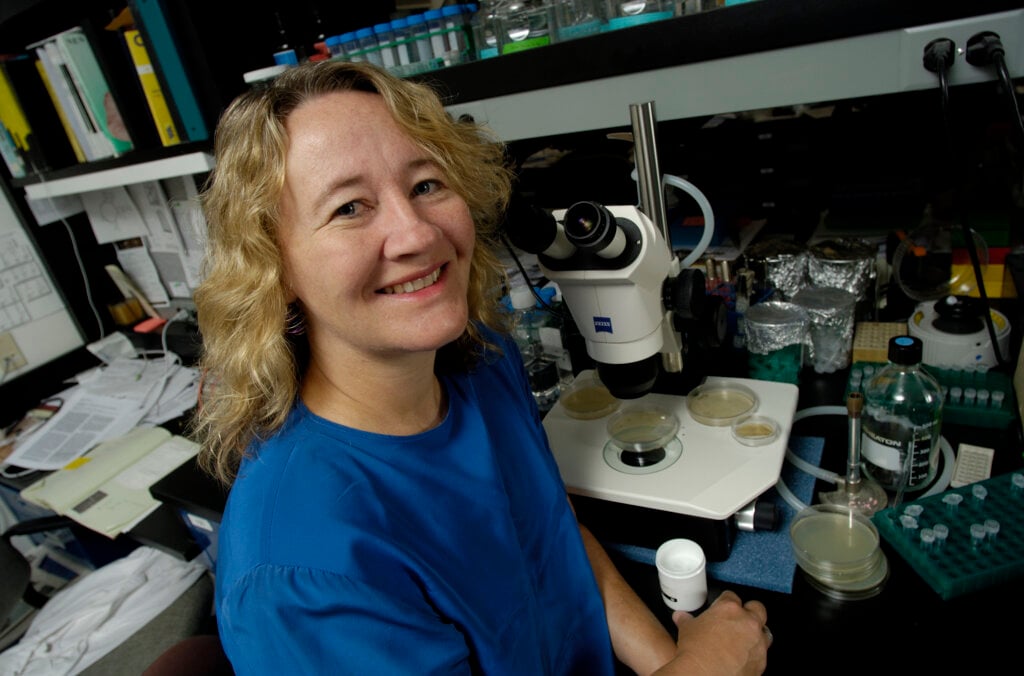
In 1996, when Greider was pregnant with their son she convinced CSHL to open a childcare facility. And she has appreciated the flexible work environment of her lab, which gives her time with her children.
Despite the Nobel Prize for her and Blackburn, Greider is still concerned with, as she puts it, “under-representation of the 50% of the brain power of this world.” She encourages women who want to have a career they love and a family to “find a way to do it. And there’s not one way.” She learned that back in elementary school.
Elizabeth Blackburn has evolved from a self-described “lab rat” to an explorer in the realms of health and public policy. She discovered the molecular structure of telomeres and co-discovered the enzyme telomerase, essential pieces in the puzzle of cellular division and DNA replication. Her research offers hope for cancer treatment, clues to the mystery of ageing and even biological links between life circumstance and lifespan. Wherever her curiosity leads her, Blackburn insists every conclusion be backed with data. “You have to get the science right.”
Elizabeth Blackburn was born in 1948, in Tasmania, the child of two doctors and the second of seven children. Growing up, she was fascinated by animals, from the jellyfish on the beach to the tadpoles she kept in glass jars. She was also captivated by the romance of the scientific quest, reading and rereading the biography of Marie Curie. She decorated her bedroom with drawings of amino acids.
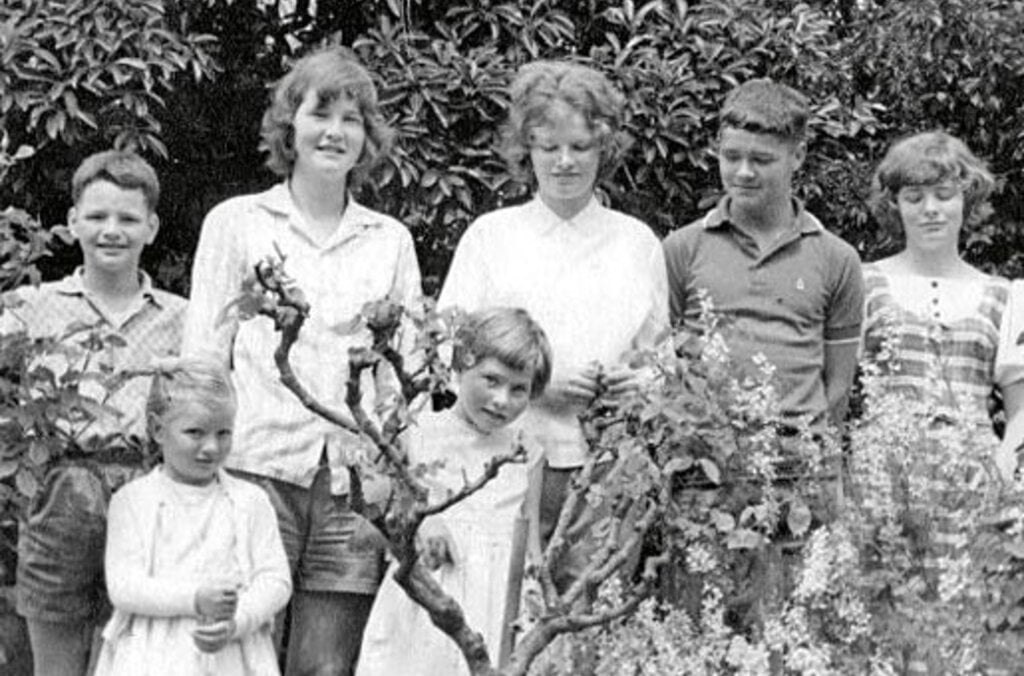
After earning her bachelor’s and master’s degrees in biochemistry at the University of Melbourne in the early 1970s, Blackburn left Australia at age 24 for doctoral work at the Laboratory of Molecular Biology (LMB) in Cambridge, England. The LMB was the epicentre of molecular biology at the time; she describes the lab as “complete immersion” and its director, Fred Sanger, as a great mentor for her work on DNA sequencing.
The LMB was also where she fell in love, with fellow lab member John Sedat. They got married in 1975, and, since he was headed to Yale University, she looked there for postdoctoral research opportunities. “Thus it was that love brought me to a most fortunate and influential choice”: the laboratory of John Gall and the study of pond scum.
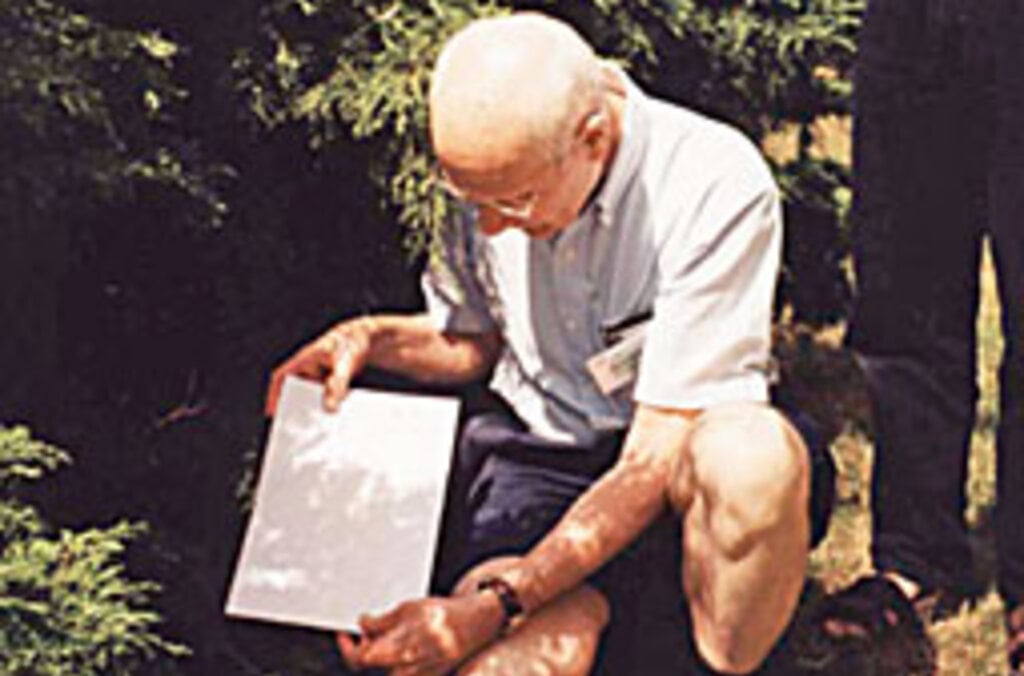
Gall encouraged Blackburn to focus her telomere research on Tetrahymena, one-celled organisms with ample linear chromosomes (and hence telomeres). In sequencing their DNA, Blackburn discovered that telomeres are composed of six short repeating segments of DNA.
As an assistant professor at Berkeley, Blackburn set out to understand how. She and biologist Jack Szostak suspected that the cause was an enzyme.
Telomeres protect the ends of chromosomes – Blackburn has likened them to caps on the ends of shoelaces – as cells divide, ensuring that all the important DNA instructions get copied. When telomeres themselves start to wear down and shorten, the cell ultimately dies. In healthy cells, however, telomeres rebuild themselves.
They were right: in 1984, with her student Carol Greider, Blackburn discovered telomerase, an enzyme that lengthens each strand of DNA before the copying stage, compensating for the shortening during cell division.
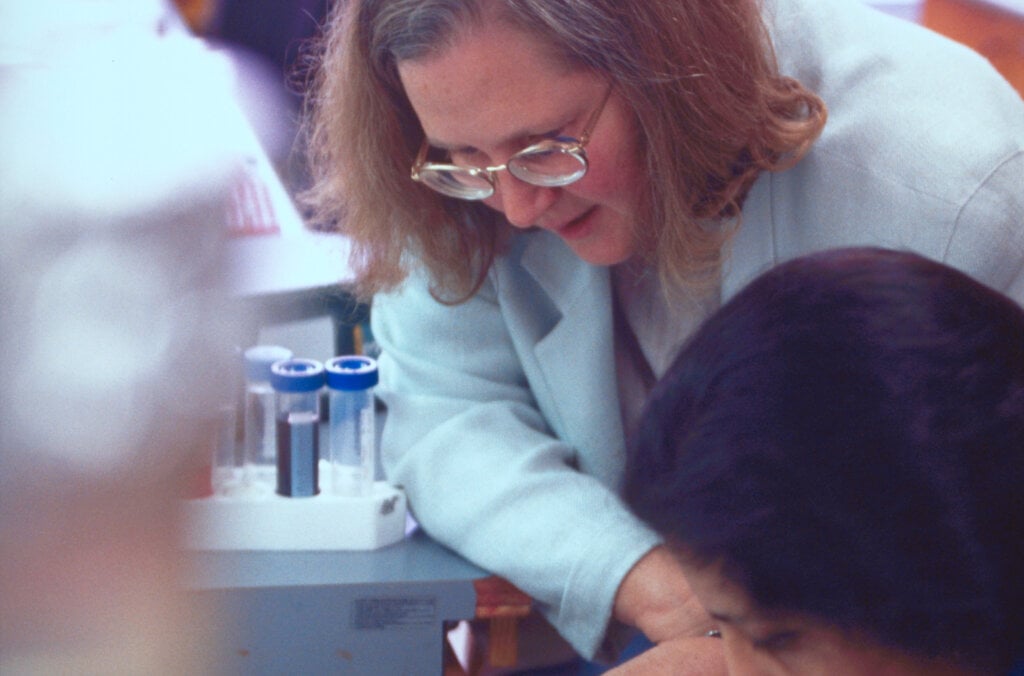
In 1990, Blackburn moved her lab to UCSF where she and her team sought to understand how the protein and genetic components of telomerase worked together. How did the cell keep the right balance between telomerase overactivity, which could lead to cancer, and underactivity, which leads to shortening chromosomes and cell death?
The link between telomere length and cell health led Blackburn to ask broader questions about health and public policy. In the early 2000s, with psychologist Elissa Epel, she studied telomere length in mothers who care for children with chronic diseases. Along with similar studies of spouses of those with chronic dementia and in people who suffered early trauma, the results were clear: the more chronic stress one suffered, the shorter one’s telomeres. Stress can prematurely age one’s cells.
“It really resonated with me as a mother. I just sort of felt for these women so much. A very nonscientific reason, if you will, but isn’t that an interesting question?”
Elizabeth Blackburn
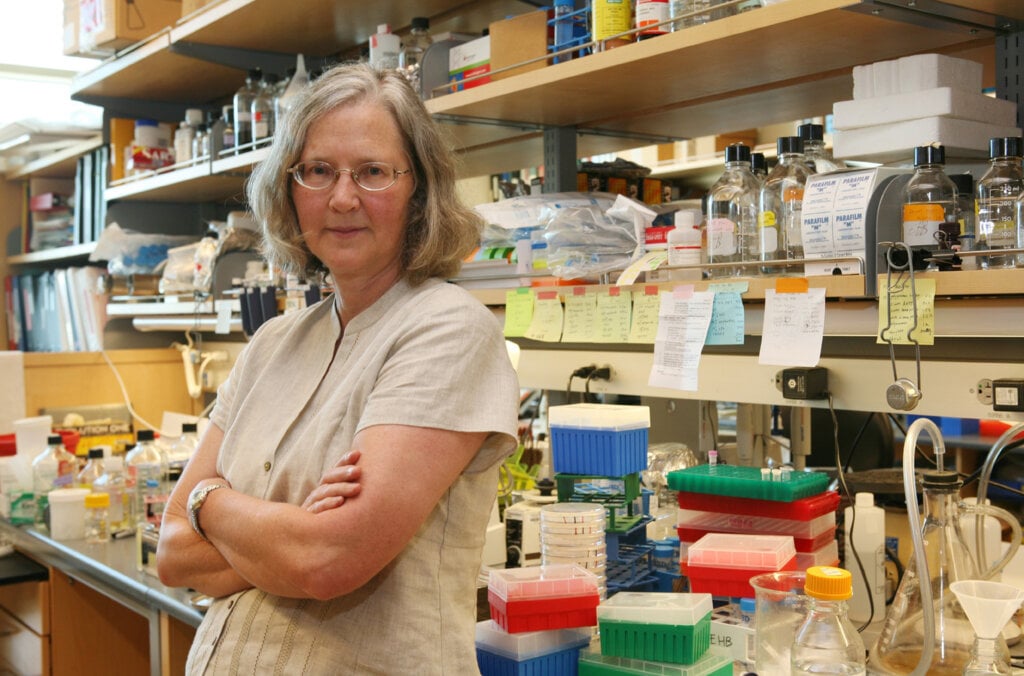
Blackburn continues to ask questions that relate to both personal and public health. Do exercise and meditation lengthen one’s telomeres and thus slow the process of cell ageing? How does growing up in a war zone, with domestic abuse or in poverty affect a person’s telomeres? Does a mother’s social disadvantage transmit to her child through the initial setting of telomere length?
Although her questions extend beyond the lab, Blackburn always returns to the lab for the answers. She remains rigorous in her methods and cautious in her assertions.
“Ageing is so many different things, and cells being able to self-renew is part of the picture but not all of it.”
Elizabeth Blackburn
In this conversation, conducted in October 2021, Elizabeth Blackburn speaks openly about the value of science and how better to engage others in its importance – and beauty. Also up for discussion is our current climate crisis, as Blackburn has just been to Antartica and witnessed the severe consequences of the world’s climate change. Last but not least, she speaks about the future of science and the future of her own research.
The host of this podcast is nobelprize.org’s Adam Smith.
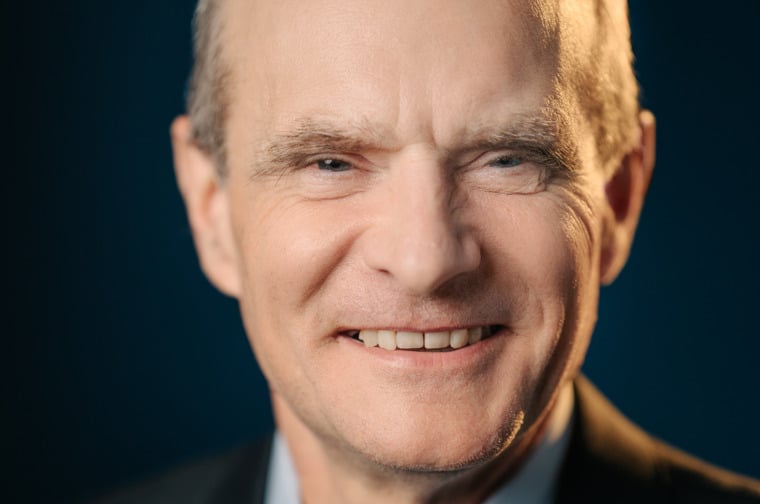
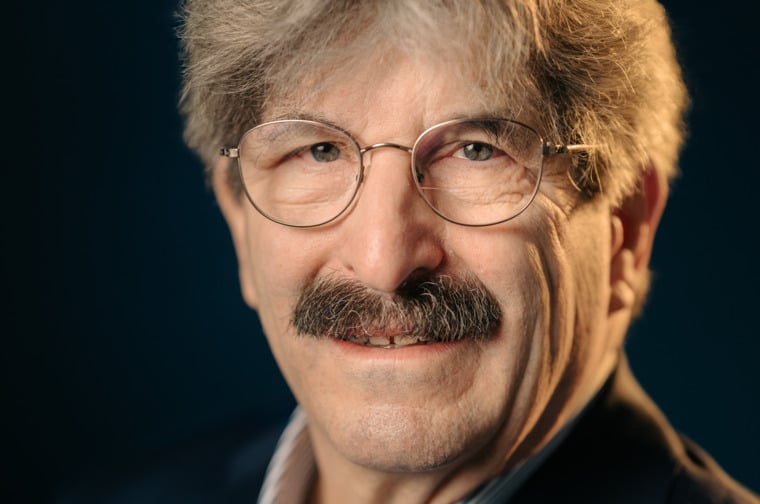
Jack Szostak, Elizabeth Blackburn, Carol Greider – welcome to Stockholm.
All: Thank you, it’s a pleasure to be here.
Your Nobel Prize is of course associated with a couple of interesting numbers. This is the hundredth time, I am sure you’ve heard, that the Nobel Prize in Physiology or Medicine has been awarded and also this is the first time ever that two women have been co-recipients of the same Nobel Prize in the sciences, and telomere research in general is one where the proportion of women is more normal, if you like, its more representable of the maked up society. Is there a reason for that, do you think?
Elizabeth Blackburn: I think we should turn it around and ask why everybody else is so aberrant, seriously, because I think that actually might frame the question a little bit more instructively as to why things are not, as you said, the biological or societal representation of women. We can point to various sorts of things such as the fact that some of who have been in the field are females, but actually there are plenty of men in the field as well and I think what stands out is that the numbers are a little different, but certainly, having examples of women who have done well in science – we all know that kind of example does make it more encouraging for others, younger people, to visualize themselves being successful in science – and so I think there has been a kind of perpetuating effect there, but I do like to think that this is the normal way it can be and perhaps we should think about, well, how do we make this more normal in other fields of science.
We will pick up your question, why is it aberrant in other fields do you think?
Elizabeth Blackburn: Somebody else can take that one.
Jack Szostak: There is obviously a lot of historical reasons, bias, familiar /- – -/ that takes a long time to get rid of and a lot of good role models to get rid of.
Have you found it difficult being a woman in science?
Carol Greider: No, I have not found it difficult, but I think that one of the things that I have always done is sort of put blinders on and done what I wanted to do, but it was when I then started to get to the higher levels in ranks that I could then look back and see what the data was. At graduate school there were 50% women, at graduate school there was postdoc fellows usually 50% and then as you get higher and higher up the representation is lower. I didn’t feel like I personally had experienced any big obstacles, I am a scientist, I can look at the data and see that there is something that is not quite representative, as one moves up the higher ranks. I think that role models are one good thing, that the more people there are in the higher ranks the more the younger people can look up and say Yes, there is something that I can do, and it doesn’t seem like an impossible task.
Is there more that needs to be done than role models? I mean, would it naturally change, or does it have to be aggressively tackled do you think?
Elizabeth Blackburn: I think aggressive tackling is good. Look at something like smoking, it took very aggressive actions to make smoking less of a wide-spread practice and certain amount of imposition of things. I don’t think it will happen organically completely from within. When you talk to colleagues, individually they are very well disposed to the idea that they see the value of having more women and more diverse groups of people’s insights, because like any enterprise the more diverse sorts of backgrounds come into it, the better way the problems can be solved. I think there is not a lack of good will among a lot of people to do this. It is a question of how do you do it, and then I am sure a mixture of various sorts of strategies will be hopeful, not least education and not least just seeing a woman there sort of makes it more possible. I think we are very visual species, and you look at something and that’s evidence in front of you, that you seem to think Oh, that’s me. If you were a young woman, I could do this.
I think further that we have to make the career structure a little bit more flexible because there has been a one size fits all model for careers in science which have been very much that based on a man having a supportive wife or partner or something to take care of life and family and that’s been something that has been daunting, we find, to young women. I personally found it very daunting as a young woman into the career structure, not the science, but the career structure, and so I think we can be much more imaginative about how we make sure women don’t leave sciences during the time when they have preoccupations with family or with elderly parents who need long term care, the sort of things that women often do.
Yes, that requires one to have really quite a strong support structure within science.
Jack Szostak: A lot more broadly than that, there are a lot of things done here in Sweden that would be kind of chocking in the United States.
Elizabeth Blackburn: Yes, absolutely!
Carol Greider: A support in terms of general /- – -/ support.
Elizabeth Blackburn: Yes, because I think the seeking point for many women, at least in my personal experience from what I see is, they say “I just can’t see being a scientist and I also do want to have a life” and I think that that is something that we shouldn’t say to young people. “Oh no, you can’t have a life and be a scientist” and yet that is the perception that they have. I think as senior scientists we could do a lot more to try to think of active ways in which this one kind of career structure model that we have could be thought of more imaginatively. And I just know examples of women who have gone part-time as their families and other needs have happened, and then they go back in full time and they just come roaring back and have done really well, and they are not all in the United States unfortunately, which again tells us something about the United States situation and support.
Turning to telomeres, the blobs on the end of chromosomes …
Elizabeth Blackburn: Blobs …
I think it’s your own phrase … I have heard you say it. They were known in the 1930s, it was known that they had an important protective role of the chromosomes, but people didn’t know what they were. It was you in the late 1970s that sorted out the molecular nature.
Elizabeth Blackburn: Began to, its still an on-going saga, none of us are out of jobs yet. That’s right. I think it was so wonderful the science that was done /- – -/ genetically in which such deductions were made about what’s going on with chromosomes and their inheritance. Now we look back at it and we say they didn’t know it was DNA and yet the thinking about what was observed, and I particularly enjoyed McClintock’s work because that’s what I got more familiar with. It was so elegant and there are so many treasures in there, of insights into what turns out to be going on in meiosis and as it turned out with what’s going on with telomeres, although her fame more broadly was, I think, perhaps more for jumping genes for many years. What she said, something written in 1931, about a telomere being distinctive, and she didn’t call it a telomere, was so clear and I think very important and it was just lack of the research tools of the time.
Jack Szostak: Molecular understanding was there …
Elizabeth Blackburn: Right they had microscopes, they had genes, phenotypes, they had really wonderful other kinds of thinking, but they were not playing with the same sort of toys in the lab that we have played with.
Ahead of time … Then you two met at this Gordon conference in 1980 and it’s sort of the way science is supposed to happen, two people meet each other, have an idea, do an experiment and prove something wonderful.
Elizabeth Blackburn: And then … nobody pays for it, but they do pay for it, no they pay for a broad sort of setting in which you can go and do experiments and explore and ask questions without somebody saying, Oh, is this going to be useful for this year’s economy or for somebody’s /- – -/ medicine. I think that is really important, I mean we thought that was something … we didn’t really think about it at the time, it was such a given that you can do an experiment with broad funding that is never going to be wasted. Scientists don’t throw away money, they work very hard and giving scientists money to ask questions that hadn’t been planned, it’s really important.
Jack Szostak: That meeting, or that kind of meeting, it’s great for bringing people together, who are working on different things.
Elizabeth Blackburn: These meetings are famous for …
Carol Greider: You had met each other before?
Jack Szostak: No, that’s how we met. After your talk I came up …
Elizabeth Blackburn: We walked across this lawn and just talked and talked.
Jack Szostak: Because I was working on broken DNA molecules’ ends and then Liz had these ends that behaved completely differently, and it was just a contrast that was kind of chocking so we had to talk about it and see what we could do to figure out what was going on.
Carol Greider: So Liz, you gave your talk first?
Elizabeth Blackburn: Yes.
It was after the talk the two of you teamed up?
Elizabeth Blackburn: Yes, I talked about what we knew about the molecular nature of these DNA molecules. You know the ends, you could get your hands physically on.
We will turn to the experiment in a minute, but I just want to ask you in general about choosing companions in science, because it is so important to get the right people to work with. Is there some, and of course one works with lots of different people throughout one’s career, but are there some criteria that you applied choosing companions to work out with?
Jack Szostak: I think it’s mostly a matter of, you know, is there an interesting experiment that actually can get done?
Elizabeth Blackburn: And then if you have the luxury of choice, yes, you do want to work with people who really do rigorous science, I think, and that can be very different kinds of science, can be done with rigour, but I think that’s important as one collaborates with people outside new areas. Jack and I, we were really much in the same sort of area, it was a molecular genetic tradition, but when you collaborate even further out, now you don’t have the deep expertise, then I think you have to have a real respect for that person’s quality of their research.
Jack Szostak: And you also need to have someone who is fun to talk to and you can exchange ideas with, each way. Some people are better at that than others. More fun to work with.
Elizabeth Blackburn: But you are right, if the scientist is really exciting you will make it happen.
Jack Szostak: You will find a way.
And when you are picking companions who don’t have a track record, students that come in into the lab, what do you look for in them?
Carol Greider: Really, it’s just the excitement of what they are doing and they simply need to communicate that excitement back and forth and I think if people really are interested and care, just interacting with them over a period of a few weeks, one can tell whether or not there is a compatible set of interest that are there. So usually there is an opportunity to do that when students may be coming into the lab, you have a chance to get to know them a little bit and see where the capabilities are on both sides. It’s not just a mentor choosing a student for a very … there is opportunities for students to go around and choose mentors and make sure that they are compatible with them as well, and I think both of those things are important.
I was going to go on to ask what do you think are the important characteristics of being a mentor, what do you try and provide for the student?
Carol Greider: Again, it’s all about the science and it’s about being a /- – -/, sit down and have a conversation and really understand that person’s interest. Some problems are very interesting, but somebody may approach it from a particular angle and somebody else approach it from a different angle and then when those two people talk it may not be as easy to understand, but a third angle, there may be a shared understanding like, you know, languages, if somebody speaks a language that is close to a language, if somebody speaks Italian and Spanish, maybe they will understand each other better than somebody speaking some other languages. So I think that that is true in terms of people in their interpersonal interactions as well, so finding those compatibilities is just a matter of spending some time together and talking about their science.
I don’t know if you want to add anything?
Elizabeth Blackburn: And finding their strengths too, which is something I learned not by being clever, but somebody once said to me that Shirley Tilghman, who is now the President of Princeton, but she is a very accomplished molecular geneticist, and somebody who knew her very well in her science days said she always is very good finding what people are good at and then making sure that gets used very well. It’s not an altruistic thing necessarily, she is making sure they thrive and do the best in science and I thought that was a really good hint and I try and look for that as well because some people have real strengths in some areas, some will ask all these questions all the time and they will never do this experiment, but its also important that they are doing that. Others will say, Yes, I will do the experiment but also be critical. Carol was actually somebody in the latter, she said, “I will do the experiment” and be very smart and critical at the same time. But other people will question, question, question, and if you can make use of that and say, this is really good that someone’s bringing into their really critical thinking and not say, Well, I really want you to do it this way and stopping it, and think, Ah this person actually is smart and they probably got some good reasons for what they are thinking about and so try and use what strengths you feel you discern in people is important.
Jack Szostak: I like to find people who are pretty independent and have some initiative and the best students are the ones where I can tell them that’s never going to work and then they go and do it and show that it does work.
Elizabeth Blackburn: My problem is that I always think that it is going to work, and they are the ones who say, Well actually …. It goes both ways and you have to have both going on and you have to have the sort of Let’s try it, and things that you really have reasoned through very well, that sometimes is the route to doing something new as you reason something very well and you do that and then something new comes of that too, so both ways in biology really can work and you can’t always predict which is going to be the formula.
Presumably it often takes quite a long time to find out what people are good at, because there must be a lot of graduate students who start and then find they don’t hit the ground running, it takes time to get going. That can be quite a dissolution at time, so it’s important for people to understand it can take time for one to work out what one should be doing.
Elizabeth Blackburn: I think people’s quality of thinking that emerges relatively easily I think, now as you say what unfolds in the experiment can of course be very slow because you know by definition you are doing things that are difficult. If they are easy someone would have done them, and so that’s I think the hard, unpredictable road for graduate students. Back to your questions of mentoring, that’s were you have to realize that that’s going on and that people will go through periods in science as we all have done, when you’re just seeming to fail all the time and the experiments don’t work, sometimes for reasons that are boring, but sometimes for reasons that are significant. You have to be able to fail a lot of the time, scientists just have to be terrific at getting slapped back on the face by nature all the time.
Carol Greider: I have told my students and I am famous in the lab for saying “That’s why they call it research” because somebody would come into my office and we will be talking about an experiment with a great result and I say “Great, go and do it again!” Somebody would come into my office and say “Nothing worked at all, nothing worked at all”. “Great, go and try it again!” And I say that’s why it is called re-search, you always have to do it again.
Elizabeth Blackburn: I realized the opposite because somebody said it isn’t research because somebody already searched for the /- – -/ rediscovering it or something. I like yours better.
Carol Greider: You have to repeat that good experiment just like you have to try again at the failed experiment.
Yes, Carol’s is less depressing, yes. So back to the experiment, together you demonstrated that telomeres from one species could protect DNA from an entirely unrelated species and thus the mechanism of the telomere protection was more fundamental than perhaps one might have though initially. And that result was very clear, you understood that immediately so where you aware of what an important piece of information you had just discovered at the time?
Jack Szostak: I think we knew that it was going to open up a lot of new experiments, because we could use all the tools available in yeast as well as you could do in Tetrahymena and then in other organisms. So we knew that it was going to allow more progress.
Elizabeth Blackburn: And I think it also felt somewhat fundamental in the sense … you know molecular biology was very dominated by there will be universal solutions for things because we were so influenced by the genetic code, DNA, everything was very universal and so when you saw something crossing lines of phylogenetic divisions … Don’t you think there was a bit of a sense when we found the sequences looked similar and they looked like there is something fairly deeply universal in the eucariotic world.
Jack Szostak: That is an important point, because it was already clear that in bacteria and many viruses there were lots of different solutions, so it didn’t have to turn out to be universal.
Elizabeth Blackburn: Yes, it was completely nonintuitive what would go on in terms of actually more the replication problem in terms of … and protection too.
And you also observed that the telomeres in yeast were lengthening and that something had to be causing that lengthening and that’s when you come into the story, because you set out to find the activity that was causing the lengthening.
Elizabeth Blackburn: By chemically speaking yes, because I thought that was … I am sort of a biochemist, somewhat by training I suppose and I had gone through biochemistry and then molecular biology and so it felt natural to try and say this is very direct, you know, reactions take place in real time sort of more or less in front of your eyes in sort of, you know, biochemical way.
Jack Szostak: You had the right organism for doing the right chemistry.
Elizabeth Blackburn: And the organism was right and it turned out … There was a biology of the organism that set this burst of telomere synthesis that takes place and there was an abundance, relatively speaking, of telomeres and so that all pointed to, well, this is a good system to try and answer questions and I had been trained in the lab of Joe Gall, which is where I actually did the sequencing of the telomeric ends, as we now call them, the DNA ends of the mini-chromosomes in the ciliated protozoans. Joe had very much always said that you should find this system in which you would answer the question best, what I think is a fundamental idea. Things will be pretty conserved throughout much of life and so this idea that find the good system was very much in my mind so I started out doing a little out of foray into things, got ten years, felt brave and Carol joined the lab and felt really brave.
She was one of your unusual students who took one of your ideas and said, Yes I can do that and off she went.
Elizabeth Blackburn: I had actually offered it to a postdoc who turned it down: Very nice Liz, but I think I will do something different. It was very politely, but.
We won’t ask the name of the person who could be seeing this.
Elizabeth Blackburn: So that was really important that Carol was not only willing, but able, that’s even more important in science, you can be willing, but to be able is huge.
And you got this now famous Christmas present in 1984, the first indication that you got your hands on the activity that was causing the lengthening of the telomeres.
Carol Greider: Yes, I was doing experiments, it was about nine months of trying various things. Liz and Jack had proposed that there may be something that would lengthen the telomeres and so, not knowing exactly what that is or what the properties were. We would just try different things and Liz and I would talk to each other every day or so and say, Okay let’s try this, like cooking, you add some ingredients and you taste it and that doesn’t taste so good so you add a little bit more salt. After trying various things there was one particular change that I made in the experiment. I was just interested in … It was an exciting time to do an experiment and then a few days later, it would take several days for the experiment to sit on an autoradiograph and so I went back in on Christmas day to develop the results of the experiment that I had done several days before and that’s when I saw this very clear repeating pattern on the autoradiograph that just looked like a six-base repeating pattern that you would expect of a telomere repeat.
That first instinct is like, Wow, this might really be what we think, of course, then after the excitement there is the, Well, are we being fooled? And so then has to follow all of the ways where we would then be our own worst critics in a sense. It’s like how could we be being fooled by this? Maybe it’s really some normal polymerase that is copying something that is a repetitive sequence in the extract. So that is were the real work of the self criticism is very important and so that is why the discovery was Christmas 1984, but the paper was published in December -85.
Elizabeth Blackburn: It just shows how fast these things go actually.
It is an obvious point, but obviously you were enjoying yourself tremendously and going in on Christmas morning was just something that was natural and the enjoyment of what you do is key, is absolutely the essence of it. Its not work, its enjoyable, I presume.
Elizabeth Blackburn: That’s right, it’s the best kept secret in science. We never tell people what fun we are having and maybe we are a little afraid because somehow society will frown upon the idea that you actually really … And yet at serious play, but it’s completely the element and the resources, I wonder what, because often the trajectory of the experiments, you find out something the next day because something has rather been incubating or autoradiograms exposing, things like this. There is often this thing where you would leave something and the next day come in and I have just been driving to Berkeley and I am driving up university avenue, really impatient because the traffic would get very slow off the free way, and you knew there would be something at the end of that university avenue when you got out of the car and went into the lab.
Carol Greider: That’s why I lived up on the hill and I came down on my bike.
Elizabeth Blackburn: Yes, you came down on your bike fast, that’s right. And you had a Volkswagen once. At least you were on the bike, that’s good. But I think that’s really an important point because many young people are saying, Oh you know science is so hard, its so true, and we all complain bitterly because we just take completely for granted the fact that we are having such a good time so we sort of have the luxury to complain about the other stuff. But it’s a really good career and very autonomous, nobody tells us what to do in terms of our choice of research and when you think about how many jobs that’s true for it’s a mince and its not as if scientists waste money. We really are so driven, we want to find things.
Carol Greider: I remember when I was a graduate student and it was the first time that I was sort of on my own and supporting myself, and I was like, Wow, they are going to pay me to come in and play everyday ,and I was being paid now what would now be you know, but it was great and I thought Wow, this is just amazing. Maybe if I just keep it up, and it’s worked so far.
Elizabeth Blackburn: No, it’s true, as an Assistant Professor you’re suddenly given this playground. They really trust me to do this – that was my feeling. And Berkeley was very /- – -/ actually and they sort of really trust you to go out and … I think now mentorship in young peoples careers is much more thoughtfully done and maybe that’s not always good because we had huge freedom just as Assistant Professors, right?
Jack Szostak: We just had the resources to go.
Elizabeth Blackburn: Yes, you have to gather the resources, but then you work really hard because you are just driven.
Perhaps it’s too big a question to ask whether its changing for the good or for the bad. Its presumably going in both directions in the same time.
Elizabeth Blackburn: I think those who love science are still driven in the same way.
Jack Szostak: I don’t know, it might be, it probably takes more time and effort to raise the money to support lab. There are more frustrations there, maybe its more bureaucratic than it use to be, but if you really want to do it, you can still do it and then you have the luxury of doing whatever experiments you think are the most interesting.
Okay, so back to the enzyme, the enzyme you discovered was unusual, it was a reverse transcriptase with extra protein and RNA and it took some time to sort all that out. When you did sort it out, it turned out that it solved the end replication problem because this problem had been laying around for a while unsolved of how DNA polymerase, well the fact that DNA polymerase could not, on its own, synthesize both chains of DNA to the end. And it seems strange that that problem had been there without anybody being able to solve it for quite a long time. DNA polymerase was revealed in 1958 by Kornberg and it was pointed out in what 1970 or so, 1972 by Watson and others, there was this problem. And it was the late 80s or mid 80s the solution came.
Carol Greider: There were solutions in other organisms as Jack had alluded to, that various viruses … what wasn’t known was how the eucariotic chromosomes solved the problem and that did wait for the sequences, until Liz found the sequences you couldn’t really ask the question until you had the actual molecular details.
Elizabeth Blackburn: And there was some peculiarities about the sequences, there were different numbers of repeats of the ends of different molecules in a population of molecules. This wasn’t like viruses although there are some viruses in which they do have recombination at the ends and they have some end repeats as well, so there were solutions that looked very plausible, that the viruses of bacteria had already evolved to have. It was really various lines of evidence that sort of said, Aha, this does not seem to be the kind of solution that new eucariots have.
Jack Szostak: But if you go back and read all our early papers we were through a lot of models, they were mostly based on recombination-like mechanisms and we held on to those to the bitter end until the sequences said that can’t possibility be.
Elizabeth Blackburn: Because people could draw beautiful diagrams, right, and the literature was, you did …, I don’t know how to draw beautiful ones. No but there was definitely some ideas out there and some of them have turned out to be quite applicable actually to some viruses and stuff like that, so the ideas were not completely useless.
Carol Greider: … applicable to telomerase in theory, as well.
Elizabeth Blackburn: Yes!
Jack Szostak: Yes, that’s right.
Carol Greider: There really were two answers, it’s just that one turned out to be a little bit more dominant then the other.
Elizabeth Blackburn: A lot more dominant.
Carol Greider: A lot more dominant, yes!
Elizabeth Blackburn: As almost universal eucariots, with exceptions, and exceptions are always instructive, that is sort of the richness of the question because there is such a lot that goes on in what seems very simple, but technically a different chromosome, it sounds like you just stick a fortress around and that’s okay, but its much more interesting and dynamic than one had thought, which again makes it fascinating.
It is fascinating, is it interesting because one tends to tell the story of science in retrospect as being a problem followed by a solution and its not quite that, is it? Its much more complicated.
Elizabeth Blackburn: And often observations come and then they are what you expect and then you start thinking about them and what they might mean and then realize, Yes, that might be providing a solution to something. You know it doesn’t happen in …
Carol Greider: But there are also possible solutions that aren’t correct, or pursue things, that’s not how they found out, that’s not how it works and you go back and pursue a different angle and what you end up hearing about historically is those things that were correct, so it seems like a linear path when actually it was a branch in a tree of which were interesting ideas. They just didn’t turn out to be how it actually worked.
Elizabeth Blackburn: Yes! Or at least not in that situation.
Carol Greider: Yes, that particular situation.
Jack Szostak: And also you get a solution to say the problem that you were thinking very originally, but once you have that solution you realize, Oh, now there is three other problems you hadn’t even thought of before and so it goes. And that is really true in the case of like human telomeres where the biochemistry is unbelievably complicated.
Elizabeth Blackburn: And yet there is an inevitability to the complexity because people say, Well, if you want a very robust sort of system it has to be inherently complex and so suddenly it makes sense in a way that we didn’t think of. We really simplified the question where we just said, we are just going to think about the DNA and the enzyme that does it and just so, you have to do that, I think, up to a point, you have to take away the irrelevancy, but always knowing that it is taking place in a cell, an incredibly complex entity which is a cell inside an incredibly complex identity which is, in our case a human, and yet you can take these things and sort of push them up to a point and then you have to realize when you have to take the blinders off, that’s the key. But again, the inherent complexity of it, its not like a curse, its sort of like, This is the way it is, because the really interesting reasons why systems have to be that way and yet we have to, on the other hand, sort of reject the complexity at certain stages in the research.
It’s a nice path of sort of going in and out of simplicity and complexity.
Elizabeth Blackburn: Right, right.
20 years on you are still working on telomeres and telomerase and sorting out the system and one thing that … Oh yes, I am coming to Jack, I’m coming back to that. One aspect that is growing up is the therapeutic implications of the fact that telomere shortening was seen to be associated with the disease states and indeed the maintenance of telomere length in both directions seems to be important, maintained equilibrium is important. What do you feel are the potential therapeutic benefits of studying telomerase and telomeres?
Elizabeth Blackburn: It is usually divided into two general categories, one is the rather hyperactive telomerase that characterizes the great majority of human cancers, on the other hand the telomerase that is presents in much more regulated form in the natural cells of the body. The normal cells, the telomerase is present in much more regulated form in normal cells of the body and various indications, such as the associations you mentioned of short telomeres with many disease states or risks of it that’s intriguing this genetic data in cases of insufficient telomerase action which says that clearly is not good for humans to not have enough telomerase in their normal cells that have to replenish to decades of adult life if we are fortune enough to move past our re-productive years and we are looking at old age, we are interested in what our health is like for that. So understanding what’s going on in cells at this fundamental level, I think you really do understand this, just to understand what’s going on in the trajectory of humans as we age, because all of the social and other settings are now letting us age, we have this sort of unexpected biological reality to live with, so we are understanding that first of all.
Now, are there quick-fixers magic pills? Not tomorrow, but maybe there is interesting things that could keep telomerase a little more active, but you have to be careful and I like to think it’s like aspirin, you take two aspirins – good – take a bottle, that’s bad. Clearly any measure would have to be carefully thought through how you would, if you want to keep telomere maintenance better, not to push it too far, because too much telomerase can help cancer cells, but I mean, really a lot to much. Then the question of course is can you exploit the high telomerase in cancer cells to selectively target cancer cells and there is beginning efforts in industry to do very early stages, to look at these kinds of things. But I think just understanding what’s going on is actually really important in understanding human ageing.
Carol Greider: And it’s not just telomerase, because one of the things that we have learned in the research over the years is really that’s the short telomeres that cause the end effect and as Jack has mentioned, any time you ask a question and you find out the answer there is many more other questions to ask. There are various regulatory mechanisms that allow the telomere length to be maintained at a certain equilibrium and telomeres is essential to provide the raw material to do that, but both the telomere is regulated as well as the proteins that are on the telomeres, that the telomeres has to interact with. I think that really understanding those details of all of the components and the complexity that goes in to the regulation will tell us a lot about these diseases, these age related degenerated diseases that may not be just telomerase related but they may be a number of other genes that one can look at that may be associated with these degenerated diseases that aren’t directly the telomerase, so there is a lot of interesting avenues to pursue still, to really understand the different directions these diseases may come from.
Because there was a great deal of therapeutic excitement about telomerase and telomeres early on and there still is. Was there an initial kind of pressure on you suddenly, that everybody was getting excited about the potential? Does it make life difficult if people’s expectations are a little bit too elevated early on?
Elizabeth Blackburn: I work in the basic science area, so I felt immune from that.
Carol Greider: It’s all the companies that have to worry about that kind of expectations because we never really said as scientists that there was going to be that kind of therapy to come in tomorrow because we didn’t have the vested interest to be doing that.
Elizabeth Blackburn: I think it is good to have these avenues explored for sure and I think that the fact that it hasn’t gone all that fast is actually not to do with the science or other sorts of things. In the meantime it’s really important to try and understand what is going on because any therapeutic is going to be all the better for having a better sense of what underlies the usefulness and where its danger points might be. It’s not clear how we think about these issues of long term diseases that affect huge numbers of people, you don’t necessarily put everybody on statins, that’s a common thing, but perhaps that equivalent isn’t necessarily the best way to go either, although we tend to be a very ‘take a pill’ oriented society and nothing wrong with that, I mean. I am all for western medicine, believe me, but I am just saying that we don’t want to limit our thinking I think to that …
Jack Szostak: And jump into something too quick and not recognize a problem.
Elizabeth Blackburn: Exactly, that’s right.
I wanted to end just by dealing with these questions of staying with your subject or not. You two have stayed with the subject …
Carol Greider: That’s debatable, the subject really has changed continuously.
I am sorry, the subject expands…
Carol Greider: Yes, I was a biochemist you know and now I am working on recombination and human disease and various other things.
Elizabeth Blackburn: I work with clinicians on chronic psychological stress, but the point is I am not the expert. I bring my expertise and they bring theirs, so it stays very fresh by keeping one’s expertise that you really have. Now interfacing with other expertise’s so it’s actually a very broad topic. Anything that says our cells are going to be able to keep replenishing got a lot of broad implications even though we are focused on one part of it.
Maybe I will discover my questions completely redundant, but let’s say you two are at least following the questioning in the same general vein and yes, it’s taking you to new places. You, on the other hand, have seemed to jump from one question to another, but there is almost a clear break between one question and the next and they seem from the outside the two different ways to do science. One is to say, There is a problem, I will work on it for a while and then I will look for another problem, actively go and find a different problem. Would that be fair to say?
Jack Szostak: I think you could find lots of examples of people who you know have one system and they use it to address lots of different questions and that can be extremely productive and then there are other people who just like to find interesting questions in different areas and go for it.
But what I was going to ask was what for you is the attraction of jumping from question to question.
Jack Szostak: Well its fun to think about new things, get into an area where you don’t really know very much so you don’t have to be fooled by the preconceptions that might dominate the field so you might have a chance of making a contribution in a different way. So that is part of the attraction.
Is there also an attraction in going to less populated places?
Jack Szostak: For me, I don’t like to be working in an area where there are a lot of other people who are going to do the same experiment at the same time or a few months later. I find it more fun to be doing something that is probably unique.
Elizabeth Blackburn: And that’s what telomeres were initially to. Nobody was asking these questions and it is a the most fun way to do science actually. I agree with you.
Jack Szostak: In the mid or late 1980s I think the implications of all the telomere work were becoming clear and it was I think clear that a lot of people would be going into that field and so I think that helped to make me look around for other areas and all the stuff about ribozymes was very new and exciting and I was very surprised that there were very few people going into that area so I thought that we might …
Carol Greider: You had already got the Nobel Prize by that time?
Jack Szostak: That was 1989 and we started working on it in actually -85.
Elizabeth Blackburn: And how life begins, I mean that’s a pretty important question.
Jack Szostak: It’s a lot of questions when you start to break it into pieces, it’s a lot of interesting questions, so that has come to dominate what we do today.
On the note that there are lots of interesting questions left, may I thank you all very much indeed for this talk and wish you a wonderful Nobel Week in Stockholm.
All: Thank you!
Thank you very much!
Did you find any typos in this text? We would appreciate your assistance in identifying any errors and to let us know. Thank you for taking the time to report the errors by sending us an e-mail.
Carol W. Greider’s page at The Johns Hopkins University, Dept. of Molecular Biology & Genetics
‘Conversations with History: Carol W. Greider’ from Institute of International Studies
On Carol W. Greider from Johns Hopkins University
Carol W. Greider delivered her Nobel Lecture on 7 December 2009 at Karolinska Institutet in Stockholm. She was introduced by Professor Thomas Perlmann, member of the Nobel Assembly and associate member of the Nobel Committee for Physiology or Medicine.
Lecture Slides
Pdf 2.5 MB
Read the Nobel Lecture
Pdf 2.90 MB
Jack W. Szostak delivered his Nobel Lecture on 7 December 2009 at Karolinska Institutet in Stockholm. He was introduced by Professor Thomas Perlmann, member of the Nobel Assembly and associate member of the Nobel Committee for Physiology or Medicine.
Jack W. Szostak delivered his Nobel Lecture on 7 December 2009 at Karolinska Institutet in Stockholm. He was introduced by Professor Thomas Perlmann, member of the Nobel Assembly and associate member of the Nobel Committee for Physiology or Medicine.
Lecture slides
Pdf 731 kB
Movie: NMR structure of an ATP binding protein
4.7 MB
Read the Nobel Lecture
Pdf 3.26 MB

Copyright © The Nobel Foundation 2009
Calligrapher: Susan Duvnäs
Book binder: Ingemar Dackéus
Photo reproduction: Lovisa Engblom
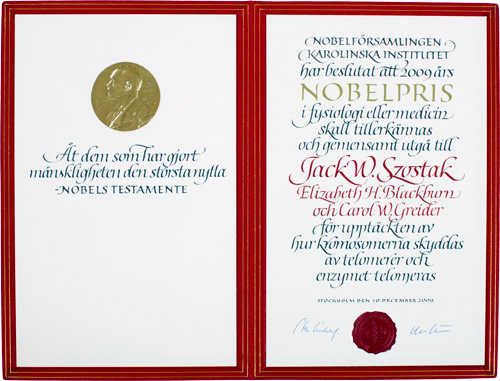
Copyright © The Nobel Foundation 2009
Calligrapher: Susan Duvnäs
Book binder: Ingemar Dackéus
Photo reproduction: Lovisa Engblom
Elizabeth H. Blackburn’s speech at the Nobel Banquet in the Stockholm City Hall, 10 December 2009.
Your Majesties, Your Royal Highnesses, Ladies and Gentlemen.
On behalf of my two co-awardees, Carol Greider and Jack Szostak, and myself, we want to convey our thanks and appreciation to the Karolinska Institutet and to the Nobel Foundation for this very great award. We each feel privileged and deeply honored to be recognized by the Nobel Prize in Physiology or Medicine.
The journeys that have brought each of us here have been long and varied: they range from traveling from Tasmania, Australia, to study in the UK and then in the USA in my case, from the UK to Canada to the USA in Jack’s case, and from California and then later to New York and Baltimore in Carol’s case. Similarly, our scientific journeys have also taken us across a wide spectrum of biology. Why? Because we believe that basic science research is the key to continued advances in, and applications to medicine. Yet biology sometimes reveals its fundamental principles through what may seem at first to be arcane and bizarre.
Consider the tiny pond organism Tetrahymena thermophila – the key to our understanding telomeres and our being able to discover telomerase. I have to tell you about this organism because it is so fascinating – not only does it have many more tiny chromosomes than most organisms, but also, I cannot resist telling you, is has not a mere two sexes as we do, but SEVEN sexes – so who knows what is going on in the water under the still dark surfaces of ponds! And we should not forget our gratitude also to the humble bakers’ and brewers’ yeast – which also, of course, provide us with delicious bread and enjoyable drinks! All three of us believe in the value of basic science as the source of ever deeper understanding and appreciation of our amazing world, an appreciation which is an essential and beautiful aspect of our culture. And, if we had not been able to use these seemingly oddball organisms because of the advantages they offered as experimental systems for biological research, I don’t know when we would have learned about telomeres and telomerase. And sometimes, having the freedom to do novel experiments, as we did, sometimes with obscure creatures, is important. Our early experiments were long shots: but there are times when one should just try something out to see what will happen – even if it does sound a bit crazy! Because our findings have led to medical implications that reach into the realms of human diseases and aging.
Lastly, I and my co-awardees have many people we would like to thank: our families and our scientific teachers, some of whom are here tonight, and our colleagues. And our wholehearted thanks from all three of us go out to all the people of Sweden for this wonderful honor.