William Randal Cremer was born in the small town of Fareham, England, not far from Portsmouth, into a working class family at a time when intense misery was the workingman’s lot …
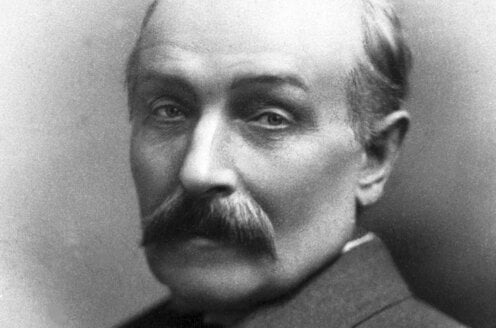
Sir William Randal Cremer was awarded the Nobel Peace Prize for his longstanding and devoted efforts in favour of the ideas of peace and arbitration.

Full name: William Randal Cremer
Born: 18 March 1828, Fareham, United Kingdom
Died: 22 July 1908, London, United Kingdom
Date awarded: 10 December 1903
William Randal Cremer was forced to seek labour from the age of 12, starting at a shipyard and later as a carpenter. His interest in politics emerged early on, and he became a key figure in the trade union movement. He believed that negotiation and arbitration could prevent the outbreak of war. For over 20 years, Cremer represented the liberal workers in Parliament, courageously advocating peace at a time when Great Britain was the world’s leading imperialist. He strongly criticised the government during the bloody South African Boer War (1899-1902). Cremer viewed contact with parliamentarians in other countries as essential. He took the initiative to establish the Inter-Parliamentary Union in 1889. This organisation remains a forum for parliamentarians from all over the world, and is one of Cremer’s major achievements.
“The world has passed through a long night of tribulation and suffering, millions of our fellow creatures have been sacrificed to the demon of war; their blood has saturated every plain and dyed every ocean. But courage, friends, courage! The darkness is ending, a new day is dawning, and the future is ours.”
From Randal Cremer’s Nobel Prize lecture 13 January 1905. Quoted from Les Prix Nobel.
| Inter-Parliamentary Union Founded in 1889 to bring together representatives from various national assemblies for annual debates. Headquartered in Geneva. Works for the peaceful resolution of conflict between nations. Addresses topics such as disarmament, environmental protection, gender equality and current world conflicts. |
William Randal Cremer was raised in poverty in the small town of Fareham, near Portsmouth. He was only a young boy when his father abandoned his family, leaving his mother to feed and support three children. Cremer never forgot his background. In 1906, he declined the King’s offer of knighthood. He changed his mind a year later, however, seeing no reason why a representative of the working class should not receive such an honour. Cremer’s acceptance came with certain conditions: he attended the ceremony in ordinary civilian attire and, as a long-time pacifist, he did not bear a sword.
“There is not a man in this House who will now declare that the Crimean War was a just one, or one that could not have been easily avoided. I am perfectly certain that a rude awakening will come with regard to the South African War.”
William Randal Cremer in ‘Parliament against the Boer War’, autumn 1900. Quoted from Howard Evans: Sir Randal Cremer – his life and work. London 1909 223.
In 1870, Cremer helped to found the International Arbitration League, a peace organisation that he headed until his death in 1908. He donated all of his peace prize money to the IAL. The IAL arranged rallies, lectures and conferences to spread its clear message: arbitration was the most appropriate tool for preventing war. When the union between Norway and Sweden was dissolved by peaceful means in 1905, Cremer was elated. He described the peace treaty, which contained provisions on arbitration, as a masterpiece.
William Randal Cremer was born in the small town of Fareham, England, not far from Portsmouth, into a working class family at a time when intense misery was the workingman’s lot …
Disclaimer: Every effort has been made by the publisher to credit organisations and individuals with regard to the supply of photographs. Please notify the publishers regarding corrections.
Nobel Lecture*, January 15, 1905
For many reasons I regret the delay which has taken place in my appearance here. Ever since the Nobel Committee awarded me the prize, I have been anxious to fulfill the condition which they impose upon the recipient, that he should visit Christiania [Oslo] and deliver an address upon the subject of arbitration and peace.
Several circumstances entirely beyond my control have led to the delay, a delay which I deeply regret and for which I ask you to excuse me.
Travelers anxious to reach their journey’s end, occasionally ask themselves how far they have got and how much farther they have to go before they reach the goal of their hopes. The progress they have made can be easily ascertained, but the remaining distance and possible accidents on the way are more difficult to calculate.
In the time at our disposal this evening, we pilgrims of peace might imitate the traveler and note how many milestones we have passed: whether we have made any real progress, whether we have any cause for rejoicing, whether any – and if so, what – real obstacles are still to be overcome.
For a long time the friends of peace were preaching and saying what ought to be done. I propose to tell you something about what has been done.
First – and I hope that you will agree with me – we have been fortunate in enlisting the sympathies and securing the support of the monarch1 who sits on the British throne and to whom the world owes a debt of gratitude for using his best influence on behalf of the cause of peace. In the past, monarchs have so rarely used their influence in the cause of amity, that the example set by King Edward is the more notable, and one of the most hopeful signs of the times.
Thirty-four years ago, when the organization of which I am secretary2 formulated a plan for the establishment of a “High Court of Nations”, we were laughed to scorn as mere theorists and utopians, the scoffers emphatically declaring that no two countries in the world would ever agree to take part in the establishment of such a court.
Today we proudly point to the fact that the Hague Tribunal has been established3; and notwithstanding the unfortunate blow it received in the early stages of its existence by the Boer War4, and the attempt on the part of some nations to boycott it, there is now a general consensus of opinion that it has come to stay – and thanks to the munificence of Mr. Carnegie, this high court of nations will be provided with a permanent home in a Palace of Peace5.
If evidence had been wanting as to the desirability and usefulness of such a tribunal, the recent “Dogger Bank” incident 6 supplied it. Had there been no tribunal in existence, Russia and Great Britain would probably have taken months to consider whether the so-called outrage was a fit subject to be referred to arbitration, and that delay would have been used by the crimson press to lash the public mind into a state of frenzy and to render a pacific solution impossible. But the very fact that the peaceful machinery was at hand, ready to be set in motion, suggested its employment, and notwithstanding the frantic efforts of some British journals to provoke a conflict, the two governments in a few days agreed to resort to the friendly offices of the Hague Tribunal.
During the last century the number of disputes settled by arbitration or friendly mediation amounted to nearly 200. Many of the disputes were of a trifling character. Some, however, were very serious, the most important of all being the great dispute between the United States and Great Britain with regard to the pirate ship Alabama7.
It was not, however, until the year 1887 that the question entered upon what I regard as its practical stage. Up till that time meetings had been held, conferences arranged, and petitions presented to governments; but the difficulty with which the friends of peace were confronted was, who should begin? What nation would take the lead and make a practical proposal? To meet this difficulty and overcome these objections, memorials8 from members of the British House of Commons were presented to the President and Congress of the United States of America, urging that the governments of the United States and of Great Britain should inaugurate a new era and conclude between them a treaty binding themselves to settle their differences by arbitration.
Of course the scoffers again pooh-poohed the idea that any nations could be found willing to conclude such treaties; but those who ridiculed have been again put to shame, for within the last twelve months, thirteen treaties have been concluded between various nations. The countries that have bound themselves by these obligations are: Great Britain and France; France and Italy; Great Britain and Italy; Denmark and Holland; Great Britain and Spain; France and Spain; France and Holland; Spain and Portugal; Germany and Great Britain; Great Britain, Norway and Sweden; Great Britain and Portugal; Switzerland and Great Britain; Sweden, Norway and Belgium. Seven other treaties have also been drafted, and signed by the government of the United States of America, and the governments of Great Britain, France, Germany, Italy, Spain, Portugal, and Switzerland. With the exception of the treaties with the United States, which yet await the decision of the Senate, all the others are operative, so that today thirteen treaties have the force of international law.
But, say the skeptics, what use are the treaties now that you have got them? To this I make answer that the treaty between France and Great Britain9, although only twelve months old, has been followed by a convention between the two governments in which all the differences between the two countries, some of which had lasted for centuries, have been equitably adjusted and the decisions of the convention endorsed by both parliaments. So today France and Great Britain, whose sons had frequently slaughtered each other and wasted the resources of both nations, are now living on terms of the most cordial friendship without a cloud on the horizon.
Another notable instance is afforded of the advantages of treaties of arbitration. The two South American republics, Chile and Argentina, which had been frequently in conflict, having solemnly bound themselves by treaty to settle their disputes by arbitration, finding that they had no use for their ironclads and vessels of war, have been disposing of them to Russia, Great Britain, and any other power that chooses to purchase them.
The latter affords an excellent illustration of the wisdom of our policy in advocating arbitration first, with the conviction on our part that disarmament would be sure to follow. The one we have always regarded as the means; the other as the end to be attained.
Amongst the advantages which we have contended that nations would reap from entering into treaties of arbitration are, that when differences arose, the disputants would have time for reflection, because, while the arbitrators were deliberating, the passions of the contending parties would cool, and the chances of war be greatly diminished.
Again, at the first rumors of war, the market price of many necessary commodities is affected, especially articles which are crossing the seas and upon which the premium for insurance is increased, all such increases having ultimately to be paid for by the consumer.
Such treaties would also weaken the baneful influence of panic mongers and serve to protect honest investors from being defrauded by stock exchange gamblers. At the first rumors of war, timid investors in various government stock, being panic-stricken, sell out, to their loss and the gamblers’ gain. This evil would be lessened, if not obviated, as investors would not rush to sell out, knowing as they would, that war could not take place until after the dispute had been referred to arbitration.
A notable illustration of the advantages of arbitration is afforded by the late Boer War. If the points in dispute between the two governments had been referred to arbitration, as the Boers desired, the thousands of lives of heroic men and women which were sacrificed, the untimely deaths of 15,378 children in the concentration camps, the devastation wrought, the misery endured, and the 250 millions of money expended, would all have been saved.
So far, I have been referring to some of the good work which has been done, and now I propose to say something about how it has been done.
Thirty-four years ago, the British and French workmen inaugurated a series of conferences and meetings and the circulation of mutual addresses to their countrymen in favor of a better understanding between the peoples10.
These efforts have been continued during the whole of that time and at last have culminated in the Treaty of Arbitration between France and England – the first treaty of that nature concluded between any of the nations of Europe. The example thus set has already led to the series of treaties I have previously referred to.
The victory which has been achieved is therefore a people’s victory, and this is the opinion emphatically expressed by the great French orator and popular leader, Mr. Jaurès11.
I have previously referred to the efforts which were made in 1887 and the following years in favor of an Anglo-American Treaty of Arbitration when two memorials in favor of such a treaty were signed, the first by 234 and the second by 364 members of the British Parliament. These memorials were unique. It was the first instance on record of the members of one parliament addressing the members of another. These influentially signed memorials were supplemented by a unanimous vote of the British House of Commons.
Ultimately a treaty was drafted12, signed by both governments, endorsed by a large majority of the Senate, but failed, for want of three votes, to secure the requisite two-thirds majority. At the present moment, however, another treaty has been signed by the two governments and is now being considered by the Senate.
But out of that failure a new force sprang into existence. That force is now known as the Interparliamentary Union.
The Interparliamentary Conferences, which have led to the formation of that Union, began in 1888 with the meeting of thirty-eight British and French parliamentary representatives at Paris. Since then conferences have been held in London, Rome, Bern, The Hague, Brussels, Budapest, Christiania, Paris, Vienna, and last year at St. Louis. From that small meeting in Paris groups have been formed in every parliament of Europe except Spain.
The Union has now nearly 2,000 adherents, and the latest addition is the formation of a group in the Congress of the United States of America.
The influence and power of the Union is now recognized. The conferences are held in senate chambers, and governments make grants toward the expenses.
When the history of the Union comes to be written, it will be found that during the time when there was considerable friction and danger of war between Italy and France, the appeals made by the Union to the members of the Italian Parliament produced an excellent effect and were largely instrumental in preventing strife between those two nations.
It is also a matter of history that the Czar was induced to issue his Rescript, which led to the Hague Convention, by the proceedings of the conference at Budapest13.
It has also brought into contact with each other and paved the way for a good understanding between the members of the parliaments of Europe and the United States. Its latest achievement was to induce the President of that great country to undertake the task of convening another conference of the nations to complete the work which the Hague Convention left unfinished. To the Union, therefore, is due the credit of having brought about the convention at the Hague which systematized arbitration and provided nations with an alternative method of settling their disputes.
To the Union is also due the credit of influencing President Roosevelt14 to summon another convention, and although the invitations to that convention do not specify that disarmament will be considered, the strong and constantly increasing desire which exists upon the subject – especially in France – will force the convention seriously to consider the cost and danger of armaments and whether they are really peace-preserving, or war-provoking institutions.
The object lesson of the war between Japan and Russia15, with its unparalleled holocaust, will make it practically impossible for the convention to disregard the question of disarmament.
To the industrial classes, the subject is of supreme importance. The workers have to pay, and the workers have to fight.
The task before us is a mighty one. All the vested interests and people who profit by war will – with the journals they control – resolutely oppose any reduction of armaments.
But science is rapidly becoming a powerful auxiliary of peace; the restiveness of the burden bearers and the growing political power of the people are also factors which will have to be reckoned with in the great struggle between the supporters of barbarism, and the higher civilization.
In this brief summary of efforts made and victories won, I have abstained from any reference to the part which I have been privileged to take in promoting the Anglo-American Treaty of Arbitration, which was the first organized effort ever made for such a purpose and which lifted the question on to a higher plane and brought it within the domain of practical politics. Incidentally I may state that every senator of the United States has just received a memorial urging that body to ratify the Anglo-American Treaty of Arbitration which is now before it. The memorial is signed by 7,452 officers of industrial organizations in Great Britain, and these organizations have a membership exceeding two and three-quarter millions.
Concerning the long-continued efforts which were necessary to bring the French and British people into line, the initiation and organization of the first Interparliamentary Conferences, the multifarious labors in the cause of peace in which I have been engaged during the past thirty-four years, I express no opinion, leaving my actions and doings to the judgment of my fellowmen.
Some people, however, appear to have lost heart because Japan and Russia are engaged in a sanguinary conflict. But the most ardent advocates of peace never expected that treaties of arbitration would at once put an end to all wars, any more than those who, when mankind was emerging from barbarism, first framed crude laws and set up rude courts of justice, expected that by so doing all men would immediately cease to fight out their personal differences.
Our forefathers, however, were not disheartened. The courts were continued for those who preferred to use them, and now we seldom hear of individual disputes being settled by brute force. What was formerly the universal practice is now regarded as degrading and brutalizing.
That is what we believe will be the ultimate effect upon nations of concluding treaties and setting up tribunals.
It may be that for a long time some nations will continue to fight each other, but the example of those nations who prefer arbitration to war, law courts to the battlefield, must sooner or later influence the belligerent powers and make war as unpopular as pugilism is now.
Gentlemen, if I have not exhausted my subject, I fear that I must have exhausted my audience.
I cannot, however, conclude without heartily thanking the Nobel Committee for having honored me with their suffrages, awarded me the magnificent prize, and afforded me the opportunity of enabling the International Arbitration League to continue its useful work when I am gone.
It has been the great object of my life to build up and endow a great peace organization which should be powerful enough to combat the forces which make for war, and thanks to the Nobel Committee, I have been able to do a great deal in that direction. Nearly the whole of the fund placed at my disposal has been given to and profitably invested for the use of the League.
My only regret is that I am unable to wholly, instead of partially, complete the endowment. I hope, however, that others may be induced to follow my example, and that before I die I may see the dream of my life realized.
There is still a great work before us. The advocates of peace are, however, no longer regarded as idle dreamers, and I trust that I have convinced you that our cause has, especially of late, made wonderful progress and that we are nearing the goal of our hopes.
The world has passed through a long night of tribulation and suffering, millions of our fellow creatures have been sacrificed to the demon of war; their blood has saturated every plain and dyed every ocean.
But courage, friends, courage ! The darkness is ending, a new day is dawning, and the future is ours.
Hurrah! Hurrah!
* The lecture text is taken from Les Prix Nobel en 1903. The Oslo Dagbladet for January 16, 1905, described the laureate as possessing a stocky build, swarthy complex: ion, bald head, grey mustache, and tinted glasses, and said that he read expertly, his voice strong and distinct.
1. Edward VII (1841-1910), called the Peacemaker, king of England (1901-1910).
2. The International Arbitration League; the proposed constitution of a “High Court of Nations”, is carried in pp. 84-85 of Sir Randal Cremer by Howard Evans.
3. By the Hague Peace Conference of 1899.
5. Andrew Carnegie (1835-1919), American industrialist and philanthropist, donated $1,500,000 in 1903 for the construction of the Palace of Peace at The Hague as a home for the Permanent Court of Arbitration (Hague Tribunal) and as a library of international law; the building was dedicated on August 28, 1913.
6. The Dogger Bank, or Hull, incident occurred on October 21, 1904, when a Russian fleet on its way through the North Sea fired on English fishing trawlers at Dogger Bank. One vessel was sunk. The remaining trawlers, five of them seriously damaged, put into Hull, England, on October 23, with two killed and six wounded. The Russians claimed to have been attacked by Japanese torpedo boats mingling with the Hull trawlers. Although British public opinion was outraged, Britain referred the matter to an International Commission of Inquiry which, on February 26, 1905, reported its opinion that since “there was no torpedo boat either among the trawlers nor on the spot, the fire opened by Admiral Rozhdestvensky was not justifiable.” On March 9, the Russian ambassador handed to the secretary of state for Foreign Affairs an indemnity of £65,000.
7. During the American Civil War, a British shipyard constructed the Alabama for the Confederacy. Armed with British weapons received at sea and manned by a Southern captain, with a partially British crew, the Alabama destroyed Northern shipping in 1863. In 1871 the United States’ claims arising from this destruction were submitted to arbitration at Geneva, and in 1872 a decision in favor of the United States was accepted.
8. Memorials (or resolutions) were presented on two occasions, 1887 and 1893, Cremer taking the leading role each time.
9. The Anglo-French Treaty of Arbitration, first of its kind in history, was signed on October 14, 1903, going into effect before general agreement on pending difficulties was concluded. These difficulties, which included problems in Egypt, Morocco, New-foundland, New Hebrides, and Siam, were adjusted by April, 1904, and the arguments published.
10. In 1871, Cremer formed the Workmen’s Peace Association. A similar organization was founded at about the same time in Paris. At a conference in Paris in 1875 fifty British delegates led by Cremer joined with 100 French delegates led by Auguste Desmoulins in establishing the Workmen’s Peace Committee to advance the international aspects of the peace crusade.
11. Jean Léon Jaurès (1859-1914), French politician, leader of the Socialists in the Chambre des Députés, founder (with Briand) and editor of L’Humanité (1904-1914).
12. The Anglo-American Arbitration Treaty (1897).
13. There was no official Russian delegate to the seventh Interparliamentary Union Conference in Budapest (September 23-25, 1896), but a Russian consul in Budapest, acting as an observer, sent to the Russian government a copy of the resolutions passed and later, as a member of the Foreign Office, to the Czar when concern about international armaments arose.
14. Czar Nicholas II is generally given credit for the actual convening of the second Hague Peace Conference in 1907. Cremer is referring to President Theodore Roosevelt’s remarks of September 24, 1904, to delegates from the recently adjourned Interparliamentary Union meetings in St. Louis when he said, “In response to your resolutions, I shall at an early date ask the other nations to join in a second congress at The Hague”, and to his fulfillment of this promise in the following month by the issuance of a circular note through Secretary of State Hay to his counterparts in other nations urging the calling of such a conference.
15. February 8, 1904 – August 29, 1905
The Nobel Foundation's copyright has expired.On Randal Cremer from Inter-Parliamentary Union
Welcome by Jorgen Gunnarsson Løvland*, Chairman of the Nobel Committee, on January 15, 1905
I have the honor to extend to you a warm welcome. That you have come here, despite your age and despite the long journey in an inclement season of the year, is proof to us of the untiring energy you have for so many years devoted to the great cause which you have served with such enthusiasm and with such success. Our best wish for you is that you may see the ideas of peace and arbitration flourish and gain in strength and influence, and that you – having yourself so nobly given concrete expression to it by the use you have made of your Nobel Prize – may see this work assured for the future.
* Mr. Løvland, also at this time minister of public works of the Norwegian government, introduced the laureate to a large audience in the Hals Brothers Concert Hall in Oslo at 5:00 p.m. on January 15, 1905. He first introduced his guest to the audience in Norwegian in a very short speech summarized in the Oslo Aftenposten for January 16, 1905. The newspaper reports that he spoke of Mr. Cremer as being an outstanding member of the British Parliament, a representative of the British people and, in particular, a representative of the British workers. He then welcomed Cremer in English. The text of this speech in English is not extant. The Aftenposten for January 16, 1905, however, published a translation in Norwegian which serves as the text for the present translation. It is given here in lieu of the presentation speech since none was made at the award ceremony on December 10, 1903.
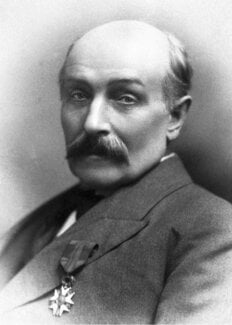 William Randal Cremer (March 18, 18281-July 22, 1908) was born in the small town of Fareham, England, not far from Portsmouth, into a working class family at a time when intense misery was the workingman’s lot. His father, a coach painter, deserted the family while the boy was still an infant. His mother, an indomitable woman, raised her son and two daughters despite stringent poverty and even sent her son to school – a church school, for she was a strong Methodist. At fifteen he was apprenticed to an uncle in the building trades, eventually becoming a full-fledged carpenter. During this time he supplemented his meager formal education by attending lectures. On one occasion he heard a lecture on peace in which the speaker suggested that international disputes be settled by arbitration, an idea that Cremer never forgot.
Cremer moved to London in 1852. There his capacity for administration was recognized in 1858 when, at the age of thirty, he was elected to a council of those running a campaign for the nine-hour day; later in that year he was one of seven who directed labor during a lockout of 70,000 men. He was instrumental in forming a single union for his trade: the Amalgamated Society of Carpenters and Joiners; he participated in the formation of the International Working Men’s Association but withdrew his support when the Association was taken over by more revolutionary thinkers.
Inevitably, it occurred to Cremer that labor should be actively represented in Parliament. He stood for Warwick in 1868 on a liberal platform calling for the vote by ballot, compulsory education, Irish disestablishment, direct taxation, land reform, amendment of the laws governing labor unions, creation of courts of conciliation to handle labor-management disputes and of international boards of arbitration to adjudicate disputes among nations. He was defeated then and again in 1874. But after the third Reform Bill of 1885 created the new constituency of Haggerston in suburban London, which consisted almost entirely of workingmen, he was elected to Parliament in 1885, 1886, and 1892. Defeated in 1895, he was reelected in 1900, retaining his seat until his death.
Cremer used his power as a member of Parliament and his prestige as a labor leader to advance his passionate belief that peace was the only acceptable state for mankind and arbitration the method by which it could be achieved. A committee of workingmen which he formed in 1870 to promote England’s neutrality during the Franco-Prussian conflict became the Workmen’s Peace Association in 1871 and it, in turn, provided the keystone for the International Arbitration League, an association to which he thereafter contributed both his time and his money.
In 1887, two years after entering Parliament, Cremer secured 234 signatures of members of Commons to a resolution addressed to the President and the Congress of the United States urging them to conclude with the government of Great Britain a treaty stipulating that disputes arising between the two governments which defied settlement by diplomacy should be referred to arbitration. In that same year Cremer, heading a delegation of British statesmen, presented the resolution to President Cleveland.
The resolution excited the interest of Frédéric Passy and other French deputies who invited Cremer and his colleagues to an exploratory meeting in Paris in 1888. As a result of this meeting the Interparliamentary Union2 was formed and its first meeting held in Paris in 1889, with representatives from eight nations in attendance. Cremer was elected vice-president of the Union and secretary of the British section.
Cremer was a lonely man: his first wife died in 1876, his second in 1884; there were no children. He lived simply, enjoyed nature, worked long hours. He was also a generous man. The cash value of the Nobel Peace Prize in 1903 was about £8,000. He immediately gave £7,000 to the League of which he was secretary and later an additional £1,000.
Stricken by pneumonia, he died on July 22, 1908.
| Selected Bibliography |
| Cremer, William Randal, «Parliamentary and Interparliamentary Experiences», The Independent, 61 (August 30, 1906) 508-513. |
| Davis, Hayne, «Cremer and the Interparliamentary Union», The Independent, 61 (July 19, 1906) 126-131. |
| Dictionary of National Biography: Twentieth Century Supplement, 1901-1911. London, Oxford University Press, 1912. |
| Efremov, Ivan N., «La Conciliation internationale», Recueil des cours, 18 (1927) 1-148. The Hague, Académie de droit international. The history of arbitration during the Cremer period is covered in pp. 5-62. |
| Evans, Howard, Sir Randal Cremer: His Life and Work. London, T. Fisher Unwin, 1909. |
| François, M.J.P.A., «La Cour permanente d’arbitrage: son origine, sa jurisprudence, son avenir», Recueil des cours, 87 (1955) 457-553. The Hague, Académie de droit international. |
| Obituary, the (London) Times (July 23, 1908) 13. |
| Ralston, Jackson H., International Arbitration: From Athens to Locarno. Stanford, Stanford University Press, 1929. |
1. Les Prix Nobel, the Dictionary of National Biography, the (London) Times, Who’s Who, the Guide to Periodical Literature, and the Annual Register give 1838 as the year of Cremer’s birth. Sir Randal’s biographer, Howard Evans, gives 1828. Investigation confirms this latter date. The following entry appears in the baptismal register of the Wesleyan Chapel, Daniel Street, Portsea, Portsmouth (RG4/563): «William Randall, son of George Morris and Harriett Cremer, was born March 18, 1828, and baptized July 6th, 1828. Residence Fareham by me, W. Toase, Minister.» This information was sent to the editor by C.F. Coghlan, correspondent and trustee of the Cremer Cottages Charity, in a letter dated October 21, 1969, Fareham, Hants, England. The name Randall is here written with two «l’s», but Cremer always wrote his name with one «l».
2. See biography of Frédéric Passy, co-recipient of the Nobel Peace Prize for 1901.
This autobiography/biography was written at the time of the award and first published in the book series Les Prix Nobel. It was later edited and republished in Nobel Lectures. To cite this document, always state the source as shown above.
1832 – 1910
Dramatist, author, poet, prominent Norwegian patriot
Liberal
Bjørnson finished Upper Secondary School in 1852 and then became a journalist. He wrote literary reviews and short stories. In 1857 he made his literary debut with the peasant tale Synnøve Solbakken. He was instructor and artistic leader at the Norwegian Theater in Bergen 1857-1859. At that time he also started working as an editor and politician. He was co-editor of Aftenposten in Kristiania (Oslo) 1859-1860, but then he went abroad. Bjørnson became one of the greatest Norwegian poets with an international reputation. In 1903 he was awarded the Nobel Prize in Literature.
Politically, Bjørnson was a radical, liberal intellectual. With voice and pen, he defended nationalism, liberalism and progress. His political activity reached a peak in the 1880s, when Norwegian liberals were struggling for a parliamentary system and increased autonomy within the Swedish-Norwegian union. At that time, however, he also became a strong proponent of the cause of peace, and believed that Norway could play an important role in its progress. While being in favour of increased autonomy for his own country, he got opposed to nationalist policies that might lead to war. In the mid-1890s there was a crisis in the Swedish-Norwegian relationship. Bjørnson then became unpopular for demanding that the crisis be liquidated by arbitration. He got unpopular both in Norway and Sweden when he suggested that Russia should be given rights of transit across northern Norway to the Atlantic. (Russia wanted access to icefree harbours). Why, he asked, should “a line on the map” put an end to “that love of neighbour to which we are everywhere obligated”? By contemporary standards, Bjørnson’s engagement for peace was broad. He supported Emile Zola in the Dreyfus affair, and generally got engaged in the struggle against persecution and oppression of individuals and minority groups. He was concerned with the social problems of his time, and demanded universal suffrage. He also came to see himself as a socialist, but hoped for the class struggle to be peacefully resolved. Bjørnstjerne Bjørnson was the most famous member of the Nobel Committee of the Norwegian Storting 1897-1906.
Back to the list of Norwegian Nobel Committee members 1901-2017