For four decades Lester Bowles Pearson has been noted for his diplomatic sensitivity, his political acumen, and his personal popularity …
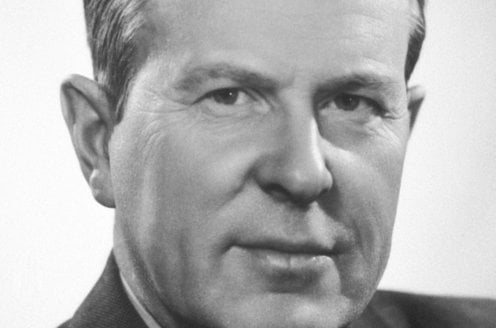
Lester Bowles Pearson was awarded the Nobel Peace Prize for his crucial contribution to the deployment of a United Nations Emergency Force in the wake of the Suez Crisis.
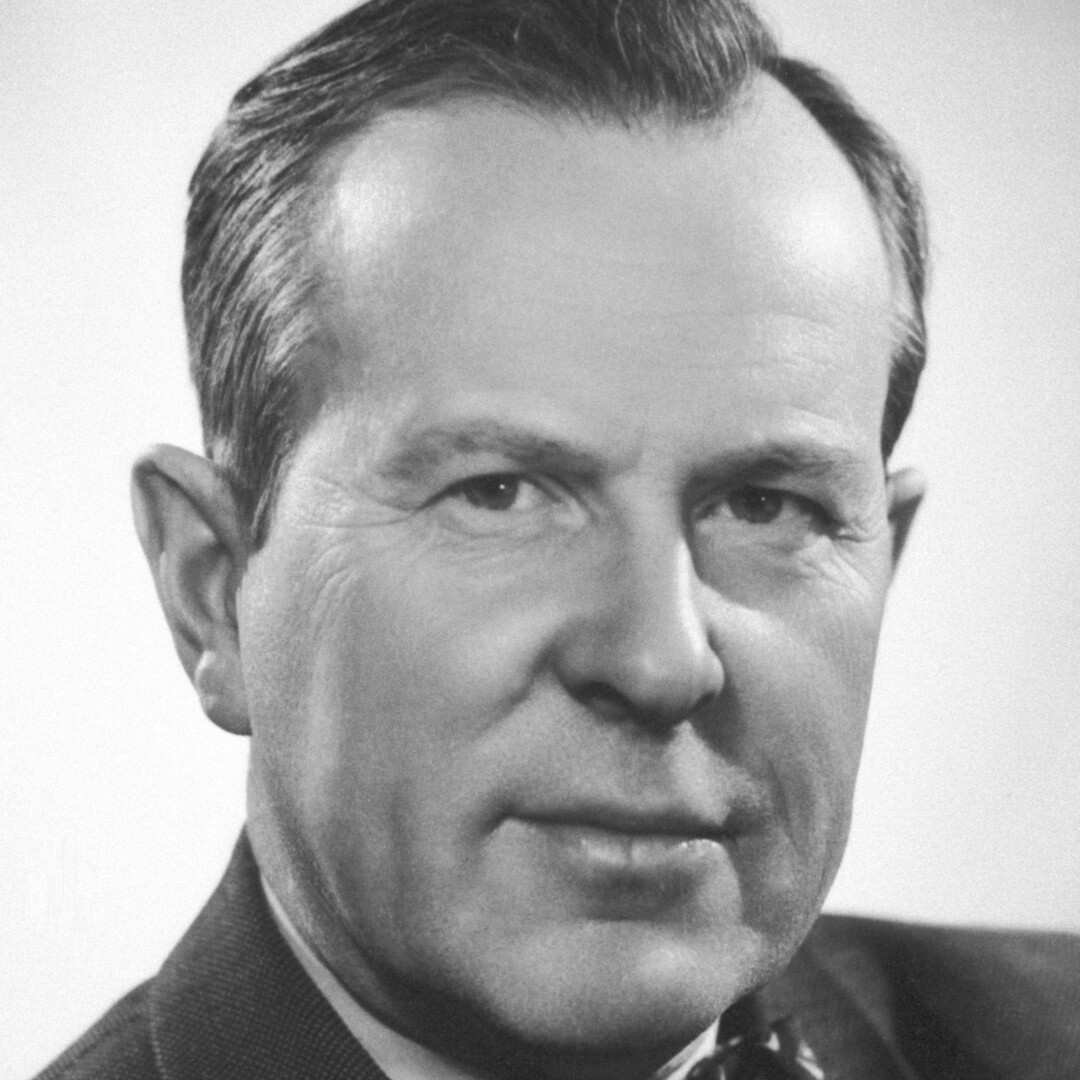
Full name: Lester Bowles Pearson
Born: 23 April 1897, Toronto, Canada
Died: 27 December 1972, Ottawa, Canada
Date awarded: 3 October 1957
Lester Pearson worked for the Canadian Department of External Affairs. As a diplomat, he witnessed the collapse of the League of Nations in the 1930s and the outbreak of WWII. During the war, he took part in preparations to establish the UN. He was favoured to become the UN’s first secretary-general, but the Soviets opposed him on the grounds that he was too pro-British. In 1952 Pearson became president of the UN General Assembly. Four years later, Great Britain, France and Israel attacked Egypt after the country nationalised the Suez Canal. The USA was not informed, and the Soviet Union threatened to use atomic weapons against the aggressors. The “Suez Crisis” was resolved when Lester Pearson gained support for a plan to send UN forces into the area to separate the warring parties.
“Lester Pearson’s vision is not that of a dreamer. He looks at life and the conditions of the world as they are, basing his conclusions on realities.”
Gunnar Jahn, Presentation Speech, 11 December 1957.
Pearson was serving as Canadian ambassador to the USA when the UN was founded in San Francisco in 1945. He tried to prevent the major powers from obtaining veto rights in the Security Council, where key UN decisions would be taken. Although his efforts were unsuccessful, many delegates actively supported him for the first UN secretary-general. Despite a majority in favour of Pearson, the Soviet Union threatened to veto any candidate from the “Anglo-American block.” Lester Pearson was therefore passed over in favour of the compromise candidate, Norwegian Minister of Foreign Affairs Trygve Lie.
“The nation at war now means literally all the people at war, and it can add new difficulties to the making or even the maintenance of peace.”
Lester Pearson, Nobel Prize lecture, 11 December 1957.
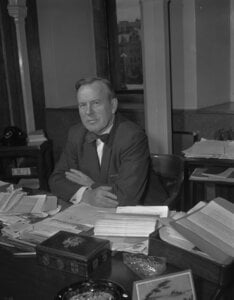
When Great Britain, France and Israel attacked Egypt in the fall of 1956, UN Secretary-General Dag Hammarskjöld tried to mediate, but the French and British used their vetoes in the Security Council to counter all proposals. Pearson then proposed that the UN send its own forces to separate the Egyptians and Israelis. The forces would also take control of regions occupied by the French and British. Pearson’s proposal was unanimously adopted by the Security Council. The first UN military forces consisted of soldiers from Colombia, Denmark, Finland, India, Indonesia, Norway, Sweden and Yugoslavia.
“Lester Pearson is a big man from a country that is a small power.”
US newspaper The New York Times, May 1956.
For four decades Lester Bowles Pearson has been noted for his diplomatic sensitivity, his political acumen, and his personal popularity …
Disclaimer: Every effort has been made by the publisher to credit organisations and individuals with regard to the supply of photographs. Please notify the publishers regarding corrections.
Lester Bowles Pearson’s Acceptance Speech, on the occasion of the award of the Nobel Peace Prize in Oslo, December 10, 1957
May I thank you, Mr. Chairman, for your very kind and generous words. I am sorry that I am not sufficiently educated to have understood them in Norwegian but I was able to detect two words, “Lester Pearson”. They seemed to me to recur all too frequently but I suppose that in the circumstance it was hard to avoid that.
I am very conscious of the fact this morning that I have received an honour that cannot fail to arouse deep emotion in the heart of the recipient. My feeling of pride and honour is increased by the presence here today of His Majesty and Her Royal Highness and by the fact, sir, that you are presiding over the ceremonies.
I realise also that I share this honour with many friends and colleagues who have worked with me for the promotion of peace and good understanding between peoples. I am grateful for the opportunities I have been given to participate in that work as a representative of my country, Canada, whose people have, I think, shown their devotion to peace.
I am deeply aware of the fact that in receiving this honour I am entering a company of men and women who have served humanity with unselfish and constructive devotion. They include, I know, two great Norwegians, Christian Lange and Fridtjof Nansen. I feel very proud and humble at having my name now linked with such men, because of the choice that you, sir, and the members of your honourable committee have made.
I am particularly happy to be able to receive this prize in Norway, a country which has so well discharged its duty to the international community and to Peace.
Alfred Nobel, not himself a Norwegian, recognised this when he conferred on Norway through your Committee the honour and responsibility of making the Peace Award.
On this occasion I wish to pay my sincere tribute to this great Swedish man of vision and action, who worked hard, lived nobly and ensured that his influence for good would extend far beyond his own life time.
Alfred Nobel decreed that this award should be conferred on someone who, in the opinion of the Committee, should have done the most or the best work to promote fraternity between nations for the abolition and reduction of standing armies and for the holding and promotion of peace congresses.
As to the first, I do not know that I have done very much myself to promote fraternity between nations but I do know that there can be no more important purpose for any man’s activity or interests.
So far as abolishing arms are concerned, those of Nobel’s day are now out of date, but I know, as you do, that if the arms which man’s genius has created today to replace them are ever used they will destroy us all. So they must be themselves destroyed.
As for the promotion of peace congresses we have had our meetings and assemblies, but the promotion through them of the determined and effective will to peace displaying itself in action and policy remains to be achieved.
Alfred Nobel – with a whimsical touch – once said:
“I would not leave anything to a man of action as he would be tempted to give up work; on the other hand, I would like to help dreamers as they find it difficult to get on in life.”
Perhaps this sentiment should have a special appeal for Norwegians who, though adept in overcoming difficulties by practical action, have been described as a “people who luxuriated in the wealth of their dreams.”
Of all our dreams today there is none more important – or so hard to realise – than that of peace in the world. May we never lose our faith in it or our resolve to do everything that can be done to convert it one day into reality.
The great Ibsen has one of his characters in the play “The Emperor and The Galilean” say:
“There are three Empires. First there is the Empire which was founded on the tree of knowledge. Then there is the Empire founded on the tree of the Cross. The third is still a secret Empire which will be founded on the tree of knowledge and the tree of the Cross – brought together.”
The award which I have received today at this ceremony, which my wife and I will always remember with emotion, is a renewed incentive to work with all other men of good will in the world for the triumph of Ibsen’s third Empire, that of the Empire of Peace.
On Lester Bowles Pearson from Nobel Peace Center
On Lester B. Pearson from the United Nations
On Lester Bowles Pearson from Parliament of Canada
Nobel Lecture*, December 11, 1957
I cannot think of anything more difficult than to say something which would be worthy of this impressive and, for me, memorable occasion, and of the ideals and purposes which inspired the Nobel Peace Award.
I would like, at the very beginning, to pay my tribute to the memory of a great man, Alfred Nobel, who made this award – and others – possible. Seldom in history has any man combined so well the qualities of idealism and realism as he did – those of the poet and the practical man of business. We know all about his dynamite and his explosives and how he lamented the use to which they would be put. Yet ideas can also be explosive, and he had many that were good and were deeply concerned with peace and war. He liked to write and talk about the “rights of man and universal brotherhood”, and no one worked harder or more unselfishly to realize those ideals, still so far away.
At this moment I am particularly conscious of the wisdom of one of his observations that “long speeches will not ensure peace”.
May I also express my great pleasure at being again in Norway, a country to which my own is so closely bound by ties of friendship, freedom, and understanding. I have worked in a very close and cordial way with Norwegian representatives at many international meetings, and the pleasure I felt at those associations was equaled only by the profit I always secured from them.
Perhaps I may be pardoned for putting any words I may have to say about peace within the framework of my own personal experience. During my lifetime greater and more spectacular progress has been made in the physical sciences than in many centuries that preceded it. As a result, the man who lived in 1507 would have felt more at home in 1907 than one who died fifty years ago if he came back to life today.
A great gulf, however, has been opened between man’s material advance and his social and moral progress, a gulf in which he may one day be lost if it is not closed or narrowed. Man has conquered outer space. He has not conquered himself. If he had, we would not be worrying today as much as we are about the destructive possibilities of scientific achievements. In short, moral sense and physical power are out of proportion.
This imbalance may well be the basic source of the conflicts of our time, of the dislocations of this “terrible twentieth century”.
All of my adult life has been spent amidst these dislocations, in an atmosphere of international conflict, of fear and insecurity. As a soldier, I survived World War I when most of my comrades did not. As a civilian during the Second War, I was exposed to danger in circumstances which removed any distinction between the man in and the man out of uniform. And I have lived since – as you have – in a period of cold war, during which we have ensured by our achievements in the science and technology of destruction that a third act in this tragedy of war will result in the peace of extinction.
I have, therefore, had compelling reason, and some opportunity, to think about peace, to ponder over our failures since 1914 to establish it, and to shudder at the possible consequences if we continue to fail.
I remember particularly one poignant illustration of the futility and tragedy of war. It was concerned, not with the blood and sacrifice of battles from 1914-1918, but with civilian destruction in London in 1941 during its ordeal by bombing.
It was a quiet Sunday morning after a shattering night of fire and death. I was walking past the smoking ruins of houses that had been bombed and burned during the night. The day before they had been a neat row of humble, red brick, workmen’s dwellings. They were now rubble except for the front wall of one building, which may have been some kind of community club, and on which there was a plaque that read “Sacred to the memory of the men of Alice Street who died for peace during the Great War, 1914-1918”. The children and grandchildren of those men of Alice Street had now in their turn been sacrificed in the Greater War, 1939-1945. For peace? There are times when it does not seem so.
True there has been more talk of peace since 1945 than, I should think, at any other time in history. At least we hear more and read more about it because man’s words, for good or ill, can now so easily reach the millions.
Very often the words are good and even inspiring, the embodiment of our hopes and our prayers for peace. But while we all pray for peace, we do not always, as free citizens, support the policies that make for peace or reject those which do not. We want our own kind of peace, brought about in our own way.
The choice, however, is as clear now for nations as it was once for the individual: peace or extinction. The life of states cannot, any more than the life of individuals, be conditioned by the force and the will of a unit, however powerful, but by the consensus of a group, which must one day include all states. Today the predatory state, or the predatory group of states, with power of total destruction, is no more to be tolerated than the predatory individual.
Our problem, then, so easy to state, so hard to solve, is how to bring about a creative peace and a security which will have a strong foundation. There have been thousands of volumes written by the greatest thinkers of the ages on this subject; so you will not expect too much from me in a few sketchy and limited observations. I cannot, I fear, provide you, in the words of Alfred Nobel, with “some lofty thoughts to lift us to the spheres”.
My aim this evening is a more modest one. I wish to look at the problem in four of its aspects – my “four faces of peace”. There is peace and prosperity or trade, peace and power, peace and policy or diplomacy, peace and people.
Peace and Prosperity
One face of peace is reflected in the prosperity of nations. This is a subject on which thought has changed greatly within the memories of most of us and is now, I submit, in process of rapid further change.
Not so long ago prominence was always given to economic factors as causes of war. That was at a time when people sought more assiduously than we now do for rational causation in human behavior. To the philosophers of the nineteenth century it seemed that there must be a motive of real self-interest, of personal gain, that led nations into conflict. To some extent there was. But in this century we have at least learned to understand more fully the complexity of motives that impel us both as individuals and as nations. We would be unwise to take any credit for that. The cynic might well remark that never has irrationality been so visible as in our times, and especially in relation to war.
We know now that in modern warfare, fought on any considerable scale, there can be no possible economic gain for any side. Win or lose, there is nothing but waste and destruction. Whatever it is that leads men to fight and suffer, to face mutilation and death, the motive is not now self-interest in any material sense.
If, however, we no longer stress so much economic factors as the direct cause of war, that does not lessen their importance in the maintenance of a creative and enduring peace. Men may not now go to war for trade, but lack of trade may help to breed the conditions in which men do go to war. The connection is not simple. Rich nations are not necessarily more peace-loving than poorer nations. You do not have to have poverty and economic instability; people do not have to be fearful about their crops or their jobs in order to create the fears and frustrations and tensions through which wars are made. But poverty and distress – especially with the awakening of the submerged millions of Asia and Africa – make the risks of war greater.
It is already difficult to realize that a mere twenty years ago poverty was taken almost for granted over most of the earth’s surface. There were always, of course, a few visionaries, but before 1939 there was little practical consideration given to the possibility of raising the living standards of Asia and Africa in the way that we now regard as indispensable. Perhaps only in North America every man feels entitled to a motor car, but in Asia hundreds of millions of people do now expect to eat and be free. They no longer will accept colonialism, destitution, and distress as preordained. That may be the most significant of all the revolutionary changes in the international social fabric of our times.
Until the last great war, a general expectation of material improvement was an idea peculiar to Western man. Now war and its aftermath have made economic and social progress a political imperative in every quarter of the globe. If we ignore this, there will be no peace. There has been a widening of horizons to which in the West we have been perhaps too insensitive. Yet it is as important as the extension of our vision into outer space.
Today continuing poverty and distress are a deeper and more important cause of international tensions, of the conditions that can produce war, than previously. On the other hand, if the new and constructive forces which are at work among areas and people, stagnant and subdued only a few years ago, can be directed along the channels of cooperation and peaceful progress, it should strengthen mankind’s resistance to fear, to irrational impulse, to resentment, to war.
Arnold Toynbee1 voiced this hope and this ideal when he said: “The twentieth century will be chiefly remembered by future generations not as an era of political conflicts or technical inventions, but as an age in which human society dared to think of the welfare of the whole human race as a practical objective.”
I hope he was not too optimistic.
It is against this background that we should, I suggest, reassess our attitude to some ideas about which we have of late been too indifferent. It has been fashionable to look on many of our nineteenth-century economic thinkers as shallow materialists. We have, for instance, made light of the moral fervor and high political purpose that lay behind such an idea as free trade. Yet the ideals to which Richard Cobden2 gave the most articulate expression, at least in the English-speaking world, were not ideals about commerce alone. They visualized a free and friendly society of nations, for whom free trade was at once a result and a cause of good relations. It is a bitter commentary on our twentieth-century society that the very phrase “free trade” has come to have a hopelessly old-fashioned and unrealistic ring to it.
We all recognize that in the depressed and disturbed economic conditions between the wars an upsurge of economic nationalism was inevitable. But why should so many be so ready to go on thinking in the same terms when the conditions that produced them are now different?
We are too inclined to assume that man’s today is more like his yesterday than like the day before yesterday. In some respects, I submit, the economics of our day are less different from those of nineteenth-century expansionism than they are from the abnormal period of depression and restrictionism that, just because it is nearer in time; still dominates much of our economic thinking.
The scientific and technological discoveries that have made war so infinitely more terrible for us are part of the same process that has knit us all so much more closely together. Our modern phrase for this is interdependence. In essence, it is exactly what the nineteenth-century economist talked about as the advantages of international specialization and the division of labor. The main difference is that excessive economic nationalism, erecting its reactionary barriers to the international division of labor, is far more anomalous and irrational now than it was when the enlightened minds of the nineteenth century preached against it and for a time succeeded in having practiced what they preached.
The higher the common man sets his economic goals in this age of mass democracy, the more essential it is to political stability and peace that we trade as freely as possible together, that we reap those great benefits from the division of labor, of each man and each region doing what he and it can do with greatest relative efficiency, which were the economic basis of nineteenth-century thought and policy. In no country is this more clearly understood than in Norway and in no country is the impulse to peace deeper or more widespread.
In this sphere, our postwar record is better than it is fashionable to recognize. Under the General Agreement on Tariffs and Trade3 there has been real progress in reducing trade barriers and in civilizing the commercial policies of national governments. The achievement so far has its limits, of course, and there have been setbacks, but there has been more progress, and over a wider area, than any of us would have dared to predict with confidence twelve years ago.
Now the European nations are launching themselves, through the Common Market and its associated free trade area4, on an adventure in the economic unification of peoples that a few years ago would have seemed completely visionary. Is it any more visionary to foresee a further extension of this cooperative economic pattern? Is it not time to begin to think in terms of an economic interdependence that would bridge the Atlantic, that would at least break down the barrier between dollar and non-dollar countries which, next only to Iron Curtains, has hitherto most sharply divided our postwar One World?
You will say that this is far too unrealistic. I can only reply that in the past decade we have already seen even more profound revolutions in men’s political and social attitudes. It would be especially tragic if the people who most cherish ideals of peace, who are most anxious for political cooperation on a wider than national scale, made the mistake of underestimating the pace of economic change in our modern world.
Just as we cannot in this day have a stable national democracy without progress in living standards and a sense that the community as a whole participates in those standards, without too great extremes of wealth and poverty, likewise we cannot have one world at peace without a general social and economic progress in the same direction. We must have rising living standards in which all nations are participating to such a degree that existing inequalities in the international division of wealth are, at least, not increased. For substantial progress on those lines we need the degree of efficiency that comes only with the freest possible movement of commerce through the world, binding people together, providing the basis of international investment and expansion, and thereby, I hope, making for peace.
Peace and Power
I now come to peace and power.
Every state has not only the right but the duty to make adequate provision for its own defense in the way it thinks best, providing it does not do so at the expense of any other state. Every state denies and rejects any suggestion that it acquires military power for any other purpose than defense. Indeed, in a period of world tension, fear, and insecurity, it is easy for any state to make such denial sound reasonable, even if the ultimate aims and policies of its leaders are other than pacific.
No state, furthermore, unless it has aggressive military designs such as those which consumed Nazi leaders in the thirties, is likely to divert to defense any more of its resources and wealth and energy than seems necessary. The economic burden of armaments is now almost overpowering, and where public opinion can bring itself effectively to bear on government, the pressure is nearly always for the greatest possible amount of butter and the fewest possible number of guns.
Nevertheless, defense by power as a first obligation on a state has to be considered in relation to things other than economics. For one thing – and this is certainly true of smaller countries – such power, unless it is combined with the defense forces of other friendly countries, is likely to be futile, both for protection and for prevention, or for deterrence, as we call it. This in its turn leads to coalitions and associations of states. These may be necessary in the world in which we live, but they do extend the area of a possible war in the hope that greater and united power will prevent any war. When they are purely defensive in character, such coalitions can make for peace by removing the temptation of easy victory. But they can never be more than a second-best substitute for the great coalition of the whole United Nations established to preserve the peace, but now too often merely the battleground of the cold war.
Furthermore, the force which you and your allies collect for your own security can, in a bad international climate, increase, or seem to increase, someone else’s insecurity. A vicious chain reaction begins. In the past, the end result has always been, not peace, but the explosion of war. Arms, produced by fear out of international tension, have never maintained peace and security except for limited periods. I am not arguing against their short-run necessity. I am arguing against their long-run effectiveness. At best they give us a breathing space during which we can search for a better foundation for the kind of security which would itself bring about arms reduction.
These coalitions for collective defense are limited in area and exclusive in character. And they provoke counter-coalitions. Today, for instance, we have now reached the point where two – and only two – great agglomerations of power face each other in fear and hostility, and the world wonders what will happen.
If the United Nations were effective as a security agency – which it is not – these more limited arrangements would be unnecessary and, therefore, undesirable. But pending that day, can we not put some force behind the United Nations which – under the authorization of the Assembly – might be useful at least for dealing with some small conflicts and preventing them from becoming great ones?
Certainly the idea of an international police force effective against a big disturber of the peace seems today unrealizable to the point of absurdity. We did, however, take at least a step in the direction of putting international force behind an international decision a year ago in the Suez crisis. The birth of this force was sudden and it was surgical. The arrangements for the reception of the infant were rudimentary, and the midwives – one of the most important of whom was Norway – had no precedents or experience to guide them. Nevertheless, UNEF5, the first genuinely international police force of its kind, came into being and into action.
It was organized with great speed and efficiency even though its functions were limited and its authority unclear. And the credit for that must go first of all to the Secretary-General of the United Nations6 and his assistants.
Composed of the men of nine United Nations countries from four continents, UNEF moved with high morale and higher purpose between national military forces in conflict. Under the peaceful blue emblem of the United Nations, it brought, and has maintained, at least relative quiet on an explosive border. It has supervised and secured a cease-fire.
I do not exaggerate the significance of what has been done. There is no peace in the area. There is no unanimity at the United Nations about the functions and future of this force. It would be futile in a quarrel between, or in opposition to, big powers. But it may have prevented a brush fire becoming an all-consuming blaze at the Suez last year, and it could do so again in similar circumstances in the future.
We made at least a beginning then. If, on that foundation, we do not build something more permanent and stronger, we will once again have ignored realities, rejected opportunities, and betrayed our trust. Will we never learn?
Today, less than ever can we defend ourselves by force, for there is no effective defense against the all-destroying effect of nuclear missile weapons. Indeed, their very power has made their use intolerable, even unthinkable, because of the annihilative retaliation in kind that such use would invoke. So peace remains, as the phrase goes, balanced uneasily on terror, and the use of maximum force is frustrated by the certainty that it will be used in reply with a totally devastating effect. Peace, however, must surely be more than this trembling rejection of universal suicide.
The stark and inescapable fact is that today we cannot defend our society by war since total war is total destruction, and if war is used as an instrument of policy, eventually we will have total war. Therefore, the best defense of peace is not power, but the removal of the causes of war, and international agreements which will put peace on a stronger foundation than the terror of destruction.
Peace and Policy
The third face of peace, therefore, is policy and diplomacy. If we could, internationally, display on this front some of the imagination and initiative, determination and sacrifice, that we show in respect of defense planning and development, the outlook would be more hopeful than it is. The grim fact, however, is that we prepare for war like precocious giants and for peace like retarded pygmies.
Our policy and diplomacy – as the two sides in the cold war face each other – are becoming as rigid and defensive as the trench warfare of forty years ago, when two sides dug in, dug deeper, and lived in their ditches. Military moves that had been made previously had resulted in slaughter without gain; so, for a time, all movement was avoided. Occasionally there was almost a semblance of peace.
It is essential that we avoid this kind of dangerous stalemate in international policy today. The main responsibility for this purpose rests with the two great world powers, the United States and the U.S.S.R. No progress will be made if one side merely shouts “coexistence” – a sterile and negative concept – and “parleys at the summit”, while the other replies “no appeasement”, “no negotiation without proof of good faith”.
What is needed is a new and vigorous determination to use every technique of discussion and negotiation that may be available, or, more important, that can be made available, for the solution of the tangled, frightening problems that divide today, in fear and hostility, the two power-blocks and thereby endanger peace. We must keep on trying to solve problems, one by one, stage by stage, if not on the basis of confidence and cooperation, at least on that of mutual toleration and self-interest.
What I plead for is no spectacular meeting of a Big Two or a Big Three or a Big Four at the summit , where the footing is precarious and the winds blow hard, but for frank, serious, and complete exchanges of views – especially between Moscow and Washington – through diplomatic and political channels.
Essential to the success of any such exchanges is the recognition by the West that there are certain issues such as the unification of Germany and the stabilization of the Middle East which are not likely to be settled in any satisfactory way without the participation of the U.S.S.R. Where that country has a legitimate security interest in an area or in a problem, that must be taken into account.
It is also essential that the Soviet Union, in its turn, recognize the right of people to choose their own form of government without interference from outside forces or subversive domestic forces encouraged and assisted from outside.
A diplomatic approach of this kind involves, as I well know, baffling complexities, difficulties, and even risks. Nevertheless, the greater these are, the stronger should be the resolve and the effort, by both sides and in direct discussions, to identify and expose them as the first step in their possible removal.
Perhaps a diplomatic effort of this kind would not succeed. I have no illusions about its complexity or even its risks. Speaking as a North American, I merely state that we should be sure that the responsibility for any such failure is not ours. The first failure would be to refuse to make the attempt.
The time has come for us to make a move, not only from strength, but from wisdom and from confidence in ourselves; to concentrate on the possibilities of agreement, rather than on the disagreements and failures, the evils and wrongs, of the past.
It would be folly to expect quick, easy, or total solutions. It would be folly also to expect hostility and fears suddenly to vanish. But it is equal or even greater folly to do nothing: to sit back, answer missile with missile, insult with insult, ban with ban.
That would be the complete bankruptcy of policy and diplomacy, and it would not make for peace.
Peace and People
In this final phase of the subject, I am not thinking of people in what ultimately will be their most important relationship to peace: the fact that more than thirty millions of them are added to our crowded planet each year. Nor am I going to dwell at any length on the essential truth that peace, after all, is merely the aggregate of feelings and emotions in the hearts and minds of individual people.
Spinoza7 said that “Peace is the vigor born of the virtue of the soul.” He meant, of course, creative peace, the sum of individual virtue and vigor. In the past, however, man has unhappily often expressed this peace in ways which were more vigorous than virtuous.
It has too often been too easy for rulers and governments to incite man to war. Indeed, when people have been free to express their views, they have as often condemned their governments for being too peaceful as for being too belligerent.
This may perhaps have been due to the fact that in the past men were more attracted by the excitements of conflict and the rewards of expected victory than they were frightened by the possibility of injury, pain, and death.
Furthermore, in earlier days, the drama of war was the more compelling and colorful because it seemed to have a romantic separation from the drabness of ordinary life. Many men have seemed to like war – each time – before it began.
As a Canadian psychiatrist, Dr. G.H. Stevenson, put it once : “People are so easily led into quarrelsome attitudes by some national leaders. A fight of any kind has a hypnotic influence on most men. We men like war. We like the excitement of it, its thrill and glamour, its freedom from restraint. We like its opportunities for socially approved violence. We like its economic security and its relief from the monotony of civilian toil. We like its reward for bravery, its opportunities for travel, its companionship of men in a man’s world, its intoxicating novelty. And we like taking chances with death. This psychological weakness is a constant menace to peaceful behavior. We need to be protected against this weakness, and against the leaders who capitalize on this weakness.”
Perhaps this has all changed now. Surely the glamour has gone out of war. The thin but heroic red line of the nineteenth century is now the production line. The warrior is the man with a test tube or the one who pushes the nuclear button. This should have a salutary effect on man’s emotions. A realization of the consequences that must follow if and when he does push the button should have a salutary effect also on his reason.
People and peace have another meaning. How can there be peace without people understanding each other, and how can this be if they don’t know each other? How can there be cooperative coexistence, which is the only kind that means anything, if men are cut off from each other, if they are not allowed to learn more about each other? So let’s throw aside the curtains against contacts and communication.
I realize that contact can mean friction as well as friendship, that ignorance can be benevolent and isolation pacific. But I can find nothing to say for keeping one people malevolently misinformed about others. More contact and freer communication can help to correct this situation. To encourage it – or at least to permit it – is an acid test for the sincerity of protestations for better relations between peoples.
I believe myself that the Russian people – to cite one example – wish for peace. I believe also that many of them think that the Americans are threatening them with war, that they are in danger of attack. So might I, if I had as little chance to get objective and balanced information about what is going on in the United States. Similarly, our Western fears of the Soviet Union have been partly based on a lack of understanding or of information about the people of that country.
Misunderstanding of this kind arising from ignorance breeds fear, and fear remains the greatest enemy of peace.
A common fear, however, which usually means a common foe, is also, regrettably, the strongest force bringing people together, but in opposition to something or someone. Perhaps there is a hopeful possibility here in the conquest of outer space. Interplanetary activity may give us planetary peace. Once we discover Martian space ships hovering over earth’s airspace, we will all come together. “How dare they threaten us like this!” we shall shout, as one, at a really United Nations!
At the moment, however, I am more conscious of the unhappy fact that people are more apt to be united for war than for peace; in fear rather than in hope. Where that unity is based on popular will, it means that war is total in far more than a military sense. The nation at war now means literally all the people at war, and it can add new difficulties to the making or even the maintenance of peace.
When everybody is directly involved in war, it is harder to make a peace which does not bear the seeds of future wars. It was easier, for instance, to make peace with France under a Napoleon who had been kept apart in the minds of his foes from the mass of Frenchmen, than with a Germany under Hitler, when every citizen was felt to be an enemy in the popular passions of the time.
May I express one final thought. There can be no enduring and creative peace if people are unfree. The instinct for personal and national freedom cannot be destroyed, and the attempt to do so by totalitarian and despotic governments will ultimately make not only for internal trouble but for international conflict. Authority under law must, I know, be respected as the foundation of society and as the protection of peace. The extension of state power, however, into every phase of man’s life and thought is the abuse of authority, the destroyer of freedom, and the enemy of real peace.
In the end, the whole problem always returns to people; yes, to one person and his own individual response to the challenges that confront him.
In his response to the situations he has to meet as a person, the individual accepts the fact that his own single will cannot prevail against that of his group or his society. If he tries to make it prevail against the general will, he will be in trouble. So he compromises and agrees and tolerates. As a result, men normally live together in their own national society without war or chaos. So it must be one day in international society. If there is to be peace, there must be compromise, tolerance, agreement.
We are so far from that ideal that it is easy to give way to despair and defeatism. But there is no cause for such a course or for the opposite one that leads to rash and ill-judged action.
May I quote a very great American, Judge Learned Hand, on this point: “Most of the issues that mankind sets out to settle, it never does settle. They are not solved because… they are incapable of solution, properly speaking, being concerned with incommensurables. At any rate… the opposing parties seldom do agree upon a solution; and the dispute fades into the past unsolved, though perhaps it may be renewed as history and fought over again. It disappears because it is replaced by some compromise that, although not wholly acceptable to either side, offers a tolerable substitute for victory; and he who would find the substitute needs an endowment as rich as possible in experience, an experience which makes the heart generous and provides his mind with an understanding of the hearts of others.”8
Yet even people with generous and understanding hearts, and peaceful instincts in their normal individual behavior, can become fighting and even savage national animals under the incitements of collective emotion. Why this happens is the core of our problem of peace and war.
That problem, why men fight who aren’t necessarily fighting men, was posed for me in a new and dramatic way one Christmas Eve in London during World War II. The air raid sirens had given their grim and accustomed warning. Almost before the last dismal moan had ended, the antiaircraft guns began to crash. In between their bursts I could hear the deeper, more menacing sound of bombs. It wasn’t much of a raid, really, but one or two of the bombs seemed to fall too close to my room. I was reading in bed and, to drown out or at least to take my mind off the bombs, I reached out and turned on the radio. I was fumbling aimlessly with the dial when the room was flooded with the beauty and peace of Christmas carol music. Glorious waves of it wiped out the sound of war and conjured up visions of happier peacetime Christmases. Then the announcer spoke in German. For it was a German station and they were Germans who were singing those carols. Nazi bombs screaming through the air with their message of war and death; German music drifting through the air with its message of peace and salvation. When we resolve the paradox of those two sounds from a single national source, we will, at last, be in a good position to understand and solve the problem of peace and war.
* This lecture was delivered by the laureate in the Auditorium of the University of Oslo. The text is taken from Les Prix Nobel en 1957.
1. Arnold J. Toynbee (1889- ), English historian, well known for his 10-volume A Study of History.
2. Richard Cobden (1804-1865), English statesman and economist, known as the “Apostle of Free Trade”, who, with John Bright, was primarily responsible for the repeal of England’s Corn Laws (1846); actively supported international arbitration and disarmament.
3. Drawn up by an international Conference on Trade and Employment in 1947, it included commitments on over 40,000 different tariff rates and a comprehensive commercial policy code aimed at elimination of discriminating treatment in international commerce.
4. The Common Market (officially the European Economic Community), organized in 1957 by the Benelux countries, France, Italy, and West Germany (Greece became an associate member in 1962), aims at the establishment of an area within which commodities, capital, services, and labor can move freely.
5. United Nations Emergency Force, proposed by Pearson and created by the UN in November, 1956. See Jahn’s presentation speech, pp. 124-125.
6. Dag Hammarskjöld (1905-1961), recipient, posthumously, of the Nobel Peace Prize for 1961.
7. Baruch, or Benedict, Spinoza (1632-1677), Dutch philosopher.
8. Learned Hand (1872-1961), American jurist, in “A Plea for the Open Mind and Free Discussion”, in The Spirit of Liberty: Papers and Addresses of Learned Hand (New York: Knopf, 1952), p. 281.
** Disclaimer
Every effort has been made by the publisher to credit organizations and individuals with regard to the supply of audio files. Please notify the publishers regarding corrections.
Presentation Speech by Gunnar Jahn*, Chairman of the Nobel Committee
The Nobel Committee of the Norwegian Parliament has awarded Alfred Nobel’s Peace Prize for 1957 to the Canadian Lester Bowles Pearson.
As we all know, Lester Pearson was Canada’s foreign minister from 1948 to 1957 when, as a result of the election, the Liberal government resigned.
The winner of the Peace Prize for this year is, then, a politician, and he is still a Liberal member of the Canadian Parliament.
It can perhaps be said that what Lester Pearson has done to prevent or to stop war would not have been possible had he not been an active politician. That, of course, may be disputed. What I want to emphasize is that the Peace Prize has not been awarded to the politician or to the secretary of state as such, but to the man Lester Pearson because of his personal qualities – the powerful initiative, strength, and perseverance he has displayed in attempting to prevent or limit war operations and to restore peace in situations where quick, tactful, and wise action has been necessary to prevent unrest from spreading and developing into a worldwide conflagration.
Lester Bowles Pearson was born in Toronto, Canada, in 1897. His father and grandfather enjoyed high reputations as Methodist preachers, and the boy grew up in a religious but broad-minded environment in which even athletics played an important part in his training. His father saw to it that he received a good education. He enrolled as a history student at the University of Toronto, but his studies were interrupted during the First World War when, at the age of eighteen, he joined the University Medical Corps as a volunteer. At the end of the war in which he eventually became an actual participant, he resumed his studies and obtained his Bachelor of Arts degree in 1919. After an interval in his uncle’s meat processing plant, he won a scholarship for studies at Oxford. In 1923 he took his Master of Arts degree. He taught for some time, becoming an assistant professor of modern history at the University of Toronto.
In 1928, when he was thirty-one years old, Lester Pearson entered the service of the Canadian Department of External Affairs. This step marked the end of his academic career and the beginning of his life as a civil servant. He was first secretary at the Department of External Affairs in Ottawa until 1935, when he was appointed counselor at the Office of the High Commissioner for Canada in London. He returned to Ottawa in 1941 as assistant undersecretary of state at the Department of External Affairs, and in the following year he was appointed Canadian minister in Washington, where he stayed until 1946, for the last two years as ambassador. Then followed two years as undersecretary of state at home until – at the age of fifty-one he became secretary of state for External Affairs in the Canadian government in 1948.
Such is the brief, prosaic data on Mr. Pearson’s career, a career which, indeed, bears witness to great proficiency and intelligence; but it reveals nothing concerning what he has accomplished, how he has tackled the tasks with which he has been confronted, or why he has solved problems in the manner he has.
Naturally, during the period when Lester Pearson was a civil servant at the Department of External Affairs, he could express his views and opinions only to the Canadian government. It was, however, during those years, which to him were largely an apprenticeship, that he gathered his wide experience and broadened his outlook. It was during that period that his views on international problems took shape. He participated in the World Disarmament Conference1 in Geneva in 1933-1934, in the London Naval Conference2 in 1935, and during that same year in the work of the Canadian delegation to the Sixteenth Assembly of the League of Nations. These conferences cannot have been very encouraging to Lester Pearson. All of us who had to do with the League of Nations in those years felt that we were going from one defeat to another. For the young Lester Pearson, however, just taking part in all this, observing it at first hand, has no doubt proved a valuable experience and contributed infinitely to what he has later been able to accomplish.
The years in London from 1935 to 1941 at the Canadian High Commissioner’s Office were very important and instructive for Lester Pearson, in close and permanent contact as he was with what was going on in Europe at that time.
He has given an appraisal of conditions in the Western European democracies after the middle of the 1930’s. It is a violent criticism of their domestic policy, as well as of their foreign policy; at home, of their inability to master the economic problems; abroad, of their hesitation and indulgence, their yielding to Hitler again and again in the belief that peace could thus be preserved – bringing them finally to the Munich crisis of 1938. Lester Pearson is said to have been one of the first Canadians who recognized at an early stage that the way which had been chosen would not lead to the desired end. War would have to come.
From 1942 to 1946 Lester Pearson was in Washington, as I said, as Canadian minister and ambassador. During that time he had more and more opportunity to bring himself to the world’s attention; he participated in the efforts to build the structure of peace, efforts which started in 1943 long before the war was over.
His first remarkable contribution was made at the 1943 Conference in Hot Springs3, which was concerned with finding out how the world’s food and capital goods were to be distributed in peacetime. Lester Pearson’s effective part in this work was obvious. Gove Hambidge gives the following description of him in his book The Story of FAO: «Mike Pearson, young, modest, responsive, intelligent, and possessed of a quick sense of humor and a flair for working out effective compromises between opposing viewpoints, had made an excellent impression at the Hot Springs Conference.»
He was elected chairman of the Interim Commission for Food and Agriculture, which was appointed to prepare the plans for the permanent organization FAO. Hambidge makes the following comment on his work on that Commission: «More than any other person he was responsible for steering the Interim Commission through two years of successful work.»
At a meeting in Quebec in 1945, when FAO was established, the work of the Commission came to an end. I would like to quote what Lester Pearson himself said on that occasion because it shows so clearly that he was already aware, at that early stage, that international cooperation was threatened by the new progress of science in the field of nuclear research. But his words also show that he holds a vision of a better world for mankind, a world without fear and without want.
This is what he said: «We at this Conference know, and we have shown, what science could do if harnessed to the chariot of construction. Man’s fears have, however, harnessed it also to another chariot – that of atomic obliteration. On that chariot race, with science driven by both contestants, all our hopes and fears and agonies and ecstasies are concentrated. If we lose in that contest, anything that we have done here or may do elsewhere in London, or Washington, or San Francisco, or Moscow will have as much consequence as a pebble thrown into the Gulf of St. Lawrence. But if we should acquire some trace of sanity and bring social progress in line with scientific development by subjecting the annihilating forces of science to some sort of social control, which in the last analysis means some sort of international control, then the work we have done at Quebec will have made a worthy and permanent contribution to man’s long effort to move upward from the jungle of hatred, suspicion, and death where so many powerful, selfish, and frightening influences even today are working to keep him mired.»
This was said in 1945. Twelve years have passed since then, and we have been witnessing just such a race, menacing and fatal because, if it continues, there can be scarcely a doubt about the outcome: the extermination or decay of a large part, if not the whole, of mankind.
The fact that this is a reality must have contributed greatly to Mr. Pearson’s views on the international conflicts of our time and must, more than anything else, have influenced his convictions about the way in which such conflicts ought to be resolved.
At about the same time the plans for FAO were being made, Lester Pearson took part in organizing UNRRA4, which was set up mainly for the purpose of reestablishing the economy of the war-ravaged countries after the war was over. The organization was also to take care of the displaced persons who had lost their homes as a result of war and persecution. UNRRA was founded in 1943, and Lester Pearson became the chairman of its Supply Committee. In 1946 he was made chairman of the Subcommittee for Displaced Persons.
Lester Pearson’s efforts in UNRRA bear the mark of the same personal qualities which he displayed during the organization of FAO. He undertook the work because he believed in a better world for mankind. He carried it out by approaching the problems in a matter-of-fact way. After a meeting of the Council of UNRRA in 1944, he said: «So UNRRA must not merely do its job well; it must do it so well that it will give heart and courage to the governments who, slowly but steadily, are building up the international structure of peace; so well that it will, by its example, bring hope to men and women, who, if that structure falls, will again be crushed beneath its ruins.»
In 1946 Lester Pearson returned to Ottawa where he became secretary of state for External Affairs in 1948. He held that position for nine years.
During this period Mr. Pearson has had a part in most of the important conferences which have been held for the solution of international problems. His chief contribution to international politics, however, has been made within the framework of the United Nations Organization.
As early as 1945 at the San Francisco Conference, where the United Nations Charter was formulated, he had been an adviser to the Canadian delegation. He was the one who argued on behalf of Canada against the veto of the great powers – an argument he continued in the meetings of the General Assembly of the United Nations. I would mention that he strongly supported the «Uniting for Peace» Resolution of 1950. That resolution offers the following possibility: when a war of aggression comes up for consideration and the Security Council is prevented from operating by the veto of one of the great powers, the General Assembly can be convened at fortyeight hours’ notice. In other words, this resolution reduces the effect of the veto of a great power.
As far as he has been able to do so, Lester Pearson has endeavored to improve the efficiency of the United Nations, to enable that organization to operate as quickly and effectively as possible.
During the time in which the United Nations has been in existence, one international conflict after another has arisen, and the moral strength of the organization has been put to a severe test.
The first really important conflict which the UN had to deal with was the question of Palestine. This matter was considered in a special session in 1947. Mr. Pearson was elected chairman of the Political Committee, and the Special Committee on Palestine recommended that the British mandate over Palestine should be discontinued and that the country should be divided into a Jewish and an Arab state. The recommendation of the committee was considered at the Second General Assembly. The question of division was then dealt with by an ad hoc committee in which Mr. Pearson participated very actively. And indeed the recommendation had a positive result. The Palestine problem was actually put to rest for some time5.
Since then Mr. Pearson has taken part in all the meetings of the General Assembly, except in 1955, and he was its president in 1952. Every time he has made significant contributions – although I cannot here refer to all the different matters which have come up for consideration. I would only call attention to his attitude during the fighting in Korea, when he was in favor of limiting hostilities as soon as the aggressors6 had been forced back. He dissociated himself entirely from those who wanted to proceed with the war until – as it was said – «final victory had been won».
This is what Pearson himself has said about the fighting in Korea: «The action of free nations against aggression in Korea has been limited and has had as its purpose not the destruction of the North Korean and Chinese peoples, but the localizing of hostilities, repelling the attack, and then negotiating cease-fire arrangements as a prelude to peace.»
These words reflect his realistic and positive attitude, an attitude he has maintained consistently – not just in the Korean conflict. If it is not possible to stop an aggression without using arms, then call off the fighting as soon as the immediate aim has been achieved, he advises; do not go further, but try to create a situation in which it is possible to work for the ultimate goal, which is peace.
The next time the world was threatened by a conflagration of unforeseeable extent was in 1956. It all seems so close to us, and we all remember the course of events.
At the end of July, 1956, Nasser suddenly proceeded to nationalize the Suez Canal. The Suez conflict was brought before the Security Council in September, and it seemed that it might be possible to find a solution.
Then, on October 29, Israel marched into Egyptian territory. On the 30th the French-British ultimatum was handed to Egypt, and the next day both these countries proceeded to the attack.
The Security Council, which immediately called on the aggressors to cease hostilities, was made inoperative by the veto of Great Britain and France.
The matter then came up before the General Assembly, and on November 2, a resolution was put to the vote which required the aggressors to stop fighting immediately.
Before this resolution was submitted, Lester Pearson had been working unceasingly night and day, through conferences and informal talks, to give the resolution a wider scope, sufficiently comprehensive to form a real basis for a solution of the conflict and for creating peace. With his rich experience, his positive attitude, and his determined vigor, he pointed out that the resolution lacked any provision for solving the problem itself. He felt that this was a matter of decisive importance in that critical phase of the developments when the world was at the very edge of disaster.
But Lester Pearson did not give up his efforts even though the Resolution of November 2 did not contain what he had wanted. In the acutely dangerous situation other ways out would have to be found. On November 4 he submitted to the General Assembly a resolution in which the Secretary-General was requested to put before the General Assembly within forty-eight hours a plan for an international United Nations force to be employed in the area of fighting to secure and supervise the cessation of hostilities. As we all know, this was done.
Never, since the end of the last war, has the world situation been darker than during the Suez crisis, and never has the United Nations had a more difficult case to deal with. However, what actually happened has shown that moral force can be a bulwark against aggression and that it is possible to make aggressive forces yield without resorting to power. Therefore, it may well be said that the Suez crisis was a victory for the United Nations and for the man who contributed more than anyone else to save the world at that time. That man was Lester Pearson.
During the Hungarian Revolution7 Lester Pearson spoke at the emergency special session of the General Assembly. He strongly advocated that an independent international authority should «enable all the Hungarian people, without fear of reprisal, to establish a free and democratic government of their own choice». «Why», he asked, «should we not now establish a suitable United Nations mission for Hungary when it has been agreed to form a United Nations authority in the Middle East?»
During the Hungarian Revolution, however, the United Nations remained powerless.
Mr. Pearson has frequently been mentioned as one of the most enthusiastic supporters of NATO8. In this organization for defense of countries whose life pattern is based on democracy and personal freedom, he finds a guarantee for the maintenance of peace and human rights in the world. He has made great efforts to extend the cooperation among NATO countries to include the political, economic, and cultural fields.
Lester Pearson would be the last to believe that military force can secure peace in the long run. This is what he said in 1955:
«No person, no nation, no group of nations can view with comfort, however, the prospects for a world where peace rests primarily on the deterrent effect of collective military strength and regional political unity. That discomfort becomes deep anxiety in the face of the fantastic development of nuclear weapons and their inclusion in the armament of a few big powers now, and of many other powers soon. This makes it more than ever necessary, while maintaining military strength, to put forth any possible effort to reduce the danger of war and gradually make such strength unnecessary.
In all the long story of mankind, arms alone, however powerful, have never been sufficient to guarantee security for any length of time. Your strength for defense becomes the weakness of those against whom you feel you must be ready to defend yourself. Your security becomes their insecurity; so they in turn seek safety in increased arms. A vicious circle commences which in the past has cost untold misery and destruction and might now, if we cannot cut through it, cause mankind’s extinction. Even adequate collective force for defence, then, is no final solution. It is merely a means to an end – peace based on something more enduring than force.»
Lester Pearson’s vision is not that of a dreamer. He looks at life and the conditions of the world as they are, basing his conclusions on realities. One may say that his visionary ideal has been constructed of the materials of experience.
I have had to confine myself to some of the main features of Lester Bowles Pearson’s activities to prevent or to stop war, and I am quite aware that I have given only an account of the result of his efforts, and not a living picture of the man himself. That, however, is not easy to do in the case of a man like Lester Pearson, whose work has been carried out largely on the diplomatic level – in commissions, at meetings, and during discussions of an informal character.
Only those who have taken part in conferences together with Lester Pearson have been able to witness his never tiring determination and his exceptional ability to put forward constructive ideas for the solution of a problem. If his proposal was rejected, he optimistically proceeded to engage his resourcefulness in finding another solution for which – thanks to the experience just gained – he might perhaps more readily win acceptance. For him the main thing was never to give up, but always to try to advance at least one step toward the goal.
Lester Pearson is far from being a compromising man when a vital point is at issue. However, he feels that the basis of any negotiations on international problems must be an attempt to understand the other party and to meet him halfway in order to establish a basis of confidence. It is only when confidence has been built up that it is possible to proceed with the negotiations with any hope of reconciliation.
However, in this work one must never betray the principles on which the United Nations Charter is based. In other words, one must work toward economic and social progress and away from poverty; toward full and free self-government and away from dictatorial regimes imposed from inside or from outside; toward a progressive realization of human rights and the dignity and worth of the individual person.
Lester Pearson believes that the time will come when it is possible, through the United Nations, to realize the dream of a worldwide community of all nations and races, and he feels that just acknowledging such an ideal in some form serves to remind us of our ultimate and underlying kinship even with our opponents. There is a value to this which, if we retain any humility, we will not underestimate.
Lester Pearson’s work has been carried on during a period of tension and open conflict, not only among nations but between races and different civilizations. At the same time, technical development has brought countries closer together and made them more mutually dependent upon one another. Any conflict that breaks out anywhere today will involve practically the whole world.
«We are now emerging into an age», Lester Pearson says, «when different civilizations will have to learn to live side by side in peaceful interchange, learning from each other, studying each other’s history and ideals, art and culture, mutually enriching each other’s lives. The only alternative in this overcrowded little world is misunderstanding, tension, clash, and – catastrophe».
The fact that the world may have to face the choice between to be and not to be and the fact that it has been left to us ourselves to decide whether life or death shall prevail, make it more necessary than ever before that we choose the right way; we must not let any conceivable method remain untried in our efforts to solve international conflicts in a peaceful way. Here, the goal will not be reached unless the people whose task it is to resolve the conflicts show no sign of failing in their will for peace and in their efforts to attain it.
As Lester Pearson has expressed it, «In our day the penalty for failure – or for serious blundering – is far greater than ever before. Mankind can no longer afford error.»
And still, no matter how dark the outlook for the world may be, Lester Pearson is no pessimist. Had he been pessimistic, he could not have found the endurance and strength which he has displayed in his work. His efforts would not have been possible had he not been supported by a strong faith in the final victory of the good forces of life.
In conclusion, I quote from a lecture which Lester Pearson gave at Princeton University in 1955:
«The fact is, that to every challenge given by the threat of death and destruction, there has always been the response from free men: It shall not be. By these responses man has not only saved himself, but has ensured his future.
May it be so again this time, as we face the awful and the glorious possibilities of the nuclear age.»
* Gunnar Jahn delivered this speech on December 10, 1957, in the Auditorium of the University of Oslo. At its conclusion, he presented the prize to the laureate, who responded with a brief speech of acceptance. The English translation of Mr. Jahn’s speech used here is basically that appearing in Les Prix Nobel en 1957, with certain editorial changes, as well as some emendations made after collation with the Norwegian text, which also appears in Les Prix Nobel.
1. Convened in February, 1932, under the aegis of the League of Nations, the conference was deadlocked several times in 1932 and 1933 on the issue of German equality and, with Germany’s withdrawal from the Conference and the League in October, 1933, came to a virtual halt despite some later meetings.
2. The Conference resulted in agreement among England, France, and the U.S. on certain naval limitations, but not until after Japan and Italy had withdrawn from the Conference.
3. Meeting in Hot Springs, Va, in 1943, this UN Conference set up the Interim Commission which eventually drafted the constitution for the Food and Agriculture Organization (FAO), formally established in 1945 and affiliated with the UN in 1946.
4. United Nations Relief and Rehabilitation Administration.
5. The long-standing dispute between the Arab and Jewish peoples involved in this question has yet (as of October, 1971) to be satisfactorily settled.
6. North Korea’s attack on South Korea in June, 1950, initiated the Korean War (1950-1953) between North Korea and (after November, 1950) Communist China on the one hand and South Korea and UN forces on the other.
7. This uprising of the Hungarian people against the Communist controlled government began October 23, 1956, and by November 8 had been effectively suppressed by the Russian army.
8. The North Atlantic Treaty Organization, defensive alliance established in 1949.
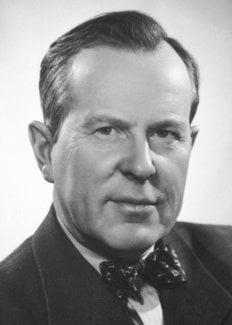
For four decades Lester Bowles Pearson (April 23, 1897-1972) has been noted for his diplomatic sensitivity, his political acumen, and his personal popularity. He is affectionately called «Mike», a nickname given to him by his flying instructor in World War I, who discarded «Lester» as being insufficiently bellicose.
Born in Toronto of Irish stock on both sides of his family, he received a balanced education in politics, learning the conservative position from his father, a Methodist minister, and the liberal from his mother. Pearson entered Victoria College at the University of Toronto in 1913 at the age of sixteen. Too young to enlist as a private when Canada declared war in 1914, he volunteered to serve with a hospital unit sponsored by the University. After two years in England, Egypt, and Greece, he was commissioned and transferred eventually to the Royal Flying Corps, but, sustaining some injuries from two accidents, one of them a plane crash, he was invalided home. He served as a training instructor for the rest of the war, meanwhile continuing his studies at the University. He received his degree in 1919 and then worked for two years for Armour and Company, a meat processing firm; years later he said, with the wit for which he is renowned, that the Russians were claiming he had once worked for an armament manufacturer.
Returning to academic life, Pearson won a two-year fellowship and enrolled at Oxford University. There he excelled not only in his chosen field of history where he received the bachelor and master degrees, but also in athletics where he won his blues in lacrosse and ice hockey.
In 1924 Pearson joined the staff of the History Department of the University of Toronto, leaving it and academic life in 1928 to accept a position as first secretary in the Canadian Department of External Affairs. In this post until 1935, Pearson received an education in domestic economic affairs while «on loan»; in 1931 as secretary to a commission on wheat futures and during 1934-1935 as secretary of a commission investigating commodity prices; the same post provided him with an apprenticeship in international diplomacy when he participated in the Hague Conference on Codification of International Law(1930), the London Naval Conference (1930), the Geneva World Disarmament Conference (1933-1934), another London Naval Conference (1935), and in sessions of the League of Nations (1935).
Pearson moved forward rapidly. From 1935 to 1941 he served in the office of the High Commissioner for Canada in London; in May, 1941, he was appointed assistant undersecretary of state for External Affairs at Ottawa; in June, 1942, named minister-counselor at the Canadian Legation in Washington; in July, 1944, promoted to the rank of minister plenipotentiary and in January, 1945, to the rank of ambassador. During his Washington stay, Pearson participated in the establishment of the United Nations Relief and Rehabilitation Administration (UNRRA) in 1943 and the United Nations Food and Agriculture Organization (FAO) 1943-1945; in the Dumbarton Oaks Conference on preliminary discussion for an organization of united nations (1944); and in the San Francisco Conference on the establishment of the UN (1945).
Pearson took over the post of undersecretary of state for External Affairs in the fall of 1946, but gave it up two years later for the possibility of action in a larger arena. In that year, Louis S. St. Laurent, the secretary of state, became prime minister of a Liberal government, replacing his retiring leader, Mackenzie King. Pearson, having conducted a successful campaign for a seat in the Commons to represent the Algoma East riding of Ontario, was given the External Affairs portfolio, holding it for nine years until the advent of John Diefenbaker’s Conservative government.
Pearson drafted the speech in which Prime Minister St. Laurent proposed the establishment of the North Atlantic Treaty Organization (NATO), signed the enabling treaty in 1949, headed the Canadian delegation to NATO until 1957, and functioned as chairman of the NATO Council in 1951-1952. Pearson also headed the Canadian delegation to the UN from 1946 to 1956, being elected to the presidency of the Seventh Session of the General Assembly in 1952-1953. As chairman of the General Assembly’s Special Committee on Palestine, he laid the groundwork for the creation of the state of Israel in 1947. In the Suez crisis of 1956, when the United Kingdom, France, and Israel invaded Egyptian territory, Pearson proposed and sponsored the resolution which created a United Nations Emergency Force to police that area, thus permitting the invading nations to withdraw with a minimum loss of face.
When the Liberals were defeated in the elections of 1957, Pearson relinquished his cabinet post but, accepting that of leader of the Opposition, began to rebuild the party. Six years later, when the Conservative government lost the confidence of the electorate, especially on the issues raised by the Cuban confrontations between the United States and Russia, and when Pearson, after a careful review of his philosophical position on national defence, announced his willingness to accept nuclear warheads from the United States, the Liberal Party was voted enough strength to establish a government with Pearson as prime minister.
In control for five years, Pearson pursued a bipartisan foreign policy based on a philosophy of internationalism. In domestic policy he implemented programs long discussed but never adopted; among them, in the field of social legislation: provisions for old age pensions, medical care, and a generalized «war on poverty»; in education: governmental assistance for higher education and technical and vocational education; in governmental operations: redistribution of electoral districts and reformation of legislative procedures. The most acrimonious debate of his half-decade in office centered on legislation to create a new flag for Canada. This legislation became the battlefield of the Conservatives, who wanted some portion of the design to recognize the traditions of the past, versus the Liberals, who wanted to eliminate historical symbols. The Liberals won and the new flag was raised on February 15, 1965.
Pearson retired from the leadership of his party in the spring of 1968 and died in 1972.
| Selected Bibliography |
| Ayre, W. Burton, Mr. Pearson and Canada’s Revolution by Diplomacy. Montreal, Wallace Press, I96. |
| Beal, John R., Pearson of Canada. New York, Duell, Sloan & Pearce, 1964. |
| Newman, Peter C., Renegade in Power: The Diefenbaker Years. Toronto, McClelland & Stewart, 1963. |
| Nicholson, Patrick, Vision and Indecision. Ottawa, Longmans Canada, 1968. |
| Pearson, Lester Bowles, The Crisis of Development. New York, Praeger, 1970. |
| Pearson, Lester Bowles, Democracy in World Politics. Princeton, N.J., Princeton University Press, 1955. |
| Pearson, Lester Bowles, Diplomacy in the Nuclear Age. Cambridge, Mass., Harvard University Press, 1959. |
| Pearson, Lester Bowles, The Four Faces of Peace and the International Outlook, ed. by Sherleigh G. Pierson. New York, Dodd, Mead, 1964. |
| Pearson, Lester Bowles, Peace in the Family of Man. London, British Broadcasting Corporation, 1969. |
| Pearson, Lester Bowles, «The United Nations and Peace», in A Critical Evaluation of the United Nations, pp. 9-24. Vancouver, University of British Columbia, 1961. |
| Poliquin, Jean-Marc, and John R. Beal, Les Trois Vies de Pearson. Première partie par Poliquin, pp. 7-70. Deuxième partie par Beal, pp. 71-265, is a translation by Poliquin from the English of Beal’s Pearson of Canada, q. v. Ottawa, Longmans Canada, 1968. |
This autobiography/biography was written at the time of the award and first published in the book series Les Prix Nobel. It was later edited and republished in Nobel Lectures. To cite this document, always state the source as shown above.
Lester Bowles Pearson died on December 27, 1972.