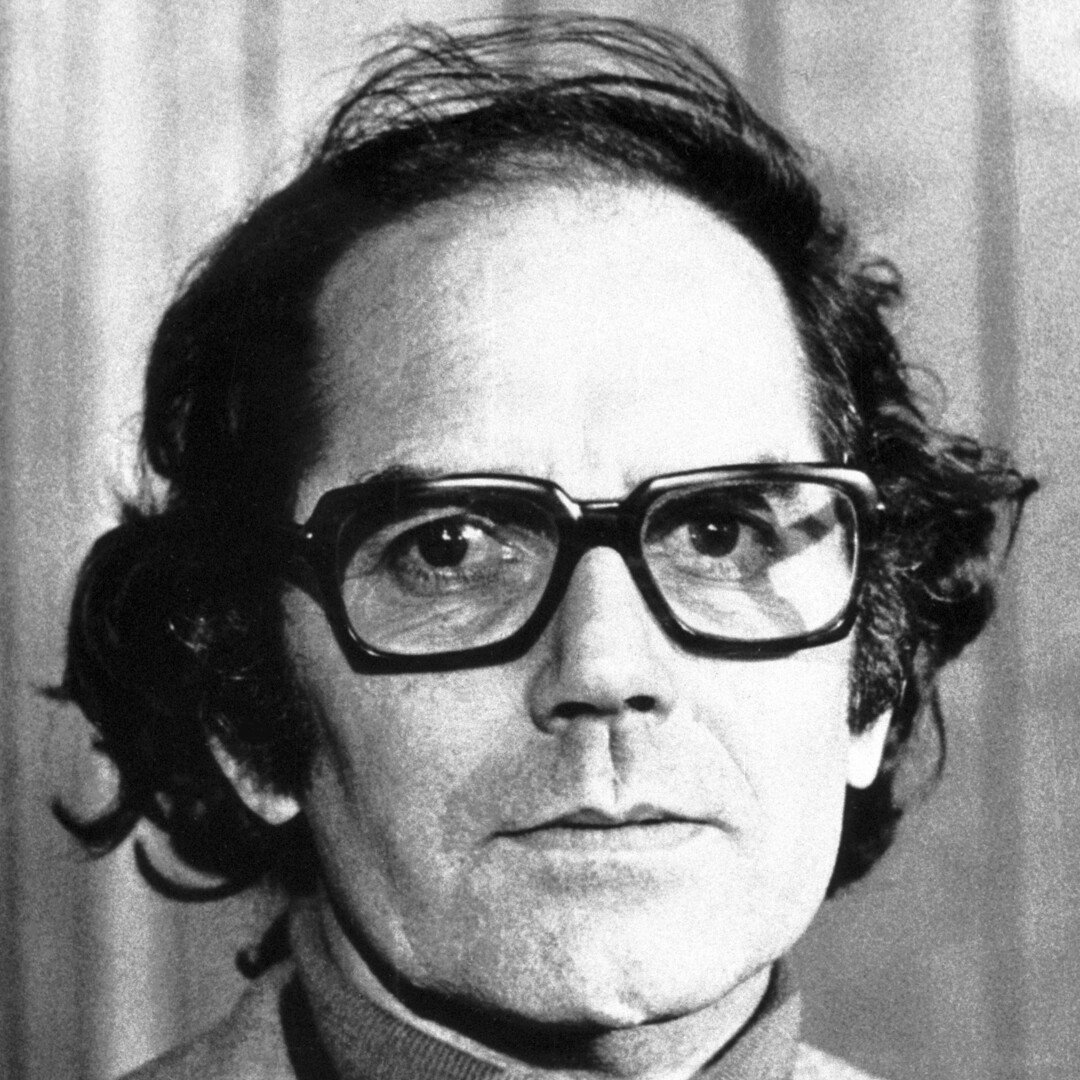
Adolfo Pérez Esquivel was awarded the Nobel Peace Prize for his work to promote fundamental human rights by non-violent means.
Adolfo Pérez Esquivel Photo from the Nobel Foundation archive.
Full name: Adolfo Pérez Esquivel Born: 26 November 1931, Buenos Aires, Argentina Date awarded: 27 October 1980
He lit a candle of hope
The 1976 military coup in Argentina marked the beginning of five years of brutal dictatorship. It was during this time that Adolfo Pérez Esquivel, an active Catholic, emerged as a strong defender of human rights and a promoter of non-violence. In the 1970s, Esquivel headed the Latin American human rights organization SERPAJ. He gave up his university career to travel around Latin America building a network. In 1977, he was arrested, imprisoned and tortured by the Argentine military junta who, bowing to pressure exerted by his friends, finally released him after 14 months. In its decision the Norwegian Nobel Committee pointed to Esquivel’s fearless, non-violent activism as a source of inspiration for oppressed peoples around the world.
“Pérez Esquivel is among those Argentinians who have shone a light in the darkness. He champions a solution of Argentina’s grievous problems that dispenses with the use of violence, and is the spokesman of a revival of respect for human rights.”
The Norwegian Nobel Committee Press Release, October 1980.
In 1974, Esquivel became secretary-general of the human rights organisation SERPAJ (Servicio Paz y Justicia en América Latina), a grassroots movement founded on Christian values and pacifist principles. The organisation was rooted in liberation theology, which stresses God’s emphasis on caring for the poor and the doctrine that rich and poor should unite in the struggle against poverty and oppression, together seeking to promote human rights and social justice.
“Unjust structures must be changed. But only through non-violence can those structures be transformed to build a more just and humane society.”
Pérez Esquivel in Newsweek, 27 October 1980.
He challenged Videla
Jorge Videla governed Argentina from 1976 to 1981. Some 20,000-30,000 of his political opponents disappeared during his rule. Esquivel travelled throughout Latin America building networks and researching ways to persuade the UN to establish a commission to expose human rights violations in Latin America. This provoked Videla’s regime. When Esquivel returned to Argentina in 1977, he was arrested and imprisoned without being interrogated or charged. He was released after 14 months of physical and psychological torture, having managed to keep up his spirits through prayer and yoga.
“We are accustomed to hearing, wherever human rights are being violated, that it is being done in the name of higher interests. I declare that there exists no higher interest than that of the human being.”
Adolfo Pérez Esquivel, Nobel Prize lecture, 11 December 1980.
Adolfo Pérez Esquivel was born in Buenos Aires in 1931. After training as an architect and sculptor he was appointed Professor of Architecture. In 1974 he relinquished his teaching post in order to devote all his time and energy to the work of co-ordinating the activities of the various non-violent elements in Latin America …
Disclaimer: Every effort has been made by the publisher to credit organisations and individuals with regard to the supply of photographs. Please notify the publishers regarding corrections.
Adolfo Pérez Esquivel – Photo gallery
Adolfo Pérez Esquivel attending the Nobel Centennial 2001, a conference titled ”The Conflicts of the 20th Century and the Solutions for the 21st Century” in Oslo, Norway, December 2001.
Nobel Peace Prize laureates at the Nobel Centennial 2001, a conference titled ”The Conflicts of the 20th Century and the Solutions for the 21st Century”. From left: Oscar Arias Sánchez, Norman Borlaug, Joseph Rotblat, Rigoberta Menchu, Adolfo Pérez Esquivel, (photographer Micheline Pelletier), John Hume and Mairead Corrigan.
At the Nobel Peace Prize award ceremony on 10 December 2001 where Kofi Annan and the United Nations were awarded the 2001 peace prize, many previous laureates were present. From left: Joseph Rotblat, Jody Williams, José Ramos-Horta, Adolfo Pérez Esquivel, Lech Wałęsa, Desmond Tutu, John Hume, David Trimble, Elie Wiesel, Norman Borlaug, Rigoberta Menchu Tum and Mairead Corrigan. The remaining are representatives for peace prize awarded organisations.
Members of the Nobel Committee, Brothers and Sisters,
I come before you, having just received the Nobel Peace Prize from so prestigious an academy, in order to share a reflection about my continent and our struggle.
I would like to give thanks to everyone for the invitation to speak in this chamber of high learning. Not only to receive me personally, but by the mark of appreciation, recognition and esteem that this invitation implies with respect to the values and actions which sustain and are the hope and faith of our people in the struggle for justice and respect for the dignity of persons as the necessary condition for attaining true peace.
I come as a man of the people, with humility and steadfastness to share with you this reality that I live and know.
When receiving the Nobel Peace Prize, I said, from the first moment, I do not assume a personal honor, but receive it in the name of the people of Latin America, and most especially in the name of the poor, the most small and needy, the indigenous, the peasants, the workers, the young, and the many thousand members of the religious orders who work in the most inhospitable places of our continent, and of all those persons of goodwill who work and struggle to build a society free from domination.
I would like to turn my attention to the anguish and hopes of our Latin Americans, not as a politician or technocrat in regard to social problems, but as a man identifying with the cause of the people in the daily struggle in defense of human rights and the affirming of values, and as a man who shares their hopes and faith in complete liberation.
In the last decades the Church initiated a new kind of reflection and action: the consideration of faith in regard to the brother or sister who suffers, who is dispossessed, the poor.
It is the faces of our workers, peasants, young, old, indigenous, and children that are the face of our Lord, Jesus Christ, who calls us to the obligation to love our brothers and sisters.
The Latin American bishops, gathered in Puebla de los Angeles in Mexico to assess the Latin American reality, gave thought from this perspective: to assume for the Church an inescapable commitment: the first priority must be the poor.
And from all which stood in the way of reflection on the life of our peoples, there is surging forth a new active theology and way of living the faith.
Thus is assumed a reasoned understanding of faith, an intent to know and explain the desperate reality that we live. The poor will not now be seen as objects of charity, as isolated individuals, but as products of a system of structures of injustice that produce marginalisation, misery, and hunger for our people.
It was a sharing of experiences and apprehending knowledge of this reality in all its aspects and facets. For Christians, faith cannot be foreign to these problems; theology, then, was considered as a reflection of this faith and of the moral force of the Word, for the work of liberation from injustice and from sin, in its structural as well as personal dimension.
Reflection is only a partial understanding of truth if it does not translate itself in practice into commitments to the common good and justice. Truth is not mere abstraction, but something to be done; and is only apprehended when this is realized.
It is this concrete work, which Christians must undertake in great numbers, that will lead to the process of liberation of our people.
Like many other persons and Christian organizations, ours, the Service for Peace and Justice in Latin America – of which as General Coordinator I am the current voice for its work and objectives – tries to encourage and exert our efforts on the path toward achieving a society free from domination that overcomes systems of injustice and inspires the fraternal embrace between humans and the reconciliation with God.
Our voice seeks to be the voice of those who have no voice, of those who are excluded, of the humble and small.
Our hands seek to speak the language of those who labor, to add to the effort to construct a new world solidarity founded on love, justice, liberty and truth.
Our analysis is a direct consequence of this commitment; our practice is the theory and use of nonviolence based on the gospel. This is a spirit and a method, the participative power of the struggle for the needs of the most small who are the elect of our Lord, who animates them with His spirit to organize themselves and unite to accomplish their own liberation. It is thus, in this way we are facing our work in Latin America.
I would like now to speak of Latin America, this reality which was defined by the beloved Pope Paul VI as el Continente de la Esperanza, (“the Continent of Hope”).
It seems that in Latin America, as we come wanting to help, we suffer the shock of the contradictions between two models of development of our nations sustained by force and social diversity.
Our Latin American nations have said of our people: “They have taken opportunities to use their talents and to organize themselves and have shown they can succeed to obtain vindication for their just rights”.
The stifling of these rights weighs heavily on this creative capacity and also weighs down the natural economic richness and development of our countries. Latin America lives the anguish of an economically unequal growth that accompanies a development not integral to the participation of the people. This generates conflict that manifests itself in many ways in all parts of our societies.
I speak of situations like that of Bolivia where a military regime pays no heed and oppresses the will of a people.
I speak of Salvador where the general violence, product of structures of domination and injustices with the force of law, seen for decades, compromises today the practical possibility of a peaceful solution.
I speak of Cuba, its prisoners and politicians responsible for clear transgressions against human rights. I speak of Paraguay, Chile, Brazil, Guatemala, countries where there exists no capacity for constitutional order nor any intent to institute such order for the openly limited and deceitful forms that will not grant to the people their authentic right to be makers of their own destiny.
I speak of my own Argentina where situations have led to systems of injustice that we share with the rest of our large Latin American fatherland. These have devolved into violence from both the Left and the Right which have resulted in the murdered, the injured, the disappeared, the tortured, prisoned, and exiled.
This situation, anguished and unjust, is shared by all responsible sectors of national life. It is felt with sorrow by the families of the disappeared, and especially the mothers, like the mothers of the Plaza de Mayo whose valorous and international action for peace is a patient witness bearing the sorrow of uncertainty about the fate of their sons.
The churches, the workers’ organizations, the political parties and the institutions for the defense of human rights have all demanded a solution of this problem that stands in the way of a real meeting of the Argentines.
I do not wish to speak more of the above mentioned injustices, since I do not believe the latter is the struggle for you here. These are things I must deal with in my own country and confront with the present government.
I want to express, with special emphasis, my total support for the Pope’s mediation regarding the boundary conflict between the Argentine republic and that of Chile, my brothers.
We know, as His Holiness John Paul II has observed, that there are no differences between our countries that cannot be overcome peacefully. We also know the unique benefits this belief could bring in a similar disaster; and already disasters are in the making from the traffickers in arms and those who want to help certain parties to divide the Latin American peoples.
The only possible solution is peace, since war means only a useless spilling of blood, and, besides, a grave violation of the dignity of both peoples, and even those who are mere spectators of the conflict.
I speak of a continent where millions of persons live who are subjected to the violence of hunger, of endemic disease, of illiteracy, of homelessness, of persecution, both for political reasons and against labor unions.
I speak, in summary, of Latin America where we experience constant violations of the human rights of the people. The violence is expressed toward the disappeared, the prisoners, the tortured, the exiles, the lack of freedom of the press, etc. … it is not only with the attacks against the rights of persons that we must deal. We must analyze also, in all the dimensions of this reality, the deep structural causes which generate these conflict situations. For that, the struggle for the dignity of the individual must consider society as much as the individual in all which has to do with the development of the rights of the people.
But this same continent and these same human beings live, besides, in the hope of making their own history. And to this immense task, where I humbly include myself, we take no more than our own hands and great faith.
To those of you also involved in this struggle on behalf of the poor, I want to bring you the image of this deeply absorbing situation and its significance for world peace.
Latin America does not see itself in the same way, but finds itself caught between an economic-political system and an international social system in profound transformation. Its image of violence reflects the violence of our contemporary world. Its injustices are bound up within an unjust international system, a system whose mechanisms, in the words of John Paul II, “are mechanisms encountered impregnated not with an authentic humanism, but with materialism producing an international standard with the rich ever richer at the expense of the poor ever poorer”.
It is necessary to create the conditions that permit displacing the mechanisms which secure the domination of one country over another. I want to affirm, together with our Latin American pastors in the meeting at Puebla, that in the ability to live together, “… all human beings hold the common good as fundamental, consistent with the ever more fraternal realization of common dignity which does not use some persons as tools for the benefit of others, and that all be disposed to sacrifice for some particular good ends”. This common dignity necessarily implies the existence of liberty.
And for us liberty is that inalienable capacity that all humans alike have at their disposal.
This is the capacity that permits the building of communion and participation which encourage human beings to relate fully with the world, with their brothers and sisters and with God.
I see with concern that this new international system, marked as it is by the existence of great multinational corporations, is far from increasing participation and improving channels of expression for the majority. What is essential are new constructs that allow political participation, eliminating the distance between the governors and the governed, that support the privileges of minorities, and do not hold on to the old, the known and worn-out structures of injustice.
The rules of the game established by the powerful and imposed on the rest of the world make possible the grand crime of our epoch, the arms race. This produces a useless diversion of resources which could be dedicated to the development of our nations. These powers produce and reproduce the conditions of injustice and domination. Such obstacles obstruct the exercise of the full rights of the people and oblige the workers of all latitudes to struggle for labor and political rights – as much in Latin America, as in Poland, in Africa and Asia.
The cause for human rights is the same, in one way or another, in the United States and the Soviet Union.
We would especially like to express our solidarity with Dr. Andrei Sakharov, the Nobel Peace Prize laureate of 1975. May he soon regain his liberty, together with Mr. Anatoly Shcharansky, both of whom are detained in the Soviet Union.
We have been speaking here of the anguish over the reality in which Latin America is living, and in particular I have referred to the situation in my country, Argentina. Also I have shown here our active preoccupation with the problems that all people of the world live with in their tireless struggle in defense of their inalienable rights.
I would like now to speak of my hope because it is that which empowers our actions and commitment.
Beginning to speak of this, I am remembering a martyr to peace, the Archbishop of Salvador, Monsignor Oscar Romero, who in his work of the gospel, shared in the way of the people even to giving his life for them. Even his martyrdom is a sign of hope.
Our hope is the benevolent notice of Christ Jesus, who in these days of the Advent and Christmas season fortifies human conscience in all latitudes. We take hope because we believe with St. Paul that love never dies, and that humankind, in the historical process, has always created enclaves of love in solidarity with the active practice of the full rights of persons.
For this, our testimony in the world cannot be limited to the exercise of critical judgement of the injustices of the social, economic, and political order or to the consequent denunciation of the sins of those responsible.
The Christian must act. Act, not based on the conviction that the Christian possesses the key to the secrets of social problems or because he knows how to extract from the Gospels infallible models to transform all situations.
The Christian must act together with all men of goodwill, bringing his humble strength to support the building of a world more just and humane.
I want to affirm with emphasis: this world is possible.
The social order we seek is not a utopia. It is a world where political life is understood in terms of active participation by the governors and the governed in the realization of the common good.
We do not believe in consensus by force. We are accustomed to hearing, wherever human rights are being violated, that it is being done in the name of higher interests. I declare that there exists no higher interest than the human being.
I point out my conviction in the maturity of the people, who are able to govern themselves without paternalistic guardians.
For this reason we have hope. We believe in the vocation and participation of our people, who day to day are awakened to their political conscience and express their desire for change and the complete democratization of society. A change based on justice, built with love, and which will bring us the most anxiously desired fruit of peace.
We must all commit ourselves to this task. And I want my voice to help build the chorus of voices so that the clamor for justice will become deafening.
I live this hope which I am sure I share with many others. I am confident that one day our daily effort will have its reward.
We are working to serve the plan of the Lord, the One whom the prophet Isaiah promised us when he said:
The Lord shall govern the nations, direct and set right the peoples; they shall beat their swords into ploughshares and quit the use of their spears. One nation will not lift its sword against another, neither shall they learn war any more.
I wish, finally, to show my deep gratitude to the members of the Nobel Committee and to all those present and to all the people of Norway for having given me such a high distinction.
I am deeply moved and commit myself to redouble my efforts in the struggle for peace.
I implore our Lord that He may, with his infinite mercy, illumine us and guide us on the road to peace and justice.
At the Nobel Centennial Symposia, held on 6 December 2001 in Oslo, Norway, Adolfo Pérez Esquivel delivered this speech.
Interpreter’s note This is a live recording of members of AIIC, the International Association of Conference Interpreters, interpreting simultaneously at the Nobel Centennial Symposia. It is not intended to be a literal or definitive translation of the proceedings.
Sres miembros del Comité Nobel,
Hermanos y Hermanas,
Vengo aquí, luego de haberme sido otorgado por tan prestigiosa academia el Premio Nobel de la Paz, para compartir una reflexión sobre mi continente y nuestra lucha. Quisiera antes que todo agradecer la invitación que me fuera hecha para hablar en esta Alta Casa de Estudios. No sólo por recibir mi persona sino por la muestra de aprecio, de reconocimiento y de estímulo que esta invitación implica con respecto a unos valores y un accionar que sustento, y que es la esperanza y la fe en nuestros pueblos en su camino para lograr la justicia y el respeto por la dignidad de las personas, como condición necesaria para alcanzar una verdadera paz.
Vengo como hombre de pueblo, con humildad y firmeza a compartir con todos Ustedes acerca de esa realidad que vivo y conozco.
Al recibir el Premio Nobel de la Paz dije desde el primer momento que no lo asumía a título personal, sino en nombre de los Pueblos de América Latina y muy en especial, en nombre de los pobres, de los más pequeños y necesitados, los indígenas, los campesinos, los obreros, los jóvenes y los miles de religiosos que trabajan en los lugares más inhóspitos de nuestro continente y de todos aquellos hombres de buena voluntad que trabajan y luchan por construir una sociedad libre de dominaciones.
Quiero referirme a las angustias y Esperanzas de nuestros Pueblos Latinoamericanos, no como político o técnico sobre los problemas sociales, sino como un hombre identificado con la causa de los pueblos en la lucha cotidiana en la defensa de sus derechos y la afirmación de sus valores, y también, que comparte sus esperanzas y su fe en la liberación integral.
En las últimas décadas las Iglesias iniciaron un nuevo estilo de reflexión y accionar pastoral: de pensar la fe a partir de la interpretación del hermano que sufre, que es desposeído, del pobre.
Son los rostros de nuestros obreros, campesinos, jóvenes, viejos, indígenas, niños, imágenes del rostro de Nuestro Señor Jesu Cristo, el que nos cuestiona y nos llama al compromiso de amor a nuestros hermanos.
Los obispos latinoamericanos, reunidos en Puebla de los Angeles, en México, al abordar la realidad latinoamericana pensaron desde esta perspectiva, asumiendo como Iglesia un compromiso ineludible, la opción preferencial por los pobres.
Es desde allí donde se empieza reflexionar la vida de nuestros pueblos, surgiendo un nuevo estilo de hacer teología y de vivir la fe.
Así, se asumió una inteligencia de fe, esto es un intento de abordar y explicar la realidad conflictiva que vivimos. El pobre no será ya visto como un objeto de caridad, como una persona aislada, sino como el producto de un sistema de estructuras de injusticias, que producen marginación, miseria y hambre para nuestros pueblos.
Se fueron compartiendo experiencias y aprehendiendo a conocer esa realidad en todos sus aspectos y facetas. Para los cristianos la fe no podría estar ajena a estos problemas, la teología entonces fue pensada como una reflexión de esa fe y de la interpelación de la Palabra desde la praxis de liberación de las injusticias y del pecado, en su dimensión personal, como estructural.
Reflexión que no es un conocimiento de la verdad a medias ya que se traduce en una práctica comprometida con el Bien común y la justicia. Es una verdad que no es mero contenido abstracto, sino un hacer. Ya que la verdad sólo se la aprehende cuando se la realiza.
Y es en ese trabajo concreto donde los cristianos tenemos mucho que aportar al proceso de liberación de nuestros pueblos.
Como muchas otras personas y organismos cristianos, nosotros a través del Servicio Paz y Justicia en América Latina – del cual como Coordinador General soy circunstancial portavoz de su trabajo y objetivos – hemos tratado de animar y aportar nuestro esfuerzo en el camino de lograr una sociedad libre de dominaciones, donde se superen las estructuras de injusticias y se viva el abrazo fraterno entre los hombres y la reconciliación con Dios.
Nuestra voz quiere ser la voz de los que no tienen voz, de los que están excluidos, de los humildes y pequeños.
Nuestras manos quieren tener el lenguaje del hombre que trabaja y sumarse al esfuerzo por la construcción de un nuevo mundo solidario, fundado en el Amor, en la Justicia, en la Libertad y en la Verdad.
Nuestro análisis es una consecuencia directa de este compromiso, nuestra práctica es la prédica y la acción no-violenta evangélica. Esto es, un espíritu y un método, la fuerza participativa de lucha, al alcance de los más pequeños, que son los elegidos de nuestro Señor que los anima con su espíritu a unirse y organizarse para gestar su propia liberación. Es así, que de esta perspectiva hemos encarado nuestro trabajo en América Latina.
Quisiera entonces hablar de América Latina, esa realidad que fuera definida por el querido Papa Pablo VI como el continente de la esperanza.
Pienso así que en América Latina venimos asistiendo y padeciendo el choque entre dos modelos de desarrollo de nuestras naciones, sustentados por fuerzas y sectores sociales diversos y hasta contradictorios entre sí.
Nuestras naciones cuentan con pueblos jóvenes y que al decir de Puebla: “donde han tenido oportunidades para capacitarse y organizarse han mostrado que pueden superarse y obtener sus justas reivindicaciones.” Sin embargo pese a esa capacidad creativa y también pese a la riqueza natural económica y desarrollada en nuestros países, América Latina vive la angustia de un crecimiento económico desigual, que no acompaña un desarrollo integral y participativo de los pueblos. Esto genera una realidad conflictiva, que se manifiesta de diversas maneras en todos los órdenes de nuestras sociedades.
Les hablo de situaciones como la de Bolivia donde un golpe militar desoye y oprime la voluntad soberana de un pueblo. Les hablo del Salvador donde la violencia generalizada, producto de estructuras de dominación e injusticias vigentes durante décadas, compromete hoy la posibilidad práctica de una solución pacífica.
Les hablo de Cuba y sus presos políticos que implican una trasgresión clara a los derechos humanos. Les hablo de Paraguay, Chile, Uruguay, Brasil, Guatemala, países donde no existe espacio para el orden constitucional o se lo intenta reemplazar por formas aperturistas, limitativas y engañosas que no otorgan al pueblo su auténtico derecho a ser artífices de su propio destino.
Les hablo de mi Argentina donde por causas que remiten a estructuras de injusticia, que compartimos con el resto de nuestra Patria Grande, América Latina, se ha derivado en situaciones de violencia de izquierda o de derecha que han dejado una secuela de muertos, lisiados, desaparecidos, torturados, presos y exiliados.
Esta situación angustiante e injusta es compartida por todos los sectores responsables de la vida nacional. Es sentida con dolor por los familiares de aquellos que han desaparecido y especialmente por las madres, como las madres de Plaza de Mayo cuya acción por la paz, valorada internacionalmente, conlleva el dolor de la incertidumbre sobre la suerte de sus hijos. Las Iglesias, las organizaciones gremiales, los partidos políticos y las instituciones de defensa de los derechos humanos, a las cuales pertenezco, han pedido solución a este problema por constituir una de las causas profundas que impiden el real encuentro de Argentinos.
No quiero abondar en las citadas injusticias, pues no creo que sea éste el lugar indicado para hacerlo. Hay cosas que debo tratar en mi propio país y confrontarlo con el actual gobierno.
Quiero expresar, con especial énfasis, mi total apoyo a la mediación Papal respecto al conflicto limítrofe entre la República Argentina, mi patria y la República de Chile, mis hermanos.
Sabemos, como nos marcaba Su Santidad Juan Pablo II, que no hay diferencias entre nuestros países que no puedan ser superadas pacíficamente. Y también sabemos que los únicos beneficiados en un desastre semejante serán, y ya lo están siendo, los traficantes de armamento y aquellos que se ven fortalecidos frente a la división de los pueblos latinoamericanos.
La única solución posible es la paz, pues la guerra significará no sólo un inútil derramamiento de sangre, sino además una grave violación a la dignidad de ambos pueblos, ya que los mismos están siendo meros espectadores del conflicto.
Les hablo de un continente donde viven millones de hombres que son sometidos a la violencia del hambre, de las enfermedades endémicas, del analfabetismo, de la falta de viviendas, de la persecución política y gremial.
Les hablo en resumen de América Latina, donde vivimos constantes violaciones a los derechos humanos y de los pueblos. La violencia expresada en desapariciones, prisiones, torturas, exilios, falta de libertad de prensa, etc. … no deben verse solamente como alentados contra los derechos individuales de las personas. Debemos analizar también en todas las dimensiones de esa realidad las causas profundas estructurales que generan esas situaciones de conflicto. Por ello la lucha por la dignidad de las personas debe encararse tanto en el plano personal, como social. En todo aquello que haga al desarrollo de los derechos de los pueblos.
Pero ese mismo continente y esos mismos hombres viven además su esperanza como un desafío de hacer su propia historia. Y en esta inmensa tarea, donde humildemente me incluyo, no tenemos más que nuestras propias manos y nuestra enorme fe.
A Ustedes que han instituido un lugar donde se predica la unión entre los pueblos bajo el signo de la paz quiero traerles la imagen de esta preocupante situación.
Latinoamérica no se explica por sí misma sino que se encuentra integrada dentro de un sistema económico-político y social internacional en profunda transformación. Su imagen de violencia refleja la violencia de nuestro mundo contemporáneo, sus injusticias se encuadran dentro de un injusto sistema internacional, sistema cuyos mecanismos al decir de Juan Pablo II: “son mecanismos, que por encontrarse impregnados no de un auténtico humanismo, sino de materialismo, producen a nivel internacional ricos cada vez más ricos a costa de pobres cada vez más pobres”.
Es necesario crear las condiciones que permitan desplazar los mecanismos que aseguran la dominación de unos países sobre otros. Quiero afirmar junto a nuestros pastores latinoamericanos en Puebla que “… toda la convivencia humana tiene que fundarse en el bien común, consistente en la realización cada vez más fraterna de la común dignidad, lo cual exige no instrumentalizar a unos en favor de otros y estar dispuestos a sacrificar aún bienes particulares”. Esta común dignidad implica necesariamente la existencia de libertad.
Y para nosotros la libertad es aquella capacidad inalienable que tenemos todos los hombres para disponer de nosotros mismos.
Capacidad que permite construir una comunión y una participación basada en realidades que impulsen al hombre a relacionarse plenamente con el mundo, con sus hermanos y con Dios.
Veo con preocupación que este nuevo sistema internacional, digitado por grandes corporaciones multinacionales, lejos de profundizar la participación y mejorar los canales de expresión de los sectores mayoritarios, fundamente su nueva estructuración en la restricción de la participación política, en el distanciamiento entre gobernantes y gobernados, en el sostén de los privilegios de las minorías; en definitiva en la manutención de las viejas, conocidas y caducas estructuras de injusticia.
Las reglas de juego establecidas por las potencias e impuestas al resto del mundo posibilitan el gran crimen de nuestra época: la carrera armamentista. Carrera esta, que determina la inútil inversión de sumas de dinero que podrían ser dedicadas al desarrollo de nuestras naciones. Estas potencias producen y reproducen las condiciones de injusticia y dominación. Obstaculizan de esta forma el ejercicio del pleno derecho de los pueblos a su autodeterminación y obligan a los trabajadores de todas las latitudes a luchar por los derechos sindicales y políticos tanto en América Latina como en Polonia, en África como en Asia.
Son los mismos perseguidos por luchar por la causa de los derechos humanos, de una u otra manera, en los Estados Unidos y la Unión Soviética.
Especialmente quisiéramos expresar nuestra solidaridad para que recuperen prontamente su libertad, el Dr. Andrei Sakharov, Premio Nobel de la Paz 1975, y el Sr. Anatoly Chtcharansky, ambos detenidos en la Unión Soviética.
He hablado aquí de nuestra angustia por la realidad que vive América Latina y en particular me he referido a la situación en mi país, la Argentina. También he manifestado nuestra viva preocupación por los problemas que viven todos los pueblos del mundo en su incansable lucha por la defensa de sus derechos inalienables.
Quiero ahora hablarles de mi esperanza, porque es ella la que nos impulsa con fuerza a la acción y al compromiso.
Y comienzo a hablar de ella recordando a un mártir de la Paz, el Arzobispo del Salvador, Mons. Osear Romero, quien, en su obra evangelizadora, compartió el camino de su pueblo hasta dar su vida por él. Su muerte es también signo de esperanza.
Nuestra esperanza es la Buena Noticia de Cristo Jesús que en estos tiempos de Navidad golpea fuerte en la conciencia de los hombres de todas las latitudes.
Tenemos esperanza porque creemos profundamente en Dios y creemos también profundamente en los valores de la persona humana.
Tenemos esperanza porque creemos con San Pablo, que el amor nunca muere, y que el hombre, en el proceso histórico, ha ido creando enclaves de amor con la práctica activa de su solidaridad hacia la liberación integral del hombre y los pueblos.
Por eso, nuestro testimonio en el mundo no puede limitarse al ejercicio del juicio crítico de las injusticias de orden social, económico y político o a la consecuente denuncia de los pecados de los responsables.
El cristiano precisa actuar.
Actuar, no bajo el convencimiento de que, por ser cristiano, posee la llave de los secretos de los problemas sociales, o porque sabe extraer del Evangelio modelos infalibles para transformar todas las situaciones.
El cristiano debe actuar junto a todos los hombres de buena voluntad, aportando su esfuerzo humilde en la construcción de un mundo más justo y humano.
Y quiero afirmarlo con énfasis: ese mundo es posible.
El orden social que buscamos no es una utopía.
Es un mundo donde la vida política sea entendida en términos de participación activa de gobernantes y gobernados en la realización del bien común.
No creemos en el consenso por la fuerza.
Estamos acostumbrados ya a escuchar, allí donde se violan los derechos humanos, que se lo hace en nombre de intereses superiores.
Yo declaro que no existe ningún interés superior al Hombre.
Señalo mi convencimiento de la madurez de los pueblos para autogobernarse sin tutelas paternalistas.
Por eso tenemos esperanza. Porque creemos en la vocación de comunión y participación de nuestros pueblos, que día a día despiertan a su conciencia política y expresan su anhelo de cambio y democratización profunda de la sociedad. Un cambio basado en la justicia, construido en el amor y que nos traiga el tan ansiado fruto de la paz.
En esta tarea debemos comprometernos todos. Y yo quiero que mi voz sirva para sumar voces y que el clamor de justicia se haga ensordecedor.
Vivo la esperanza que seguramente comparto con muchos hombres. Confío que un día nuestro cotidiano esfuerzo tendrá su recompensa. Estamos construyendo, sirviendo al plan del Señor, aquello que el profeta Isaias nos prometiera cuando dijo:
el Señor gobernará las Naciones y enderezará a la humanidad; harán arados de sus espadas y sacarán hoces de sus lanzas. Una Nación no levantará su espada contra otra y no se adiestrarán para la guerra.
Quiero finalmente manifestarles mi más profunda gratitud a los señores miembros del Comité Nobel y a todos los aquí presentes y al pueblo de Noruega todo por haber depositado en mí tan alta distinción. Me siento emocionado y a la vez comprometido a redoblar mi esfuerzo en la lucha por la Paz.
Imploro a nuestro Señor para que con su infínita misericordia nos ilumine y guíe en el camino de la Paz y la Justicia.
Discurso en Oslo al recibir el Premio Nobel de la paz
Majestad, Altezas, Señoras y Señores
Con humildad estoy ante Ustedes para recibir la alta distinción que el Comité Nobel y el Parlamento otorgan a quienes han consagrado su vida en favor de la PAZ, de la promoción de la JUSTICIA y la solidaridad entre los pueblos.
Quiero hacerlo en nombre de los pueblos de América Latina, y de manera muy particular de mis hermanos los más pobres y pequeños, porque son ellos los más amados por Dios; en nombre de ellos, mis hermanos indígenas, los campesinos, los obreros, los jóvenes, los miles de religiosos y hombres de buena voluntad que renunciando a sus privilegios comparten la vida y camino de los pobres y luchan por construir una nueva sociedad.
Para un hombre como yo, una pequeña voz de los que no tienen voz, que lucha para que se oiga con toda la fuerza el clamor de los Pueblos, sin otra identificación que con el hombre concreto latinoamericano y como cristiano, este es sin duda el más alto honor que puedo recibir que se me considere un Servidor de la Paz.
Vengo de un continente que vive entre la angustia y la Esperanza y en donde se inscribe mi historia, estoy convencido que la opción de la fuerza evangélica de la no-violencia se abre como un desafío y a perspectivas nuevas y radicales.
Una opcion que prioriza un valor esencial y entrañablemente cristiano: la dignidad del Hombre, la sagrada trascendente e irrenunciable dignidad del hombre que le viene del hecho primordial de ser hijo de Dios y hermano en Cristo y por lo tanto hermano nuestro.
En estos largos años de lucha a través del Servicio Paz y Justicia en América Latina compartimos el camino junto a los más pobres y necesitados.
No tenemos mucho que decir, pero sí, mucho que compartir para lograr a través de la lucha no-violenta la abolición de las injusticias, a fin de alcanzar una sociedad más justa y humana para todos.
En este caminar junto a mis hermanos los pobres, los que son perseguidos, los que tienen hambre y sed de justicia, los que padecen por causa de la opresión, los que se angustian ante la perspectiva de la guerra, los que sufren la agresión de la violencia o ven postergados sus derechos elementales.
Es por todos ellos que estoy aquí.
Mi voz quiere tener la fuerza de la voz de los humildes. La voz que denuncia la injusticia y proclama la Esperanza en Dios y la Humanidad que es la Esperanza del Hombre que ansia vivir en la comunión y participación con todos los hermanos como hijos de Dios.
America Latina es un continente joven, vital, que fue definido por el Papa Pablo VI como el Continente de la Esperanza.
Conocer es valorar una realidad con la vocación cierta de compartir su destino.
Conocer es llegar a una profunda identidad con los pueblos que protagonizan un proceso histórico, estando dispuestos a redimir el dolor con el amor, asumiendo, en esta perspectiva, la praxis de Jesús.
Pero cuando vemos esa realidad que viven nuestros pueblos es una ofensa a Dios, en que millones de nuestros niños, jóvenes, adultos, ancianos viven bajo el signo del sub-desarrollo.
La violencia institucionalizada, la miseria y la opresión generan una realidad dual, fruto de la persistencia de sistemas políticos y económicos creadores de injusticias, que consagran un orden social que beneficia a unos pocos: ricos cada vez más ricos a costa de pobres cada vez más pobres.
Frente a esta realidad quiero como los Obispos en Puebla, como los cristianos comprometidos en los movimientos que luchan por los derechos humanos, como los hombres de buena voluntad compartir las angustias que brotan de los rostros dolientes del hombre latinoamericano, en él que reconocemos el rostro sufriente de Cristo, nuestro Señor que nos cuestiona e interpela
Les hablo teniendo ante mis ojos el recuerdo vivo de los rostros de mis hermanos,
los trabajadores, obreros y campesinos que son reducidos a niveles de vida infrahumana y limitados sus derechos sindicales,
del rostro de los niños que padecen desnutrición,
de los jóvenes que ven frustradas sus esperanzas,
de los marginados urbanos,
de nuestros indígenas,
de las madres que buscan sus hijos desaparecidos,
de los desaparecidos, muchos de ellos niños,
de miles de exiliados,
de los Pueblos que reclaman libertad y Justicia para todos.
Pero pese a tanto dolor vivo la Esperanza porque siento que América Latina es un continente puesto de pie, que podrán demorar su liberación, pero nunca impedir.
Vivimos la Esperanza porque creemos, como San Pablo, que el amor nunca muere y que el hombre, en el proceso histórico, ha ido creando enclaves de Amor con la práctica activa de su solidaridad en todo el mundo hacia la liberación integral del hombre y los pueblos.
Para mí es esencial tener la serenidad interior de la oración para escuchar el silencio de Dios, que nos dice en nuestra vida personal y en el signo de la historia de nuestro tiempo de la fuerza del Amor.
Y es por esa fe en Cristo y en los hombres que debemos aportar nuestro esfuerzo humilde en la construcción de un mundo más justo y humano. Y quiero afirmarlo con énfasis: Ese mundo es posible.
Y para construir esa nueva sociedad debemos estar con las manos abiertas, fraternas, sin odios, sin rencores, para alcanzar la reconciliación y la Paz, pero con mucha firmeza, sin claudicaciones en defensa de la Verdad y la Justicia.
Porque sé que nadie puede sembrar con los puños cerrados. Para sembrar es necesario abrir las manos.
Quiero agradecer a todos Ustedes, al Comité Nobel por esta alta distinción a los humildes de América Latina.
Me siento emocionado y a la vez comprometido a redoblar mis esfuerzos en la lucha por la paz y la Justicia. Puesto que la paz sólo es posible como fruto cicla Justicia, que esta verdadera Paz, es la transformación profunda de la no-violencia que es la fuerza de Amor.
Quiero expresar a Ustedes que gracias a la ayuda y comprensión de mi esposa e hijos, en los momentos más duros y difíciles de la lucha, pude continuar junto a mis hermanos de América Latina, con su amor, silencio y compañía, y siempre contribuyen a fortalecerme y darme el coraje de servir a mis hermanos.
Invocando la fuerza de Cristo, nuestro Señor, como nos enseñaba en el Sermón de la Montaña y que quiero compartir con todos Ustedes con mi pueblo y el mundo.
Bienaventurados los pobres de esp íritu, porque de ellos es el Reino de los Cielos,
Bienaventurados los mansos, porque ellos poseer án en herencia la tierra,
Bienaventurados los que lloran, porque ellos serán consolados. Bienaventurados los que tienen hambre y sed de la justicia, porque ellos serán saciados.
Bienaventurados los misericordiosos, porque ellos alcanzar án misericordia,
Bienaventurados los limpios de corazón, porque ellos verán a Dios,
Bienaventurados los que trabajan por la paz, porque ellos serán llamados hijos de Dios,
Bienaventurados los perseguidos por la causa de la justicia, porque de ellos es el Reino de los Cielos,
Bienaventurados seréis cuando os injurien y os persigan y digan con mentira toda clase de mal contra vosotros por mi causa. Alegraos y regocijaos, porque vuestra recompensa será grande en los cielos; pues de la misma manera persiguieron a los profetas anteriores a vosotros.
(Mateo 5, 1-12)
Reciban mi profundo agradecimiento y deseos de Paz y Bien.
Adolfo Pérez Esquivel – Prize presentation
Watch a video clip of Adolfo Pérez Esquivel receiving his Nobel Peace Prize medal and diploma during the Nobel Peace Prize Award Ceremony at the Oslo City Hall in Norway, 10 December 1980.
Adolfo Pérez Esquivel – Acceptance Speech
Adolfo Pérez Esquivel held his Acceptance Speech on 10 December 1980, in the Oslo City Hall, Norway.
Your Majesty, Mr. President of the Nobel Committee, Committee Members, Ladies and Gentlemen:
With humility I stand before you to receive the high distinction that the Nobel Committee and the Parliament grant to those who have committed their lives on behalf of peace and to the pursuit of justice and solidarity among nations.
I would like to receive this award in the name of the people of Latin America and especially in the name of the poorest and smallest of my brothers and sisters, who are the most beloved children of God. I receive it in the name of my indigenous brothers and sisters, the peasants, workers, and young people, in the name of the thousands of members of religious orders and of men and women of goodwill, who renounce privileges to share the life and way of the poor, and who struggle to build a new society.
For a man like myself, a small voice for those who have no voice, who struggles so that the cry of the people may be heard in all its power, for one without any special identity except as a veritable Latin American man and as a Christian, – this is, without any doubt, the highest honour that I can receive: to be considered a servant of peace.
I come from a continent that lives between anguish and hope, where my own history is being written. I am convinced that the gospel power of nonviolence presents a choice that opens up for us a challenge of new and radical perspectives. It is an option which gives priority to the essential Christian value: the dignity of the human being; the sacred, transcendent and irrevocable dignity that belongs to the human being by reason of being a child of God and a brother or sister in Christ, and therefore, our own brother and sister.
In these long years of struggle for our organisation, the Service for Peace and Justice in Latin America, we have shared the path together with the poorest and most necessitous.
We have not much to say but much to share in order to achieve by nonviolent struggle the abolition of injustice and the attainment of a more just and humane society for all.
It is walking together with our brothers and sisters, those who are persecuted, who hunger and thirst for justice, who suffer oppression, who live in anguish by the prospect of war, who suffer aggressive violence or see regularly postponed the attainment of their elemental rights.
It is for all these that I am here today.
Would that my voice could have the strength of voice of the humble, a voice that denounces injustice and proclaims hope in God and humanity. This is the hope of all human beings who long to live in harmony in common with all persons as brothers and sisters and as children of God.
Latin America is a continent young and vital, which was described by Pope Paul VI as the “Continent of Hope”.
To understand this is to value this reality and be called to share in its destiny. It means to achieve a profound identity with the people who are the protagonists in this historic process. It means being ready to redeem pain and suffering with love in the way that Jesus taught.
When we see the world our people inhabit, we see it as an affront to God in which millions of our children, youths, adults, and the elderly live under the mark of under-development.
The institutionalised violence, misery and oppression generate a dual reality, fruit of the political and economic systems that create injustice, sanctifying a social order that benefits only a few: the rich becomes ever richer at the expense of the poor who becomes ever poorer.
Confronting that reality – like the Catholic bishops at Puebla, like the Christians committed to the struggle for human rights, like all persons of goodwill – I want to share the anguish on the suffering face of the Latin American man or woman in whom we see the suffering face of Christ, our Lord, questioning us.
As I speak to you, I see before my eyes the vivid images of my brothers and sisters:
– faces of the workers and peasants living at sub-human levels, whose rights to organise are severely limited;
– faces of children who suffer from malnutrition;
– of young people who see their hopes frustrated;
– of the marginal urban poor;
– of our indigenous people;
– of the mothers searching for their missing sons and daughters;
– of the disappeared, many of them mere children;
– of thousands of exiles;
– of the people who clamour for liberty and justice of all.
In spite of so much suffering and pain, I live in hope because I feel that Latin America is a continent on the rise. Its liberation may be delayed but never denied.
We live in hope because, like St. Paul, we believe that love never dies. Human beings in the historical process have created enclaves of love with their active practice of solidarity throughout the world, with the goal of the full liberation of humanity.
For me it is essential to have the inner peace and serenity of prayer in order to listen to the silence of God, which speaks to us in our personal life and the history of our times, of the power of love.
Because of this faith in Christ and humankind, we must apply our humble efforts to build a more just and humane world. I want to affirm emphatically: such a world is possible.
To create this new society we must reach out our hands, fraternally, without hatred and rancour, for reconciliation and peace, with unfaltering determination in the defense of truth and justice.
We know we cannot plant seeds with closed fists. To sow we must open our hands.
I want to thank all of you and the Nobel Committee for this high distinction given the humble people of Latin America. I am deeply moved and even more committed to redouble my efforts in the struggle for peace and justice.
We know that peace is only possible when it is the fruit of justice. True peace is a profound transformation by means of the force of nonviolence that is the power of love.
I would like to tell you that, thanks to the support and understanding of my wife and children even in the hardest and most difficult moments of this struggle, I could continue this work together with my brothers and sisters of Latin America. With my family’s love, silence and solidarity they have always helped to give me strength and courage to serve my brothers and sisters.
Invoking the strength of Christ, our Lord, I would like to share with you, with my people, and with the world what He has taught us in the Sermon on the Mount:
Blessed are the poor in spirit;
– theirs is the kingdom of heaven.
Blessed are the gentle;
– they shall inherit the earth.
Blessed are they who mourn;
– they shall be comforted.
Blessed are those who hunger and thirst for righteousness;
– they shall be satisfied.
Blessed are the merciful;
– they shall obtain mercy.
Blessed are the pure in heart;
– they shall see God.
Blessed are the peacemakers;
– they shall be called children of God.
Blessed are those who are persecuted for righteousness’ sake;
– theirs is the kingdom of heaven.
Blessed are you when people abuse you and persecute you and speak all kinds of falsehoods against you for my sake.
Rejoice and be glad, for great will be your reward in heaven. In the same way they persecuted the prophets before you.
(Matthew 5, 1-12)
Receive my deep gratitude and my wish for peace and well-being.