Richard E. Taylor – Photo gallery

1 (of 4) Richard E. Taylor receiving his Nobel Prize from H.M. King Carl XVI Gustaf of Sweden at the Stockholm Concert Hall, on 10 December 1990.
Nobel Foundation. Photo: Lars Åström

2 (of 4) All 1990 Nobel Prize laureates assembled on stage at the Nobel Prize award ceremony in Stockholm, Sweden on 10 December 1990: physics laureates Jerome I. Friedman, Henry W. Kendall and Richard E. Taylor, Chemistry laureate Elias James Corey, medicine laureates Joseph E. Murray and E. Donnall Thomas, literature laureate Octavio Paz and economic sciences laureates Harry M. Markowitz, Merton H. Miller and William F. Sharpe.
Nobel Foundation. Photo: Lars Åström

3 (of 4) Richard E. Taylor after the award ceremony at the Stockholm Concert Hall, on 10 December 1990.
Nobel Foundation. Photo: Lars Åström

4 (of 4) Richard E. Taylor delivering his banquet speech at the Nobel Banquet at the Stockholm City Hall, 10 December 1990.
Nobel Foundation. Photo: Lars Åström
Henry W. Kendall – Photo gallery

1 (of 3) Henry W. Kendall receiving his Nobel Prize from H.M. King Carl XVI Gustaf of Sweden at the Stockholm Concert Hall, on 10 December 1990.
Nobel Foundation. Photo: Lars Åström
2 (of 3) All 1990 Nobel Prize laureates assembled on stage at the Nobel Prize award ceremony in Stockholm, Sweden on 10 December 1990: physics laureates Jerome I. Friedman, Henry W. Kendall and Richard E. Taylor, Chemistry laureate Elias James Corey, medicine laureates Joseph E. Murray and E. Donnall Thomas, literature laureate Octavio Paz and economic sciences laureates Harry M. Markowitz, Merton H. Miller and William F. Sharpe.
Nobel Foundation. Photo: Lars Åström

3 (of 3) Henry W. Kendall photographed during Nobel Week in Stockholm, December 1990.
Nobel Foundation. Photo: Lars Åström
Jerome I. Friedman – Photo gallery

1 (of 2) Jerome I. Friedman receiving his Nobel Prize from H.M. King Carl XVI Gustaf of Sweden at the Stockholm Concert Hall, on 10 December 1990.
Nobel Foundation. Photo: Lars Åström
2 (of 2) All 1990 Nobel Prize laureates assembled on stage at the Nobel Prize award ceremony in Stockholm, Sweden on 10 December 1990: physics laureates Jerome I. Friedman, Henry W. Kendall and Richard E. Taylor, Chemistry laureate Elias James Corey, medicine laureates Joseph E. Murray and E. Donnall Thomas, literature laureate Octavio Paz and economic sciences laureates Harry M. Markowitz, Merton H. Miller and William F. Sharpe.
Nobel Foundation. Photo: Lars Åström
Henry W. Kendall – Facts
Henry W. Kendall – Biographical
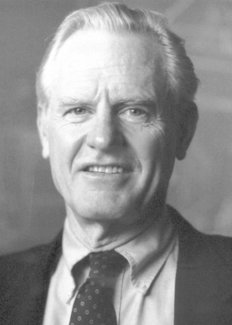
I was born on December 9, 1926 in Boston, Massachusetts. My parents were Henry P. Kendall, a Boston businessman, and Evelyn Way Kendall, originally from Canada.
I lived in Boston until the early 1930s when the family – there were five, for by then I had a younger brother and a younger sister – moved to a small town outside Boston, where the three of us grew up and where I still live.
I went briefly to a local grade school but was held back by a reading disability which was cured after I was moved to a school some miles distant. From age 14 to 18, most of the period of World War II, I spent at Deerfield Academy, a college preparatory school. My academic work was poor for I was more interested in non-academic matters and was bored with school work. I had developed – or had been born with – an active curiosity and an intense interest in things mechanical, chemical and electrical and do not remember when I was not fascinated with them and devoted to their exploration. Father was a great encouragement in these projects except when they involved hazards, such as the point, at about age 11, when I embarked on the culture of pathogenic bacteria. He also instilled in both me and my brother a love and respect for the outdoors, especially the mountains and the sea.
I entered the US Merchant Marine Academy in the summer of 1945. I was there, in basic training, when the first atom bombs were exploded over Japan. I was unaware of the human side of these events and only recall a feeling that some of the last secrets of nature had been penetrated and that little would be left to explore. I spent the winter of 1945-46 on a troop transport on the North Atlantic (a most interesting experience), returning to the Academy for advanced training in the spring of 1946. I resigned in October, 1946, to start as a freshman at Amherst College. Although a mathematics major at college, my interest in physics was great and I did undergraduate research and a thesis in that field. But history, English and biology were all most attractive and there was a period, early on, when any one of these might have ended up as the major subject. Non-college enterprises, in the summers particularly, absorbed considerable time. I and a Deerfield friend became interested in diving and two summers were spent in organizing and running a small diving and salvage operation. We wrote our first books after that; one on shallow water diving, another on underwater photography, with a considerable success for both. These activities, mostly self-taught, were a good introduction to two skills very helpful in later experimental work: seeing projects through to successful conclusions and doing them safely.
On the urging of Karl Compton, a family friend and then President of MIT, I applied for, and was accepted at that institution’s school of physics in 1950. The years at graduate school were a continuing delight – the first sustained immersion in science at a full professional level. My thesis, carried out under the supervision of Martin Deutsch, was an attempt to measure the Lamb shift in positronium, a transient atom discovered by Deutsch a few years before. The attempt was unsuccessful but it served as a very interesting introduction to electromagnetic interactions and the power of the underlying theory.
The two years after receiving the PhD degree were spent as a National Science Foundation Postdoctoral Fellow at MIT and at Brookhaven National Laboratory, followed by a trip west to join the research group of Robert Hofstadter and the faculty of the Stanford University physics department. Hofstadter was engaged in the study of the proton and neutron structure that was later to bring him the Nobel Prize, work that even at the time was clearly of the greatest interest and importance. The principal facility used in this research was a 300 ft. linear electron accelerator, a precursor to the 2 mile machine at the Stanford Linear Accelerator Center (SLAC), later built in the hills behind the University. Here I met and worked with Jerome Friedman, got to know Richard Taylor, then a graduate student in another group and W.K.H. Panofsky, the driving force behind SLAC. Friedman, Taylor and I were later to join in the long series of measurements on deep inelastic scattering at SLAC.
As in the college years, absorbing non-physics matters claimed a portion of my leisure time: mountaineering and mountain photography. Stanford and the San Francisco Bay area offered a number of skilled climbs as well as Yosemite Valley not far away. After two years of rock and mountain climbing, I was invited on the first-of several expeditions to the Andes. Later there have been trips to the Himalayas and the Arctic, with cameras of increasing size to capture some of the astonishing beauty of those remote places. Many of the friends made during those years have remained through life.
After five years at Stanford I moved back to MIT as a member of the faculty. Friedman had gone there a year earlier and we reestablished our collaboration. By 1964, the joint work with Taylor, by then a research group leader at SLAC, was initiated. This collaboration was surely the most enjoyable of any physics I have ever done. It was a pleasure shared by most people in the effort and well recognized at the time. All three of us have remained, up to the present, in the universities we were at then. I have been involved in research in later years, after the SLAC effort wound down in the middle 1970s, at the proton accelerator at Fermilab and since 1981, again at SLAC. The most interesting physics for me has always been the searches for new phenomena or new effects. With colleagues I have searched for limits to quantum electrodynamics, heavy electrons, parity breakdown in electron properties, and other such things. Unfortunately, the ever-growing size, scale, and duration of particle experiments, as well as the much larger collaborations, have made such programs less and less congenial to me over the years, circumstances that disturb many in the physics community.
At the start of the 1960s, troubled by the massive build-up of the superpower’s nuclear arsenals, I joined a group of academic scientists advising the U.S. Defense Department. The opportunity to observe the operation of the Defense establishment from the “inside,” both in the nuclear weapons area and in the counterinsurgency activities that later expanded to be the U.S. military involvement in South East Asia proved a valuable experience, helpful in later activities in the public domain. It was clear that changing unwise Government policies from inside, especially those the Government is deeply attached to, involves severe, often insurmountable, problems.
In 1969, I was one of a group founding the Union of Concerned Scientists (UCS), and have played a substantial role in its activities in the years hence. UCS is a public interest group, supported by funds raised from the general public, that presses for control of technologies which may be harmful or dangerous. The organization has had an important national role in the controversies over nuclear reactor safety, the wisdom of the US Strategic Defense Initiative, the B2 (Stealth) bomber, and the challenge posed by fossil fuel burning and possible greenhouse warming of the atmosphere, among others. I have been Chairman of the organization since 1974. The activities of the organization are part of a slowly growing interest among scientists to take more responsibility for helping society control the exceedingly powerful technologies that scientific research has spawned. It is hard to conclude that scientists are in the main responsible for the damage and risks that are now so apparent in such areas as environmental matters and nuclear armaments; these have been largely the consequence of governmental and industrial imperatives, both here and abroad. Yet it seems clear that without scientists’ participation in the public debates, the chances of great injury to all humanity is much enhanced. In my view, the scientific community has not participated in this effort at a level commensurate with the need, nor with the special responsibilities that scientists ineluctably have in this area.
This expenditure of effort and the sense of responsibility to help achieve control of aberrant technologies which drives it, stems in no small measure from the example set by my Father, who, throughout his life, spent a great deal of time and no small amount of energy on quiet, pro bono work. He was not alone among his own friends – nor among his own contemporaries – in this; it has been a tradition in New England of very long standing. In continuing to pursue such objectives, my expectation is that the challenges facing both me and the Union will be made substantially easier by the award of the Nobel Prize. This is perhaps the most attractive part of having gained this exceptional honor.
This autobiography/biography was written at the time of the award and later published in the book series Les Prix Nobel/ Nobel Lectures/The Nobel Prizes. The information is sometimes updated with an addendum submitted by the Laureate.
Henry W. Kendall died on February 15, 1999.
Richard E. Taylor – Biographical
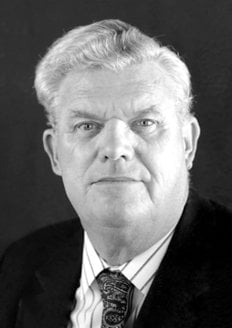
Medicine Hat is a small town in Southwestern Alberta founded just over 100 years ago in a valley where the Canadian Pacific Railway crossed the South Saskatchewan River. I was born there on November 2, 1929 and raised in comfortable if somewhat Spartan circumstances. My father was the son of a Northern Irish carpenter and his Scottish wife who homesteaded on the Canadian prairies; my mother was an American, the daughter of Norwegian immigrants to the northern United States who moved to a farm in Alberta shortly after the first World War. During my early years our family of three was part of a large family clan headed by my Scottish grandmother. I attended schools named after English Generals and Royalty – Kitchener, Connaught, Alexandra.
Although I read quite a bit and found mathematics easy, I was not an outstanding student. In high school I did reasonably well in mathematics and science thanks to some talented and dedicated teachers.
I was nearly ten years old when World War II began. That conflict had a great effect on our town, and on me. In rapid succession the town found itself host to an R.A.F. flight training school, a prisoner of war camp and a military research establishment. The wartime glamor of the military, the sudden infusion of groups of sophisticated and highly-educated people, and new cultural opportunities (the first live symphonic music I ever heard was played by German prisoners of war) all transformed our town and widened the horizons of the young people there. I developed an interest in explosives and blew three fingers off my left hand just before hostilities ended in Europe. The atomic bomb that ended the war later that summer made me intensely aware of physicists and physics.
Higher education was highly prized in the society of a small prairie town and I was expected to continue on to university. After some difficulties over low grades in some high school subjects, I was admitted to the University of Alberta in Edmonton. I registered in a special program emphasizing mathematics and physics and gradually became interested in experimental physics, continuing my studies towards a Masters degree at the same institution. My thesis research was a rather primitive effort to measure double b-decay in an aging Wilson cloud chamber. Between sessions at the University, I spent two summers as a research assistant at the Defense Research Board installation near Medicine Hat working with Dr. E.J. Wiggins, who encouraged me to continue my studies either in eastern Canada or in the United States.
Those were interesting years, and during this time I met, courted and married Rita Bonneau – a partnership which has enriched my life in every way. Together we decided to try California, and I was accepted into the graduate program at Stanford, while she found work teaching in a military school in order to support us both. The first two years at Stanford were exciting beyond description – the Physics Department at Stanford included Felix Bloch, Leonard Schiff, Willis Lamb, Robert Hofstadter, and W.K.H. (Pief) Panofsky who had just arrived from Berkeley. I found that I had to work hard to keep up with my fellow students, but learning physics was great fun in those surroundings. At the end of the second year I joined the High Energy Physics Laboratory where the new linear accelerator was just beginning to do experiments. My thesis work was accomplished there under Prof. Robert F. Mozley, on a rather difficult experiment producing polarized g-rays from the accelerator beam and then using those g-rays to study p-meson production.
In 1958 I was invited to join a group of physicists at the École Normale Supérieure in Paris who were planning experiments at an accelerator (similar to the linac at Stanford) which was under construction in Orsay. I stayed in France for about three years working on the experimental facilities for the accelerator, and then participated in some electron scattering experiments. My wife began a new career there as a librarian at the Orsay laboratory, a career which was interrupted for a while when our son, Ted, was born in 1960. We returned to the United States in 1961 but a continuing connection to French physics and physicists has been a significant element in my life since that time – including a Doctorate (Honoris Causa) very kindly conferred upon me in 1980 by the Université de Paris-Sud.
Upon our return to the United States, I joined the staff of the Lawrence Berkeley Laboratory at the University of California. After less than a year in Berkeley, I moved back to Stanford where work on the construction of Stanford Linear Accelerator Center (SLAC) was just beginning. At SLAC, I started working on the design of the experimental areas for the new accelerator. By 1963 I had joined the group considering the requirements for electron scattering apparatus in the larger of two experimental areas. I worked closely with Pief Panofsky, and with collaborators from the California Institute of Technology and the Massachusetts Institute of Technology. I spent the next decade helping to build equipment and taking part in various electron scattering experiments, a number of which are the subject of the 1990 Nobel lectures. This was a period of intense activity, but also one of intense enjoyment for me. I was surrounded by people I liked and admired, and deeply involved in experiments which generated interest in laboratories and universities all over the world. I count myself extremely fortunate to have been at SLAC at that time.
I became a member of the SLAC faculty in 1968. In 1971, I was awarded a Guggenheim fellowship and spent an interesting sabbatical year at CERN, where I was impressed by the great progress that European science had made in the decade since I had worked in France.
Well before my trip to CERN, colleagues in the group at SLAC had become interested in testing some of the invariance properties of the electromagnetic interaction, a field which would absorb our efforts for most of the 1970s. When Charles Prescott joined the group in 1970, he began a serious study of ways to test parity conservation in the interaction between an electron and a nucleon. The electroweak theories of Weinberg and Salam predicted levels of nonconservation that looked extremely hard to measure. We attempted an experiment with the existing Yale polarized source, but the measurements did not reach the desired level of sensitivity. I was not very encouraging to my colleagues who wished to pursue the experiment to higher levels of accuracy. After the theoretical work of Veltman and van’t Hooft and the discovery of neutral currents at CERN (during the year I was there) and at NAL (now Fermilab), the interest in experiments on parity conservation greatly intensified. In 1975 a new method for producing polarized electrons was discovered by a group in Colorado which included E.L. Garwin of SLAC. In 1978, after building a source for the linac based on the new method, we were able to demonstrate a violation of parity in close agreement with the electroweak predictions.
After the parity experiments, our group presented two proposals for large experimental facilities at PEP, the e+e– collider then being built at SLAC. Both those proposals were rejected. The group was finally successful in proposing a relatively small PEP detector, but I did not take part in that experiment.
In 1981, I received an Alexander von Humboldt award which allowed me to spend most of the 1981-82 academic year at DESY in Hamburg. In 1982 I returned to SLAC as Associate Director for Research, a post I held until 1986 when I resigned to return to research. Since that time I have spent quite a bit of time in Europe and I am presently playing a very small role in the H1 detector preparations at HERA.
This autobiography/biography was written at the time of the award and later published in the book series Les Prix Nobel/ Nobel Lectures/The Nobel Prizes. The information is sometimes updated with an addendum submitted by the Laureate.
Richard E. Taylor died on 22 February 2018.
Richard E. Taylor – Interview
Jerome I. Friedman – Nobel Lecture
Nobel Lecture, December 8, 1990
Deep Inelastic Scattering: Comparisons with the Quark Model
Read the Nobel Lecture
Pdf 299 kB
Henry W. Kendall – Nobel Lecture
Nobel Lecture, December 8, 1990
Deep Inelastic Scattering: Experiments on the Proton and the Observation of Scaling
Read the Nobel Lecture
Pdf 786 kB
Richard E. Taylor – Nobel Lecture
Nobel Lecture, December 8, 1990
Deep Inelastic Scattering: The Early Years
Read the Nobel Lecture
Pdf 1.12 MB