Giosuè Carducci – Nobel Lecture
Giosuè Carducci did not deliver a Nobel Lecture.
Giosuè Carducci – Bibliography
| Selected poetry |
| Rime di Giosuè Carducci. – San Miniato : Tipografia Ristori, 1857 |
| Levia gravia. – Pistoia : tipografia Niccolai e Quarteroni, 1868 |
| Poesie di Giosuè Carducci. – Florence : Barbèra, 1871 |
| Nuove poesie di Enotrio Romano. – Imola : Galeati, 1873 |
| Odi barbare di Giosuè Carducci. – Bologna : Zanichelli, 1877 |
| Satana e polemiche sataniche. – Bologna : Zanichelli, 1879 |
| Juvenilia. – Bologna : Zanichelli, 1880 |
| Levia gravia : 1861-1867. – Bologna : Zanichelli, 1881 |
| Nuove odi barbare. – Bologna : Zanichelli, 1882 |
| Giambi ed epodi di Giosuè Carducci (1867-1872). – Bologna : Zanichelli, 1882 |
| Rime nuove. – Bologna : Zanichelli, 1887 |
| Opere di Giosuè Carducci. – Bologna : Zanichelli, 1889-1909. – 20 vol. |
| Terze odi barbare. – Bologna: Zanichelli, 1889 |
| Rime e ritmi. – Bologna : Zanichelli, 1899 |
| Poesie di Giosuè Carducci. – Bologna : Zanichelli, 1901 |
| Opere scelte di Giosue Carducci. – 1: Poesie / a cura di Mario Saccenti. – Torino : Unione tipografico-editrice torinese, 1993 |
| Miscellaneous works |
| Della scelta di curiosità letterarie inedite o rare. – Bologna : G. Romagnoli, 1863 |
| Studi letterari di Giosuè Carducci. – Livorno : Vigo, 1874 |
| Delle poesie latine edite e inedite di Ludovico Ariosto. – Bologna : Zanichelli, 1875 |
| Bozzetti critici e discorsi letterari. – Livorno : Vigo, 1876 |
| Confessioni e battaglie.Serie prima. – Roma : Sommaruga, 1883 |
| Confessioni e battaglie. Serie seconda. – Roma: Sommaruga, 1883 |
| Confessioni e battaglie. Serie terza. – Roma : Sommaruga, 1884 |
| Conversazioni critiche. – Roma : Sommaruga, 1884 |
| Petrarca e Boccacci. – Roma : Perino, 1884 |
| Jaufré Rudel : poesia antica e moderna. – Bologna : Zanichelli, 1888 |
| Letture italiane. – Bologna : Zanichelli, 1890-1898. – 3 vol. |
| Degli spiriti e delle forme nella poesia di Giacomo Leopardi. – Bologna : Zanichelli, 1898 |
| Prose di Giosuè Carducci. – Bologna : Zanichelli, 1905 |
| Opere. – Edizione Nazionale. – Bologna : Zanichelli, 1935-1940. – 30 vol. |
| Lettere. – Edizione Nazionale. – Bologna : Zanichelli, 1938-1968. – 22 vol. |
| Poesie e prose scelte / introduzione, scelta e commento di Mario Fubini e Remo Ceserani. – Firenze : La nuova Italia, 1968 |
| Opere scelte di Giosue Carducci. – 1: Prose, commenti, lettere / a cura di Mario Saccenti. – Torino : Unione tipografico-editrice torinese, 1993 |
| Works translated into English |
| Poems of Giosuè; translated with two introductory essays. – New York : Dodd, Mead & company, 1892 |
| Poems of Italy : Selections from the Odes of Giosue Carducci / translated by Maud Holland. – New York : Scribners, 1907 |
| Selections from Carducci : Prose and Poetry / translated by Antonio Marinoni. – New York : William R. Jenkins, 1913 |
| Carducci : a Selection of his Poems / translated by G. L. Bickersteth. – London : Longmans, Green, 1913 |
| The Rime Nuove of Giosuè Carducci / translated by Laura Fullerton Gilbert. – Boston: R. G. Badger, 1916 |
| A Selection from the Poems of Giosuè Carducci / translated by Emily A. Tribe. – London : Longmans, Green, 1921 |
| From the Poems of Giosuè Carducci / translated by Romilda Rendel. – London : K. Paul, Trench, Trubner & co., 1929 |
| The Barbarian Odes of Giosuè Carducci / translated by William Fletcher Smith. – Menasha, Wis.: G. Banta, 1939 |
| Political and Satiric Verse of Giosue Carducci. – Colorado Springs, Colo., Priv. print., 1942 |
| The New Lyrics of Giosue Carducci / translated from the Italian by William Fletcher Smith. – Colorado Springs, Colo.: Privately printed, 1942 |
| The Lyrics and Rhythms of Giosue Carducci / translated by Smith. – Colorado Springs, Colo.: Privately printed, 1942 |
| Twenty-Four Sonnets of Giosue Carducci / translated by Arthur Burkhard. – Yarmouth Port, Mass. : Register Press, 1947 |
| Selected Verse / edited with a translation, introduction, and commentary by David H. Higgins. – Warminster, U.K. : Aris & Phillips, 1994 |
The Swedish Academy, 2010
Giosuè Carducci – Nominations
Giosuè Carducci – Other resources
Links to other sites
On Giosuè Carducci from Pegasos Author’s Calendar
Award ceremony speech
Presentation Speech by C.D. af Wirsén, Permanent Secretary of the Swedish Academy, on December 10, 1906
From the unusually large number of poets and authors proposed for the Nobel Prize this year, the Swedish Academy has chosen a great Italian poet who for a long time has attracted the attention both of the Academy and of the entire civilized world.
Since antiquity, Northern men have been drawn to Italy by her history and her artistic treasures as well as by her sweet and gentle climate. The Northerner does not stop until he has arrived in the eternal city of Rome, just as the war for Italian unity could not stop before Rome was conquered. But before arriving in Rome the visitor is fascinated by the beauty of so many other places. Among these, in the Appenines, is the Etruscan city of Bologna, which is known to us through the Songs of Enzo by Carl August Nicander.
Since the Middle Ages, when a famous university gave it the title of learned, Bologna has been of great importance in the cultural history of Italy. Although in ancient times it was renowned as an authority on jurisprudence, it has now become especially famous for its poetic marvels. Thus, it is today still worthy of the expression «Bononia docet» (Bologna teaches). For its greatest poetic attainments of the present, it is indebted to the man to whom the Nobel Prize has been awarded this year – Giosuè Carducci.
Carducci was born on July 27, 1835, in Val di Castello. He himself has given an interesting account of his impressions from his childhood and youth, and he has been the subject of several good biographies.
In order to judge properly the development of his mind and his talents, it is important to know that his father, Dr. Michele Carducci, was a member of the Carboneria (a secret political society working for Italian unity) and was active in the political movements for Italian liberty, and that his mother was an intelligent and liberal woman.
Michele obtained a position as a doctor in Castagneto. The young poet thus spent his earliest years in the Tuscan Maremma. He learned Latin from his father, and Latin literature was to become very familiar to him. Although Carducci later opposed Manzoni’s ideas with great fervour, he was also strongly influenced for a long time by his father’s admiration for the poet. At this time he also studied the Iliad and the Aeneid, Tasso’s Gerusalemme, Rollin’s Roman history, and Thier’s work on the French Revolution.
It was a time of great political tension, and one can well believe that in those days of discord and oppression the young poet’s fiery imagination absorbed everything which had to do with ancient liberty and the impending unification.
The boy soon turned into a little revolutionary. As he himself recounts, in his games with his brothers and friends he organized little republics which were governed by archons or consuls or tribunes. Vigorous brawls frequently broke out. Revolution was considered a normal state of affairs; civil war was always the order of the day. The young Carducci stoned a make-believe Caesar who was about to cross the Rubicon. Caesar had to flee and the republic was saved. But the next day the little patriotic hero got a sound trouncing from the conquering Caesar.
Not too much stress need be laid on these games, since they are frequent among young boys. But Carducci did, in fact, embrace strong republican sympathies in later life.
In 1849 the family moved to Florence, where Carducci was enrolled in a new school. Here, in addition to his required studies, he first read the poetry of Leopardi, Schiller, and Byron. And soon he started writing poetry – satiric sonnets. He later studied at the Scuola Normale Superiore in Pisa, where he seems to have shown a great deal of energy in his work. After finishing his studies he became a teacher of rhetoric in San Miniato. Because of his expressions of radical ideas, the grand-ducal government annulled his later election to a post at the Arezzo elementary school. Afterward, however, he taught Greek at the lyceum in Pistoia. Finally he obtained a chair at the University of Bologna, where he has had a long and highly successful career.
These in brief are the general lines of his external life. There has been no lack of struggle in his career. He was, for example, even suspended for some time from teaching in Bologna, and on several occasions he was involved in lively polemics with several Italian authors. He suffered great personal tragedies, of which his brother Dante’s suicide was undoubtedly the most painful. But his family life and his love for his wife and children have offered him great consolation.
The fight for Italian liberty was extremely important to the development of his sensibility. Carducci was a passionate patriot; he followed the war with all the fire of his soul. And no matter how much he may have been embittered by the defeats at Aspromonte and Mentana, and no matter how much he was disillusioned by the new parliamentary government, which was not being organized in accordance with his desires, he was, nevertheless, overjoyed at the triumph of his sacred patriotic cause.
His ardent nature was tormented by anything which in his opinion interfered with the fulfilment of the work for Italian unity. He was not one to wait patiently; he continuously demanded immediate results and felt a strong aversion to diplomatic delays and the diplomatic festina lente.
In the meantime his poetry blossomed abundantly. Although he is also the author of excellent historical and literary criticism, we should be concerned above all with his poetry, for it is through his poetry that he has won his greatest fame.
The volume Juvenilia (1863) contains, as the title indicates, his youthful work of the 1850’s. Two qualities characterize this collection: on the one and, its classical cast and intonation, sometimes carried to the point where Carducci salutes Phoebus Apollo and Diana Trivia; and on the other, its profoundly patriotic tone, accompanied by a violent hatred of the Catholic Church and of the Pope’s power, the strongest obstacles to Italian unity.
In strong opposition to ultramontanism, Carducci in his songs evokes the memories of ancient Rome, the images of the great French Revolution, and the figures of Garibaldi and Mazzini. At times, when be believes Italy’s state hopeless and fears that all of its ancient virtues and valiant deeds have been vitiated, he plunges into the profoundest despair.
This bitterness helps to explain Carducci’s numerous attacks on various authors and on other people; Carducci was generally violent in his polemics. But in Juvenilia there are also poems with a more positive content, like the song to Victor Emanuel, written in 1859 at the moment when it became obvious that a war with Austria would soon break out. In this song he jubilantly celebrates the monarch who bore the banner of Italian unity.
True patriotism is expressed in the sonnet «Magenta» and in the poem «II Plebiscito», in which he renews his enthusiastic praise of Victor Emanuel. . . The most beautiful of the poems in Juvenilia is probably the poem to the Savoy cross…
The later collection called Levia Gravia ( 1868) [Light and Heavy ] contains the poems of the sixties. A certain sadness can be heard in many of these poems. The long delay of the conquest of Rome contributed much to Carducci’s bitter feelings, but there were a great many other things which Carducci passionately regretted in the prevailing politics of the day. Carducci had expected more from the new political conditions than they could offer. Yet we encounter some very beautiful poems in this collection. Carducci was familiar with fourteenth-century poetry, and a great many echoes of this epoch are heard, for instance, in «Poeti di Parte Bianca» [«Poets of the White Party»] and in his poem on the proclamation of the Italian kingdom.
Only in the Rime nuove (1877) [New Rhymes] and in the three collections of the Odi barbare (1877-89) [The Barbarian Odes ] do Carducci’s full lyrical maturity and accomplished stylistic beauty appear. Here we no longer find the same disdainful poet who fought with sword and fire under the pseudonym of Enotrio Romano. Instead, the character of the poet seems wholly transformed; sweeter, softer melodies are to be heard. The introductory poem «Alla Rima» [«To Rhyme»] is extremely musical, a true hymn to the beauty of rhyme. Its ending excellently characterizes Carducci himself… Evidently Carducci understood his own temperament, which he compares with the Tyrrhenian Sea. But his uneasiness is not continuous, and notes of real joy resound in the enchanting poem «Idillio di Maggio» [«A May Eclogue»]. «Mattinata» [«Morning»], which clearly recalls Hugo, is also lovely, as are the songs entitled «Primavere Elleniche» [«Hellenic Springtimes»] …
«Ca Ira» [«The Rebellion»], a section of the Rime nuove, is composed of a series of sonnets. Although it is not of great poetic value, it does represent Carducci’s more or less unreserved apotheosis of the French Revolution.
The poet’s greatness is more fully revealed in his Odi barbare, the first collection of which came out in 1877, the second in 1882, and the third in 1889. There is some justification, however, for criticism of the work’s form.
Although Carducci adopted ancient meters, he transformed them so entirely that an ear accustomed to ancient poetry will not hear the classical rhythms. Many of these poems attain the pinnacle of perfection in their poetic content. Carducci’s genius has never reached greater heights than in some of his Odi barbare. One need only name the fascinating «Miramar» and the melodious and melancholy poem «Alla Stazione in una Mattinata d’Autunno» [«To the Station On an Autumn Morning»], products of the most noble inspiration. The song «Miramar» is about the unfortunate emperor Maximilian and his brief Mexican adventure. It excels as much in its moving tragic tone as it does in its vivid nature imagery. The Adriatic shore is depicted with perfect mastery. This song exhales a certain feeling of compassion which is rare in Carducci’s treatment of Austrian subject matter, but which he expressed yet another time in the beautiful song on the Empress Elizabeth’s sad fate in Rime e Ritmi (1898) [Rhymes and Rythms]…
Many contrasts clearly are to be found in a violent and rich poetic nature like Carducci’s. Disapproval from many sides has thus been mixed with the just admiration for this poet. Yet Carducci is without doubt one of the most powerful geniuses of world literature, and such disapproval, voiced also by his compatriots, has not been spared even the greatest poets. No one is without defect.
The blame is not, however, directed at his sometimes passionate republican tendencies. Let his opinions remain his own possession. No one will contest his independent political position. In any case, his hostility toward the monarchy has subsided with the years. He has come more and more to consider the Italian dynasty as the protector of Italian independence. In fact, Carducci has even dedicated poems to the queen mother of Italy, Margherita. A venerable woman revered by almost all factions, her poetic soul has been celebrated by Carducci’s grandiose art. He has paid her beautiful and affectionate homage in the magnificent song «alla Regina d’Italia» [«To the Queen of Italy»] and in the immortal poem «Il Liuto e la Lira» [«Lute and Lyre»], in which, through the Provençal sirventes and the pastoral, he expresses his admiration of the noble princess… The petty, obstinate republicans, because of these and other tributes, have looked upon Carducci as a deserter of their cause. He justly responded, however, that a song of admiration dedicated to a magnanimous and good woman has nothing whatever to do with politics, and that he reserved the right to think and write whatever he pleased about the reigning Italian family and its members.
The reasons for the antagonism of his friends and political partisans toward him are of a completely different origin. This antagonism is occasioned less by his ferocious assaults on persons of differing political opinions than by his overenthusiastic paganism, which often assumes a biting tone toward Christianity itself. His anti-Christian sentiments have above all produced his much discussed hymn to Satan.
There is a good deal of justice in many of the attacks on Carducci’s anti-Christianity. Although one cannot perfectly approve of the way in which he has tried to defend himself in Confessioni e battaglie [Confessions and Battles] and in other writings, a knowledge of the attendant circumstances helps to explain, if not to justify, Carducci’s attitudes.
Carducci’s paganism is understandable to a Protestant, at least. As an ardent patriot who saw the Catholic Church as in many ways a misguided and corrupt force opposed to the freedom of his adored Italy, Carducci was quite likely to confuse Catholicism with Christianity, extending to Christianity the severe judgments with which he sometimes attacked the Church.
Still we must not forget the genuine religious sentiments expressed in some of his poems. It is helpful to remember the end of «La Chiesa di Polenta» [«The Church of Polenta«], which stands in healthy contrast to «In una Chiesa Gotica» [«In a Gothic Church»].
And as to the impetuous Inno a Satana (1865) [Hymn to Satan ], it would be a great wrong to Carducci to identify him, for example, with Baudelaire and to accuse Carducci of poisonous and unhealthy «Satanism» In fact, Carducci’s Satan has an ill-chosen name. The poet clearly means to imply a Lucifer in the literal sense of the word – the carrier of light, the herald of free thought and culture, and the enemy of that ascetic discipline which rejects or disparages natural rights. Yet it seems strange to hear Savanarola praised in a poem in which asceticism is condemned. The whole of the hymn abounds with such contradictions. Carducci himself in recent times has rejected the entire poem and has called it a «vulgar sing-song». Thus, there is no reason to dwell any longer on a poem which the poet himself has disavowed.
Carducci is a learned literary historian who has been nurtured by ancient literature and by Dante and Petrarch. But he cannot be easily classified. He is not devoted to romanticism, but rather to the classical ideal and Petrarchan humanism. Regardless of the criticism which can justly be launched against him, the irrefutable truth remains that a poet who is always moved by patriotism and a love of liberty, who never sacrifices his opinions to gain favour, and who never indulges in base sensualism, is a soul inspired by the highest ideals.
And insofar as his poetry in the aesthetic sense attains a rare force, Carducci can be considered worthy in the highest degree of the Nobel Prize in Literature.
The Swedish Academy thus pays respect to a poet who already enjoys a world-wide reputation, and adds its homage of admiration to the many praises already given him by his country. Italy has elected Carducci senator and repaid the honour he has brought her by assigning him a life-long pension amounting to a considerable sum.
At the banquet, C.D. af Wirsén spoke in Italian about the poet whom illness had prevented from coming to Stockholm. Subsequently he addressed himself to the Italian chargé d’affaires, Count Caprara, and recalled that through the Nobel Prize Sweden had wanted to honour his country and one of her greatest sons at the same time. Mr. Caprara expressed his gratitude in French and, after a speech addressed to the country of Alfred Nobel, promised to convey the homage to the poet.
The Nobel Prize in Literature 1906
Giosuè Carducci – Biographical
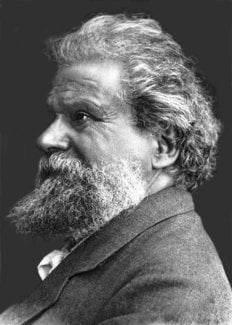
Giosuè Carducci (1835-1907) was born in Val di Castello, a small town near Pisa. He was early attracted to the Greek and Roman authors; in addition, he conscientiously studied the Italian classics: Dante, Tasso, and Alfieri. At the age of twenty he graduated with a degree in philosophy and letters from the University of Pisa. After several difficult years in which he taught in various high schools, he was appointed to the chair of Italian Literature at the University of Bologna, a post that he held until his retirement in 1904.
Inspired both by his own time as well as by his study of the classical and Italian poets, Carducci began writing poetry when he was a child. The first two collections of his poetry were Rime (1857) [Rhymes] and Levia Gravia (1868) [Light and Heavy]. Both reveal his enthusiasm for and imitation of the ancients as well as a strong revolutionary tendency. Inno a Satana (1865) [Hymn to Satan], for which Carducci was considered to be a «notorious praiser of Satan», is the full expression of his free thought and of modern ideas, inventions, and revolutions. Giambi ed epodi (1882) [Iambics and Epodes], a collection of satiric poems of a political nature, expresses Carducci’s indignation with his compatriots. In the Nuove poesie (1873) [New Poems] end the three collections of Odi barbare (1877, 1882, and 1889) [The Barbarian Odes], his poetic forms reach perfection.
Carducci was also an excellent translator, and the lyrics of Goethe and Heine greatly influenced the development of his own poetry.
In addition to his fame as a poet he was a noted literary historian and an eminent orator. He conducted research in every phase of literature and eloquently expressed his findings in Studi letterati (1874) [Literary Studies], Bozetti critici e discorsi letterari (1876) [Critical Sketches and Literary Discussigns], and many other works.
Carducci, moreover, led an active political life. After having been named an honorary citizen of Bologna, he was elected to the Senate in 1890; he served as deputy in the House of Representatives for a short time. Carducci’s poetry inspired his compatriots in the war for Italian independence, and he enjoyed an immense popularity both at home and abroad. Having manifested a scholarly and dynamic personality in all his endeavours, he stands as the greatest Italian literary figure in the latter part of the nineteenth century.
This autobiography/biography was written at the time of the award and first published in the book series Les Prix Nobel. It was later edited and republished in Nobel Lectures. To cite this document, always state the source as shown above.
Giosuè Carducci died on February 16, 1907.
The Nobel Foundation's copyright has expired.