“Banker to the Poor”. Professor Muhammad Yunus established the Grameen Bank in Bangladesh in 1983, fueled by the belief that credit is a fundamental human right …
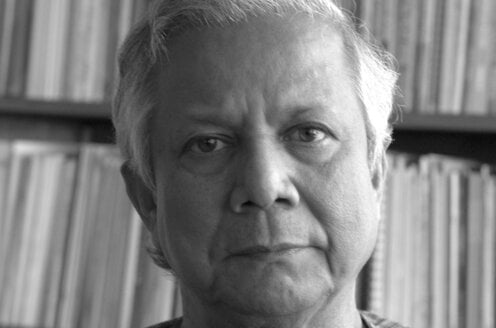
Muhammad Yunus was awarded the Nobel Peace Prize, jointly with Grameen Bank, for his efforts through microcredit to create economic and social development from below.
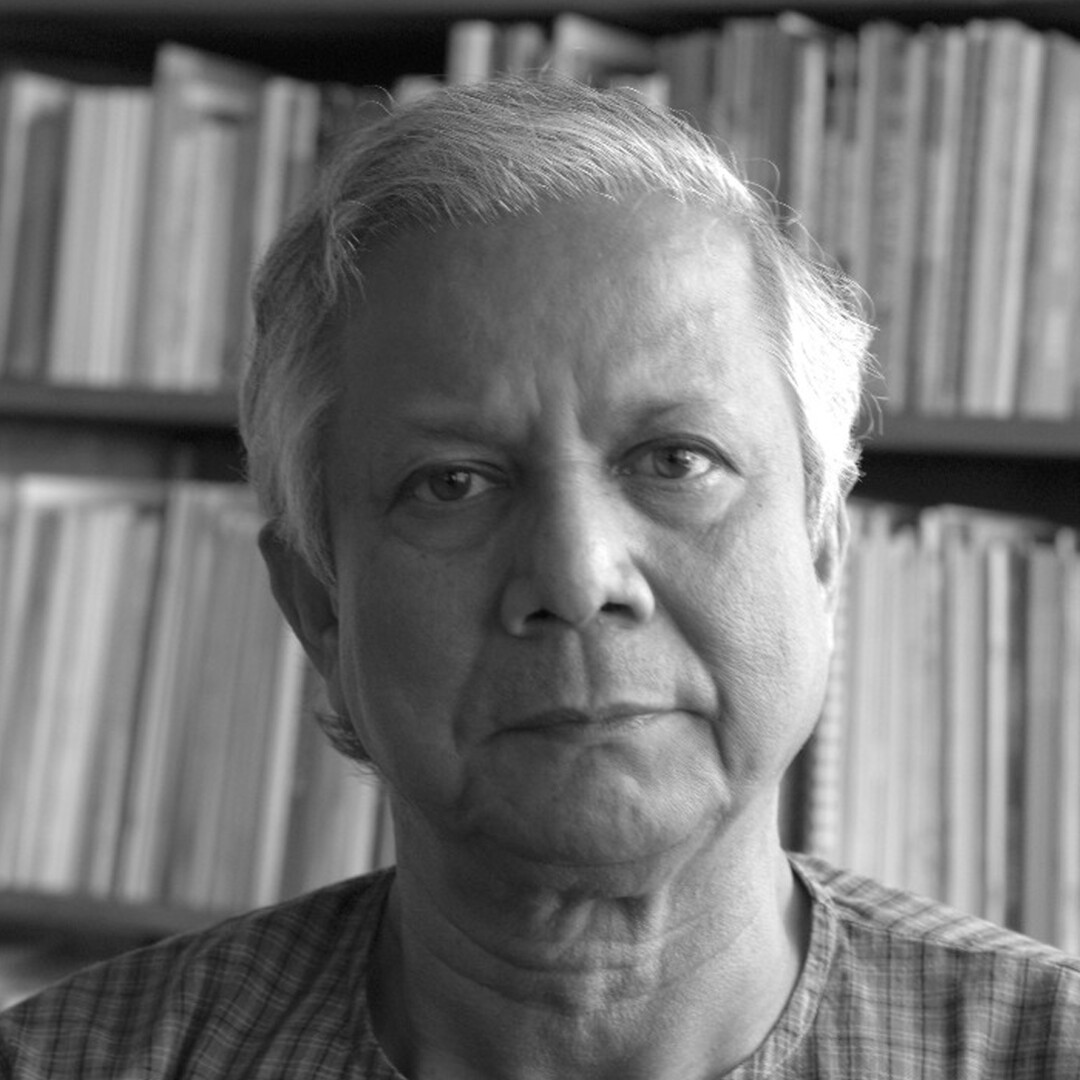
Full name: Muhammad Yunus
Born: 28 June 1940, Chittagong, British India (now Bangladesh)
Date awarded: 13 October 2006
Professor Muhammad Yunus is from Bangladesh. During a 1974 study of a poor village, he realised that something was wrong with the economic theories he was teaching. Access to credit was a human right, he felt, and his mission became to end poverty. Despite warnings from banks and the government, Yunus started giving small loans to the poor. In 1983, he founded Grameen Bank to drive economic and social development from the bottom up. Yunus believed women spend the money they borrow in ways that benefit their families and local communities, and that they are more responsible than men. So more than 96 per cent of the loan-holders were women. The Nobel Committee described Yunus as a leader who had succeeded in translating his vision into practical actions – to the benefit of millions.
“Poverty is created by the system we created … If we can fix the system, we can cure poverty.”
Muhammad Yunus, 4 February 2005
“I said, and I still say, the banking systems are designed to benefit the privileged. It is by design the poor are left out.”
Muhammad Yunus, 4 February 2005
Imagine that you are a woman from a village in Bangladesh. You scrape a living making bamboo stools. Because you do not own anything you can put up as security, you cannot get a loan from a bank. To pay for the bamboo you need to make the stools, you must borrow from a money-lender, who demands a high rate of interest. To pay back the loan you must sell your stools for a high price. But if it is too high you risk not being able to sell them, and even if you do, the money-lender takes most of the profit. This true story gave Yunus the idea for microcredit.
Yunus’s idea was to give poor people small loans and advice on how to use the money. The aim was to give people the help they need to get started. Yunus began by lending money from his own pocket to see if the idea would work in practice. In 1983 he opened Grameen Bank. Yunus’s goal is that, in the future, poverty will be something you will only see in a museum.
Not everyone saw the link between peace and the work of Muhammad Yunus and Grameen Bank. Since the 1950’s the Norwegian Nobel Committee have looked upon the concept of working for peace in a wider context. And by giving the Nobel Peace Prize to Yunus and Grameen Bank, they once again considered the fight against poverty as a contribution towards peace. As Yunus himself has said: “Poverty is a denial of human rights. If we raise people out of poverty we can build peace both within society and between societies.”
Muhammad Yunus gained many opponents after he revealed plans to found a new party to fight corruption in Bangladesh in 2007. The peace laureate shelved his plans, but was again criticised in late 2010. A TV-film accused him of exploiting his position in Grameen Bank to misuse Norwegian aid funds, of charging unfairly high interest and for unfair penalties upon borrowers who defaulted on loans. Even though Yunus was exonerated from the accusations, he was dismissed from his post as managing director at Grameen Bank in 2011.
“Banker to the Poor”. Professor Muhammad Yunus established the Grameen Bank in Bangladesh in 1983, fueled by the belief that credit is a fundamental human right …
Disclaimer: Every effort has been made by the publisher to credit organisations and individuals with regard to the supply of photographs. Please notify the publishers regarding corrections.
Grameen Bank was awarded the Nobel Peace Prize, jointly with Mohammad Yunus, for their efforts to create economic and social development from below.

Full name: Grameen Bank
Native name: Grameen Bank
Founded: 1976, Dhaka, Bangladesh
Date awarded: 13 October 2006
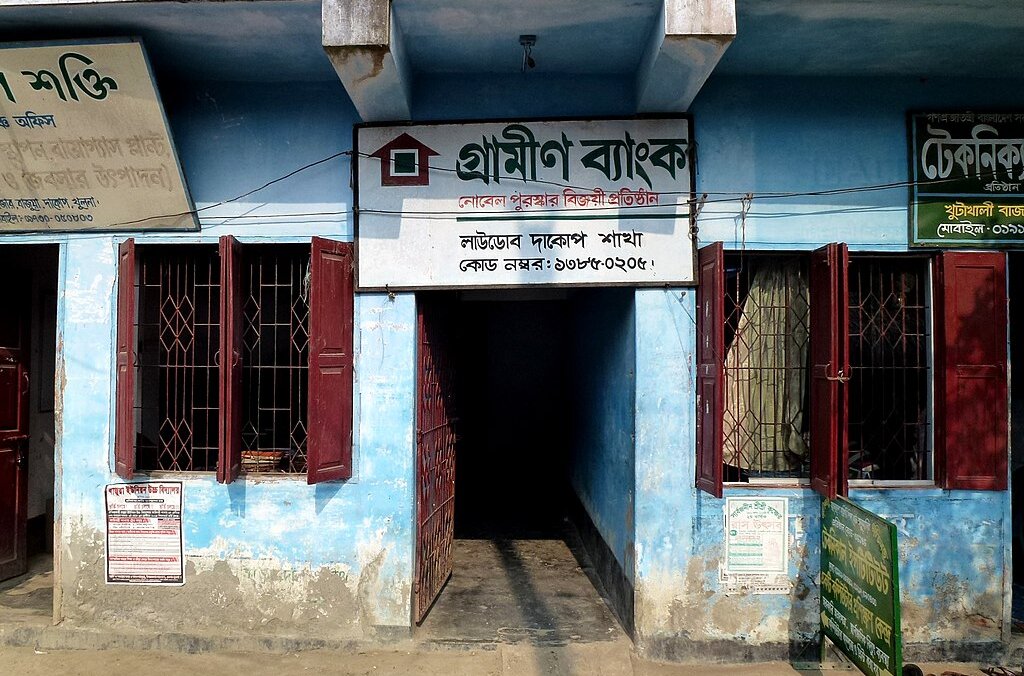
Grameen Bank (village bank) has millions of members in Bangladesh. The bank provides loans and other services to people who would otherwise have no access to such assistance. Loans are granted for income-generating activities, such as purchasing farm animals which can be turned into goods for sale. Families and local communities prosper as a result of the bank’s services, and it has inspired similar efforts worldwide. Muhammad Yunus, the bank’s founder, started lending money to poor people in Jobra in 1976. The project became a proper bank in 1983. Villages all over Bangladesh have a Grameen branch and in 2006 96 per cent of the borrowers were women. The Grameen model has given people worldwide the chance to create a better life for themselves and contribute to local development.
“Poverty is created by the system we created … If we can fix the system, we can cure poverty.”
Muhammad Yunus, 4 february 2005
Grameen Bank started by offering microloans. In 2006 the bank also offered a number of other services, such as savings schemes, money transfer and telecommunications services. In May 2006 the bank had 6.7 million loan-holders and more than 2,000 banking centres. The bank offered loans to people in more than 70,000 villages in Bangladesh.
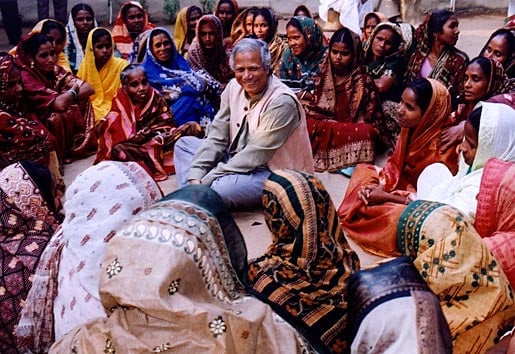
When it started, Grameen Bank lent money to both men and women, but Yunus noticed that women were more reliable when it came to repaying their loans, and the money they earned often benefited the entire family. In 2006, 96 per cent of Grameen Bank’s loan-holders were women. At its many centres, Grameen Bank offers the women financial advice. Once a week they meet as a group and discuss among themselves how the money can be put to the best possible use. The loans make it easier for women to earn money and create a decent life for themselves and their families.
Yunus presented his idea to the established banks, but they were sceptical. The bankers did not believe that poor people would be able to repay the money they had borrowed. Yunus began to lend money from his own pocket, and gave borrowers advice about how to put it to the best use. He soon saw that people repaid what they had borrowed. Eventually Yunus started borrowing money that he then lent to those who wanted a microloan. And in 1983 he set up Grameen Bank – the village bank.
Yunus realised that poor people did not have the money to go into business for themselves. For the want of a few start-up dollars they could not afford to buy the tools, raw materials or animals that would allow them to make a living. Normal banks refused to grant loans to people with nothing to offer as security. Yunus had a simple idea. Lending people a small amount of money – a microloan – would enable them to start their own businesses and thereby climb out of poverty.
Disclaimer: Every effort has been made by the publisher to credit organisations and individuals with regard to the supply of photographs. Please notify the publishers regarding corrections.

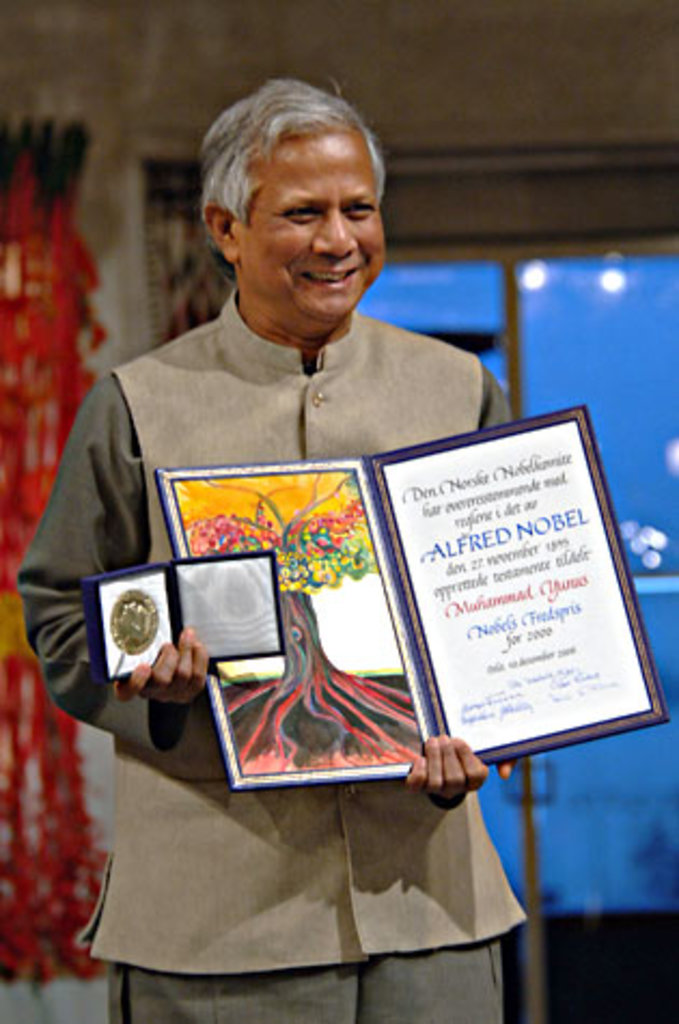
Nobel Prize laureate Muhammad Yunus at the Nobel Peace Prize award ceremony at Oslo City Hall, 10 December 2006.
© The Norwegian Nobel Institute 2006. Photo: Ken Opprann

Mosammat Taslima Begum (left), representing Grameen Bank, and Muhammad Yunus pose with their Nobel Peace Prize Medals and Diplomas.
© The Norwegian Nobel Institute 2006. Photo: Ken Opprann
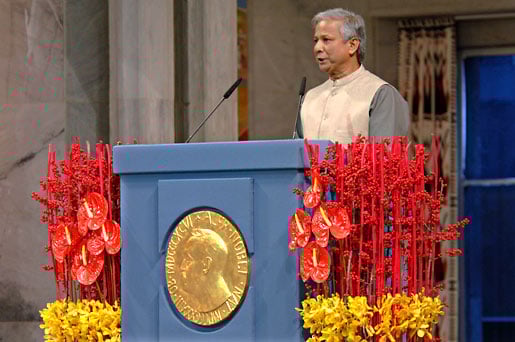
Muhammad Yunus delivering his Nobel Lecture at the Oslo City Hall, 10 December 2006.
Copyright © The Norwegian Nobel Institute 2006
Photo: Ken Opprann
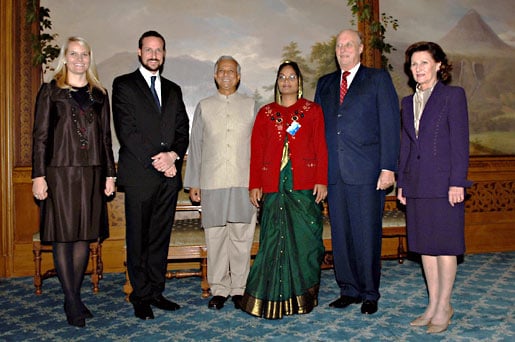
Crown Princess Mette-Marit and Crown Prince Haakon of Norway, Nobel Peace Prize Laureate Muhammad Yunus, Mosammat Taslima Begum (representing Grameen Bank), and Their Majesties King Harald V and Queen Sonja of Norway at Oslo City Hall, 10 December 2006.
Copyright © The Norwegian Nobel Institute 2006
Photo: Ken Opprann

Muhammad Yunus, 2006 Nobel Peace Prize Laureate, signing the guest book at the Norwegian Nobel Institute.
Copyright © The Norwegian Nobel Institute 2006
Photo: Ken Opprann
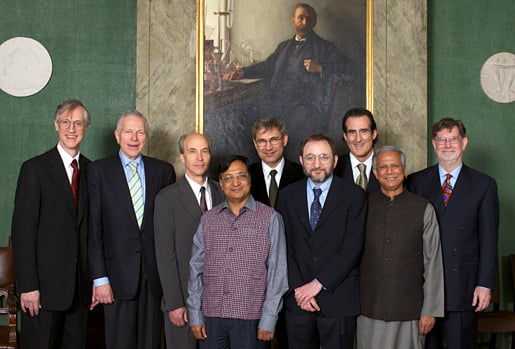
All the 2006 Nobel Laureates assembled for a group photo during their visit to the Nobel Foundation, 12 December 2006. Left to right: John C. Mather, Edmund S. Phelps, Roger Kornberg, Dipal Chandra Barua (representing Grameen Bank), Orhan Pamuk, Andrew Z. Fire, Craig C. Mello, Muhammad Yunus, and George F. Smoot.
Copyright © The Nobel Foundation 2006
Photo: Torbjörn Zadig

2006 Nobel Peace Prize Laureate Muhammad Yunus during a podcast recording at the Nobel Foundation in Stockholm, 19 May 2014.
Copyright © Nobel Media AB 2014

2006 Nobel Peace Prize Laureate Muhammad Yunus during a visit to the Nobel Foundation in Stockholm, 19 May 2014.
Copyright © Nobel Media AB 2014

Muhammad Yunus visiting the Nobel Museum in Stockholm, 12 December 2006.
Copyright © Scanpix 2006 Photo: Mark Earthy
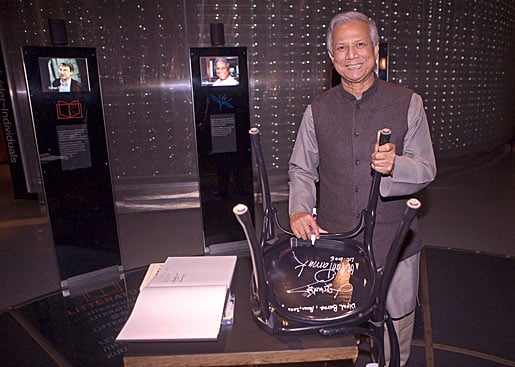
Muhammad Yunus, like many Nobel Laureates before him, autographs a chair at Kafé Satir at the Nobel Museum in Stockholm, 12 December 2006.
Copyright © Scanpix 2006 Photo: Mark Earthy
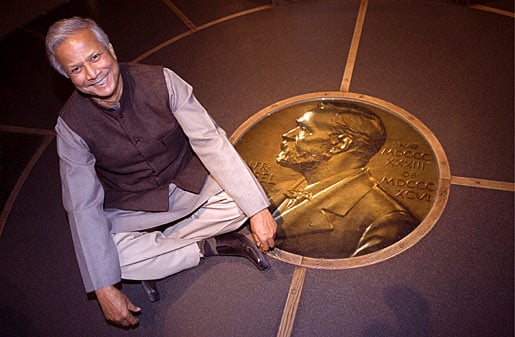
Muhammad Yunus during his visit to the Nobel Museum in Stockholm, 12 December 2006.
Copyright © Scanpix 2006 Photo: Mark Earthy

2006 Nobel Peace Prize Laureate Muhammad Yunus during the interview at the Nobel Museum in Stockholm, 12 December 2006. The interviewer is Marika Griehsel, freelance journalist.
Copyright © Nobel Media AB 2006
Photo: Frida Westholm

2006 Nobel Peace Prize Laureate Muhammad Yunus during the interview for Nobelprize.org in Stockholm, 12 December 2006.
Copyright © Nobel Media AB 2006
Photo: Frida Westholm
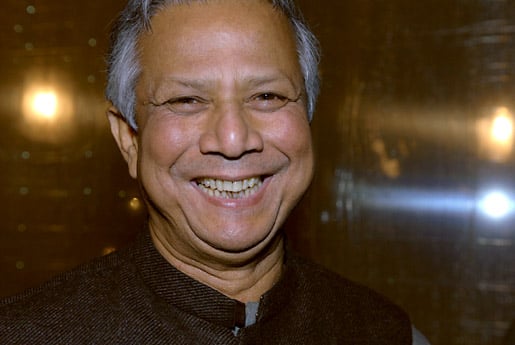
Nobel Peace Prize Laureate Muhammad in Stockholm, 12 December 2006.
Copyright © Nobel Media AB 2006
Photo: Frida Westholm

2006 Nobel Peace Prize Laureate Muhammad Yunus.
Copyright © Grameen Bank Audio Visual Unit, 2006
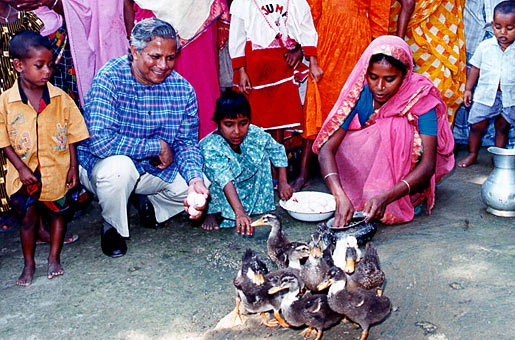
Muhammad Yunus and loan holders of Grameen Bank.
Copyright © Grameen Bank Audio Visual Unit, 2006
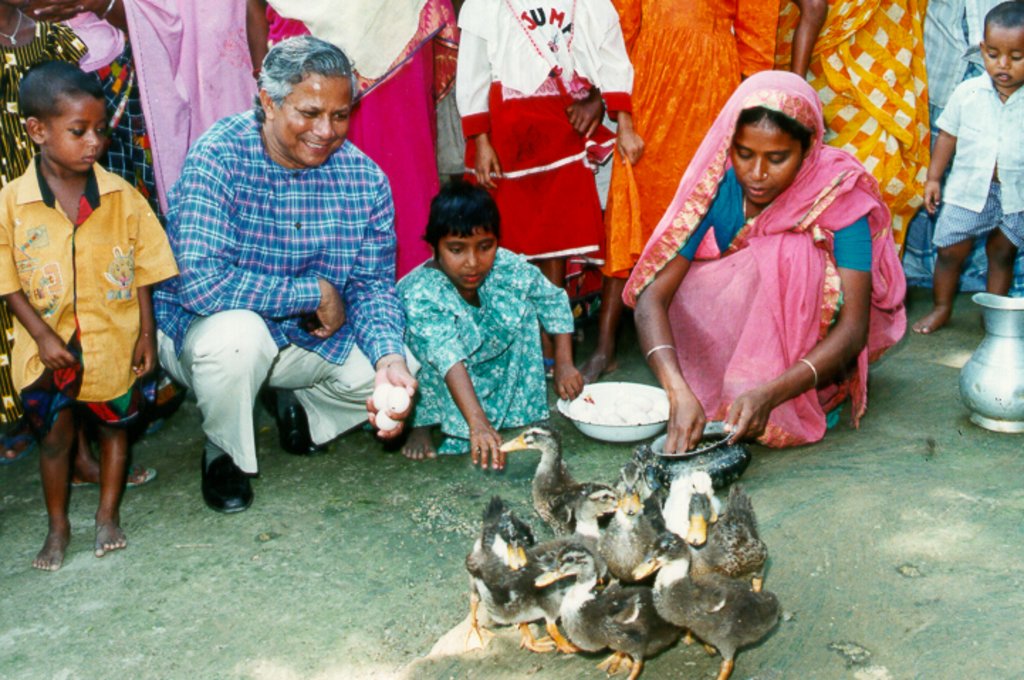
Muhammad Yunus visits Grameen Bank Centers and loan holders, who are mostly women.
Copyright © Grameen Bank Audio Visual Unit, 2006

Muhammad Yunus is being greeted.
Copyright © Grameen Bank Audio Visual Unit, 2006
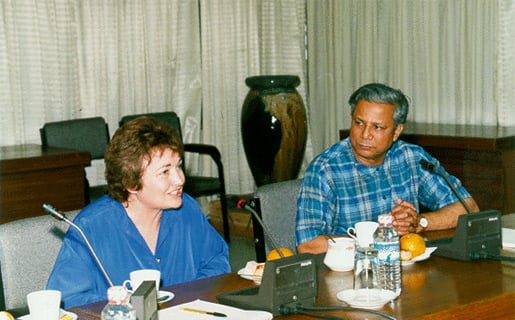
Mairead Corrigan Maguire, 1976 Nobel Peace Prize Laureate, visiting Grameen Bank and Muhammad Yunus on 23 November 1998.
Copyright © Grameen Bank, 1998 Photo: Nurjahan Chaklader
Nobel Lecture, Oslo, 10. desember, 2006.
Deres Majesteter, Deres Kongelige Høyheter, ærede medlemmer av den norske Nobelkomiteen, Eksellenser, Mine damer og herrer,
Jeg er sammen med Grameen Bank svært beæret over å motta denne meget prestisjefylte prisen. Vi er begeistret og overveldet over å ha blitt vist en slik ære. Helt siden det ble kunngjort hvem som hadde vunnet Nobels fredspris, har jeg mottatt hilsninger fra hele verden, men det som har rørt meg aller mest er alle de telefonene jeg nesten daglig har mottatt fra låntakere i Grameen Bank i fjerntliggende landsbyer i Bangladesh som bare ønsker å fortelle meg hvor stolte de er over å ha fått en slik anerkjennelse.
Ni valgte representanter for de 7 millioner låntakerne/eiere i Grameen Bank har reist sammen med meg hele veien til Oslo for å motta denne prisen. Jeg vil takke den norske Nobelkomiteen på deres vegne for årets tildeling av Nobels fredspris til Grameen Bank. Ved å gi deres institusjon denne meget prestisjefylte prisen, har dere vist dem en ære uten sidestykke. Takket være denne prisen, deltar ni stolte kvinner fra ulike landsbyer i Bangladesh som Nobelprisvinnere under denne seremonien, noe som gir en helt ny mening til Nobels fredspris.
Alle låntakerne i Grameen Bank feirer denne dagen som den største dagen i sine liv. De samler seg rundt nærmeste fjernsynsapparat i landsbyer over hele Bangladesh sammen med andre landsbyboere for å se på overføringen av denne seremonien.
Årets pris står for den høyeste ære og verdighet for hundre millioner av kvinner rundt om i verden som hver eneste dag kjemper for å tjene til livets opphold og gi håp om et bedre liv til sine barn. Dette er et historisk øyeblikk for dem.
Mine damer og herrer:
Ved å tildele oss denne prisen, har den norske Nobelkomiteen gitt viktig støtte til ideen om at fred er uløselig knyttet sammen med fattigdom. Fattigdom er en trussel mot freden.
Inntektsfordelingen i verden sier sitt. Nittifire prosent av verdens inntekter går til 40 prosent av befolkningen mens seksti prosent av befolkningen lever på kun 6 prosent av verdens inntekter. Halvparten av verdens befolkning lever på to dollar om dagen. Over en milliard mennesker lever på under én dollar om dagen. Dette er ingen oppskrift for fred.
Det nye tusenåret ble innledet med en stor global drøm. Verdens ledere kom i år 2000 sammen i FN og vedtok blant annet et historisk mål om å halvere fattigdommen innen 2015. Aldri tidligere i menneskehetens historie hadde hele verden stått sammen og i fellesskap vedtatt et så ambisiøst mål, med en klart angitt tidsramme og omfang. Men så inntraff 11. september og Irak-krigen og plutselig mistet verdensopinionen fokus på denne drømmen, og vi så at verdensledernes oppmerksomhet dreide fra bekjempelse av fattigdom til bekjempelse av terrorisme. Så langt har USA alene brukt over 530 milliarder $ på Irak-krigen.
Jeg mener at det ikke er mulig å bekjempe terrorisme med militære virkemidler. Terrorisme må fordømmes i sterke ordelag. Vi må ta klar avstand fra terrorisme og finne virkemidler som gjør det mulig å få slutt på dette fenomenet. Vi må ta for oss de dyptgripende årsakene til terrorismen hvis vi skal å få bukt med den én gang for alle Jeg mener at det å bruke ressurser på å forbedre de fattiges liv er en langt bedre strategi enn å bruke dem på våpen.
Fred må forstås på en human måte 3/4 på en bred sosial, politisk og økonomisk måte. Freden trues av en urettferdig økonomisk, sosial og politisk orden, fravær av demokrati, miljøødeleggelser og fravær av menneskerettigheter.
Fattigdom er fravær av alle menneskerettigheter. Frustrasjon, fiendtlighet og sinne som skyldes nedverdigende fattigdom kan ikke føre til fred i noe samfunn. Ønsker man å bygge en stabil fred, må man finne ut hvordan man kan gi folk muligheten til å leve et anstendig liv.
Å skape muligheter for flertallet av befolkningen – de fattige – står sentralt i det arbeidet som vi har viet våre liv til over de siste 30 årene.
Selv ble jeg ikke engasjert i kampen mot fattigdommen som politiker eller forsker. Jeg engasjerte meg fordi fattigdom var noe som omga meg og som jeg ikke kunne snu ryggen til. I 1974 var det vanskelig for meg å undervise i fine økonomiske teorier på universitetet samtidig som Bangladesh var rammet av en fryktelig sultkatastrofe. Stilt overfor knugende fattigdom og hungersnød, så jeg plutselig hvor hule disse teoriene var. Jeg ville gjøre noe straks for å hjelpe folk rundt meg, om jeg så bare fikk hjulpet ett eneste menneske til å komme seg gjennom nok én dag på en litt bedre måte. Dette gjorde at jeg ble konfrontert med de fattiges kamp for å skrape sammen små beløp som kunne strekke til livets opphold. Jeg ble sjokkert over å oppdage at en kvinne i landsbyen, som hadde lånt mindre enn én dollar hos utlåneren, måtte gi ham eneretten til å kjøpe alt hun produserte til den prisen han selv fastsatte. For meg var dette slavearbeid.
Jeg bestemte meg for å utarbeide en liste over alle ofrene for denne utlåns-“virksomheten” i landsbyen som lå rett ved siden av universitetsområdet. Da listen var ferdig, hadde jeg navnene på 42 ofre som til sammen hadde lånt 27 US $. Jeg tilbød dem 27 US $ fra min egen lomme for å få dem ut av pengeutlånernes klør. Den entusiasme som dette lille bidraget skapte hos folk, var det som fikk meg til å engasjere meg ytterligere. Hvis jeg kunne glede så mange mennesker med et så lite pengebeløp, hvorfor ikke gjøre mer av det samme?
Og det er det jeg har forsøkt å gjøre helt siden den gangen. Det aller første jeg gjorde var å forsøke å overbevise banken på universitetsområdet om å låne ut penger til de fattige. Men dette fungerte ikke. Banken sa at de fattige ikke var kredittverdige. Etter at jeg hadde jobbet iherdig med dette i flere måneder uten hell, tilbød jeg meg å stille som garantist for lån til de fattige. Jeg ble forbløffet over resultatet. De fattige betalte tilbake sine lån innen fristen hver eneste gang! Men jeg støtte fortsatt på problemer da jeg ville utvide ordningen til å omfatte eksisterende banker. Det var da jeg bestemte meg for å opprette en egen bank for fattige og i 1983 lyktes jeg endelig med dette. Jeg ga banken navnet Grameen Bank, eller landsbybanken.
I dag yter Grameen Bank lån til nærmere 7 millioner fattige, hvorav 97 prosent er kvinner, i 73.000 landsbyer i Bangladesh. Grameen Bank gir fattige familier lån uten sikkerhet til inntektsgivende virksomhet, boliger, studier og mikrobedrifter og tilbyr i tillegg en rekke attraktive sparings-, pensjonsfonds- og forsikringsprodukter til sine medlemmer. Siden ordningen med boliglån ble innført i 1984, er den blitt benyttet til å bygge 640.000 hus. Det er kvinnene selv som står som de juridiske eierne av disse husene. Vi har fokusert på kvinner fordi vi har sett at det å gi lån til kvinnene gir flest fordeler for familien.
Til sammen har banken gitt lån som tilsvarer ca. 6,0 milliarder US $. Tilbakebetalingsgraden er på 99%. Grameen Bank går rutinemessig med overskudd. Banken er økonomisk selvfinaniserende og har ikke tatt imot midler fra givere siden 1995. Grameen Banks innskudd og egne ressurser tilsvarer i dag 143 prosent av alle utestående lån. Ifølge Grameen Banks interne undersøkelse, har 58 prosent av våre låntakere nå kommet over fattigdomsgrensen.
Grameen Bank startet opp som et bitte lite lokalt forankret prosjekt som ble drevet ved hjelp av flere av mine studenter, som var lokale ungdommer. Tre av disse studentene arbeider fortsatt sammen med meg etter alle disse årene, i toppledelsen i Grameen Bank. De er her i dag for å ta imot denne æresbevisningen som dere nå gir oss.
Denne ideen, som startet opp i Jobra, en liten landsby i Bangladesh, har spredt seg til resten av verden og det finnes nå Grameen-lignende ordninger i nesten alle verdens land.
Det er nå 30 år siden vi startet opp. Vi ser på barna til våre låntakere hva slags effekt vårt arbeid har hatt på deres liv. Kvinner som er låntakere hos oss prioriterer nesten alltid barna høyest. Ett av de seksten slagordene som de utarbeidet og levde etter, gikk ut på å sende barna på skole. Grameen Bank oppmuntret dem og ganske snart gikk samtlige barn på skole. Mange av disse barna oppnådde toppresultater i sine klasser. Vi ønsket å feire dette, og derfor opprettet vi en stipendordning for begavede studenter. Grameen Bank deler nå ut 30.000 stipendier hvert år.
Mange av barna har tatt høyere utdanning for å bli leger, ingeniører, lærere eller har tatt en annen fagutdannelse. Vi har innført studielån for å gjøre det lettere for Grameen-studenter å fullføre høyere utdanning. Noen av dem har nå tatt en doktorgrad. Det er 13.000 studenter som får studielån. Over 7.000 nye studenter kommer nå til hvert år.
Vi skaper en helt ny generasjon som vil være godt rustet for å bringe sine familier ut av fattigdommens grep. Vi ønsker å skape et brudd i fattigdommens historiske kontinuitet.
I Bangladesh har tilbudet om mikrokreditt allerede nådd ut til 80 prosent av de fattige familiene. Vi håper at vi innen 2010 skal ha nådd ut til 100 prosent av de fattige familiene.
For tre år siden startet vi opp et eget program med fokus på tiggere. Ingen av Grameen Banks regler gjelder for dem. Lånene er rentefrie; de kan betale inn det beløpet de selv ønsker, når de måtte ønske det. Vi foreslo at de kunne ta med seg småvarer som snacks, leker eller husholdningsartikler når de gikk fra hus til hus for å tigge. Denne ideen slo an. I dag er det 85.000 tiggere som deltar i programmet. Ca. 5.000 av dem har helt sluttet å tigge. Et typisk lån til en tigger er på 12 $.
Vi oppmuntrer og støtter ethvert forslag som kan hjelpe fattige til å komme seg ut av fattigdommen. Vi fremholder alltid ideen om å bruke mikrokreditt i tillegg til andre tiltak fordi vi mener at mikrokreditt gjør at slike tiltak fungerer bedre.
Informasjons- og kommunikasjonsteknologien (IKT) forandrer raskt vår verden ved å skape en avstands- og grenseløs verden med øyeblikkelig kommunikasjon. Den er i ferd med å bli stadig billigere og billigere. Jeg øynet en mulighet for at de fattige kunne endre sine liv hvis de fikk tilgang til denne teknologien for å dekke sine behov.
Som et første skritt for å bringe IKT ut til de fattige, opprettet vi et mobiltelefonselskap, Grameen Phone. Vi ga lån fra Grameen Bank til fattige kvinner slik at de kunne kjøpe mobiltelefoner og selge telefontjenester i landsbyene. Vi så synergieffekten mellom mikrokreditt og IKT.
Telefonvirksomheten ble en suksess og en populær virksomhet blant Grameens låntakere. Telefondamene satte seg raskt inn i og fornyet telefonvirksomheten, som har blitt den raskeste måten å komme seg ut av fattigdommen og oppnå samfunnets respekt på. I dag er det nærmere 300.000 telefondamer som tilbyr telefontjenester i landsbyer rundt om i Bangladesh. Grameen Phone har over 10 millioner abonnenter og er landets største mobiltelefonselskap. Selv om telefondamene kun utgjør en liten andel av det samlede antall abonnenter, står de for 19 prosent av selskapets inntekter. 4 av de ni styremedlemmene som deltar på den høytidelige seremonien her i dag, er telefondamer.
Grameen Phone er et joint-venture eid av Telenor i Norge og Grameen Telecom i Bangladesh. Telenor eier 62 prosent av selskapets aksjer, mens Grameen Telecom eier 38 prosent. Vår visjon er at vi til slutt skal omdanne dette selskapet til et sosialt forretningsforetak ved at de fattige kvinnene i Grameen Bank skal bli majoritetseiere. Dette er et mål vi jobber for å nå. En dag vil Grameen Phone bli nok et eksempel på et stort foretak eid av fattige.
Kapitalismen fokuserer på det frie markedet. Det hevdes at jo friere markedet er, desto bedre vil kapitalismen gi svar på spørsmålene om hva, hvordan og for hvem. Det hevdes også at individets søken etter personlig vinning vil gi et optimalt kollektivt resultat.
Jeg går inn for å styrke friheten i markedet. Men samtidig er jeg veldig misfornøyd med de begrepsmessige begrensningene som markedsaktørene pålegges. Dette springer ut av ideen om at næringsdrivende er endimensjonale mennesker, som bare har ett formål med sin forretningsvirksomhet, nemlig profittmaksimering. En slik fortolkning av kapitalismen isolerer de næringsdrivende fra de politiske, emosjonelle, sosiale, åndelige og miljømessige dimensjonene i livet. Dette ble kanskje innført som en fornuftig forenkling, men det fjernet det som er selve essensen i menneskenes liv.
Mennesker er fantastiske vesener utrustet med ubegrensede menneskelige egenskaper og evner. Våre teoretiske utlegninger bør gi rom for at disse egenskapene skal få utfolde seg, og ikke ta utgangspunkt i at de ikke finnes.
Mange av verdens problemer skyldes denne begrensningen som er lagt på aktørene i det frie markedet. Verden har ikke løst problemet med den knugende fattigdommen som halvparten av verdens befolkning lever under. Flertallet av verdens befolkning får ikke tilgang på helsetjenester. Det landet som har det rikeste og frieste markedet i verden, er ute av stand til å tilby helsetjenester til en femtedel av sin befolkning.
Vi har vært så imponert over det frie markedets suksess at vi aldri har våget å gi uttrykk for noen tvil når det gjelder det grunnleggende postulatet. For å forverre det hele har vi jobbet ekstra hardt for å forandre oss slik at vi i så stor grad som mulig ligner de endimensjonale menneskene som inngår i teoriens begrepsapparat. Dette har vi gjort for at den frie markedsmekanismen skal fungere så friksjonsfritt som mulig.
Ved å gi begrepet “næringsdrivende” en bredere definisjon, kan vi endre kapitalismens karakter drastisk, og løse mange av de uløste sosiale og økonomiske problemene innenfor rammen av det frie markedet. La oss anta at en næringsdrivende, i stedet for å bare være motivert av én ting (som profittmaksimering), nå er motivert av to ting som er gjensidig utelukkende, men like viktige – a) profittmaksimering og b) gjøre gode gjerninger for menneskeheten og for verden.
Hver motivasjonsfaktor vil føre til en egen form for forretningsvirksomhet. La oss kalle den første formen for forretningsvirksomhet en profittmaksimerende forretningsvirksomhet og den andre formen for en sosial forretningsvirksomhet.
Sosial forretningsvirksomhet vil være en ny form for virksomhet som lanseres på markedet, hvor formålet er å utgjøre en forskjell i verden. De som investerer i sosial forretningsvirksomhet vil kunne få tilbake sin investering, men vil ikke få utbetalt utbytte fra selskapet. Overskuddet vil bli pløyet tilbake til selskapet slik at det kan nå ut til flere og at kvaliteten på selskapets produkt eller tjeneste kan forbedres. En sosial forretningsvirksomhet vil være et selskap som ikke er tapsbringende, men som heller ikke gir utbytte.
Når slike sosiale forretningsforetak er blitt lovregulert, vil mange eksisterende selskaper satse på å opprette slike sosiale forretningsvirksomheter i tillegg til sin opprinnelige virksomhet. Mange aktivister fra frivillig sektor vil også se på dette som et attraktivt alternativ. Til forskjell fra frivillig sektor, hvor man må samle inn penger fra givere for å holde virksomheten i gang, vil en sosial forretningsvirksomhet være selvfinansierende og skape overskudd som gjør det mulig å ekspandere siden det dreier seg om foretak som ikke er tapsbringende. Sosial forretningsvirksomhet vil gå inn i en ny og egen form for kapitalmarked for å reise kapital.
Ungdommer rundt om i hele verden, spesielt i rike land, vil bli tiltrukket av ideen om sosial forretningsvirksomhet siden de gjennom dette vil bli utfordret til å gjøre noe viktig for vår verden ved å ta i bruk sitt kreative talent. Mange av dagens ungdommer føler frustrasjon over at det i dagens kapitalistiske verden ikke finnes noen verdige utfordringer som kan skape begeistring hos dem. Sosialismen ga dem en drøm å kjempe for. Ungdommer drømmer om å skape sin egen, perfekte verden.
Sosial forretningsvirksomhet tar for seg nesten alle de sosiale og økonomiske problemene i verden. Utfordringen ligger i å utvikle nyskapende forretningsmodeller og bruke dem til å oppnå de ønskede sosiale virkninger på en kostnadseffektiv og velfungerende måte. Helsetjenester til fattige, finanstjenester til fattige, informasjonsteknologi til fattige, utdanning og opplæring til fattige, fornybar energi – alle disse feltene er spennende felter for sosial forretningsvirksomhet.
Sosial forretningsvirksomhet er viktig fordi den tar opp sentrale problemstillinger som menneskeheten er opptatt av. Den kan bidra til å endre livene til de 60 prosent av verdens befolkning som befinner seg helt nederst på rangstigen og løfte dem ut av fattigdommen.
Selv profittmaksimerende selskaper kan utformes som sosiale forretningsforetak ved at man gir fullt eierskap eller majoritetseierskap til de fattige. Dette er den andre formen for sosial forretningsvirksomhet. Grameen Bank faller inn under denne kategorien.
De fattige kan få aksjer i disse selskapene i gave fra givere, eller de kan kjøpe aksjer for egne penger. Låntakerne kjøper aksjer i Grameen Bank for egne penger og disse aksjene ikke overdras til personer som ikke er låntakere. Et engasjert, profesjonelt team står for den daglige driften av banken.
Bilaterale og multilaterale givere kunne lett opprette en slik form for sosial forretningsvirksomhet. Når en giver gir et lån eller en bevilgning for å få bygget en bro i mottakerlandet, kan det opprettes et “broselskap” som eies av de fattige på lokalplanet. Et engasjert forvaltningsselskap kan få ansvaret for å drive selskapet. Selskapets overskudd går til de fattige i form av betaling av utbytte, eller til bygging av flere broer. Mange infrastruktur-prosjekter, som veier, motorveier, flyplasser, havner, forsyningssskaper kan utformes på denne måten.
Grameen har opprettet to sosiale forretningsvirksomheter av den første typen. Den ene er en yoghurt-fabrikk, som fremstiller yoghurt tilsatt vitaminer o.l. for å gi ernæring til underernærte barn, og dette er et joint-venture med Danone. Den vil fortsette å bygge ut sin virksomhet inntil denne yoghurten når ut til samtlige underernærte barn i Bangladesh. Den andre er en øyesykehus-kjede. Hvert sykehus skal foreta 10.000 operasjoner av grå stær årlig til differensierte priser for rike og fattige.
For å koble investorene sammen med slike sosiale forretningsforetak, må vi opprette et sosialt børsmarked hvor det kun handles med aksjer i sosiale forretningsforetak. En investor vil henvende seg til en slik børs med et klart ønske om å finne en sosial forretningsvirksomhet som står for det han er opptatt av. De som er ute etter å tjene penger vil henvende seg til det eksisterende aksjemarkedet.
For at et sosialt børsmarked skal kunne fungere godt, må vi opprette ratingselskaper, standardisere terminologien, definisjonene, innføre effektevalueringsverktøy, rapporteringsformater og nye finanspublikasjoner, som for eksempel The Social Wall Street Journal. Bedriftsøkonomiske utdanningsinstitusjoner vil tilby utdanning og utstede vitnemål i sosial forretningsvirksomhet slik at unge ledere lærer hvordan de skal drive sosial forretningsvirksomhet mest mulig effektivt, og fremfor alt, bli inspirert til å starte opp sosiale forretningsforetak selv.
Jeg støtter globaliseringen og mener den kan gi de fattige større fordeler enn alternativet. Men det må være den riktige formen for globalisering. For meg er globaliseringen som en hundrefelts motorvei som går på kryss og tvers av kloden. Hvis det er fritt frem for alle på denne motorveien, vil alle feltene bli overtatt av kjempelastebiler fra verdens store økonomier. Rickshawene fra Bangladesh vil bli presset ut av motorveien. For å skape en vinn-vinn-situasjon må vi ha trafikkregler, trafikkpoliti og trafikkmyndigheter for denne globale motorveien. Regelen om “den sterkestes rett” må erstattes av regler som sikrer de fattigste en plass og en del av kaka, uten å bli skjøvet ut over sidelinja av de sterke. Globaliseringen må ikke bli til finansimperialisme.
Slagkraftige multinasjonale sosiale forretningsforetak kan opprettes slik at gevinsten ved globaliseringen beholdes av fattige mennesker og fattige land. Sosiale forretningsvirksomheter vil enten gi fattige mennesker eierskap, eller sørge for at fortjenesten beholdes av de fattige landene, siden de ikke skal ta ut utbytte. Direkte utenlandske investeringer foretatt av utenlandske sosiale forretningsforetak vil bli spennende nyheter for mottakerland. Å bygge opp en sterkere økonomi i fattige land ved å ivareta deres nasjonale interesser overfor selskaper som driver utplyndring vil være en viktig oppgave for sosiale forretningsvirksomheter.
Vi får det vi vil ha, eller det vi ikke avviser. Vi aksepterer det faktum at vi alltid vil ha fattige rundt oss og at fattigdommen er en del av menneskeskjebnen. Det er nettopp dette som er grunnen til at vi fortsatt har fattige rundt oss. Hvis vi fullt og helt hadde ment at fattigdom er uakteptabelt og ikke hører hjemme i et sivilisert samfunn, hadde vi bygget opp institusjoner og ført en politikk som hadde vært egnet til å skape en fattigdomsfri verden.
Vi ville reise til månen, så da gjorde vi det. Vi oppnår det vi ønsker å oppnå. Hvis det er noe vi ikke oppnår, så er det fordi vi ikke har gått ordentlig inn for det. Vi skaper det vi ønsker oss.
Hva vi ønsker oss og hvordan vi skal skaffe oss det, vil være avhengig av vår tankesett. Det er uhyre vanskelig å endre vårt tankesett når det først har blitt formet. Vi må finne ut hvordan vi skal kunne endre perspektiv kontinuerlig og rekonfigurere vårt tankesett raskt når ny kunnskap vokser frem. Vi kan rekonfigurere vår verden hvis vi greier å rekonfigurere vårt tankesett.
Jeg tror vi kan skape en verden uten fattigdom fordi fattigdommen ikke er skapt av de fattige. Den er skapt og opprettholdes av det økonomiske og sosiale systemet som vi har utformet for oss selv; de institusjoner og begreper som dette systemet består av; den politikken som vi fører.
Fattigdommen oppstod fordi vi bygget vårt teoretiske rammeverk på postulater som undervurderer menneskenes evner, ved at vi utarbeidet for snevre begreper (begreper som for eksempel forretningsvirksomhet, kredittverdighet, entreprenørskap, sysselsetting) eller bygget opp halvferdige institusjoner (som for eksempel finansinstitusjoner, hvor de fattige utestenges). Fattigdom skyldes feil i begrepsapparatet mer enn manglende evner fra menneskenes side.
Jeg tror fullt og fast at vi kan skape en verden uten fattigdom hvis vi alle tror på det. I en verden uten fattigdom skal du bare kunne se fattigdom hvis du går på et fattigdomsmuseum. Når skolebarn besøker fattigdomsmuseet, vil de bli forskrekket over å se hvilke forferdelige og uverdige forhold enkelte mennesker levde under. De vil anklage sine forfedre for å ha tolerert en slik inhuman situasjon, som eksisterte så lenge og rammet så mange.
Et menneske som fødes inn i denne verden, er fullt utrustet ikke bare til å ta vare på seg selv, men også til å bidra til at flere mennesker i verden får det bedre. Noen er så heldige at de til en viss grad får muligheten til å utforske sitt potensiale, mens mange andre lever et helt liv uten noensinne å få muligheten til å pakke opp denne fantastiske gaven som de ble født med. De går uutforsket i graven og verden får aldri nyte godt av deres skaperevne og deres bidrag.
Grameen har gitt meg en urokkelig tro på menneskenes skaperevne. Dette har ført til at jeg mener at mennesket ikke er født til å lide under sult og fattigdom.
For meg er fattige mennesker som bonsaitrær. Når du planter det beste frøet fra det høyeste treet i en blomsterpotte, får du en kopi av det høyeste treet, men det blir bare noen tommer høyt. Det er ingenting i veien med det frøet du plantet, det er bare ikke nok jord. Fattige mennesker er bonsaitrær. Det er ingenting i veien med frøene deres. Det er bare det at samfunnet aldri ga dem noe grunnlag å vokse på. Alt som skal til for å bringe fattige mennesker ut av fattigdommen, er at vi skaper et utviklende miljø for dem. Så snart de fattige kan slippe løs sin energi og sin skaperevne, vil fattigdommen raskt forsvinne.
La oss stå sammen om å gi ethvert menneske en rimelig sjanse til å frigjøre sin energi og sin skaperevne.
Mine damer og herrer,
La meg avslutningsvis gi uttrykk for min dypfølte takk til den norske Nobelkomiteen for deres anerkjennelsen av at fattige mennesker, og i særdeleshet fattige kvinner, både har et potensiale og en rett til å leve et anstendig liv, og at mikrokreditt bidrar til å frigjøre dette potensialet.
Jeg tror at den æresbevisningen vi er blitt tildelt vil inspirere til mange flere modige initiativer rundt om i verden slik at vi får et historisk gjennombrudd når det gjelder å avskaffe den globale fattigdommen.
Tusen takk.
Muhammad Yunus delivered his Nobel Lecture on 10 December 2006 at the Oslo City Hall, Norway. He was introduced by Professor Ole Danbolt Mjøs, Chairman of the Norwegian Nobel Committee. Professor Yunus begins his Nobel Lecture with a few words in Bangla.
Nobel Lecture, Oslo, December 10, 2006.
Your Majesties, Your Royal Highnesses, Honorable Members of the Norwegian Nobel Committee, Excellencies, Ladies and Gentlemen,
Grameen Bank and I are deeply honoured to receive this most prestigious of awards. We are thrilled and overwhelmed by this honour. Since the Nobel Peace Prize was announced, I have received endless messages from around the world, but what moves me most are the calls I get almost daily, from the borrowers of Grameen Bank in remote Bangladeshi villages, who just want to say how proud they are to have received this recognition.
Nine elected representatives of the 7 million borrowers-cum-owners of Grameen Bank have accompanied me all the way to Oslo to receive the prize. I express thanks on their behalf to the Norwegian Nobel Committee for choosing Grameen Bank for this year’s Nobel Peace Prize. By giving their institution the most prestigious prize in the world, you give them unparalleled honour. Thanks to your prize, nine proud women from the villages of Bangladesh are at the ceremony today as Nobel laureates, giving an altogether new meaning to the Nobel Peace Prize.
All borrowers of Grameen Bank are celebrating this day as the greatest day of their lives. They are gathering around the nearest television set in their villages all over Bangladesh , along with other villagers, to watch the proceedings of this ceremony.
This years’ prize gives highest honour and dignity to the hundreds of millions of women all around the world who struggle every day to make a living and bring hope for a better life for their children. This is a historic moment for them.
Ladies and Gentlemen:
By giving us this prize, the Norwegian Nobel Committee has given important support to the proposition that peace is inextricably linked to poverty. Poverty is a threat to peace.
World’s income distribution gives a very telling story. Ninety four percent of the world income goes to 40 percent of the population while sixty percent of people live on only 6 per cent of world income. Half of the world population lives on two dollars a day. Over one billion people live on less than a dollar a day. This is no formula for peace.
The new millennium began with a great global dream. World leaders gathered at the United Nations in 2000 and adopted, among others, a historic goal to reduce poverty by half by 2015. Never in human history had such a bold goal been adopted by the entire world in one voice, one that specified time and size. But then came September 11 and the Iraq war, and suddenly the world became derailed from the pursuit of this dream, with the attention of world leaders shifting from the war on poverty to the war on terrorism. Till now over $ 530 billion has been spent on the war in Iraq by the USA alone.
I believe terrorism cannot be won over by military action. Terrorism must be condemned in the strongest language. We must stand solidly against it, and find all the means to end it. We must address the root causes of terrorism to end it for all time to come. I believe that putting resources into improving the lives of the poor people is a better strategy than spending it on guns.
Peace should be understood in a human way − in a broad social, political and economic way. Peace is threatened by unjust economic, social and political order, absence of democracy, environmental degradation and absence of human rights.
Poverty is the absence of all human rights. The frustrations, hostility and anger generated by abject poverty cannot sustain peace in any society. For building stable peace we must find ways to provide opportunities for people to live decent lives.
The creation of opportunities for the majority of people − the poor − is at the heart of the work that we have dedicated ourselves to during the past 30 years.
I became involved in the poverty issue not as a policymaker or a researcher. I became involved because poverty was all around me, and I could not turn away from it. In 1974, I found it difficult to teach elegant theories of economics in the university classroom, in the backdrop of a terrible famine in Bangladesh. Suddenly, I felt the emptiness of those theories in the face of crushing hunger and poverty. I wanted to do something immediate to help people around me, even if it was just one human being, to get through another day with a little more ease. That brought me face to face with poor people’s struggle to find the tiniest amounts of money to support their efforts to eke out a living. I was shocked to discover a woman in the village, borrowing less than a dollar from the money-lender, on the condition that he would have the exclusive right to buy all she produces at the price he decides. This, to me, was a way of recruiting slave labor.
I decided to make a list of the victims of this money-lending “business” in the village next door to our campus.
When my list was done, it had the names of 42 victims who borrowed a total amount of US $27. I offered US $27 from my own pocket to get these victims out of the clutches of those money-lenders. The excitement that was created among the people by this small action got me further involved in it. If I could make so many people so happy with such a tiny amount of money, why not do more of it?
That is what I have been trying to do ever since. The first thing I did was to try to persuade the bank located in the campus to lend money to the poor. But that did not work. The bank said that the poor were not creditworthy. After all my efforts, over several months, failed I offered to become a guarantor for the loans to the poor. I was stunned by the result. The poor paid back their loans, on time, every time! But still I kept confronting difficulties in expanding the program through the existing banks. That was when I decided to create a separate bank for the poor, and in 1983, I finally succeeded in doing that. I named it Grameen Bank or Village bank.
Today, Grameen Bank gives loans to nearly 7.0 million poor people, 97 per cent of whom are women, in 73,000 villages in Bangladesh. Grameen Bank gives collateral-free income generating, housing, student and micro-enterprise loans to the poor families and offers a host of attractive savings, pension funds and insurance products for its members. Since it introduced them in 1984, housing loans have been used to construct 640,000 houses. The legal ownership of these houses belongs to the women themselves. We focused on women because we found giving loans to women always brought more benefits to the family.
In a cumulative way the bank has given out loans totaling about US $6.0 billion. The repayment rate is 99%. Grameen Bank routinely makes profit. Financially, it is self-reliant and has not taken donor money since 1995. Deposits and own resources of Grameen Bank today amount to 143 per cent of all outstanding loans. According to Grameen Bank’s internal survey, 58 per cent of our borrowers have crossed the poverty line.
Grameen Bank was born as a tiny homegrown project run with the help of several of my students, all local girls and boys. Three of these students are still with me in Grameen Bank, after all these years, as its topmost executives. They are here today to receive this honour you give us.
This idea, which began in Jobra, a small village in Bangladesh, has spread around the world and there are now Grameen type programs in almost every country.
It is 30 years now since we began. We keep looking at the children of our borrowers to see what has been the impact of our work on their lives. The women who are our borrowers always gave topmost priority to the children. One of the Sixteen Decisions developed and followed by them was to send children to school. Grameen Bank encouraged them, and before long all the children were going to school. Many of these children made it to the top of their class. We wanted to celebrate that, so we introduced scholarships for talented students. Grameen Bank now gives 30,000 scholarships every year.
Many of the children went on to higher education to become doctors, engineers, college teachers and other professionals. We introduced student loans to make it easy for Grameen students to complete higher education. Now some of them have PhD’s. There are 13,000 students on student loans. Over 7,000 students are now added to this number annually.
We are creating a completely new generation that will be well equipped to take their families way out of the reach of poverty. We want to make a break in the historical continuation of poverty.
In Bangladesh 80 percent of the poor families have already been reached with microcredit. We are hoping that by 2010, 100 per cent of the poor families will be reached.
Three years ago we started an exclusive programme focusing on the beggars. None of Grameen Bank’s rules apply to them. Loans are interest-free; they can pay whatever amount they wish, whenever they wish. We gave them the idea to carry small merchandise such as snacks, toys or household items, when they went from house to house for begging. The idea worked. There are now 85,000 beggars in the program. About 5,000 of them have already stopped begging completely. Typical loan to a beggar is $12.
We encourage and support every conceivable intervention to help the poor fight out of poverty. We always advocate microcredit in addition to all other interventions, arguing that microcredit makes those interventions work better.
Information and communication technology (ICT) is quickly changing the world, creating distanceless, borderless world of instantaneous communications. Increasingly, it is becoming less and less costly. I saw an opportunity for the poor people to change their lives if this technology could be brought to them to meet their needs.
As a first step to bring ICT to the poor we created a mobile phone company, Grameen Phone. We gave loans from Grameen Bank to the poor women to buy mobile phones to sell phone services in the villages. We saw the synergy between microcredit and ICT.
The phone business was a success and became a coveted enterprise for Grameen borrowers. Telephone-ladies quickly learned and innovated the ropes of the telephone business, and it has become the quickest way to get out of poverty and to earn social respectability. Today there are nearly 300,000 telephone ladies providing telephone service in all the villages of Bangladesh . Grameen Phone has more than 10 million subscribers, and is the largest mobile phone company in the country. Although the number of telephone-ladies is only a small fraction of the total number of subscribers, they generate 19 per cent of the revenue of the company. Out of the nine board members who are attending this grand ceremony today 4 are telephone-ladies.
Grameen Phone is a joint-venture company owned by Telenor of Norway and Grameen Telecom of Bangladesh. Telenor owns 62 per cent share of the company, Grameen Telecom owns 38 per cent. Our vision was to ultimately convert this company into a social business by giving majority ownership to the poor women of Grameen Bank. We are working towards that goal. Someday Grameen Phone will become another example of a big enterprise owned by the poor.
Capitalism centers on the free market. It is claimed that the freer the market, the better is the result of capitalism in solving the questions of what, how, and for whom. It is also claimed that the individual search for personal gains brings collective optimal result.
I am in favor of strengthening the freedom of the market. At the same time, I am very unhappy about the conceptual restrictions imposed on the players in the market. This originates from the assumption that entrepreneurs are one-dimensional human beings, who are dedicated to one mission in their business lives − to maximize profit. This interpretation of capitalism insulates the entrepreneurs from all political, emotional, social, spiritual, environmental dimensions of their lives. This was done perhaps as a reasonable simplification, but it stripped away the very essentials of human life.
Human beings are a wonderful creation embodied with limitless human qualities and capabilities. Our theoretical constructs should make room for the blossoming of those qualities, not assume them away.
Many of the world’s problems exist because of this restriction on the players of free-market. The world has not resolved the problem of crushing poverty that half of its population suffers. Healthcare remains out of the reach of the majority of the world population. The country with the richest and freest market fails to provide healthcare for one-fifth of its population.
We have remained so impressed by the success of the free-market that we never dared to express any doubt about our basic assumption. To make it worse, we worked extra hard to transform ourselves, as closely as possible, into the one-dimensional human beings as conceptualized in the theory, to allow smooth functioning of free market mechanism.
By defining “entrepreneur” in a broader way we can change the character of capitalism radically, and solve many of the unresolved social and economic problems within the scope of the free market. Let us suppose an entrepreneur, instead of having a single source of motivation (such as, maximizing profit), now has two sources of motivation, which are mutually exclusive, but equally compelling − a) maximization of profit and b) doing good to people and the world.
Each type of motivation will lead to a separate kind of business. Let us call the first type of business a profit-maximizing business, and the second type of business as social business.
Social business will be a new kind of business introduced in the market place with the objective of making a difference in the world. Investors in the social business could get back their investment, but will not take any dividend from the company. Profit would be ploughed back into the company to expand its outreach and improve the quality of its product or service. A social business will be a non-loss, non-dividend company.
Once social business is recognized in law, many existing companies will come forward to create social businesses in addition to their foundation activities. Many activists from the non-profit sector will also find this an attractive option. Unlike the non-profit sector where one needs to collect donations to keep activities going, a social business will be self-sustaining and create surplus for expansion since it is a non-loss enterprise. Social business will go into a new type of capital market of its own, to raise capital.
Young people all around the world, particularly in rich countries, will find the concept of social business very appealing since it will give them a challenge to make a difference by using their creative talent. Many young people today feel frustrated because they cannot see any worthy challenge, which excites them, within the present capitalist world. Socialism gave them a dream to fight for. Young people dream about creating a perfect world of their own.
Almost all social and economic problems of the world will be addressed through social businesses. The challenge is to innovate business models and apply them to produce desired social results cost-effectively and efficiently. Healthcare for the poor, financial services for the poor, information technology for the poor, education and training for the poor, marketing for the poor, renewable energy − these are all exciting areas for social businesses.
Social business is important because it addresses very vital concerns of mankind. It can change the lives of the bottom 60 per cent of world population and help them to get out of poverty.
Even profit maximizing companies can be designed as social businesses by giving full or majority ownership to the poor. This constitutes a second type of social business. Grameen Bank falls under this category of social business.
The poor could get the shares of these companies as gifts by donors, or they could buy the shares with their own money. The borrowers with their own money buy Grameen Bank shares, which cannot be transferred to non-borrowers. A committed professional team does the day-to-day running of the bank.
Bilateral and multi-lateral donors could easily create this type of social business. When a donor gives a loan or a grant to build a bridge in the recipient country, it could create a “bridge company” owned by the local poor. A committed management company could be given the responsibility of running the company. Profit of the company will go to the local poor as dividend, and towards building more bridges. Many infrastructure projects, like roads, highways, airports, seaports, utility companies could all be built in this manner.
Grameen has created two social businesses of the first type. One is a yogurt factory, to produce fortified yogurt to bring nutrition to malnourished children, in a joint venture with Danone. It will continue to expand until all malnourished children of Bangladesh are reached with this yogurt. Another is a chain of eye-care hospitals. Each hospital will undertake 10,000 cataract surgeries per year at differentiated prices to the rich and the poor.
To connect investors with social businesses, we need to create social stock market where only the shares of social businesses will be traded. An investor will come to this stock-exchange with a clear intention of finding a social business, which has a mission of his liking. Anyone who wants to make money will go to the existing stock-market.
To enable a social stock-exchange to perform properly, we will need to create rating agencies, standardization of terminology, definitions, impact measurement tools, reporting formats, and new financial publications, such as, The Social Wall Street Journal. Business schools will offer courses and business management degrees on social businesses to train young managers how to manage social business enterprises in the most efficient manner, and, most of all, to inspire them to become social business entrepreneurs themselves.
I support globalization and believe it can bring more benefits to the poor than its alternative. But it must be the right kind of globalization. To me, globalization is like a hundred-lane highway criss-crossing the world. If it is a free-for-all highway, its lanes will be taken over by the giant trucks from powerful economies. Bangladeshi rickshaw will be thrown off the highway. In order to have a win-win globalization we must have traffic rules, traffic police, and traffic authority for this global highway. Rule of “strongest takes it all” must be replaced by rules that ensure that the poorest have a place and piece of the action, without being elbowed out by the strong. Globalization must not become financial imperialism.
Powerful multi-national social businesses can be created to retain the benefit of globalization for the poor people and poor countries. Social businesses will either bring ownership to the poor people, or keep the profit within the poor countries, since taking dividends will not be their objective. Direct foreign investment by foreign social businesses will be exciting news for recipient countries. Building strong economies in the poor countries by protecting their national interest from plundering companies will be a major area of interest for the social businesses.
We get what we want, or what we don’t refuse. We accept the fact that we will always have poor people around us, and that poverty is part of human destiny. This is precisely why we continue to have poor people around us. If we firmly believe that poverty is unacceptable to us, and that it should not belong to a civilized society, we would have built appropriate institutions and policies to create a poverty-free world.
We wanted to go to the moon, so we went there. We achieve what we want to achieve. If we are not achieving something, it is because we have not put our minds to it. We create what we want.
What we want and how we get to it depends on our mindsets. It is extremely difficult to change mindsets once they are formed. We create the world in accordance with our mindset. We need to invent ways to change our perspective continually and reconfigure our mindset quickly as new knowledge emerges. We can reconfigure our world if we can reconfigure our mindset.
I believe that we can create a poverty-free world because poverty is not created by poor people. It has been created and sustained by the economic and social system that we have designed for ourselves; the institutions and concepts that make up that system; the policies that we pursue.
Poverty is created because we built our theoretical framework on assumptions which under-estimates human capacity, by designing concepts, which are too narrow (such as concept of business, credit- worthiness, entrepreneurship, employment) or developing institutions, which remain half-done (such as financial institutions, where poor are left out). Poverty is caused by the failure at the conceptual level, rather than any lack of capability on the part of people.
I firmly believe that we can create a poverty-free world if we collectively believe in it. In a poverty-free world, the only place you would be able to see poverty is in the poverty museums. When school children take a tour of the poverty museums, they would be horrified to see the misery and indignity that some human beings had to go through. They would blame their forefathers for tolerating this inhuman condition, which existed for so long, for so many people.
A human being is born into this world fully equipped not only to take care of him or herself, but also to contribute to enlarging the well being of the world as a whole. Some get the chance to explore their potential to some degree, but many others never get any opportunity, during their lifetime, to unwrap the wonderful gift they were born with. They die unexplored and the world remains deprived of their creativity, and their contribution.
Grameen has given me an unshakeable faith in the creativity of human beings. This has led me to believe that human beings are not born to suffer the misery of hunger and poverty.
To me poor people are like bonsai trees. When you plant the best seed of the tallest tree in a flower-pot, you get a replica of the tallest tree, only inches tall. There is nothing wrong with the seed you planted, only the soil-base that is too inadequate. Poor people are bonsai people. There is nothing wrong in their seeds. Simply, society never gave them the base to grow on. All it needs to get the poor people out of poverty for us to create an enabling environment for them. Once the poor can unleash their energy and creativity, poverty will disappear very quickly.
Let us join hands to give every human being a fair chance to unleash their energy and creativity.
Ladies and Gentlemen,
Let me conclude by expressing my deep gratitude to the Norwegian Nobel Committee for recognizing that poor people, and especially poor women, have both the potential and the right to live a decent life, and that microcredit helps to unleash that potential.
I believe this honor that you give us will inspire many more bold initiatives around the world to make a historical breakthrough in ending global poverty.
Thank you very much.
Copyright © The Nobel Foundation 2006
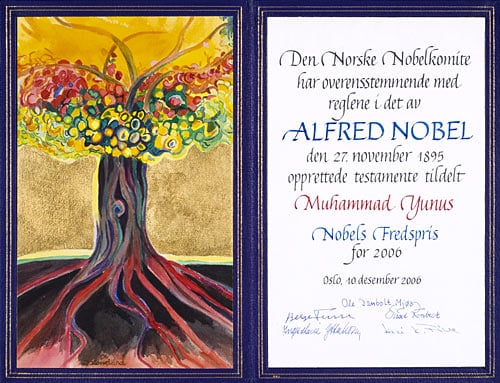
Copyright © The Nobel Foundation 2006
Artist: Jarle Rosseland
Calligrapher: Inger Magnus
Photo reproduction: Thomas Widerberg
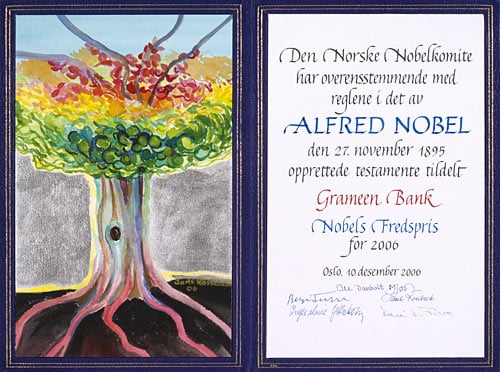
Copyright © The Nobel Foundation 2006
Artist: Jarle Rosseland
Calligrapher: Inger Magnus
Photo reproduction: Thomas Widerberg
Mosammat Taslima Begum (left), representing Grameen Bank, and Muhammad Yunus pose with their Nobel Peace Prize Medals and Diplomas.
© The Norwegian Nobel Institute 2006. Photo: Ken Opprann
Crown Princess Mette-Marit and Crown Prince Haakon of Norway, Nobel Peace Prize Laureate Muhammad Yunus, Mosammat Taslima Begum (representing Grameen Bank), and Their Majesties King Harald V and Queen Sonja of Norway at Oslo City Hall, 10 December 2006.
Copyright © The Norwegian Nobel Institute 2006
All the 2006 Nobel Laureates assembled for a group photo during their visit to the Nobel Foundation, 12 December 2006. Left to right: John C. Mather, Edmund S. Phelps, Roger Kornberg, Dipal Chandra Barua (representing Grameen Bank), Orhan Pamuk, Andrew Z. Fire, Craig C. Mello, Muhammad Yunus, and George F. Smoot.
Copyright © The Nobel Foundation 2006
Photo: Ken Opprann
Photo: Torbjörn Zadig
Watch a video clip of Mosammat Taslima Begum, representing Grameen Bank, receiving the Nobel Prize medal and diploma during the Nobel Peace Prize Award Ceremony at the Oslo City Hall in Norway, 10 December 2006.