Heinrich Wieland – Nobel Lecture
Nobel Lecture, December 12, 1928
The Chemistry of the Bile Acids
Read the Nobel Lecture
Pdf 98 kB
Heinrich Wieland – Nominations
Heinrich Wieland – Other resources
Links to other sites
On Heinrich Wieland from Boehringer Ingelheim
Heinrich Wieland – Facts
Award ceremony speech
Presentation Speech by Professor H.G. Söderbaum, Secretary of the Royal Swedish Academy of Sciences, on December 10, 1928*
Your Majesty, Your Royal Highnesses, Ladies and Gentlemen.
We hear continually that today science, in particular natural science, is becoming increasingly more specialized, that scientists are delving deeper and deeper into specialized studies difficult to survey, that the deep stream of research is turning into ever-shallower brooks and channels, and that in this way the unity that exists between the different branches of science is in danger of being destroyed. Indeed, most people have wondered with some disquiet where this apparently unrestricted specialization will eventually lead. The answer to this question is that, while the question itself is completely justified, the disquiet is in most cases unjustified or at least unduly great.
A stage is reached sooner or later in the development of every natural science, when research, after dealing with problems of more general importance, has of necessity to apply itself to problems of detail of apparently more limited interest. It is simply that the continuous increase in scientific knowledge necessitates a corresponding continuous increase in the division of work. Many fields of science which could once be handled by a few or even one investigator, may only one generation later provide enough or more than enough work for whole hosts of students and their attendants. However, specialization is, or should be, not an end but a means. Even at the stage of the division of work, for the true investigator the end is, and will remain, that of determining the inner connection between the changing phenomena, and, depending on the extent to which this end is achieved, the special researches will gradually merge into greater units; the detail then ceases to be an isolated thing, more or less unimportant as regards the whole, but becomes a necessary link in a connected chain of knowledge.
The work which has been awarded Alfred Nobel’s Chemistry Prizes this year by the Academy of Sciences, provides an instructive example of this process.
We are dealing here with several fields of work, which are separate from the start.
First we have biles. As is well-known, biles and hence their specific constituents, bile acids, are of major importance in the digestion process. Now these bile acids have been for almost a hundred years the object of active study by a large number of prominent investigators. In this way a large amount of material was accumulated from observations, but despite this, little was known concerning the connection between the various bile acids, and almost nothing concerning the details of their structure, when Wieland began his work in this field.
Then we have the cardiac poisons. Of animal cardiac poisons chemists were acquainted in particular with so-called bufotalin, which is present in the skin secretion of certain species of the toad genus Bufo. In therapeutics, on the other hand, vegetable cardiac poisons have long been used, especially those belonging to the glucoside group and obtained from species of the plant genera Digitalis and Strophantus. But the production of these substances in the pure state and the determination of the chemical relationships between them had long remained an unresolved problem.
The so-called sterols are also an extremely interesting group from the physiological viewpoint. They too occur both in vegetation and in animals. Most numerous are the vegetable sterols, the so-called phytosterols, but the best-known is certainly cholesterol, which occurs in the animal organism, and which was first found about 150 years ago in gall stones. This substance occurs not only in bile but also in the brain, in nerve substance, in the egg, in blood, and presumably in all cells. Thus we can conclude that it plays an extremely important part in the life process of man and the animals, just as the phytosterols play an extremely important part in the life process of plants. These sterols were however an isolated group for a long time. The difficulties associated with investigation of their chemical constitution were so great that it is only during the last few decades, above all through Windaus’s investigations, that a clearer picture has been obtained thereof.
Finally, we come to a group of compounds which have only been known for a relatively short time, but which during this short time have attracted very considerable attention, both from chemists and from the public at large. Who today is unacquainted with vitamins, these mysterious substances which are of such immense significance for life, vita, itself and which have thus justifiably taken their name from it? But compared with those mentioned above, the difficulties which here confronted the investigator were far greater, and in most cases it had to be regarded as sufficient to characterize these substances on the basis of their physiological effects.
Thanks to the work which this year has been found before others worthy of recognition through the award of the Nobel Prize in Chemistry, the inner connection between all these apparently isolated fields of research has been very strikingly demonstrated. Of course the way in which this took place can only be described very briefly here.
Wieland succeeded in producing from bile a saturated acid which can be regarded as the mother substance or parent acid of the bile acids, and which he studied and characterized in detail. When Windaus then produced this same parent acid, cholanic acid, from cholesterol by means of a complicated and very ingenious series of experiments, this indicated very clearly the close relationship between cholesterol and the bile acids. It should be pointed out in this connection that Wieland’s investigations into bile acids themselves gave a deeper insight of the mechanism of the action of the bile in the resorption of food in the intestines.
But this is not all. As a result of patient and skilful work, Windaus succeeded in producing several of the digitalis glucosides and their components in the pure state. In this way it was shown that these vegetable cardiac poisons are directly related on the one hand to cholesterol and the bile acids, and on the other hand to the animal cardiac poison bufotoxin, which Wieland studied with great success.
Another sterol which Windaus has studied in detail, is ergosterol, which occurs partly in ergot and partly in yeast. The research carried out in recent years, in which Windaus himself has also played a leading part, has revealed the very important fact that, on being irradiated with ultraviolet light, this ergosterol assumes exactly the same properties as the antirachitic vitamin, “vitamin D”, i.e. it will cure rachitis (rickets). For example, it has been found that 5 mg of irradiated ergosterol has the same action in this respect as 1 litre of good cod-liver oil. It can be considered proved, therefore, that ergosterol, or possibly a sterol, the physiological effects of which correspond completely with those of ergosterol, constitutes the antirachitic provitamin, i.e. the mother substance of vitamin D.
All the investigations which we have had to summarize so briefly here, have one thing in common with each other. They were all designed to explain the internal structure of organic materials, their relationships with one another and their transitions into each other. For this reason they are of fundamental importance for our knowledge of a number of processes occurring both in the healthy and in the diseased organism, and therefore of greatest significance not only for chemistry as such, but also for its sister sciences, physiology and medicine. But in order to reach this vantage point of knowledge, where the dividing walls separating the various special researches no longer obstruct vision, where the connection between extensive parts of organic chemistry can be surveyed and where in fact the fields of three main disciplines appear to connect and merge with each other – all this has taken years of hard, diligent, and resourceful work in the deep mines of detailed research. These are the researches which are to be rewarded here.
Professor Wieland. The decision of the Royal Academy of Sciences to award you the Nobel Prize in Chemistry for your work on bile acids and related substances, is only a just recognition of the solution of a problem which is without doubt one of the most difficult which organic chemistry has had to tackle.
The complex composition of the compounds investigated, the large number of atoms contained in the molecules of these compounds, the fact that the material was often very difficult to produce, even in small quantities, these were obstacles which could only be overcome with such striking success through a remarkable skill in experimentation and a rare capacity for finding new ways and means.
In gratitude for what you have achieved for science in this connection, and with hearty congratulations on your well-deserved distinction, the Academy asks you to accept the Nobel Prize in Chemistry for the year 1927 from the hands of his Majesty the King.
Professor Windaus. If the Royal Academy of Sciences had had only one Nobel Prize in Chemistry to award on this occasion, and had had to present it to one person, it would have been in a very difficult position.
For there is no doubt that your work on sterols, vegetable cardiac poisons and other closely related substances merits in the same high degree such an award as the work which we have just recognized.
Moreover, it is clear that your work and that of your colleague in Munich are so interrelated and supplement each other in such a way that it would have been extremely difficult to award the Prize to the one while passing over the other.
In addition, both researches display the same assiduity, the same remarkable capacity for overcoming even the greatest experimental difficulties, and the same lucidity in interpreting the results obtained, that it would obviously have been impossible to give precedence to one investigator over the other.
The fact that two Prizes were available for award this year, has fortunately freed the Academy from this quandary. For this the Academy congratulates itself no less than you, and asks you now to take the last few steps which separate you from the external symbols of the Prize.
* The Nobel Prize in Chemistry 1927 was announced on November 13, 1928.
The Nobel Prize in Chemistry 1927
Heinrich Wieland – Biographical
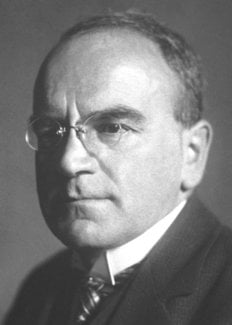 Heinrich Otto Wieland was born as the son of Württemberger parents, Dr. Theodor Wieland and Elise Blum, on June 4, 1877, in Pforzheim where his father was a pharmaceutical chemist. He studied at the Universities of Munich, Berlin and Stuttgart, and then returned to the Baeyer Laboratory in Munich where, in 1901, he received his doctorate under Johannes Thiele. In Munich, where he had chosen to make his home, he received in 1904 the venia legendi and in 1913 a senior lectureship in the University Chemical Laboratory. In 1917 he transferred his activities to the Technical College nearby as a full Professor. From 1917-1918 he was busy at the Kaiser Wilhelm Institute in Berlin-Dahlem working on Defence. In 1921 he accepted a call to Freiburg and in 1925 returned to Munich at Willstätter’s request to succeed him in his Chair in the University of Munich. For twenty-seven years the destiny of the Munich laboratory lay in his hands.
Wieland’s scientific work, recorded in four hundred publications, covers a wide field in the realm of Organic Chemistry and Biochemistry.
For several decades Wieland’s attention was claimed by the organic nitrogenous compounds. His brilliant studies of the reaction of nitrogen oxides with orefins and aromatics, the clarification of furoxanes as well as the classical experiments with fulminic acid and its polymerization may be chosen as examples. In the same connection, Wieland succeeded in the first production of stable organic nitrogen radicals, of diphenyl nitrogen and its N-oxide. The proof of short-lived radicals in solution reactions involved him in an extensive series of experiments whose importance for the modern development of organic radical chemistry can hardly be overestimated.
In later years Wieland was entirely devoted to the chemistry of natural substances. His contributions to the clarification of the structure of morphine and strychnine, the constitution and synthesis of the lobelia alkaloid and the research into the curare alkaloid were masterpieces. Work on the poisonous agent in the “death cap” mushroom led to the isolation of the crystalline cyclopeptides phalloidine and amanitine; work on the pigment of butterflies led to the discovery of the biologically important class of pterin compounds. The publications which began in 1912 on the subject of bile acids culminated in 1932 in the clarification of the carbon framework of the steroids, whose general importance in Nature Wieland recognized.
Much of Wieland’s life work was occupied by the investigations into the oxidation processes in living cells, which enabled him to recognize dehydrogenation as a universal oxidation principle in Nature. This work restored the unity of Organic Chemistry and Biochemistry which had been lost since the time of Liebig.
It is not surprising that Wieland was accorded all the honours that the scientific world has to offer. He was a member of the great learned societies of the world, he was awarded a Nobel Prize in 1927, he received the Order of Merit and the Otto Hahn Prize, and for twenty years he was Editor of Justus Liebigs Annalen der Chemie. Wieland’s great school is evidence of his importance as an academic teacher.
In an age of increasing specialization, Wieland was among the last of those who were able to enjoy an encyclopaedic knowledge of the whole of Chemistry.
In 1908, he married Josephine Bartmann of Munich. They had three sons, Wolfgang, a doctor of pharmaceutical chemistry; Theodor, professor of chemistry in the University of Frankfurt; and Otto, professor of medicine in the University of Munich, and one daughter, Eva, who is married to Professor Feodor Lynen, professor of biochemistry in the University of Munich, Nobel Laureate in Physiology or Medicine, 1964.
The great scholar’s life was ruled by hard work, but also by love and kindness both to his pupils and to his family; it ended shortly after his 80th birthday, on August 5, 1957, in Starnberg.
This autobiography/biography was written at the time of the award and first published in the book series Les Prix Nobel. It was later edited and republished in Nobel Lectures. To cite this document, always state the source as shown above.