Robert B. Woodward – Other resources
Links to other sites
On Robert Burns Woodward from Chemical Heritage Foundation
Robert B. Woodward – Nominations
Award ceremony speech
Presentation Speech by Professor A. Fredga, member of the Nobel Committee for Chemistry of the Royal Swedish Academy of Sciences
Your Majesty, Your Royal Highnesses, Ladies and Gentlemen.
In our days, the chemistry of natural products attracts a very lively interest. New substances, more or less complicated, more or less useful, are constantly discovered and investigated. For the determination of the structure, the architecture of the molecule, we have to-day very powerful tools, often borrowed from Physical Chemistry. The organic chemists of the year 1900 would have been greatly amazed if they had heard of the methods now at hand. However, one cannot say that the work is easier; the steadily improving methods make it possible to attack more and more difficult problems and the ability of Nature to build up complicated substances has, as it seems, no limits.
In the course of the investigation of a complicated substance, the investigator is sooner or later confronted by the problem of synthesis, of the preparation of the substance by chemical methods. He can have various motives. Perhaps he wants to check the correctness of the structure he has found. Perhaps he wants to improve our knowledge of the reactions and the chemical properties of the molecule. If the substance is of practical importance, he may hope that the synthetic compound will be less expensive or more easily accessible than the natural product. It can also be desirable to modify some details in the molecular structure. An antibiotic substance of medical importance is often first isolated from a microorganism, perhaps a mould or a germ. There ought to exist a number of related compounds with similar effects; they may be more or less potent, some may perhaps have undesirable secondary effects. It is by no means certain, or even probable, that the compound produced by the microorganism – most likely as a weapon in the struggle for existence – is the very best from the medical point of view. If it is possible to synthesize the compound, it will also be possible to modify the details of the structure and to find the most effective remedies.
The synthesis of a complicated molecule is, however, a very difficult task; every group, every atom must be placed in its proper position and this should be taken in its most literal sense. It is sometimes said that organic synthesis is at the same time an exact science and a fine art. Here Nature is the uncontested master, but I dare say that the prize-winner of this year, Professor Woodward, is a good second.
Professor Woodward has a special liking for synthetic undertakings which are generally regarded as practically impossible. I shall here touch upon a number of his most famous achievements, some of the substances in question being well-known from the columns of the daily press. During World War II, Professor Woodward synthesized quinine, the well-known antimalarial. Later followed the steroids cholesterol and cortisone. The related substance lanosterol is perhaps less familiar but very important from the scientific point of view. The synthesis of the famous poison strychnine caused a great sensation some ten years ago. Still more remarkable is perhaps the synthesis of reserpine, an alkaloid of great medical importance. Several other examples from the chemistry of the alkaloids could be mentioned, substances with strange names and interesting properties: lysergic acid, ergonovine, ellipticine, colhicine.
In the field of antibiotics Professor Woodward has, among many other things, established the structure of aureomycin and terramycin. He has also cleared the way for synthetic work within this group of substances, the so-called tetracyclines.
A very notable piece of work is the synthesis of chlorophyll, the green plant pigment which absorbs and transforms the radiant energy of the sun, the existence of which is thus a necessary condition for organic life on Earth. This work has greatly increased our knowledge of the chlorophyll molecule.
Professor Woodward’s activity has by no means been restricted to synthetic work. He has established the structure of many important compounds, for instance the peculiar fish poison tetrodotoxin, causing numerous fatalities in Japan, and he has made an original and promising approach to the synthesis of polypeptides. He has also developed very interesting ideas about synthetic activity in Nature, the genesis of complicated molecules within the living organism. These theories have been confirmed by experiments with labelled molecules.
Professor Woodward’s research work covers vast and various fields in Organic Chemistry. A leading feature is that the problems have been extremely difficult and that they have been solved with brilliant mastery. He has attacked them with a maximum of theoretical knowledge, a never-failing practical judgement and, not least, a genial intuition. He has, in a conspicuous way, widened the limits for what is practically possible. As a stimulating example he has exerted a profound influence on the organic chemistry of today.
Professor Woodward, I have here tried to give a brief survey of your more famous achievements in Organic Chemistry. It is sometimes said that you have demonstrated that nothing is impossible in organic synthesis. This is perhaps a slight exaggeration. You have, however, in a spectacular way expanded and enlarged the domain of the possible. It is also said that you stand out like a wizard. We know that in times long passed, chemistry was classified as an occult science. Anyhow, you have certainly not gained your scientific reputation by magical means, but by the penetrative intensity of your chemical thinking and the rigorous expert planning of your experiments. In these respects you hold a unique position among organic chemists of to-day. In recognition of your services to Chemical Science, the Royal Academy has decided to confer upon you the Nobel Prize of this year for your outstanding achievements in the art of organic synthesis.
To me has been granted the privilege to convey to you the most hearty congratulations of the Academy and to invite you to receive your prize from the hands of His Majesty the King.
Speed read: Rebuilding chemical complexity
A central theme of organic chemistry is the desire to understand important biological processes through discovering and imitating the manner in which Nature constructs its key substances from their basic chemical elements. Constructing artificial versions of natural products from its chemical building blocks traditionally involved a large degree of trial and error, and consequently the more complex the compound the more formidable the task. Through formulating rational and systematic processes that removed much of this guesswork, Robert Woodward continuously raised the bar for what could be achieved in the field by successfully synthesizing a series of natural products of a complexity never before seen.
The hallmarks of Woodward’s approach were his remarkable ability to select the best starting materials to create the major structural elements of the final compound, and to select the correct chemical reactions out of the many available that could help him stitch the starting materials together in the correct manner. Woodward also pioneered the use of the latest analytical tools from other branches of chemistry to ensure his chemical construction processes went exactly to plan. Using these tools, Woodward could deduce incredibly precise features of chemicals; in particular, he went to great pains to ensure that every atom and every chemical group was placed in its proper position in three-dimensional space at key stages in the procedure.
Several of Woodward’s numerous successes using this approach were hailed as being masterpieces in the art of synthesizing natural products. Most notably, Woodward synthesized the chemical quinine used in the treatment of malaria, the steroids cholesterol and cortisone, the infamous poison strychnine, the tranquilizing drug reserpine, and chlorophyll, the green plant pigment crucial for photosynthesis. He also shed light on the key structure of penicillin, and revealed the structures of a new class of antibiotics called the tetracyclines. His complex, ingenious approach, combined with his comprehensive command of all aspects of organic chemistry, helped Woodward to expand the possibilities with which chemists could rebuild Nature’s chemistry set.
The Nobel Prize in Chemistry 1965
Robert B. Woodward – Biographical
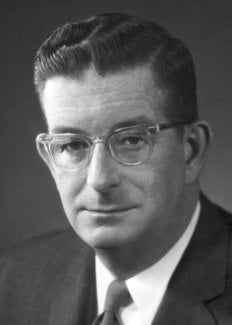
Robert Burns Woodward was born in Boston on April 10th, 1917, the only child of Margaret Burns, a native of Glasgow, and Arthur Woodward, of English antecedents, who died in October, 1918, at the age of thirty-three.
Woodward was attracted to chemistry at a very early age, and indulged his taste for the science in private activities throughout the period of his primary and secondary education in the public schools of Quincy, a suburb of Boston. In 1933, he entered the Massachusetts Institute of Technology, from which he was excluded for inattention to formal studies at the end of the Fall term, 1934. The Institute authorities generously allowed him to re-enroll in the Fall term of 1935, and he took the degrees of Bachelor of Science in 1936 and Doctor of Philosophy in 1937. Since that time he has been associated with Harvard University, as Postdoctoral Fellow (1937-1938), Member of the Society of Fellows (1938-1940), Instructor in Chemistry (1941-1944), Assistant Professor (1944-1946), Associate Professor (1946-1950), Professor (1950-1953), Morris Loeb Professor of Chemistry (1953-1960), and Donner Professor of Science since 1960. In 1963 he assumed direction of the Woodward Research Institute at Basel. He was a member of the Corporation of the Massachusetts Institute of Technology (1966-1971), and he is a Member of the Board of Governors of the Weizmann Institute of Science.
Woodward has been unusually fortunate in the outstanding personal qualities and scientific capabilities of a large proportion of his more than two hundred and fifty collaborators in Cambridge, and latterly in Basel, of whom more than half have assumed academic positions. He has also on numerous occasions enjoyed exceptionally stimulating and fruitful collaboration with fellow-scientists in laboratories other than his own. His interests in chemistry are wide, but the main arena of his first-hand engagement has been the investigation of natural products – a domain he regards as endlessly fascinating in itself, and one which presents unlimited and unparalleled opportunities for the discovery, testing, development and refinement of general principles.
Prof. Woodward holds more than twenty honorary degrees of which only a few are listed here: D.Sc. Wesleyan University, 1945; D. Sc. Harvard University, 1957; D. Sc. University of Cambridge (England), 1964; D. Sc. Brandeis University, 1965; D. Sc. Israel Institute of Technology (Haifa), 1966; D.Sc. University of Western Ontario (Canada), 1968;D.Sc. Universite de Louvain (Belgium), 1970.
Among the awards presented to him are the following: John Scott Medal (Franklin Institute and City of Philadelphia), 1945; Backeland Medal (North Jersey Section of the American Chemical Society), 1955; Davy Medal (Royal Society), 1959; Roger Adams Medal (American Chemical Society), 1961; Pius XI Gold Medal (Pontifical Academy of Sciences), 1969; National Medal of Science (United States of America), 1964; Willard Gibbs Medal (Chicago Section of the American Chemical Society), 1967; Lavoisier Medal (Societe Chimique de France), 1968; The Order of the Rising Sun, Second Class (His Majesty the Emperor of Japan), 1970; Hanbury Memorial Medal (The Pharmaccutical Society of Great Britain), 1970; Pierre Brnylants Medal (Université de Louvain), 1970.
Woodward is a member of the National Academy of Sciences; Fellow of the American Academy of Arts and Sciences; Honorary Member of the German Chemical Society; Honorary Fellow of The Chemical Society; Foreign Member of the Royal Society; Honorary Member of the Royal Irish Academy; Corresponding Member of the Austrian Academy of Sciences; Member of the American Philosophical Society; Honorary Member of the Belgian Chemical Society; Honorary Fellow of the Indian Academy of Sciences; Honorary Member of the Swiss Chemical Society; Member of the Deutsche Akademie der Naturforscher (Leopoldina); Foreign Member of the Accademia Nazionale dei Lincei; Honorary Fellow of the Weizmann Institute of Science; Honorary Member of the Pharmaceutical Society of Japan.
Woodward married Irja Pullman in 1938, and Eudoxia Muller in 1946. He has three daughters: Siiri Anne (b. 1939), Jean Kirsten (b. 1944), and Crystal Elisabeth (b. 1947), and a son, Eric Richard Arthur (b. 1953).
This autobiography/biography was written at the time of the award and first published in the book series Les Prix Nobel. It was later edited and republished in Nobel Lectures. To cite this document, always state the source as shown above.
Robert B. Woodward died on July 8, 1979.
Robert B. Woodward – Nobel Lecture
Nobel Lecture, December 11, 1965
Recent Advances in the Chemistry of Natural Products
Read the Nobel Lecture
Pdf 246 kB
Robert B. Woodward – Banquet speech
Robert B. Woodward’s speech at the Nobel Banquet in Stockholm, December 10, 1965
Your Majesty, Your Royal Highnesses, Ladies and Gentlemen.
We are told that the Nobel festivities are a celebration of achievement. Therefore, I hope it will be regarded as appropriate for me to express my feeling that the things my fellow laureates and I have experienced here – the splendid and obviously so heart-felt hospitality, the magnificent ceremonies, and the unparalleled sense of occasion – all of these are in themselves achievements of the first rank. It is a high privilege for me to be a participant in this great occasion, and in many ways it cannot but be pleasant. But that pleasure is mixed with some concern, a concern which must have been shared by many, if not all, who have stood in this place. Can anyone deserve so concentrated an accolade? That concern for me is lessened if it is not suppressed by my awareness that my work has been done in close association with more than two hundred and fifty men and women. With them I have shared many challenges, surprises and pleasures, and their hands, their minds, and their hearts have brought me here tonight. And I am glad to have this opportunity to say in this very public place that they share this honor with me. But even this thought in a way gives rise to another concern. Alfred Nobel intended his prizes to be awarded for personal achievement. If I search for my personal achievement, it may be that I have led these men and women – and perhaps in some measure all organic chemists – to the higher ground of a greater appreciation of the power, and above all of the beauty of their science. If I have done this during the last almost thirty years, I have done it in circumstances which have been enormously exciting and quite rewarding enough in themselves. Beyond that, to have all this is somehow beyond one’s dreams. For it, I thank you one and all.