Ilya Prigogine – Nominations
Ilya Prigogine – Nobel Lecture
Nobel Lecture, December 8, 1977
Time, Structure and Fluctuations
Read the Nobel Lecture
Pdf 461 kB
Ilya Prigogine – Other resources
Links to other sites
‘Ilya Prigogine, Chaos, and Dissipative Structures’ from DOE R&D Accomplishments
Ilya Prigogine – Banquet speech
Ilya Prigogine’s speech at the Nobel Banquet, December 10, 1977
Your Majesties, Your Royal Highnesses, Ladies and Gentlemen,
It is now a little more than eighty years ago that Alfred Nobel decided to create the Nobel Foundation responsible for the attribution of the Nobel Prizes.
These eighty years have seen important and sometimes tragic events which have deeply altered our outlook on human values.
Before coming to Stockholm at this great occasion, I read carefully Nobel’s testament and I could not help asking: What is the significance of this testament today, eighty years after it has been written.
It seems to me that his message has even deeper implications at present than at the time he had formulated it.
Alfred Nobel considered science as an essential positive element for the future of mankind. Already then this was not the unanimous view. For example Tolstoï advocated the return to nature as a possible cure for the deseases of civilization.
Today the question of the positive contribution of science to mankind is much more controversial. In a recent interesting publication by UNESCO “La Science et la Diversité des Cultures” I found the following characteristic remark: “Depuis plus d’un siècle, le secteur de l’activité scientifique a connu une telle croissance à l’intérieur de l’espace culturel ambiant qu’il semble se substituer à l’ensemble de la Culture. Pour certains, il n’y aurait là qu’une illusion… D’autres enfin, effrayés par la manipulation à laquelle l’homme et les sociétés sont exposés en tombant sous le pouvoir de la science, y voient se profiler le spectre de la déroute culturelle”.
There is indeed a problem. Science has created a form of cultural stress expressed by the famous “two cultures” motto of Lord Snow. Science for the benefit of humanity is only possible if the scientific attitude is deeply rooted in the culture as a whole.
This implies certainly a better dissemination of scientific information in the public on one side but also on the other a better understanding of the problems of our time by the scientific community.
The views expressed by Alfred Nobel in his testament could have appeared to some as the expression of the general consensus of his time. At present this is no more so. It appears to us as a program to which we can all contribute.
I regard the attribution of the Nobel Prize as a great encouragement to participate in this program, to promote through the modest means available to an individual scientist a cultural and social climate in which the intentions so clearly formulated by Alfred Nobel in his will may find their fullest realization.
Ilya Prigogine – Biographical
Translation from the French text
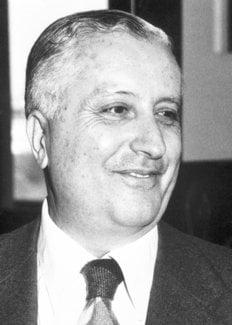
In his memorable series “Etudes sur le temps humain”, Georges Poulet devoted one volume to the “Mesure de l’instant”.1 There he proposed a classification of authors according to the importance they give to the past, present and future. I believe that in such a typology my position would be an extreme one, as I live mostly in the future. And thus it is not too easy a task to write this autobiographical account, to which I would like to give a personal tone. But the present explains the past.
In my Nobel Lecture, I speak much about fluctuations; maybe this is not unrelated to the fact that during my life I felt the efficacy of striking coincidences whose cumulative effects are to be seen in my scientific work.
I was born in Moscow, on the 25th of January, 1917 – a few months before the revolution. My family had a difficult relationship with the new regime, and so we left Russia as early as 1921. For some years (until 1929), we lived as migrants in Germany, before we stayed for good in Belgium. It was at Brussels that I attended secondary school and university. I acquired Belgian nationality in 1949.
My father, Roman Prigogine, who died in 1974, was a chemical engineer from the Moscow Polytechnic. My brother Alexander, who was born four years before me, followed, as I did myself, the curriculum of chemistry at the Université Libre de Bruxelles. I remember how much I hesitated before choosing this direction; as I left the classical (Greco-Latin) section of Ixelles Athenaeum, my interest was more focused on history and archaeology, not to mention music, especially piano. According to my mother, I was able to read musical scores before I read printed words. And, today, my favourite pastime is still piano playing, although my free time for practice is becoming more and more restricted.
Since my adolescence, I have read many philosophical texts, and I still remember the spell “L’évolution créatrice” cast on me. More specifically, I felt that some essential message was embedded, still to be made explicit, in Bergson‘s remark:
“The more deeply we study the nature of time, the better we understand that duration means invention, creation of forms, continuous elaboration of the absolutely new.”
Fortunate coincidences made the choice for my studies at the university. Indeed, they led me to an almost opposite direction, towards chemistry and physics. And so, in 1941, I was conferred my first doctoral degree. Very soon, two of my teachers were to exert an enduring influence on the orientation of my future work.
I would first mention Théophile De Donder (1873-1957).2 What an amiable character he was! Born the son of an elementary school teacher, he began his career in the same way, and was (in 1896) conferred the degree of Doctor of Physical Science, without having ever followed any teaching at the university.
It was only in 1918 – he was then 45 years old – that De Donder could devote his time to superior teaching, after he was for some years appointed as a secondary school teacher. He was then promoted to professor at the Department of Applied Science, and began without delay the writing of a course on theoretical thermodynamics for engineers.
Allow me to give you some more details, as it is with this very circumstance that we have to associate the birth of the Brussels thermodynamics school.
In order to understand fully the originality of De Donder’s approach, I have to recall that since the fundamental work by Clausius, the second principle of thermodynamics has been formulated as an inequality: “uncompensated heat” is positive – or, in more recent terms, entropy production is positive. This inequality refers, of course, to phenomena that are irreversible, as are any natural processes. In those times, these latter were poorly understood. They appeared to engineers and physico-chemists as “parasitic” phenomena, which could only hinder something: here the productivity of a process, there the regular growth of a crystal, without presenting any intrinsic interest. So, the usual approach was to limit the study of thermodynamics to the understanding of equilibrium laws, for which entropy production is zero.
This could only make thermodynamics a “thermostatics”. In this context, the great merit of De Donder was that he extracted the entropy production out of this “sfumato” when related it in a precise way to the pace of a chemical reaction, through the use of a new function that he was to call “affinity”.3
It is difficult today to give an account of the hostility that such an approach was to meet. For example, I remember that towards the end of 1946, at the Brussels IUPAP meeting,4 after a presentation of the thermodynamics of irreversible processes, a specialist of great repute said to me, in substance: “I am surprised that you give more attention to irreversible phenomena, which are essentially transitory, than to the final result of their evolution, equilibrium.”
Fortunately, some eminent scientists derogated this negative attitude. I received much support from people such as Edmond Bauer, the successor to Jean Perrin at Paris, and Hendrik Kramers in Leyden.
De Donder, of course, had precursors, especially in the French thermodynamics school of Pierre Duhem. But in the study of chemical thermodynamics, De Donder went further, and he gave a new formulation of the second principle, based on such concepts as affinity and degree of evolution of a reaction, considered as a chemical variable.
Given my interest in the concept of time, it was only natural that my attention was focused on the second principle, as I felt from the start that it would introduce a new, unexpected element into the description of physical world evolution. No doubt it was the same impression illustrious physicists such as Boltzmann5 and Planck6 would have felt before me. A huge part of my scientific career would then be devoted to the elucidation of macroscopic as well as microscopic aspects of the second principle, in order to extend its validity to new situations, and to the other fundamental approaches of theoretical physics, such as classical and quantum dynamics.
Before we consider these points in greater detail, I would like to stress the influence on my scientific development that was exerted by the second of my teachers, Jean Timmermans (1882-1971). He was more an experimentalist, specially interested in the applications of classical thermodynamics to liquid solutions, and in general to complex systems, in accordance with the approach of the great Dutch thermodynamics school of van der Waals and Roozeboom.7
In this way, I was confronted with the precise application of thermodynamical methods, and I could understand their usefulness. In the following years, I devoted much time to the theoretical approach of such problems, which called for the use of thermodynamical methods; I mean the solutions theory, the theory of corresponding states and of isotopic effects in the condensed phase. A collective research with V. Mathot, A. Bellemans and N. Trappeniers has led to the prediction of new effects such as the isotopic demixtion of helium He3+ He4, which matched in a perfect way the results of later research. This part of my work is summed up in a book written in collaboration with V. Mathot and A. Bellemans, The Molecular Theory of Solutions. 8
My work in this field of physical chemistry was always for me a specific pleasure, because the direct link with experimentation allows one to test the intuition of the theoretician. The successes we met provided the confidence which later was much needed in my confrontation with more abstract, complex problems.
Finally, among all those perspectives opened by thermodynamcis, the one which was to keep my interest was the study of irreversible phenomena, which made so manifest the “arrow of time”. From the very start, I always attributed to these processes a constructive role, in opposition to the standard approach, which only saw in these phenomena degradation and loss of useful work. Was it the influence of Bergson’s “L’évolution créatrice” or the presence in Brussels of a performing school of theoretical biology?9 The fact is that it appeared to me that living things provided us with striking examples of systems which were highly organized and where irreversible phenomena played an essential role.
Such intellectual connections, although rather vague at the beginning, contributed to the elaboration, in 1945, of the theorem of minimum entropy production, applicable to non-equilibrium stationary states.10 This theorem gives a clear explanation of the analogy which related the stability of equilibrium thermodynamical states and the stability of biological systems, such as that expressed in the concept of “homeostasy” proposed by Claude Bernard. This is why, in collaboration with J.M. Wiame,11 I applied this theorem to the discussion of some important problems in theoretical biology, namely to the energetics of embryological evolution. As we better know today, in this domain the theorem can at best give an explanation of some “late” phenomena, but it is remarkable that it continues to interest numerous experimentalists.12
From the very beginning, I knew that the minimum entropy production was valid only for the linear branch of irreversible phenomena, the one to which the famous reciprocity relations of Onsager are applicable.13 And, thus, the question was: What about the stationary states far from equilibrium, for which Onsager relations are not valid, but which are still in the scope of macroscopic description? Linear relations are very good approximations for the study of transport phenomena (thermical conductivity, thermodiffusion, etc.), but are generally not valid for the conditions of chemical kinetics. Indeed, chemical equilibrium is ensured through the compensation of two antagonistic processes, while in chemical kinetics – far from equilibrium, out of the linear branch – one is usually confronted with the opposite situation, where one of the processes is negligible.
Notwithstanding this local character, the linear thermodynamics of irreversible processes had already led to numerous applications, as shown by people such as J. Meixner,14 S.R. de Groot and P. Mazur,15 and, in the area of biology, A. Katchalsky.16 It was for me a supplementary incentive when I had to meet more general situations. Those problems had confronted us for more than twenty years, between 1947 and 1967, until we finally reached the notion of “dissipative structure”. 17
Not that the question was intrinsically difficult to handle; just that we did not know how to orientate ourselves. It is perhaps a characteristic of my scientific work that problems mature in a slow way, and then present a sudden evolution, in such a way that an exchange of ideas with my colleagues and collaborators becomes necessary. During this phase of my work, the original and enthusiastic mind of my colleague Paul Glansdorff played a major role.
Our collaboration was to give birth to a general evolution criterion which is of use far from equilibrium in the non-linear branch, out of the validity domain of the minimum entropy production theorem. Stability criteria that resulted were to lead to the discovery of critical states, with branch shifting and possible appearance of new structures. This quite unexpected manifestation of “disorder-order” processes, far from equilibrium, but conforming to the second law of thermodynamics, was to change in depth its traditional interpretation. In addition to classical equilibrium structures, we now face dissipative coherent structures, for sufficient far-from-equilibrium conditions. A complete presentation of this subject can be found in my 1971 book co-authored with Glansdorff.18
In a first, tentative step, we thought mostly of hydrodynamical applications, using our results as tools for numerical computation. Here the help of R. Schechter from the University of Texas at Austin was highly valuable.19 Those questions remain wide open, but our centre of interest has shifted towards chemical dissipative systems, which are more easy to study than convective processes.
All the same, once we formulated the concept of dissipative structure, a new path was open to research and, from this time, our work showed striking acceleration. This was due to the presence of a happy meeting of circumstances; mostly to the presence in our team of a new generation of clever young scientists. I cannot mention here all those people, but I wish to stress the important role played by two of them, R. Lefever and G. Nicolis. It was with them that we were in a position to build up a new kinetical model, which would prove at the same time to be quite simple and very instructive – the “Brusselator”, as J. Tyson would call it later – and which would manifest the amazing variety of structures generated through diffusion-reaction processes.20
This is the place to pay tribute to the pioneering work of the late A. Turing,21 who, since 1952, had made interesting comments about structure formation as related to chemical instabilities in the field of biological morphogenesis. I had met Turing in Manchester about three years before, at a time when M.G. Evans, who was to die too soon, had built a group of young scientists, some of whom would achieve fame. It was only quite a while later that I recalled the comments by Turing on those questions of stability, as, perhaps too concerned about linear thermodynamics, I was then not receptive enough.
Let us go back to the circumstances that favoured the rapid development of the study of dissipative structures. The attention of scientists was attracted to coherent non-equilibrium structures after the discovery of experimental oscillating chemical reactions such as the Belusov-Zhabotinsky reaction;22 the explanation of its mechanism by Noyes and his co-workers;23 the study of oscillating reactions in biochemistry (for example the glycolytic cycle, studied by B. Chance24 and B. Hess25) and eventually the important research led by M. Eigen.26 Therefore, since 1967, we have been confronted with a huge number of papers on this topic, in sharp contrast with the total absence of interest which prevailed during previous times.
But the introduction of the concept of dissipative structure was also to have other unexpected consequences. It was evident from start that the structures were evolving out of fluctuations. They appeared in fact as giant fluctuations, stabilized through matter and energy exchanges with the outer world. Since the formulation of the minimum entropy production theorem, the study of non-equilibrium fluctuation had attracted all my attention.27 It was thus only natural that I resumed this work in order to propose an extension of the case of far-from-equilibrium chemical reactions.
This subject I proposed to G. Nicolis and A. Babloyantz. We expected to find for stationary states a Poisson distribution similar to the one predicted for equilibrium fluctuations by the celebrated Einstein relations. Nicolis and Babloyantz developed a detailed analysis of linear chemical reactions and were able to confirm this prediction.28 They added some qualitative remarks which suggested the validity of such results for any chemical reaction.
Considering again the computations for the example of a non-linear biomolecular reaction, I noticed that this extension was not valid. A further analysis, where G. Nicolis played a key role, showed that an unexpected phenomenon appeared while one considered the fluctuation problem in nonlinear systems far from equilibrium: the distribution law of fluctuations depends on their scale, and only “small fluctuations” follow the law proposed by Einstein.29 After a prudent reception, this result is now widely accepted, and the theory of non-equilibrium fluctuations is fully developing now, so as to allow us to expect important results in the following years. What is already clear today is that a domain such as chemical kinetics, which was considered conceptually closed, must be thoroughly rethought, and that a brand-new discipline, dealing with non-equilibrium phase transitions, is now appearing.30, 31, 32
Progress in irreversible phenomena theory leads us also to reconsideration of their insertion into classical and quantum dynamics. Let us take a new look at the statistical mechanics of some years ago. From the very beginning of my research, I had had occasion to use conventional methods of statistical mechanics for equilibrium situations. Such methods are very useful for the study of thermodynamical properties of polymer solutions or isotopes. Here we deal mostly with simple computational problems, as the conceptual tools of equilibrium statistical mechanics have been well established since the work of Gibbs and Einstein. My interest in non-equilibrium would by necessity lead me to the problem of the foundations of statistical mechanics, and especially to the microscopic interpretation of irreversibility.33
Since the time of my first graduation in science, I was an enthusiastic reader of Boltzmann, whose dynamical vision of physical becoming was for me a model of intuition and penetration. Nonetheless, I could not but notice some unsatisfying aspects. It was clear that Boltzmann introduced hypotheses foreign to dynamics; under such assumptions, to talk about a dynamical justification of thermodynamics seemed to me an excessive conclusion, to say the least. In my opinion, the identification of entropy with molecular disorder could contain only one part of the truth if, as I persisted in thinking, irreversible processes were endowed with this constructive role I never cease to attribute to them. For another part, the applications of Boltzmann’s methods were restricted to diluted gases, while I was most interested in condensed systems.
At the end of the forties, great interest was aroused in the generalization of kinetic theory to dense media. After the pioneering work by Yvon34, publications of Kirkwodd35, Born and Green36, and of Bogoliubov37 attracted a lot of attention to this problem, which was to lead to the birth of non-equilibrium statistical mechanics. As I could not remain alien to this movement, I proposed to G. Klein, a disciple of Fürth who came to work with me, to try the application of Born and Green’s method to a concrete, simple example, in which the equilibrium approach did not lead to an exact solution. This was our first tentative step in non-equilibrium statistical mechanics.38 It was eventually a failure, with the conclusion that Born and Green’s formalism did not lead to a satisfying extension of Boltzmann’s method to dense systems.
But this failure was not a total one, as it led me, during a later work, to a first question: Was it possible to develop an “exact” dynamical theory of irreversible phenomena? Everybody knows that according to the classical point of view, irreversibility results from supplementary approximations to fundamental laws of elementary phenomena, which are strictly reversible. These supplementary approximations allowed Boltzmann to shift from a dynamical, reversible description to a probabilistic one, in order to establish his celebrated H theorem.
We still encountered this negative attitude of “passivity” imputed to irreversible phenomena, an attitude that I could not share. If – as I was prepared to think – irreversible phenomena actually play an active, constructive role, their study could not be reduced to a description in terms of supplementary approximations. Moreover, my opinion was that in a good theory a viscosity coefficient would present as much physical meaning as a specific heat, and the mean life duration of a particle as much as its mass.
I felt confirmed in this attitude by the remarkable publications of Chandrasekhar and von Neumann, which were also issued during the forties.39 That was why, still with the help of G. Klein, I decided to take a fresh look at an example already studied by Schrödinger, 40 related to the description of a system of harmonic oscillators. We were surprised to see that, for all such a simple model allowed us to conclude, this class of systems tend to equilibrium. But how to generalize this result to non-linear dynamical systems?
Here the truly historic performance of Léon van Hove opened for us the way (1955).41 I remember, with a pleasure that is always new, the time – which was too short – during which van Hove worked with our group. Some of his works had a lasting effect on the whole development of statistical physics; I mean not only his study of the deduction of a “master equation ” for anharmonic systems, but also his fundamental contribution on phase transitions, which was to lead to the branch of statistical mechanics that deals with so-called “exact” results.42
This first study by van Hove was restricted to weakly coupled anharmonic systems. But, anyway, the path was open, and with some of my colleagues and collaborators, mainly R. Balescu, R. Brout, F. Hénin and P. Résibois, we achieved a formulation of non-equilibrium statistical mechanics from a purely dynamical point of view, without any probabilistic assumption. The method we used is summed up in my 1962 book.43 It leads to a “dynamics of correlations”, as the relation between interaction and correlation constitutes the essential component of the description. Since then, these methods have led to numerous applications. Without giving more detail, here, I will restrict myself to mentioning two recent books, one by R. Balescu,44 the other by P. Résibois and M. De Leener.45
This concluded the first step of my research in non-equilibrium statistical mechanics. The second is characterized by a very strong analogy with the approach of irreversible phenomena which led us from linear thermodynamics to non-linear thermodynamics. In this tentative step also, I was prompted by a feeling of dissatisfaction, as the relation with thermodynamics was not established by our work in statistical mechanics, nor by any other method. The theorem of Boltzmann was still as isolated as ever, and the question of the nature of dynamics systems to which thermodynamics applies was still without answer.
The problem was by far more wide and more complex than the rather technical considerations that we had reached. It touched the very nature of dynamical systems, and the limits of Hamiltonian description. I would never have dared approach such a subject if I had not been stimulated by discussions with some highly competent friends such as the late Léon Rosenfeld from Copenhagen, or G. Wentzel from Chicago. Rosenfeld did more than give me advice; he was directly involved in the progressive elaboration of the concepts we had to explore if we were to build a new interpretation of irreversibility. More than any other stage of my scientific career, this one was the result of a collective effort. I could not possibly have succeeded had it not been for the help of my colleagues M. de Haan, Cl. George, A. Grecos, F. Henin, F. Mayné, W. Schieve and M. Theodosopulu. If irreversibility does not result from supplementary approximations, it can only be formulated in a theory of transformations which expresses in “explicit” terms what the usual formulation of dynamics does “hide”. In this perspective, the kinetic equation of Boltzmann corresponds to a formulation of dynamics in a new representation.46, 47, 48, 49
In conclusion: dynamics and thermodynamics become two complementary descriptions of nature, bound by a new theory of non-unitary transformation. I came so to my present concerns; and, thus, it is time to end this intellectual autobiography. As we started from specific problems, such as the thermodynamic signification of non-equilibrium stationary states, or of transport phenomena in dense systems, we have been faced, almost against our will, with problems of great generality and complexity, which call for reconsideration of the relation of physico-chemical structures to biological ones, while they express the limits of Hamiltonian description in physics.
Indeed, all these problems have a common element: time. Maybe the orientation of my work came from the conflict which arose from my humanist vocation as an adolescent and from the scientific orientation I chose for my university training. Almost by instinct, I turned myself later towards problems of increasing complexity, perhaps in the belief that I could find there a junction in physical science on one hand, and in biology and human science on the other.
In addition, the research conducted with my friend R. Herman on the theory of car traffic50 gave me confirmation of the supposition that even human behaviour, with all its complexity, would eventually be susceptible of a mathematical formulation. In this way the dichotomy of the “two cultures” could and should be removed. There would correspond to the breakthrough of biologists and anthropologists towards the molecular description or the “elementary structures”, if we are to use the formulation by Lévi-Strauss, a complementary move by the physico-chemist towards complexity. Time and complexity are concepts that present intrinsic mutual relations.
During his inaugural lecture, De Donder spoke in these terms:51 “Mathematical physics represents the purest image that the view of nature may generate in the human mind; this image presents all the character of the product of art; it begets some unity, it is true and has the quality of sublimity; this image is to physical nature what music is to the thousand noises of which the air is full…”
Filtrate music out of noise; the unity of the spiritual history of humanity, as was stressed by M. Eliade, is a recent discovery that has still to be assimilated.52 The search for what is meaningful and true by opposition to noise is a tentative step that appears to be intrinsically related to the coming into consciousness of man facing a nature of which he is a part and which it leaves.
I have many times advocated the necessary dialogue in scientific activity, and thus the vital importance of my colleagues and collaborators in the journey that I have tried to describe. I would also stress the continuing support that I received from institutions which have made this work a feasible one, especially the Université Libre de Bruxelles and the University of Texas at Austin. For all of the development of these ideas, the International Institute of Physics and Chemistry founded by E. Solvay (Brussels, Belgium) and the Welch Foundation (Houston, Texas) have provided me with continued support.
The work of a theoretician is related in a direct way to his whole life. It takes, I believe, some amount of internal peace to find a path among all successive bifurcations. This peace I owe to my wife, Marina. I know the frailty of the present, but today, considering the future, I feel myself to be a happy man.
This autobiography/biography was written at the time of the award and first published in the book series Les Prix Nobel. It was later edited and republished in Nobel Lectures. To cite this document, always state the source as shown above.
Ilya Prigogine died on May 28, 2003.
Press release

11 October 1977
The Royal Swedish Academy of Sciences has decided to award the 1977 Nobel Prize in Chemistry to
Professor Ilya Prigogine, Université Libre de Bruxelles, Belgium,
for his contributions to non-equilibrium thermodynamics, particularly the theory of dissipative structures
ORDER FROM DISORDER LED TO NOBEL PRIZE IN CHEMISTRY
Thermodynamics is a central branch of modern science, and its general laws govern the physical and chemical processes which occur in our world. An important early application of thermodynamics dealt with steam engines (heat engines) in which heat is converted to mechanical energy. Classical thermodynamics was developed in the nineteenth and in the beginning of the twentieth century by a number of prominent scientists, theoreticians as well as experimentalists, many of which have their names immortalized as designations for units or laws. Some examples are Watt, Carnot, Clausius, Joule, von Helmholtz, Lord Kelvin, Nernst, Boltzmann and Gibbs.
The so-called First, Second and Third Laws of Thermodynamics were discovered during this period. They set general limits for the conversion of one form of energy, for example heat or chemical energy, to another one, for example mechanical work. One phase in the development of thermodynamics ended with the formulation of statistical thermodynamics by Boltzmann and Gibbs. Statistical thermodynamics is based on the fact that what we experience as heat is actually an outward manifestation of molecular and atomic motion.
Classical thermodynamics has played a dominant role in the development of modern science and technology. In suffers, however, from certain limitations, as it cannot be used for the study of irreversible processes but only for reversible processes and transitions between different states of equilibrium.
Many of the most important and interesting processes in Nature are irreversible. A good example is provided by living organisms which consume chemical energy in the form of nutrients, perform work and excrete waste as well as give off heat to the surroundings without themselves undergoing changes; they represent what is called a stationary or steady state. The boiling of an egg provides another example, and still another one is, a thermocouple with a cold and a hot junction connected to an electrical measuring instrument.
The first investigator who developed a method for the exact treatment of such problems, for example of the thermocouple, was Onsager who received the 1968 Nobel Prize for this contribution. His approach was, however based on assumptions which in principle make it applicable only to systems close to equilibrium.
The great contribution of Prigogine to thermodynamic theory in his successful extension of it to systems which are far from thermodynamic equilibrium. This is extremely interesting as large differences compared to conditions close to equilibrium had to be expected. Prigogine has demonstrated that a new form of ordered structures can exist under such conditions, and he has given them the name ”dissipative structures” to stress that they only exist in conjunction with their environment.
The most well-known dissipative structure is perhaps the so-called Benárd instability. This is formed when a layer of liquid is heated from below. At a given temperature heat conduction starts to occur predominantly through convection, and it can be observed that regularly spaced, hexagonal convection cells are formed in the layer of liquid. This structure is wholly dependent on the supply of heat and disappears when this ceases.
Quite generally it is possible in principle to distinguish between two types of structures: equilibrium structures, which can exist as isolated systems (for example crystals), and dissipative structures, which can only exist in symbiosis with their surroundings. Dissipative structures display two types of behaviour: close to equilibrium their order tends to be destroyed but far from equilibrium order can be maintained and new structures be formed.
The probability for order to arise from disorder is infinitesimal according to the laws of chance. The formation of ordered, dissipative systems demonstrates, however, that it is possible to create order from disorder. The description of these structures have led to many fundamental discoveries and applications in diverse fields of human endeavour, not only in chemistry. In the last few years applications in biology have been dominating but the theory of dissipative structures has also been used to describe phenomena in social-systems.
Award ceremony speech
Presentation Speech by Professor Stig Claesson of the Royal Academy of Sciences
Translation from the Swedish text
Your Majesties, Your Royal Highnesses, Ladies and Gentlemen,
The discoveries for which Ilya Prigogine has been awarded this year’s Nobel Prize for Chemistry come within the field of thermodynamics, which represents one of the most sophisticated branches of scientific theory and is of enormous practical relevance.
The history of thermodynamics dates back to the early years of the nineteenth century. With the acceptance of the atomic theory – due above all to the works of John Dalton – the view began to be commonly accepted that what we term heat is merely the movement of the smallest components of matter. Then the invention of the steam engine created an increasingly urgent need for exact mathematical study of the interaction between heat and mechanical work.
A number of brilliant scientists, whose names have survived not only in the annals of science but also as terms for important units, contributed to the rapid development of thermodynamics during the nineteenth century. Apart from Dalton himself, we have Watt, Joule and Kelvin, who have given their names to the units of atomic weight, power, energy and absolute temperature calculated from absolute zero. Important work was also done by Helmholtz, Clausius and Gibbs, who adopted a statistical approach to the movement of atoms and molecules and created that synthesis of thermodynamics and statistics which we call statistical thermodynamics. Their names have been given to several important natural laws.
This process of development attained something of a conclusion in the early years of the present century, and thermodynamics began to be regarded as a branch of science whose evolution was essentially complete. However, it was subject to certain limitations. For the most part it could only deal with reversible processes, that is, processes occurring via states of equilibrium. Even an irreversible system as simple as the thermocouple, with its simultaneous conduction of heat and electricity, could not be satisfactorily treated until Onsager developed the reciprocity relations which earned him the 1968 Nobel Prize for Chemistry. The reciprocity relations were a great step forward in the development of a thermodynamics of irreversible processes, but they presupposed a linear approximation. which can only be employed relatively close to equilibrium.
Prigogine’s great contribution lies in his successful development of a satisfactory theory of non-linear thermodynamics in states which are far removed from equilibrium. In doing so he has discovered phenomena and structures of completely new and completely unexpected types, with the result that this generalized, nonlinear and irreversible thermodynamics has already been given surprising applications in a wide variety of fields.
Prigogine has been particularly captivated by the problem of explaining how ordered structures – biological systems, for example – can develop from disorder. Even if Onsager’s relations are utilized, the classical principles of equilibrium in thermodynamics still show that linear systems close to equilibrium always develop into states of disorder which are stable to perturbations and cannot explain the occurrence of ordered structures.
Prigogine and his assistants chose instead to study systems which follow non-linear kinetic laws and which, moreover, are in contact with their surroundings so that energy exchange can take place – open systems, in other words. If these systems are driven far from equilibrium, a completely different situation results. New systems can then be formed which display order in both time and space and which are stable to perturbations. Prigogine has called these systems dissipative systems, because they are formed and maintained by the dissipative processes which take place because of the exchange of energy between the system and its environment and because they disappear if that exchange ceases. They may be said to live in symbiosis with their environment.
The method which Prigogine has used to study the stability of the dissipative structures to perturbations is of very great general interest. It makes it possible to study the most varied problems, such as city traffic problems, the stability of insect communities, the development of ordered biological structures and the growth of cancer cells to mention but a few examples.
Three of the persons who have assisted Prigogine for many years, above all P. Glansdorff but also R. Lefever and G. Nicolis, deserve special mention in this context, because of the important and original contributions they have made towards the development of science.
Thus Prigogine’s researches into irreversible thermodynamics have fundamentally transformed and revitalized the science, given it a new relevance and created theories to bridge the gaps between chemical, biological and social scientific fields of inquiry. His works are also distinguished by an elegance and a lucidity which have earned him the epithet “the poet of thermodynamics”.
Professor Prigogine, I have tried briefly to describe your great contribution to non-linear irreversible thermodynamics, and it is now my privilege and pleasure to convey to you the heartiest congratulations of the Swedish Royal Academy of Sciences and to ask you to receive your Nobel prize from the hands of His Majesty the King.