Theodor Mommsen – Nominations
Theodor Mommsen – Other resources
Links to other sites
On Theodor Mommsen from Pegasos Author’s Calendar
On Theodor Mommsen from Universität Zürich
Theodor Mommsen – Biographical
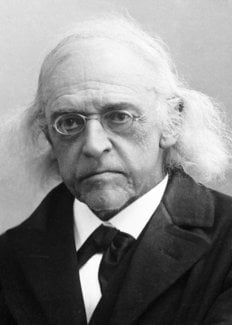
Theodor Mommsen (1817-1903), the greatest classical historian of the nineteenth century, was born in Garding, Schleswig, the son of a Protestant minister. He read law and classics at Kiel from 1838-43, and after a few years in France and Italy and a short career in journalism, he became a professor of law at the University of Leipzig. His involvement in the revolution of 1848-49 led to his dismissal in 1850. After holding academic positions at the universities of Zürich and Breslau he was appointed to the chair of Ancient History at the University of Berlin in 1858. He was permanent secretary of the Prussian Academy of Arts and Sciences. In the seventies he was an active and prominent member of the Prussian Parliament, first as a National Liberal and later as a Liberal.
Mommsen’s many writings – a bibliography up to 1887 lists over 900 items – revolutionized the study of Roman history. He was the general editor of, and chief contributor to, the Corpus Inscriptionum Latinarum, the gigantic collection of Roman inscriptions published by the Berlin Academy (1867-1959). This work laid the foundations for a systematic study of Roman government, administration, economics, and finance. Mommsen’s books on Roman coinage and on Roman constitutional and criminal law are still classics in their fields. But he was more than a brilliant scholar with a tremendous grasp of detail and a powerful talent of organization. He was a vivid and powerful writer. His passionate involvement in the revolution of 1848-49 deeply affected the point of view of his main work, the incomplete Römische Geschichte (1854-55, 1885) [History of Rome]. His contempt for the senatorial oligarchy and the «weakling» Cicero, as well as his boundless admiration for the energy and statesmanship of Julius Caesar, for a long time dominated the standard view of the history of that era. The work covers the history of the Roman Republic; a history of the Empire was planned but never written, except for a volume on provincial administration under the Empire.
This autobiography/biography was written at the time of the award and first published in the book series Les Prix Nobel. It was later edited and republished in Nobel Lectures. To cite this document, always state the source as shown above.
Theodor Mommsen died on November 1, 1903.
The Nobel Foundation's copyright has expired.Bibliography
| Works in German |
| Liederbuch dreier Freunde / Theodor Mommsen, Theodor Storm, Tycho Mommsen. – Kiel, 1843 |
| Oskische Studien. – Berlin : Nicolai, 1845-1846. – 2 vol. |
| Die Grundrechte des deutschen Volkes, mit Belehrungen und Erläuterungen. – Leipzig : Wigand, 1849. – Rev. ed., Frankfurt am Main: Klostermann, 1969 |
| Die unteritalischen Dialekte. – Leipzig : Wigand, 1850 |
| Über das römische Münzwesen. – Leipzig : Weidmann, 1850 |
| Die Schweiz in römischer Zeit. – Zurich, 1854 |
| Römische Geschichte. – Berlin : Weidmann, 1854-1856. – 2 vol. |
| Die römische Chronologie bis auf Caesar. – Berlin : Weidmann, 1858 |
| Geschichte des römischen Münzwesens. – Berlin : Weidmann, 1860 |
| Römische Forschungen. – Berlin: Weidmann, 1864-1879. – 2 vol. |
| Römisches Staatsrecht. – Leipzig : Hirzel, 1871-1888. – 3 vol. |
| Die Provinzen von Caesar bis Diokletian. – Berlin : Weidmann, 1885. – (Römische Geschichte; 4) |
| Die Örtlichkeit der Varusschlacht. – Berlin : Weidmann, 1885 |
| Abriss des römischen Staatsrechts. – Leipzig : Dunker & Humblot, 1893 |
| Römisches Strafrecht. – Leipzig: Duncker & Humblot, 1899. – 3 vol. |
| Weihe-Inschrift für Valerius Dalmatius. – Berlin : Königlich Preussische Akademie der Wissenschaften, 1902 |
| Gesammelte Schriften. – Berlin : Weidmann, 1904. – 8 vol. |
| Reden und Aufsätze. – Berlin : Weidmann, 1905 |
| Das Römische Imperium der Cäsaren/ hrsg. von Kurt L. Walter-Schomburg. – Berlin : Safari, 1941 |
| Tagebuch der französisch-italienischen Reise : 1844/1845 / hrsg. von Gerold und Brigitte Walser. – Bern : Lang, 1976 |
| Römische Geschichte : Vollständige Ausgabe in acht Bänden. – München : Deutscher Taschenbuch, 1976. – 8 vol. |
| Römische Kaisergeschichte : nach den Vorlesungs-Mitschriften von Sebastian und Paul Hensel 1882/86 / hrsg. von Barbara und Alexander Demandt. – München : Beck, 1992 |
| Translations into English |
| The History of Rome / translated by William P. Dickson. – London : Bentley, 1862-1866. – 4 vol.. |
| The History of Rome. – Rev. ed. / translated by William P. Dickson. – London : Bentley, 1894. – 5 vol. |
| The History of Rome / abridged by Dero A. Saunders and John H. Collins. – Clinton, Mass. : Meridian Books, 1958 |
| The Provinces of Rome from Caesar to Diocletian. – Rev. ed. of vol. 5 of Römische Geschichte / translated by William P. Dickson. – Chicago : Ares, 1974 |
| Critical studies (selection) |
| Theodor Mommsen : Gelehrter, Politiker und Literat / Josef Wiesehöfer (Hg.). Unter Mitarb. von Henning Börm. – Stuttgart : Steiner, 2005 |
| Rebenich, Stefan, Theodor Mommsen : eine Biographie. – München : Beck, 2002 |
| Theodor Mommsen: Wissenschaft und Politik im 19. Jahrhundert / hrsg. von Alexander Demandt. – Berlin : de Gruyter, 2005 |
The Swedish Academy, 2007
Theodor Mommsen – Facts
Award ceremony speech
Presentation Speech by C.D. af Wirsén, Permanent Secretary of the Swedish Academy on December 10, 1902
The second paragraph of the Nobel statutes states that «Literature» should include not only belles-lettres, «but also other writings that in form or content show literary value». This definition sanctions the award of the Nobel Prize in Literature to philosophers, writers on religious subjects, scientists, and historians, provided that their work is distinguished by artistic excellence of presentation as well as by the high value of its content.
The Swedish Academy this year had to make its choice among many brilliant names that have been suggested. In giving the Prize to the historian Theodor Mommsen, whose name had been proposed by eighteen members of the Royal Prussian Academy of Sciences, it has selected one of the most celebrated among them.
A bibliography of Mommsen’s published writings, compiled by Zangemeister on the occasion of his seventieth birthday, contains nine hundred and twenty items. One of Mommsen’s most important projects was editing the Corpus Inscriptionum Latinarum (1867-1959), a Herculean task despite the assistance of many learned collaborators, for not only did Mommsen contribute to each of the fifteen volumes but the organization of the total work is his lasting achievement. A veritable hero in the field of scholarship, Mommsen has done original and seminal research in Roman law, epigraphy, numismatics, the chronology of Roman history, and general Roman history. Even an otherwise prejudiced critic admitted that he can speak with equal authority on an Iapygian inscription, a fragment of Appius Caecus, and agriculture in Carthage. The educated public knows him chiefly through his Römische Geschichte (1854-55, 1885) [History of Rome], and it is this monumental work in particular that induced the Swedish Academy to award the Nobel Prize to him.
The work began to appear in 1854; Volume IV has not yet been published, but in 1885 he brought out Volume V, a masterly description of the state of the provinces under the Empire, a period so close to our own that the descriptions could be made to apply to more recent fields of activity which are mentioned in the Nobel statutes and which one can use as a starting point in assessing the total work of the writer. Mommsen’s Römische Geschichte, which has been translated into many languages, is distinguished by its thorough and comprehensive scholarship as well as its vigorous and lively style. Mommsen combines his command of the vast material with acute judgment, strict method, a youthful vigour, and that artistic presentation which alone can give life and concreteness to a description. He knows how to separate the wheat from the chaff, and it is difficult to decide whether one should give higher praise and have more admiration for his vast knowledge and the organizing power of his mind or for his intuitive imagination and his ability to turn carefully investigated facts into a living picture. His intuition and his creative power bridge the gap between the historian and the poet. Mommsen felt this relationship when in the fifth volume of his Roman history he said that imagination is the mother not only of poetry but also of history. Indeed, the similarities are great. Ranke’s detached objectivity is reminiscent of Goethe’s calm greatness, and England did right in burying Macaulay in the poets’ corner of Westminster Abbey.
In a few bold strokes Mommsen has drawn the character of the Roman people and shown how the Roman’s obedience to the state was linked to the obedience of son to father. With extraordinary skill he has unrolled the huge canvas of Rome’s development from slight beginnings to world rule. He has shown how with the growth of the Empire new tasks outgrew the old and stubbornly preserved constitution; how the sovereignty of the comitia gradually became a fiction, only incidentally realized by demagogues for their own purposes; how the Senate took care of public affairs in an honourable manner, but how the old aristocratic oligarchy that had once served its purpose failed to meet new demands; how a frequently unpatriotic capitalism abused its powers in political speculations; and how the disappearance of the free peasant led to disastrous consequences for the commonwealth. Mommsen also has demonstrated how the frequent change of consuls hampered the unified and consistent conduct of wars, which led to the prolongation of military commands; how at the same time the generals became increasingly independent and how Caesarism became a necessity for many reasons but especially because of the lack of institutions commensurate with the needs of the actual Empire; and how absolutism in many cases would have caused less hardship than the oligarchic rule. False grandeur vanishes before the uncompromising eye of the historian, the wheat is separated from the chaff and, like his admired Caesar, Mommsen has a clear eye for practical needs and that freedom from illusions which he praised in the conquerors of Gaul.
Various critics have objected that Mommsen is sometimes carried away by his genius for subjective passionate judgments, especially in his frequently unfavourable remarks concerning the last partisans of dying freedom and the opponents of Caesar, and concerning those who wavered between the parties during those hard times. Objections, perhaps not always totally unjustified, have been raised to Mommsen’s admiration of the power of genius even where it breaks the law, as well as to his statement that in history, which has no trials for high treason, a revolutionary can be a farsighted and praiseworthy statesman. On the other hand, it must be emphasized that Mommsen never glorifies brute power, but extols that power which serves the high goals of the state; and one has to record his firmly stated conviction that «praise that is corrupted by the genius of evil sins against the sacred spirit of history.» It has also been remarked that Mommsen occasionally applies to ancient conditions modern terms that cannot fully correspond to them (Junkertum, the Roman Coblenz, Camarilla, Lanzknechte, Marschälle, Sbirren, etc.). But this method of stressing the similarities between historical phenomena of different ages is not a product of Mommsen’s imagination but of his learning, which has at its disposal many analogues from various periods of history. If it adds too much colour to the narrative, it also adds freshness. Mommsen, by the way, is not a historical materialist. He admires Polybius, but he blames him for overlooking the ethical powers of man, and for having a too mechanical Weltanschauung. Concerning C. Gracchus, the inspired revolutionary whose measures he sometimes praises and sometimes blames, he says that every state is built on sand unless the ruler and the governed are tied together by a common morality. A healthy family life is to him the core of the nation. He severely condemns the curse of the Roman system of slavery. He has seen how a people that still has energy can be morally strengthened by disaster, and there is a pedagogical truth in his words that just as Athens’ freedom was born out of the flames with which the Persians ravaged the Acropolis, so today the unity of Italy resulted from the conflagration that the Gauls caused in Rome.
Learned, lively, sarcastic, and versatile, Mommsen has shed light on the domestic and foreign affairs of Rome, her religion, literature, law, finances, and customs. His descriptions are magnificent; no reader can forget his accounts of the battles of Lake Trasimene, Cannae, Aleria, and Pharsalus. His character sketches are equally lively. In sharp and clear outlines we see the profiles of the «political incendiary» C. Gracchus; of Marius in his last period «when insanity became a power and one plunged into abysses to avoid giddiness »; of Sulla, in particular, an incomparable portrait that has become an anthology piece; of the great Julius Caesar, Mommsen’s Roman ideal; of Hannibal, Scipio Africanus, the victor of Zama – not to mention the lesser figures whose features have been drawn clearly by the master’s hand.
With regard to these portraits the historian Treitschke has said that Römische Geschichte is the finest historical work of the nineteenth century and that Mommsen’s Caesar and Hannibal must cause enthusiasm in every young man, every young soldier.
One finds in Mommsen a curious combination of qualities. He is profoundly learned, a sober analyst of sources; yet he can be passionate in his judgments. He describes in great detail and with profound knowledge the inner workings of government and the complexities of economics; but at the same time his battle scenes and character sketches are brilliant. He is perhaps above all an artist, and his Römische Geschichte is a gigantic work of art. Belles-lettres, that noble flower of civilization, receives the last mention in Nobel’s will; Mommsen will always be counted among its prime representatives. When he delivered the first volume of his Römische Geschichte to the publisher, he wrote, «the labour has been immense», and on the fiftieth anniversary of his doctorate he spoke fervently of the boundless ocean of scholarship. But in his completed work the labour, however great it may have been, has been obliterated as in any true work of art which receives its own form from nature. The reader treads on safe ground, unmolested by the surf. The great work stands before our eyes as if cast in metal. In his inaugural address in Cambridge, Lord Acton justly called Mommsen one of the greatest writers of the present, and from this point of view especially Mommsen deserves a great literary prize. The most recent German edition of Römische Geschichte has just appeared. There are no changes. The work has retained its freshness; it is a monument which, though it may not possess the soft beauty of marble, is as perennial as bronze. The scholar’s hand is visible everywhere, but so is the poet’s. And, indeed, Mommsen did write poetry in his youth. The Liederbuch dreier Freunde [Songbook of Three Friends] of 1843 is witness that he might have become a servant of the Muses if, in his own words, circumstances had not brought it about that «what with folios and with prose/not every bud turned out a rose». Mommsen the historian was a friend of Theodor Storm and an admirer of Mörike; even in advanced years he translated works by the Italian poets Carducci and Giacosa.
Arts and Sciences have often shown the capacity to keep their practitioners young in spirit. Mommsen is both a scholar and an artist, and at eighty-five he is young in his works. Even in old age, as late as 1895, he made valuable contributions to the Proceedings of the Prussian Academy of Sciences.
The medal of the Nobel Prize in Literature depicts a young man listening to the inspirations of the Muses. Mommsen is an old man, but he possesses the fire of youth, and one rarely realizes as clearly as when reading Mommsen’s Römische Geschichte that Clio was one of the Muses. That example of pure history aroused our enthusiasm when we were young; it has kept its power over our minds, as we learn when we reread it now in our older days. Such is the power of historical scholarship if it is combined with great art.
For the above reasons we are sending today a homage from the country of Erik Gustaf Geijer to Theodor Mommsen.
At the banquet, C.D. af Wirsén delivered a speech in German in which he praised «the master of the art of historical exposition», and, in the name of the Swedish Academy, invited those present to empty their glasses in honour of the «great master of German historical research». The Minister of Germany Count von Leyden, replied for Theodor Mommsen, who was absent.