Knut Hamsun – Banquet speech
English
Norwegian
Knut Hamsun’s speech at the Nobel Banquet at Grand Hôtel, Stockholm, December 10, 1920
(Translation)
What am I to do in the presence of such gracious, such overwhelming generosity? I no longer have my feet planted on the ground, I am walking on air, my head is spinning. It is not easy to be myself right now. I have had honours and riches heaped on me this day. I myself am what I am, but I have been swept off my feet by the tribute that has been paid to my country, by the strains of her national anthem which resounded in this hall a minute ago.
It is as well perhaps that this is not the first time I have been swept off my feet. In the days of my blessed youth there were such occasions; in what young person’s life do they not occur? No, the only young people to whom this feeling is strange are those young conservatives who were born old, who do not know the meaning of being carried away. No worse fate can befall a young man or woman than becoming prematurely entrenched in prudence and negation. Heaven knows that there are plenty of opportunities in later life, too, for being carried away. What of it? We remain what we are and, no doubt, it is all very good for us!
However, I must not indulge in homespun wisdom here before so distinguished an assembly, especially as I am to be followed by a representative of science. I will soon sit down again, but this is my great day. I have been singled out by your benevolence, chosen amongst thousands of others, and crowned with laurels! On behalf of my country I thank the Swedish Academy and all Sweden for the honour they have bestowed on me. Personally, I bow my head under the weight of such great distinctions, but I am also proud that your Academy should have judged my shoulders strong enough to bear them.
A distinguished speaker said earlier tonight that I have my own way of writing, and this much I may perhaps claim and no more. I have, however, learned something from everyone and what man is there who has not learned a little from all? I have had much to learn from Sweden’s poetry and, more especially, from her lyrics of the last generation. Were I more conversant with literature and its great names, I could go on quoting them ad infinitum and acknowledge my debt for the merit you have been generous enough to find in my work. However, coming from a person like me, this would be mere name-dropping, shallow sound effects without a single bass note to support them. I am no longer young enough for this; I have not the strength.
No, what I should really like to do right now, in the full blaze of lights, before this illustrious assembly, is to shower every one of you with gifts, with flowers, with offerings of poetry – to be young once more, to ride on the crest of the wave. That is what I should wish to do on this great occasion, this last opportunity for me. I dare not do it, for I would not be able to escape ridicule. Today riches and honours have been lavished on me, but one gift has been lacking, the most important one of all, the only one that matters, the gift of youth. None of us is too old to remember it. It is proper that we who have grown old should take a step back and do so with dignity and grace.
I know not what I should do – I know not what is the right thing to do, but I raise my glass to the youth of Sweden, to young people everywhere, to all that is young in life.
Prior to the speech, Professor Oscar Montelius addressed Mr. Hamsun: «I know that you prefer to be talked about as little as possible; but I cannot refrain from assuring you that all of us who admire your Growth of the Soil rejoice in having made your personal acquaintance.»
The Nobel Foundation's copyright has expired.Knut Hamsun – Bibliography
| Works in Norwegian |
| Den Gaadefulde : en kjærlighedshistorie fra Nordland. – Tromsø : Urdal, 1877 |
| Bjørger : fortælling. – Bodø : A. F. Knudsen, 1878 |
| Fra det moderne Amerikas aandsliv. – København : Philipsen, 1889 |
| Lars Oftedal : udkast. – Bergen : Mons Litlere, 1889 |
| Sult. – København : Philipsen, 1890 |
| Mysterier. – Copenhagen : Philipsen, 1892 |
| Redaktør Lynge. – Copenhagen : Philipsen, 1893 |
| Ny Jord. – Copenhagen : Philipsen, 1893 |
| Pan : af Løjtnant Thomas Glahns Papirer. – Copenhagen : Philipsen, 1894 |
| Ved Rigets Port. – Copenhagen : Philipsen, 1895 |
| Livets Spil. – Copenhagen : Det Nordiske Forlag, 1896 |
| Siesta : skitser. – Copenhagen : Gyldendal, 1897 |
| Aftenrøde : slutningsspil. – Copenhagen : Gyldendal, 1898 |
| Victoria : en kærligheds historie. – Christiania : Cammermeyer, 1898 |
| Munken Vendt. – Copenhagen : Gyldendal, 1902 |
| I Æventyrland : oplevet og drømt i Kaukasien. – Copenhagen : Gyldendal, 1903 |
| Dronning Tamara : skuespil i tre akter. – Copenhagen : Gyldendal, 1903 |
| Kratskog : Historier og Skitser. – Copenhagen : Gyldendal, 1903 |
| Det vilde Kor : digte. – Copenhagen : Gyldendal, 1904 |
| Sværmere. – Copenhagen : Gyldendal, 1904 |
| Stridende Liv : skildringer fra Vesten og Østen. – Copenhagen : Gyldendal, 1905 |
| Under Høststjærnen : en vandrers fortælling. – Christiania : Gyldendal, 1906 |
| Benoni. – Christiania : Gyldendal, 1908 |
| Rosa : af student Parelius’ papirer. – Christiania : Gyldendal, 1908 |
| En vandrer spiller med sordin. – Christiania : Gyldendal, 1909 |
| Livet ivold : Sskuespil i fire akter. – Christiania : Gyldendal, 1910 |
| Den sidste glæde : skildringer. – Christiania : Gyldendal, 1912 |
| Børn av tiden. – Christiania : Gyldendal, 1913 |
| Segelfoss by. – Copenhagen : Gyldendal, 1915 |
| Markens Grøde. – Copenhagen : Gyldendal, 1917 |
| Konerne ved vandposten. – Copenhagen : Gyldendal, 1920 |
| Siste kapitel. – Christiania : Gyldendal, 1923 |
| Landstrykere. – Oslo : Gyldendal, 1927 |
| August. – Oslo : Gyldendal, 1930 |
| Men livet lever. – Oslo : Gyldendal, 1933 |
| Ringen sluttet. – Oslo : Gyldendal, 1936 |
| Artikler / i utvalg ved Francis Bull. – Oslo : Gyldendal, 1939 |
| Paa gjengrodde stier. – Oslo : Gyldendal, 1949 |
| Paa turné : tre foredrag om litteratur / utgitt ved Tore Hamsun. – Oslo : Gyldendal, 1960 |
| Livsfragmenter : ni noveller / samlet, redigert og kommentert av Lars Frode Larsen . – Oslo : Gyldendal, 1988 |
| Over havet : artikler, reisebrev / samlet, redigert og kommentert av Lars Frode Larsen. – Oslo : Gyldendal, 1990 |
| Knut Hamsuns brev / utgitt av Harald S. Næss. – Oslo : Gyldendal, 1994-2001. – 7 vol. |
| Hamsuns polemiske skrifter / i utvalg ved Gunvald Hermundstad. – Oslo : Gyldendal, 1998 |
| Samlede verker. – 10. utg. – Oslo : Gyldendal, 2000. – 15 vol. |
| En fløjte lød i mit blod : nye dikt / samlet, redigert og kommentert av Lars Frode Larsen. – Oslo : Gyldendal, 2003 |
| Translations into English |
| Hunger / translated by George Egerton. – London : Smithers, 1899 |
| Shallow Soil / translated by Carl Christian Hyllested. – New York : Scribners, 1914 |
| Growth of the Soil / translated by W. W. Worster. – London : Gyldendal, 1920 |
| Pan / translated by W. W. Worster. – London : Gyldendal, 1920 |
| Wanderers / translated by W. W. Worster. – New York : Knopf, 1922 |
| Victoria : a love story / translated by Arthur G. Chater. – London : Gyldendal, 1923 |
| Children of the Age / translated by J. S. Scott. – New York : Knopf, 1924 |
| In the Grip of Life / translated by Graham Rawson and Tristan Rawson. – New York : Knopf, 1924 |
| Benoni / translated by Arthur G. Chater. – New York : Knopf, 1925 |
| Segelfoss Town / translated by J. S. Scott. – New York : Knopf, 1925 |
| Rosa / translated by Arthur G. Chater. – New York : Knopf, 1926 |
| Mysteries / translated by Arthur G. Chater. – New York : Knopf, 1927 |
| The Women at the Pump / translated by Arthur G. Chater. – New York : Knopf, 1928 |
| Chapter the Last / translated by Arthur G. Chater. – New York : Knopf, 1929 |
| Vagabonds / translated by Eugene Gay-Tifft. – New York : Coward-McCann, 1930 |
| August / translated by Eugene Gay-Tifft. – New York : Grosset & Dunlap, 1931 |
| The Road Leads On / translated by Eugene Gay-Tifft. – New York : Coward-McCann, 1934 |
| The Ring Is Closed / translated by Eugene Gay-Tifft. – New York : Coward-McCann, 1937 |
| Look Back on Happiness / translated by Paula Wiking. – New York : Coward-McCann, 1940 |
| Pan / translated by James W. McFarlane. – London : Artemis Press, 1955 |
| Hunger / translated by Robert Bly ; introduction by Isaac Bashevis Singer. – New York : Farrar, Straus & Giroux, 1967 |
| On Over-grown Paths / translated by Carl L. Anders on. – New York : Paul S. Eriksson, 1967 |
| The Cultural Life of Modern America / edited and translated by Barbara Morgridge. – Cambridge, Mass. : Harvard University Press, 1969 |
| Victoria : a love story / translated by Oliver Stallybrass. – New York : Farrar, Straus & Giroux, 1969 |
| Mysteries / translated by Jerry Bothmer. – New York : Farrar, Straus & Giroux, 1971 |
| The Wanderer / translated by Oliver Stallybrass and Gunnvor Stallybrass. – New York : Farrar, Straus & Giroux, 1975 |
| The Women at the Pump / translated by Oliver Stallybrass and Gunnvor Stallybrass. – New York : Farrar, Straus & Giroux, 1978 |
| Wayfarers / translated by James W. McFarlane. – New York : Farrar, Straus & Giroux, 1980 |
| Selected Letters / edited by Harald Næss and James W. McFarlane. – Norwich : Norvik Press, 1990-1998. – 2 vol. |
| Night Roamers and Other Stories / translated by Tiina Nunnally. – Seattle : Fjord Press, 1992 |
| Dreamers / translated by Tom Geddes. – New York : New Directions, 1996 |
| Hunger / translated by Sverre Lyngstad. – Edinburgh : Rebel Inc, 1996 |
| Rosa / translated by Sverre Lyngstad. – Los Angeles : Sun & Moon Press, 1997 |
| Tales of Love and Loss / translated by Robert Ferguson. – London : Souvenir Press, 1997 |
| Pan : from the Papers of Lieutenant Thomas Glahn / translated and edited by Sverre Lyngstad. – New York : Penguin, 1998 |
| On Overgrown Paths / translated by Sverre Lyngstad. – Los Angeles : Green Integer, 1999 |
| Mysteries / translated by Sverre Lyngstad. – New York : Penguin, 2001 |
| Knut Hamsun Remembers America : Essays and Stories, 1885-1949 / translated and edited by Richard Nelson Current. – Columbia : University of Missouri Press, 2003 |
| The Last Joy / translated by Sverre Lyngstad. – Los Angeles : Green Integer, 2003 |
| In Wonderland / translated by Sverre Lyngstad. – Brooklyn, N.Y. : IG, 2004 |
| Victoria / translated by Sverre Lyngstad. – New York : Penguin, 2005 |
| Growth of the Soil / translated with explanatory and textual notes by Sverre Lyngstad ; introduction by Brad Leithauser. – New York : Penguin Books, 2007 |
| Hunger / introduction by Paul Auster ; translated from the Norwegian and with an afterword by Robert Bly. – New York : Farrar, Straus and Giroux, 2008 |
| Critical studies (a selection) |
| Østby, Arvid, Knut Hamsun : en bibliografi. – Oslo : Gyldendal, 1972 |
| Kittang, Atle, Luft, vind, ingenting : Hamsuns desillusjonsromanar frå Sult til Ringen sluttet. – Oslo : Gyldendal, 1984 |
| Næss, Harald, Knut Hamsun. – Boston : Twayne, 1984 |
| Ferguson, Robert, Enigma : the life of Knut Hamsun. – London : Hutchinson, 1987 |
| Humpál, Martin, The Roots of Modernist Narrative : Knut Hamsun’s Novels Hunger, Mysteries, and Pan. Oslo . – Norway : Solum, 1998 |
| Kolloen, Ingar Sletten, Enigma : the Life of Knut Hamsun. – London : Hutchinson, 1987 |
| Lyngstad, Sverre, Knut Hamsun, Novelist : a Critical Assessment. – New York : Lang, 2005 |
| Kolloen, Ingar Sletten, Hamsun : svermer og erobrer. – Oslo : Gyldendal, 2009 |
| Kolloen, Ingar Sletten, Knut Hamsun : Dreamer & Dissenter / translated by Erik Skuggevik. – New Haven : Yale University Press, 2009. |
| Žagar, Monika, Knut Hamsun : the Dark Side of Literary Brilliance. – Seattle : University of Washington Press, 2009 |
The Swedish Academy, 2010
Knut Hamsun – Other resources
Links to other sites
On Knut Hamsun from Pegasos Author’s Calendar
Projekt Runeberg – about Knut Hamsun
Biography from Hamsun Society – in Norwegian
Hamsuncenteret (in Norwegian)
Knut Hamsun – Photo gallery

Knut Hamsun at his desk in the author's cottage at Nørholm, 1929.
Photo: A.B. Wilse Courtesy: Norsk Folkemuseum

Knut Hamsun at his estate, Nørholm, on a summer day in 1927.
Photo: A.B. Wilse Courtesy: Norsk Folkemuseum

Marie and Knut Hamsun, at Nørholm with their dog Dux, in around 1925.
Photo: A.B. Wilse Courtesy: Norsk Folkemuseum

Growth of the Soil.
Photo: A.B. Wilse Courtesy: Norsk Folkemuseum
Knut Hamsun – Banquet speech
English
Norwegian
Knut Hamsun’s speech at the Nobel Banquet at Grand Hôtel, Stockholm, December 10, 1920
(in Norwegian)
Nei hvad skal jeg gjöre overfor en saa hjærtelig Elskværdighet! Den löfter mig iveiret og jeg mister Fotfæstet, Salen farer avsted med mig. Det er ikke godt at være mig nu, jeg er blit tyk av Ære og Rikdom i Stockholm idag, jeg staar der jeg staar, men den Hyldest til mit Land som bruset i »Ja vi elsker» den var en Bölge gjennem mig, den faar mig til at svaie.
Det kommer mig da tilgode at jeg ogsaa for i Livet – i den velsignede Ungdom – kan ha været i de Tilfælder at jeg har svaiet. Hvilken Ungdom har ikke det? Det skulde da være Unge Höire, de som er födt gamle, de som aldrig er med. Det hænder Ungdommen intet værre end at bli indfanget av Ufarlighet og Negativitet. Herregud – det som möter os i Livet kan stundom faa os til at svaie. Hvad saa? Vi staar der vi staar, det kommer os tilgode.
Men jeg skal vogte mig for at tale Bondevisdom til en saa utvalgt Forsamling som denne – især like for den store Videnskap skal ha Ordet. Jeg sætter mig om et Øieblik ned igjen. Men nu er det jo saa at jeg har hat min Oplevelse idag: en stor Velvilje har opspurt mig, har opsporet mig blandt Tusener og skjænket mig en Krans! Jeg har at takke det Svenske Akademi og Sverige paa mit Lands Vegne for Æren som er vist mig, personlig har jeg at böie mit Hode under Vægten av en höi Utmær kelse. Jeg er stolt av at Akademiet har tiltrodd min Nakke Styrke nok til at bære denne Utmærkelse.
Som det var antydet av en æret Taler for i Kvæld tör jeg kanske tro paa at jeg har skrevet mine Böker paa min lille Vis, det er alt jeg kan forlange. Men jeg har lært av alle, – hvem lærer ikke av alle! Jeg har lært meget av svensk Diktning, ikke mindst av den siste Menneskealders svenske Lyrik. Hvis jeg nu var litt forfaren i Litteratur og kunde regne op Navne saa vilde jeg utvikle dette noget bedre, i Tilknytning til de velvillige Uttalelser om mig. Men det vilde jo bare bli utvortes Flinkhet og Mundprat fra min Side, uten en eneste Brysttone. Jeg har heller ikke Ungdommeligheten til det, jeg orker ikke.
Nei hvad jeg heller vilde i denne Stund, i alt dette Lys og i denne straalende Forsamling, det var at gaa om til hver især av Dem med Blomster og Vers og Gaver, at være ung igjen, at ride paa Bölgen. Det var det jeg vilde for en stor Anlednings Skyld, for en siste Gangs Skyld. Men jeg vaager det ikke mere, jeg kunde ikke redde Billedet fra Karikaturen. Jeg er blit tyk av Ære og Rikdom i Stockholm idag – javel, men jeg mangler det vigtigste, det eneste, jeg mangler Ungdommen. Det er ingen av os saa gammel at vi ikke mindes den. Det sömmer sig at vi ældede træder tilbake, men vi gjör det med Honnör.
Uanset hvad jeg burde nu – det vet jeg ikke -, uanset hvad som passer bedst – det vet jeg ikke -, jeg tömmer mit Glas for Sveriges Ungdom, for al Ungdom, for alt ungt i Livet!
The Nobel Foundation's copyright has expired.Knut Hamsun – Nominations
Award ceremony speech
Presentation Speech by Harald Hjärne, Chairman of the Nobel Committee of the Swedish Academy, on December 10, 1920
In accordance with the statutes of the Nobel Foundation, the Swedish Academy has awarded the literary Prize for 1920 to the Norwegian novelist Knut Hamsun for his work, Markens Grøde (1917) [Growth of the Soil].
It would be superfluous to give a detailed account of a book that in a short time has spread everywhere in its original form or in translation. Through the originality of its plot and style, it has aroused the liveliest interest in many countries and has found favourable reception with the most diverse groups of readers. Only recently a leading and distinctly conservative English reviewer wrote that this book, which had appeared in England only this year, was universally acclaimed as a masterpiece. The reasons for this incontestable success will no doubt hold the attention of literary critics for a long time, but even now, under the impact of first impressions, they deserve to be pointed out at least in their broad features.
In spite of current opinions of our time, those who want to find in literature above all a faithful reproduction of reality, will recognize in Markens Grøde the representation of a life that forms the basis of existence and of the development of societies wherever men live and build. These descriptions are not distorted by any memories of a long, highly civilized past; their immediate effect is due to the evocation of the harsh struggle all active men must in the beginning endure (in varying external conditions, of course) against an indomitable and rebellious nature. It would be difficult to conceive of a more striking contrast with works usually called «classic».
Nonetheless, this work may rightly be called classic, but in a deeper and more profound sense than usual if this epithet is to express something other and more than vague praise. The classic, in the culture we have inherited from antiquity, is less the perfect which calls for imitation than the significant which is taken directly from life and which is rendered in a form of enduring value even for future ages. The insignificant, that which in itself is of no consequence, cannot be comprehended in this notion any more than that which is formally provisional or defective. But apart from that, whatever is precious in human life, although it may appear common, can be placed in the same category as the extraordinary and the brilliant, with a significance and a form of equal value, once it is presented for the first time in its proper light. In this sense it is no exaggeration to maintain that in Markens Grøde Hamsun has given to our times a classic that can be measured against the best we already have. Antiquity does not possess in this respect a monopoly inaccessible to future generations; for life is always new and inexhaustible and as such can always be presented in new forms created by new geniuses.
Hamsun’s work is an epic of labour to which the author has given monumental lines. It is not a question of disparate labour which divides men within and among themselves; it is a question of the concentrated toil which in its purest form shapes men entirely, which mollifies and brings together divided spirits, which protects and increases their fruits with a regular and uninterrupted progress. The labour of the pioneer and the first farmer with all its difficulties, under the poet’s pen, thus takes on the character of a heroic struggle that yields nothing to the grandeur of the manly sacrifice for one’s country and companions in arms. Just as the peasant poet Hesiod described the labours of the field, so Hamsun has put in the foreground of his work the ideal labourer who dedicates his whole life and all his powers to clearing the land and to triumphing over the obstacles with which men and the forces of nature confront him. If Hamsun has cast behind him all the weighty memories of civilization, he has by his own work contributed to a precise understanding of the new culture that our era expects to arise from the progress of physical labour as a continuation of ancient civilization.
Hamsun does not present so-called types on his stage. His heroes and heroines are all very much alive, all in quite modest circumstances. Certain among them, and the best, are unimaginative in their goals and thoughts, the principal example being the tireless and silent farmer himself. Others are drifting, troubled, and often even bewildered by egoistic aspirations and follies. They all carry the mark of their Norwegian origin; they are all conditioned in some manner by «the fruits of the earth». It is one of the characteristics of our sister languages that often the same words express very different nuances of meaning by the images they evoke. When we Swedes speak of the «fruits of the earth», we think immediately of something fertile, abundant, succulent, preferably in an agricultural region that has been cultivated for a long time. The thought of Hamsun’s book is not oriented in this direction. «The earth» here is the rugged and forbidding fallow soil. Its fruits do not fall from a cornucopia of abundance; they comprise all that can germinate and grow in this ungrateful soil, the good and the bad, the beautiful and the ugly, among men and animals as well as in the forest and the fields. Such are the kinds of fruits Hamsun’s work offers for our harvest.
However, we Swedes, or at least many Swedes, do not feel strange in the regions and circumstances described to us here. We rediscover the atmosphere of the North with all that is a part of its natural and social milieu, and with many parallels on both sides of the frontier. Moreover, Hamsun also presents Swedish characters who are drawn to the newly cultivated land, most of them no doubt attracted by the mirage of brilliant economic success, as the cities on the Norwegian coasts appear on the horizon like snares of the great worldly life enticing defenceless hearts from the heavy toil of the land.
These and other quite human projections, far from weakening, reinforce the impression produced by the classic content of the story. They dissipate the apprehension one could feel in seeing the light of the ideal at the expense of truth; they guarantee the sincerity of the design, the truth of the images and the characters. Their common humanity escapes no one. The proof is in the welcome this work has found among peoples of different mentalities, languages, and customs. Furthermore, through the light touch of smiling humour with which the author treats even the saddest things he relates, he has proved his own compassion for human destiny and human nature. But in the story, he never departs from the most complete artistic serenity. The style, stripped of vain ornaments, renders the reality of things with certainty and clarity, and one rediscovers in it, under a personal and powerful form, all the richness of nuance of the writer’s mother tongue.
Mr. Knut Hamsun – In facing the rigours of the season as well as the fatigues of a long trip particularly arduous at this time in order to come to receive the Prize awarded you, you have given great joy to the Swedish Academy, which will certainly be shared by all the persons present at this ceremony. In the name of the Academy, I have tried as well as possible in the short time accorded me to express at least some of the major reasons for which we appreciate so highly your work which has just been crowned. Thus, in addressing myself now to you personally, I do not wish to repeat what I have said. It remains for me only to congratulate you in the name of the Academy and to express the hope that the memories you will keep of your visit with us will be ties that will link you to us also in the future.
The Nobel Prize in Literature 1920
Knut Hamsun – Biographical
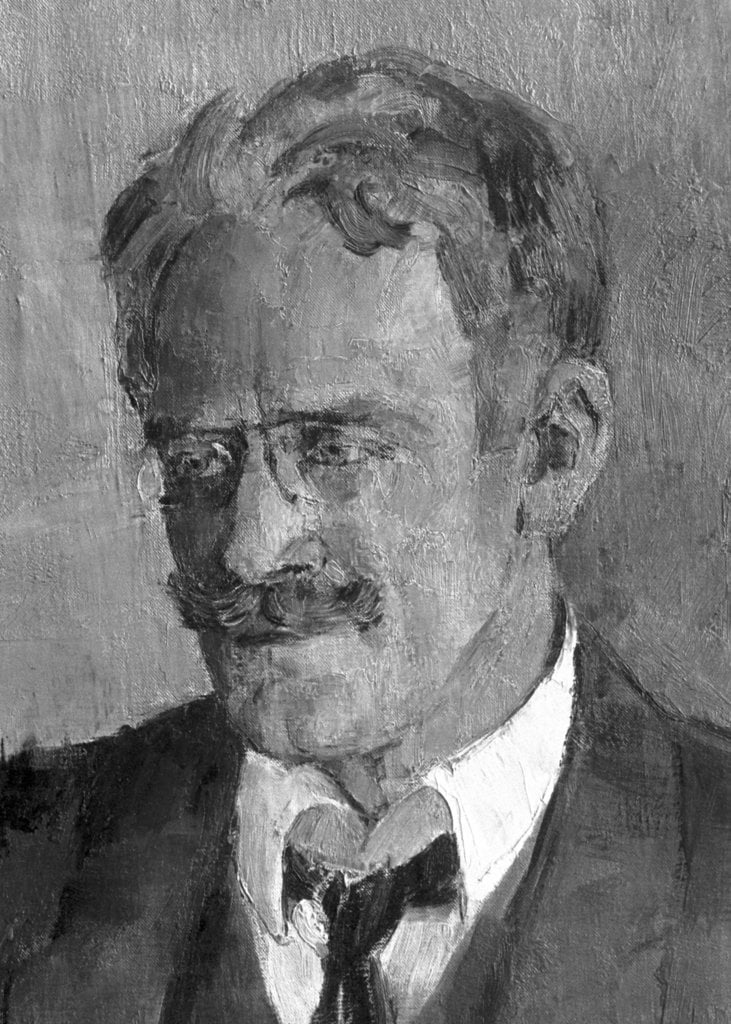
Knut Hamsun (1859-1952) was born in Gudbrandsdalen, Norway, and grew up in poverty in Hamarøy in Nordland. From early childhood he was a shoemaker’s apprentice, but was also a road worker, stonemason, junior-level teacher, and so on. He spent some years in America, travelling and working as a tram driver, and published his impressions, chiefly satirical, under the title Fra det moderne Amerikas Aandsliv (1889) [The Intellectual Life of Modern America]. The novel Sult (1890) [Hunger] and even more so Pan (1894) led to Hamsun’s literary breakthrough and Sult is regarded as the first genuinely modern novel in Norwegian literature.
Hamsun’s work is determined by a deep aversion to civilization and the belief that man’s only fulfilment lies with the soil. This primitivism (and its concomitant distrust of all things modern) found its fullest expression in Hamsun’s masterpiece Markens Grøde (1917) [Growth of the Soil]. His early works usually centre on an outcast, a vagabond figure, aggressively opposed to civilization. In his middle period, Hamsun’s aggressiveness gives way to melancholy resignation about the loss of youth. The decay of age is the theme of such plays as Livets Spil (1896) [Game of Life] and Aftenrøde (1898) [ Sunset], as well as of the novels Under Høststjernen (1906)[Under the Autumn Star], Benoni (1908), and En Vandrer Spiller med Sordin (1909) [A Wanderer Plays on Muted Strings]. In 1904 Hamsun also published a volume of poems, Det vilde Kor [The Wild Chorus].
Hamsun’s later works focused less on individual characters and more on broad attacks on civilization. Apart from Marken’s Grøde one should mention Børn av Tiden (1913) [Children of the Age], Segelfoss By (1915) [Segelfoss Town] Landstrykere (1927) [Vagabonds], August (1930), Men Livet lever (1933) [The Road leads on], and Ringen sluttet (1936) [The Ring is Closed].
Hamsun’s admiration for Germany, which was of long standing, made him sympathetic toward the Nazi invasion of Norway in 1940. After the war he was sentenced to the loss of his property, temporarily put under psychiatric observation, and spent his last years in poverty. A fifteen-volume edition of his complete works was published in 1954, two years after his death.
This autobiography/biography was written at the time of the award and first published in the book series Les Prix Nobel. It was later edited and republished in Nobel Lectures. To cite this document, always state the source as shown above.
Knut Hamsun died on 19 February 1952.
The Nobel Foundation's copyright has expired.