Ronald Ross – Nobel Lecture
Nobel Lecture, December 12, 1902
Researches on Malaria
Read the Nobel Lecture
Pdf 795 kB
Ronald Ross – Banquet speech
Ronald Ross’s speech at the Nobel Banquet in Stockholm, December 10, 1902
Your Royal Highnesses,
grefve Mörner and gentlemen,
I beg to thank you for the very great honour you have done me in drinking to my health this evening; and you, Professor Mörner, for the eloquent and flattering terms in which you proposed the toast. I beg to accept the honour, not only for myself, but for all those who have laboured so long at the important subject of malaria. Permit me, at this auspicious moment, to mention the names of some of those to whom humanity owes so much, but who have not always been as fortunate as myself in receiving reward for their labours. I will begin with the great name of Laveran, who more than twenty years ago discovered the cause of malaria and created a new branch of science – Laveran, that true man of science who has honoured me by permitting me to call him my master. I will mention next the names of Golgi, that most distinguished Italian; of Danilewsky, of Marchiafava, and Celli, of Kelsch, of Mannaberg, of Bignami, Romanowsky, Sakharof, Canalis, Bastianelli, Dionisi, Vandyke Carter, the two Plehns, Ziemann, Thayer, and not least, MacCallum, who, with a host of others no less meritorious, consolidated the discovery of Laveran. Turning now to the subject of malaria and mosquitoes, I must first mention those who created the hypothesis, namely King, in America, Koch, in Germany, Laveran, in France, and particularly Manson, in England, whose profound induction formed the basis of my own humble endeavours, and whom I shall always esteem one of my masters. Now permit me the honour of naming those who in all parts of the world confirmed and amplified those elements of the truth which I had found in India – the great Koch and his German colleagues; Bignami, Bastianelli, and Celli, in Italy; Daniels, Stephens, Christophers, Ziemann, Annett, Dutton, Elliott, Van der Scheer, Van Birlekom, Manson and his son, Fernside James, Nuttall, Austen, Theobald, Howard and many others. Nor let us by any means forget those who are endeavouring to turn these discoveries to practical account for the saving of human life on a large scale, particularly Koch, Sir William MacGregor, Celli, Logan Taylor and Gorgas; and, not least, Sir Alfred Jones and those merchants of London and Liverpool who are spending their money freely for the same great cause.
In conclusion, gentlemen, I hope you will permit me to utter a personal note. I cannot help comparing the present moment with that when, seven years ago, I commenced the researches for which you have today given me such great honour. I cannot help remembering the dingy little military hospital, the old cracked microscope, and the medicine bottles which constituted all the laboratory and apparatus which I possessed for the purpose of attacking one of the most redoubtable of scientific problems. Today I have received in this most beautiful capital of the north, the most distinguished of all scientific honours from the hand of your king himself. Gentlemen, I can do no more than thank you.
Prior to the speech, Professor the Count K.A.H. Mörner, Rector of the Royal Caroline Institute, addressed the laureate:
Professor Ross,
It is a long way from Sweden to India. But we will accompany you – in our thoughts – back to the scene of your efforts and success.
Your enterprise about malaria was a troublesome one. Far from scientific centres and their resources, occupied by your duties, being an army surgeon, you wished to pave the way for science, where other investigators had tried it in vain.
Thousands of experiments were made; the door to the sought-for realm of science remained closed. Many inquirers would have thought they were going wrong. But for your perseverance and your faithful belief in the value of Manson’s induction, you would have shrunk from the difficulties.
At last your assiduous efforts and your penetrative genius gained the victory and gave an extensive solution of the malaria-problem.
Already once before today I have mentioned the importance of your work. Your followers – if they be just – will testify, that your discoveries have been the basis, from which the knowledge of malaria has of late proceeded so successfully.
You have yourself taken part in working out the matter. I beg to draw attention to the malariaexpeditions in Africa, of which you have been a partaker. I venture to express the conviction that in the future science will be still more indebted to you.
Now your results are a common wealth that gives the investigators the possibility of advancing, each in his sphere, the knowledge concerning malaria. If we would follow the propagation of your discoveries and visit all the places, where they are used for whetting weapons against malaria, we must go round the world. But we return and join in congratulating you on your exceedingly beautiful work and pledge your health.
The Nobel Foundation's copyright has expired.Ronald Ross – Nominations
Ronald Ross – Other resources
Links to other sites
Sir Ronald Ross collections at London School of Hygiene & Tropical Medicine
‘Malaria, mosquitoes and the legacy of Ronald Ross’ from WHO
Ronald Ross – Biographical
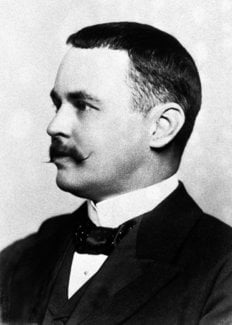
Ronald Ross was born on May 13, 1857, as the son of Sir C.C.G. Ross, a General in the English army. He commenced the study of medicine at St. Bartholomew’s Hospital in London in 1875; entered the Indian Medical Service in 1881. He commenced the study of malaria in 1892. In 1894 he determined to make an experimental investigation in India of the hypothesis of Laveran and Manson that mosquitoes are connected with the propagation of the disease. After two and a half years’ failure, Ross succeeded in demonstrating the life-cycle of the parasites of malaria in mosquitoes, thus establishing the hypothesis of Laveran and Manson. In 1899 he joined the Liverpool School of Tropical Medicine under the direction of Sir Alfred Jones. He was immediately sent to West Africa to continue his investigations, and there he found the species of mosquitoes which convey the deadly African fever. Since then the School has been unremitting in its efforts to improve health, and especially to reduce the malaria in West Africa. Ross’ researches have been confirmed and assisted by many distinguished authorities, especially by Koch, Daniels, Bignami, Celli, Christophers, Stephens, Annett, Austen, Ruge, Ziemann, and many others.
In 1901 Ross was elected a Fellow of the Royal College of Surgeons of England and also a Fellow of the Royal Society, of which he became Vice-President from 1911 to 1913. In 1902 he was appointed a Companion of the Most Honourable Order of Bath by His Majesty the King of Great Britain. In 1911 he was elevated to the rank of Knight Commander of the same Order. In Belgium, he was made an Officer in the Order of Leopold II.
In 1902 a movement was set on foot to commemorate the valuable services rendered to the School of Tropical Medicine by its originator and Chairman, Sir Alfred Jones, by founding a Chair of Tropical Medicine in University College to be connected with the School. The movement was met with enthusiastic support, and an amount of money was quickly collected sufficient to found «Sir Alfred Jones’ Chair of Tropical Medicine». Ross was appointed to the Professorship in 1902 and retained the Chair until 1912, when he left Liverpool, and was appointed Physician for Tropical Diseases at Kings College Hospital, London, a post which he held together with the Chair of Tropical Sanitation in Liverpool. He remained in these posts until 1917, when he was appointed Consultant in Malariology to the War Office, his service in this capacity, and in special connection with epidemic malaria then occurring on combatant troops, being recognized by his elevation to the rank of Knight Commander, St. Michael and St. George, in 1918. He was later appointed Consultant in Malaria to the Ministry of Pensions. In 1926 he assumed the post of Director in Chief of the Ross Institute and Hospital of Tropical Diseases and Hygiene, which had been created by admirers of his work, and he remained in this position until his death. He was also a President of the Society of Tropical Medicine. His Memoirs (London, 1923) were «inscribed to the people of Sweden and the memory of Alfred Nobel».
During this active career, Ross’ interest lay mainly in the initiation of measures for the prevention of malaria in different countries of the world. He carried out surveys and initiated schemes in many places, including West Africa, the Suez Canal zone, Greece, Mauritius, Cyprus, and in the areas affected by the 1914-1918 war. He also initiated organizations, which have proved to be well established, for the prevention of malaria within the planting industries of India and Ceylon. He made many contributions to the epidemiology of malaria and to methods of its survey and assessment, but perhaps his greatest was the development of mathematical models for the study of its epidemiology, initiated in his report on Mauritius in 1908, elaborated in his Prevention of Malaria in 1911 and further elaborated in a more generalized form in scientific papers published by the Royal Society in 1915 and 1916. These papers represented a profound mathematical interest which was not confined to epidemiology, but led him to make material contributions to both pure and applied mathematics. Those related to «pathometry» are best known and, 40 years later, constitute the basis of much of the epidemiological understanding of insect-borne diseases.
Through these works Ross continued his great contribution in the form of the discovery of the transmission of malaria by the mosquito, but he also found time and mental energy for many other pursuits, being poet, playwright, writer and painter. Particularly, his poetic works gained him wide acclamation which was independent of his medical and mathematical standing.
He received many honours in addition to the Nobel Prize, and was given Honorary Membership of learned societies of most countries of Europe, and of many other continents. He got an honorary M.D. degree in Stockholm in 1910 at the centenary celebration of the Caroline Institute. Whilst his vivacity and single-minded search for truth caused friction with some people, he enjoyed a vast circle of friends in Europe, Asia and America who respected him for his personality as well as for his genius.
Ross married Rosa Bessie Bloxam in 1889. They had two sons, Ronald and Charles, and two daughters, Dorothy and Sylvia. His wife died in 1931, Ross survived her until a year later, when he died after a long illness, at the Ross Institute, London, on September 16, 1932.
This autobiography/biography was written at the time of the award and first published in the book series Les Prix Nobel. It was later edited and republished in Nobel Lectures. To cite this document, always state the source as shown above.
For more updated biographical information, see: Ross, Ronald, Memoirs. John Murray, London, 1923.
The Nobel Foundation's copyright has expired.Ronald Ross – Facts
Award ceremony speech
Presentation Speech by Professor the Count K.A.H. Mörner, Rector of the Royal Caroline Institute on December 10, 1902
Your Majesty, Your Royal Highnesses, Ladies and Gentlemen.
Among the stipulations Alfred Nobel set forth in his will, on which the Nobel Foundation is based, that concerning the international character of the prizes occupies an important place. This proves not only his love of mankind and his wish that we should regard one another as brethren, but it is also a witness of his extensive and prescient views more especially concerning medical science and its advancement.
All the branches of medical science and their promotors in different countries have the same ultimate aim, that of gaining the most thorough knowledge possible both about the human body and the processes in it, as also about noxious influences and the means of their prevention. All medical workers unite in pursuing that aim and in doing so feel members of one great fellowship. Nevertheless, the different fields of medical science lie at such a distance one from another, that the individual worker on many occasions must look afar in the attempt to get a thorough view of the progress of the work.
With respect to diseases they are often of different kinds and import in divers regions of the world. For instance, malaria is nowadays of little importance here in Sweden, whereas it is a veritable scourge in other regions. For elucidating this question by an instance from a European country, it may be mentioned that in Italy of late the annual average of deaths by malaria has been about 15,000, and the yearly number of cases is calculated as about two millions. Still more overwhelming are the numbers from India. Of the British Army, amounting to about 178,000 men, close upon 76,000 men were admitted into hospital for malarial fever in the year 1897. In this single year the mortality from «fever» among the civil population in India amounted to a total of more than five millions. It is moreover a well-known fact, that malaria dominates so severely in vast territories that it causes the very greatest difficulties for the cultivation of countries which, but for the malaria, are specially favoured by Nature.
The question of the real nature of malaria, its origin, its manner of entering the organism, and the consequent question of the possibility of preventing this disease, are all of the greatest importance and have from remote ages occupied investigators, for a long time without success.
A very important discovery concerning malaria was made – now long ago, more than two decades – when Laveran, a French army surgeon, ascertained, that malaria is a parasitic disease, caused by a very low form of animal life, that he found in the blood of malarious patients. By this discovery the name of Laveran has for ever become renowned in the history of malaria.
Research about malaria in the last two decades has chiefly been based on Laveran’s discovery. Science has thereby been enriched with many an important fact. We have gained knowledge of the different forms of the malarial parasite in blood. We have found, that it differs in the special forms of the disease. We have learned the relations between the parasite and the red blood corpuscles, in which it is chiefly to be found. We have furthermore been able to survey the manner in which it multiplies in the blood; the Italian investigator Golgi has in this respect revealed the remarkable fact that the periodicity of the malarial attacks depends on the appearance of new generations of the parasite in the blood. We have moreover found allied parasites in the blood of several mammals and birds.
The important question, previously mentioned, as to the possibility of the malarial parasite living outside the body, and its way of obtaining entrance into the blood remained unanswered. For some reasons, among others owing to various facts that were known concerning other parasites of an animal nature, it was supposed that the malarial parasite in some way leaves the blood so as to exist in some form in nature, probably as a parasite of some other being. As nothing indicated that the parasite was to be found in the secretions or excretions, the supposition lay near at hand, that suctorial insects would assist in carrying the parasite to a place, where it had to pass the aforementioned part of its life-cycle. Attention was therefore directed to the mosquito, which was thus supposed to spread the malarious infection. The importance of the mosquito in this respect has now been proved. In this case, as in several others, tradition anticipated science; it is even said, that negroes in the East-Africa use the same name for the mosquito and for malaria.
The mosquito theory of malaria was introduced to science by King no less than 18 years ago. The theory, however, remained a conjecture without other evidence than some suggestions given by epidemiological observations. The attempts made in Italy in the early nineties with the view of examining the theory experimentally, and, eventually, proving it to be true, gave results that seemed anything but encouraging; being far more likely to prevent the investigators from following this line.
A person we deem of great merit concerning the solution of the problem is the English investigator, Patrick Manson. It was a change in the appearance of the parasite, which was sometimes observed to occur, as the blood is shed, that Manson especially regarded as the first stage of its life outside the body. This phenomenon has afterwards been shown by the American pathologist Mac Callum to imply an act of reproduction of the parasite. Manson was moreover guided by his experience regarding another parasite of the blood, a little worm, filaria, the transference of which from one part of its life-cycle to another he had found effected by the mosquito, and more particularly by special species of the mosquito. By his views set forth on malaria, and by exciting expectation that the solution of the malaria problem was to be found in the direction he indicated, Manson gave an impulse to the further testing of the mosquito-theory and at last to its being established. Manson, who lived in England, had no opportunity of taking up the experimental work of the problem. The solution came from India.
It was an English army surgeon in India, Ronald Ross, who, impressed by Manson’s induction, undertook the experimental testing of the matter. Critically arranging his experiments, he caused mosquitoes that were hatched from larvae in the laboratory, to bite malarious patients, and endeavoured to follow the parasite in the body of the mosquitoes. The results of the first two years’ labour, although assiduous and scrupulous, gave little promise of success. But in August 1897 all at once he made vast progress towards his aim. While experimenting with another, less common species of mosquito, in the wall of its stomach he found bodies that very probably were an evolutionary stage of the human malarial parasite.
Ross, being prevented by circumstances from pursuing his plan in studying the malarial parasite of man, continued his work with an allied malarial parasite of birds. The result was that not only could he confirm his discovery concerning human malaria, as he found corresponding facts for avian malaria, but he also in a short time succeeded in revealing the further development of the avian malarial parasite in the body of the mosquito.
This development is briefly as follows. In the stomach of the mosquito a process of fecundation at first takes place; the form of the parasite, thereby produced, penetrates the stomach wall, embedded in which it grows to button-like structures projecting into the body-cavity. In these structures a large number of elongated organisms, «sporozoites», are formed. On the consequent bursting of the said structures the «sporozoites» escape into the general body-cavity of the mosquito, and accumulate in the salivary or poison glands, which are in connection with the proboscis with which the bites of the insect are inflicted. A bite of the mosquito, at that time, inoculates the parasite, and if the individual is susceptible to the parasite, this develops in the manner known and described long ago.
Ross’s discoveries into malaria were immediately followed by a series of important works.
Thus the Italian investigator, Grassi, in association with his colleagues, Bignami and Bastianelli, proved that the human malarial parasite not only in its early stage, already detected by Ross, but also in its further development undergoes the same evolution that Ross described for the growth of the avian malarial parasite in the body of the mosquito. Grassi also has precisely indicated the species of mosquito that are of import for the malaria of man. Many valuable works, besides these, have been issued by Ross, by the Italian investigators, by Robert Koch and by many others, works, by which not only our knowledge of the malarial parasite has been enlarged, but this knowledge has been made useful in combating and preventing malarial disease.
The eminent scientific value of Ross’s work, its importance as a basis for the success of the recent investigations into malaria, its rich contents as regards the art of medical practice and especially hygiene, will be obvious from the above.
It is owing to these merits, that the Professorial Staff of the Royal Caroline Institute has decided to allot the Medical Nobel Prize of this year to Ronald Ross.
Professor Ronald Ross. In announcing that the Professorial Staff of the Royal Caroline Institute has decided to award to you the Medical Nobel Prize of this year on account of your work on malaria, in the name of the said Institute I congratulate you on your investigations. By your discoveries you have revealed the mysteries of malaria. You have enriched science with facts of great biological interest and of the very greatest medical importance. You have founded the work of preventing malaria, this veritable scourge of many countries.