Niels Ryberg Finsen – Biographical
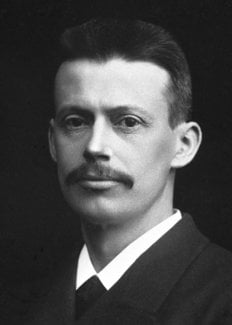
Niels Ryberg Finsen was born on December 15, 1860, at Thorshavn in the Faroe Islands. His father, Hannes Steingrim Finsen, belonged to an Icelandic family with traditions reaching back to the 10th century, and occupied prominent (from 1871 the highest) positions in the administration of the Faroe Islands. The mother, Johanne Formann, was born in Falster, Denmark. The boy received his early education in schools at Thorshavn and then at Herlufsholm in Denmark. Here the Rector declared that «Niels was a very nice boy, but his gifts were small and he was quite devoid of energy». This may have been due to fagging for older pupils, for when the boy was moved to a school at Reykjavik, Iceland, in 1876, he succeeded much better in spite of the fact that he did not initially know the language.
In 1882 Finsen went to Copenhagen to study medicine, taking his final examination in 1890. The same year he also became prosector of anatomy at the University of Copenhagen, a post he left in 1893 in order to be able to devote more time to his scientific work. He still went on with private tutoring of medical students, thus gaining a very moderate income for his living.
Already from 1883 and probably several years earlier he suffered from an illness which turned out to be Pick’s disease and is characterized by progressive thickening of the connective tissue of certain membranes in the liver, the heart and the spleen. This results in impairment of the functions of these organs. As time went on, symptoms of heart trouble developed in addition to the general weakness and ascites, so that Finsen became more and more of an invalid. His last years had to be spent in a wheel-chair and his ascites had to be tapped no less than 18 times – often as much as 6 litres of fluid were withdrawn. That he in spite of this was able to make his remarkable contributions to medicine tells of a strong will and great energy.
He has himself given the following short description of his work.
«My disease has played a very great role for my whole development… The disease was responsible for my starting investigations on light: I suffered from anaemia and tiredness, and since I lived in a house facing the north, I began to believe that I might be helped if I received more sun. I therefore spent as much time as possible in its rays. As an enthusiastic medical man I was of course interested to know what benefit the sun really gave. I considered it from the physiological point of view but got no answer. I drew the conclusion that I was right and the physiology wrong. From this time (about 1888) I collected all possible observations about animals seeking the sun, and my conviction that the sun had a useful and important effect on the organism (especially the blood?) became stronger and stronger. What this useful effect really was, I could not find; I have been working for this goal ever since but have not been able to find exactly what I have been seeking, though we have gone somewhat forward.
My intention was even then (about 15 years ago) to use the beneficial effects of the sun in the form of sun bathing or artificial light baths; but I understood that it would be inappropriate to bring it into practical use if the theory was not built upon scientific investigations and definite facts.
During my work towards this goal I encountered several effects of light. I then devised the treatment of small-pox in red light (1893) and further the treatment of lupus (1895). Both these things are therefore in a sense side-issues, but they completely occupied my time for several years and have partly drawn me away from my main goal.
During the last few years, I have, however, become convinced that it does not help to wait until I find the answer I am looking for in the laboratory, but that it is justified to work also with clinical experiments. Thus both approaches can be carried out simultaneously in the effort to reach the final goal.»
In beautiful but simple experiments Finsen demonstrated that the most refractive rays from the sun («the chemical rays») or from an electric arc may have a stimulating effect on the tissues. If the irradiation is too strong, however, it may give rise to tissue damage, but this may to some extent be prevented by pigmentation of the skin as in the negro or in those much exposed to the sun. In small-pox Finsen thought that the multiple scars might be avoided if the patient was protected from the chemical rays. The experiments with such patients were successful. On the other hand chemical rays free from heat rays might be used to obtain a useful effect either by concentration on particular area – and this led to the treatment of lupus vulgaris or other skin diseases – or employed as general sun-baths, which on Finsen’s suggestion was tried in cases of tuberculosis. The results were promising but as a rule the northern climate was not well suited for such therapy. As is well known, this kind of treatment has been found to be excellent in places where the sun is rich in chemical rays, e.g. in the Alps where the absorption of these rays by the atmosphere is rather small. The treatment of surgical tuberculosis in this way by O. Bernhard and A. Rollier at high elevations in Switzerland has been specially successful.
Finsen himself proved very convincingly that the concentrated chemical rays may exercise very beneficial effects in the disfiguring disease lupus vulgaris. This is due to a bactericidal as well as a general stimulating effect on the tissues. He has developed the technique by numerous practical methods, and the Finsen Institute was erected in Copenhagen as early as 1896, being enlarged some years later due to the generosity of two Danish donors, Mr. Hageman and Mr. Jörgensen, and the Danish Government. It has served as the model for numerous similar institutes in different parts of the world, and together they have greatly reduced the number of cases of lupus.
Finsen’s work contained a definite and important recent discovery and was therefore well qualified for a Nobel Prize. Moreover he was still a young man. Of course it was known that his health was not good, but it was obviously thought that the Prize might be of considerable importance. This was soon found to be the case. When Finsen, on October 17, 1903, received the letter with the announcement of the decision, his first words were: «Well, thus it has now been established that the thing is Danish». When the usual Nobel festivities took place at Stockholm on December 10, 1903, he himself was sitting at his home in his wheel-chair receiving congratulations from his personnel and from numerous friends. He then made it known that he would donate 50,000 crowns of the Prize to the Institute and another 60,000 crowns to a sanatorium for heart and liver diseases which had also been founded by him. One immediate consequence was that each of his two main donors gave 50,000 crowns to the Finsen Institute. Thus in spite of Finsen’s failing health his ideas were spread still further and his creation – the Institute – was helped.
Among the many publications by Finsen Om Lysets Indvirkninger paa Huden (On the effects of light on the skin) appeared in 1893 and the classical treatise Om Anvendelse i Medicinen af koncentrerede kemiske Lysstraaler (The use of concentrated chemical light rays in medicine) in 1896. This and other papers were published in German in 1899, and La Photothérapie appeared in French the same year. The results of many of his researches are contained in the communications published by his Institute. Finsen tried to counteract the symptoms of his illness in various ways, and during his last years he kept to a diet poor in salt. This led to his last publication, a thorough study of En Ophobning af Salt i Organismen (An accumulation of salt in the organism) in 1904.
Finsen received the title of Professor in 1898, and in 1899 he became Knight of the Order of Dannebrog, to which a few years later the Silver Cross was added. He was member or honorary member of numerous societies in Scandinavia, in Iceland, Russia, Germany etc. He received a Danish gold medal for merit, and in 1904 the Cameron Prize was given him from the University of Edinburgh.
In 1892 Finsen married Ingeborg Balslev (b. 1868), daughter of the bishop Balslev at Ribe. They had four children, of which the eldest boy died the day after he was born. The second son, Halldor (b. 1896 ) became a physician. One daughter, Gudrun (b. 1900) married Professor S. Lomholt, who was for many years head of the Department of Skin Diseases of the Finsen Institute and is the author of a charming biography of his father-in-law. The youngest daughter, Valgerda (b. 1903 ), also married.
Dr. Finsen died on September 24, 1904.
This autobiography/biography was written at the time of the award and first published in the book series Les Prix Nobel. It was later edited and republished in Nobel Lectures. To cite this document, always state the source as shown above.
The Nobel Foundation's copyright has expired.Niels Ryberg Finsen – Banquet speech
As the Laureate was unable to be present at the Nobel Banquet in Stockholm, December 10, 1903, a telegrem was read by Professor the Count K.A.H. Mörner, Rector of the Royal Caroline Institute (in Danish)
“Herr Rektor Greve Mörner! Jeg beder dem overbringe den højtærede Forsamling min Hilsen og min Beklagelse över ikke at kunne være tilstede ved denne Fest. Til dem og de øvrige Medlemmer af det Karolinske Instituts Lærerkollegium sender jeg min bedste Tak for den Ære, som de har vist mig ved Tildelelsen af den medicinske Nobelpris. Denne ærefulde, internationale Pris, som i saa høj Grad opildner til nyt Arbeide og nye Anstrængelser, har jeg tillige modtaget med en dyb Følelse af, at den ogsaa forpligter. Mine bedste Ønsker for det Karolinske Institut.
Niels R. Finsen
Professor the Count K.A.H. Mörner also made this comment (in Swedish):
Eders Kungliga Högheter, mina damer och herrar!
Jag beder att få föreslå en skål för pristagaren inom gruppen fysiologi och medicin.
Den fest, till hvilken vi i dag samlats, är en litteraturens och vetenskapernas högtid till firande af deras framsteg och till minne af deras befrämjare, d:r Alfred Nobel. Det är således en den andliga odlingens glädjefest. Sorgens malört fattas dock icke i glädjens bägare. Professor Finsen är af svår sjukdom hindrad att närvara. Själf en välgörare för lidande medmänniskor är han dock ett lidandets offer; själf en banbrytare för läkekonsten är han dock ett bevis på dennas vanmakt i många fall.
Hans sjukdom, som oafbrutet fortgått under mer än ett decennium och under sista tiden vunnit allt större herravälde, har dock aldrig blifvit honom så öfvermäktig, att den kufvat hans forskarhåg. Snarare torde man kunna säga, att denna blifvit väckt och eldad af hans eget lidande. Hans första, mer obestämda tankar beträffande ljusets inflytande på organismen rörde sig om hans eget lidande och möjligheten att inverka därpå. Snart öfvergaf han emellertid tanken på sig själf för att – man må säga: med uppoffring af sig själf – ägna sig åt forskarkallet och besvarande af de vetenskapliga frågor, som uppställde sig för honom. Inseende, att denna uppgift skulle helt och hållet taga honom i anspråk, fann han sig föranlåten att afsäga sig den anställning som prosektor, han hade inom Köpenhamns medicinska fakultet, för att odeladt kunna ägna de krafter, som stodo honom till buds, åt den uppgift, han gjort till sitt lifs mål, nämligen forskningen öfver ljusets inflytande på organismen.
Huru han löst denna uppgift har jag redan förut i dag omnämnt. Jag vet icke, att större berömmelse kan gifvas därför än det erkännande, Karolinska institutets lärarkollegium ägnat honom genom sitt beslut om prisutdelningen, och jag kan därför endast tillägga en varm önskan, att det allt framgent må förunnas professor Finsen att fullfölja sin forskning. Att denna ur djupet af våra hjärtan framsprungna önskan är den bästa hälsning vi i dag kunna bringa professor Finsen synes af följande telegram, som i dag ankommit.
Ett drag, utmärkande för professor Finsens verksamhet och som äfven visar sig i det upplästa telegrammet, vill jag framhålla: det är hans sega, för intet sviktande ihärdighet. Professor Finsen härstammar från en gammal isländsk släkt. Förvisso är det därifrån detta karaktärsdrag härleder sig. Men det är dock icke ett uteslutande isländskt skaplynne, som sålunda kännetecknar sig. Det är – jag tror mig utan förhäfvelse kunna säga det – ett släktmärke för de skandinaviska folken, som hos Finsen fått sin gedigna prägling. På samma gång, som vi beundra det genialiska i Finsens vetenskapliga verksamhet, värmas därför våra känslor, då vi i honom se en skandinaviskt nationell märkesman. Den skål, som ägnas honom, frambär icke blott var hyllning för forskaren utan äfven våra känslor för den skandinaviske fränden och tömmes med broderlig tillgifvenhet för Danmarks folk.
Eders Kungliga Högheter, mina damer och herrar, jag beder att få föreslå en skål för den medicinske pristagaren, professor Finsen, och vänder mig vid dess utbringande till Danmarks härvarande representant, grefve Sponneck.
The Nobel Foundation's copyright has expired.Niels Ryberg Finsen – Nobel Lecture
Niels Ryberg Finsen did not deliver a Nobel Lecture.
Niels Ryberg Finsen – Nominations
Award ceremony speech
Presentation Speech by Professor the Count K.A.H. Mörner, Rector of the Royal Caroline Institute, on December 10, 1903
Your Majesty, Your Royal Highnesses, Ladies and Gentlemen.
This year’s Nobel Prize for Physiology or Medicine has been awarded by the Council of Professors of the Caroline Institute to Professor Niels Finsen of Copenhagen in recognition of his work on the treatment of diseases, and in particular the treatment of lupus vulgaris by means of concentrated light rays.
Finsen’s studies in connection with this disease constitute the most well-known and the most fruitful part of his work and are responsible for the important role played by phototherapy in medical art today. His first steps in the field of phototherapy, however, were directed towards general biological problems related to the effects of light on the organism. This led him to consider a number of specific problems concerning the effects of light on the skin in certain diseases. At first his research was not concerned with lupus but with another disease, smallpox. This first project in the field of therapeutics was certainly far removed from the principles that Finsen followed later in the treatment of lupus and other diseases, but it prepared the way none the less for his major research in this latter field.
In 1893 Finsen recommended the use of red light in the treatment of smallpox; this treatment, by protecting the skin against harmful light rays, was believed to facilitate the healing of the skin lesions and prevent the appearance of scars which are often the sequel to this disease. An analogous form of treatment for smallpox had in fact been in use many years before and had even been current during a part of the nineteenth century. A firm basis for this practice was lacking however. The situation was far more favourable when Finsen began his research on the subject. In 1889 Widmark’s important work had demonstrated that the most refrangible rays of the spectrum, in particular the ultraviolet rays, had a strong and specific effect on those parts of the body surface which were exposed to them. This effect is quite different from the irritations or bums produced by heat rays. At first no effect, or at the most a slight one, is apparent, but a few hours after exposure to the rays a certain degree of irritation is felt which progressively increases in intensity for about twenty-four hours and then gradually subsides. Finsen’s proposed treatment of smallpox made use of Widmark’s findings in this field. His method consisted in filtering off the ultraviolet rays by means of red glass and red curtains, etc., thus preventing their irritative effect on the affected skin, without having to keep the patient in total darkness.
Although this work brought recognition for Finsen, it is nevertheless of secondary importance when compared with the results of his further research. Finsen’s stroke of genius in his later work was to attempt to make therapeutic use of the powerful biological effects of highly refrangible rays. In this way he blazed the trail for scientific phototherapy and for the curative use also of other rays than those contained in ordinary light.
Finsen’s decision to follow this line of research was influenced by the phenomenon that light has the property of preventing the development of bacteria and even of killing micro-organisms. This phenomenon had already been observed in 1877 by Downes and Blunt and had been confirmed and studied by a number of scientists such as Duclaux, Roux, Buchner and others, on bacterial cultures, before Finsen undertook to apply it to living tissue containing bacteria. In this case also the active rays are the high-refraction rays of the spectrum. In considering the effects of light on living organisms containing bacteria, an explanation of the results obtained must take into account an essential factor other than the effect of light on pathogenic micro-organisms, namely, the already mentioned effects of light on the tissue itself. The question as to which of these two factors is most important in the therapeutic use of light will no doubt be the subject of further research. Whatever the answer may be to this question, the effective rays are the ones strongly refracted. The lower refraction rays, on the other hand, are of little use and, since they have the great disadvantage of producing combustion, must, as far as possible, be eliminated. Finsen’s method is therefore in no way comparable to certain previous attempts to treat lupus by burning the affected tissue with a burning-glass.
The treatment of lupus by Finsen’s method is carried out in the following way. Sunlight, or more frequently the light from a powerful electric-arc lamp (both forms containing a high proportion of active rays) is concentrated by means of lenses of appropriate composition into a beam from which the heat rays have been as far as possible eliminated; this beam is projected on a small area of affected skin, which has been drained of blood by pressure. The beam of light is applied continuously for one hour. Immediately afterwards the treated area becomes red and a little inflamed. During the next few days, this irritation of the skin increases, and then soon after begins to decrease and it is at this point that healing commences and scar tissue begins to form, which eventually produces a surface almost exactly like normal skin. Every part of the diseased area is treated consecutively, repeating the process twice on the same area if this proves necessary. This treatment has no unpleasant effects but it is expensive, requires constant supervision and considerable time. The results obtained, however, greatly outweigh these disadvantages. This method has proved of use in the treatment of a number of other skin diseases, but it has been particularly successful in the treatment of lupus vulgaris. None of the methods previously used for the treatment of this disease has produced results which can in any way be compared to those obtained with phototherapy.
Lupus vulgaris is, as we know, a form of tuberculosis, with localized lesions on the skin, especially that of the face, such as the nose, eyelids, lips and cheeks. The skin is gradually eroded, the face sometimes becomes dreadfully disfigured, and finally transforms patients into objects of repulsion. The chronic and progressive nature of this disease is particularly marked: it may remain active for ten years, twenty years, or even longer and, until now, it has proved resistant to all treatment. Even when patients had sufficient courage to persevere with these forms of treatment their hopes were dashed more often than not; rarely was a permanent improvement possible in this dreadful disease.
Thus it was that Finsen’s method was hailed as a benefit to humanity when his treatment of lupus gave results which can without exaggeration be described as brilliant.
Finsen began to treat his first case of lupus in November 1895. Although the method had not yet been developed far, and although the case itself was of considerable severity, having proved resistant to all the current forms of treatment most energetically applied, the results were most satisfactory. News of this success soon spread: patients suffering from lupus left their hiding places and hurried from far and near to seek a cure or some relief from their suffering. They were rarely disappointed.
The new method soon obtained recognition from the medical world and became current practice. It also gained considerable support from philanthropists outside medical circles. The very next year, in 1896, the Finsen Institute of Phototherapy was founded in Copenhagen with funds obtained largely from generous private donations; the State and the City authorities also contributed. This Institute, devoted to research on the biological effects of light and the practical medical application of the results obtained, has since gradually been greatly developed and improved. It is now housed in its own recently equipped building, which includes a clinical section for the treatment of patients and an experimental research laboratory. It has a large staff including 8 doctors, 53 nurses, 3 assistants, other employees and numerous domestics.
Finsen’s method for treating lupus is still used in the Institute. This year a report was published containing the cases of lupus treated during the first six years, up to and including November, 1901, in which 800 cases are described. The results are particularly satisfactory and are far superior to those obtained previously in the battle against this disease.
In 50% of these cases the skin disease was cured, although in many of them the lesions were extensive and of long standing. In a great number of cases, so much time has elapsed since the recovery that one considers this as permanent.
In the other 50% of thes cases, in which a complete cure was not achieved, a partial cure or a considerable improvement was obtained in most cases. In only a very small number of cases, approximately 5% of all cases, treatment was unsuccessful or produced only temporary results. From the beginning of December 1901 until the end of October of this year, 300 further cases of lupus were treated. It has been noted that in recent years the proportion of cases of early lupus is much higher than before. As Finsen has said, it seems that in Denmark the time will soon come when the last chronic cases of lupus will have disappeared. Since cases of early lupus respond more easily to treatment, the future is most encouraging.
This method represents an immense step forward and the work of Professor Finsen has led to developments in a field of medicine which can never be forgotten in the history of medicine. For this reason he deserves the eternal gratitude of suffering humanity.
An illness, from which he has long suffered, unfortunately prevents Professor Finsen from being here today.
I therefore ask you, Count Sponneck, as representing Denmark, to accept on behalf of Professor Finsen the tribute which the Council of Professors of the Caroline Institute pays to your eminent fellow countryman in awarding him this year’s Nobel Prize, and I am particularly happy to do so in the knowledge that this tribute has been won by a brother from over the Sund.